Quantcast

Secretary Bessent Discusses 12-Hour Session with Chinese Vice Premier He Lifeng

Treasury Secretary Scott Bessent joins CNBC ‘Squawk Box’ this morning to discuss his 12-hour meeting with Chinese Vice Premier He Lifeng.  Within the interview Bessent details the ‘U.S.-China AI Dialogue’, the calls for a slowdown in AI development and whether regulation is needed.

Secretary Bessent notes President Trump is not going to deliver liability immunity to AI frontier labs and existing legal frameworks within the U.S. will remain as protective pathways as development moves from AI labs into engineering outcomes.

This is the core of the issue. The investors that poured money into the AI labs, now support immunity from legal liability that doesn’t exist in any other sector other than Big Pharma. AI wants the same protection as Big Pharma, and President Trump is not going to allow the shift in responsibility from AI developers to government. WATCH:

Also below is the full debriefing from Secretary Bessent and USTR Jamieson Greer that followed the Sunday meeting between the U.S. and Chinese counterparts.

As CTH has noted, the pace of these critical economic developments is going to speed up over the next several days and weeks.  It becomes increasingly important to stay tuned-in to the granular issues as they unfold in order to fully appreciate the landscape that surrounds us.   It can be challenging to absorb information as the pace increases, yet it is critical to remain aware so that each building block in the nationalist policy making remains in context.
(more…)

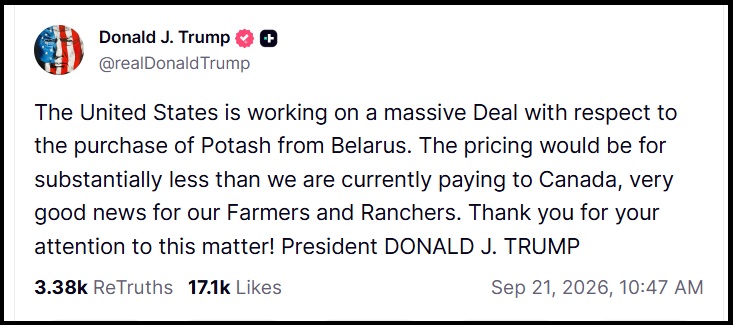
Trump Dumps Globalist Potash Supplier for Nationalist Potash Supplier

I suspect we will see similar realignment continues as the globalists like Canada and the EU try to oppose President Trump and U.S. best interests.

Belarus stands in ideological opposition to the globalists in Europe and President Alexander Lukashenko is an ally of Russian Federation President Vladimir Putin.  This announcement is a smack back against the leverage Canada claims to carry.  Again, creating more distance between the USA and the Snow Mexicans.

[SOURCE]

Watch the interview with U.S. Trade Representative Jamieson Greer to understand exactly where this is going.  The United States is systematically decoupling from Canada.  When we cut the economic lifeline represented by the USMCA, Canada will be adrift.

(more…)

President Trump Signs Russian Sanctions Bill that Grants Him Massive Tariff Authority Over U.S. Imports from Countries Doing Business With Russia

After a careful review of HR5334, the Lindsey Graham Russian Sanctions Bill [pdf HERE], I can certainly see why President Trump would happily sign it.

The bill has several elements that are immensely useful for President Trump, beginning with the fact that the baseline of the bill sits upon the cornerstone of current U.S. sanctions against Russia.   This is a critical aspect to understand, because if you take away the originating Russian sanctions, HR5334 disappears.

Secondly, the bill grants President Trump the ability to place 100% tariffs on the top five trading partners of Russia, but the bill also grants wide latitude as to how those top five are determined.  Top five oil, top five gas, top five financial, top five sector specific (energy, grain, oil, minerals etc.) the actual parameters or definitions of the “top five” are undetermined except by monetary value.

Some have just realized what this bill empowers. Others have yet to catch on.  Additionally, The bill gives President Trump the ability to impose tariffs of up to 100% within 30 days on all goods imported into the US from the five largest importers of Russian crude oil or gas as well as any country that knowingly made new purchases of oil or gas 30 days after the law was enacted or was among the top five countries helping Russia evade sanctions.

But there’s the key, again the authority is based on the pre-existing “sanctions.” So, who determines sanction relief? [interim, temporary, or strategic, in coordination with the policy objectives of the President] That would be U.S. Secretary of Treasury Scott Bessent.

Remember the previous 30-day interim sanction relief that Bessent and Trump provided for Russian oil/gas “on the water’?  In that scenario, the legislatively authorized tariff authority becomes entirely subject to the application determination of President Trump.  Ex. give a 30-day waiver and suddenly oil/gas are no longer the largest monetary trade issues. Instead, it could be as simple as who buys the most Russian caviar; maybe it’s Italy or Spain, or even Canada. lol 😂

(more…)

Palantir CEO Frames AI Leaders Request as Effort to Avoid Lawsuits from Large Corporate Clients Over IP Theft

Palantir CEO Alex Karp is a little quirky but, on this issue, I tend to agree with him.

According to Karp in the interview below the request by OpenAI and Anthropic AI labs for government regulation is related to a legal issue within their business model.  Right now, massive multinational corporations are working with AI groups under contract. As part of those contracts the leaders of the corporations are discovering their individual business plans, what they call their intellectual property (IP) has been uploaded into the dataset of the AI models themselves.

These corporations have spent billions of dollars on their detailed business plans, marketing plans, logistics and revenue systems that are now part of the AI dataset.  These CEOs are not happy and talking about lawsuits against the AI developers for stealing their corporate intellectual property.  However, at the same time the CEOs are furious at the loss of proprietary information, they are simultaneously bound to the AI developers for forward revenue.  This is creating a problem.

Example: By some analyst’s estimations, Amazon’s forward revenue projection is approximately 51% dependent on further technological capability through the use of AI.  However, Jeff Bezos likely does not appreciate his business model, which includes a massive dataset that he makes money from, being taken and uploaded to the AI database.  Bezos could sue Anthropic for ip theft.

All of the AI labs are exposed to this litigation if it was to unfold.  Additionally, all of the investors into the AI frontier labs would be at risk if the AI developer were sued by these corporations.  Both the AI developers and their investors would/are demanding protection from these lawsuits.

Here’s where it gets complicated.

(more…)

President Vladimir Putin Explains Why NATO Wants a War Against Russia

Sometimes Russian Federation President Vladimir Putin just nails the issue in a way that is difficult for western voices to deconstruct. This is one of those examples.

Using the reference of the EU recently raising interest rates in an effort to lower energy costs, a seemingly disconnected approach that attaches energy policy to monetary policy, Vladimir Putin outlines exactly why the EU Central Bank approach is used.  This is a really important dynamic to understand.

For a long time, Russia battled with the EU over the pricing process for oil and gas.  Russia, specifically Putin, wanted to sell oil/gas to the EU based on production prices and fair profits.

Europe wanted to buy Russian oil/gas based on “market prices” which are manipulated by speculation and traders.

Putin doesn’t like this pricing approach because it artificially inflates the price based on speculation, trading and inorganic influences.

Instead, Putin always said the “market approach” makes your energy prices go up, even when production capacitary prices go down (productivity).

Producers can provide increases in energy volume at lower per unit levels just by turning a dial on gas volume.  Why would Europe want to pay more, when the cost to deliver a higher volume lowers the per unit price.  The EU never had a good answer, other than that’s just the way the ‘western market’ works.

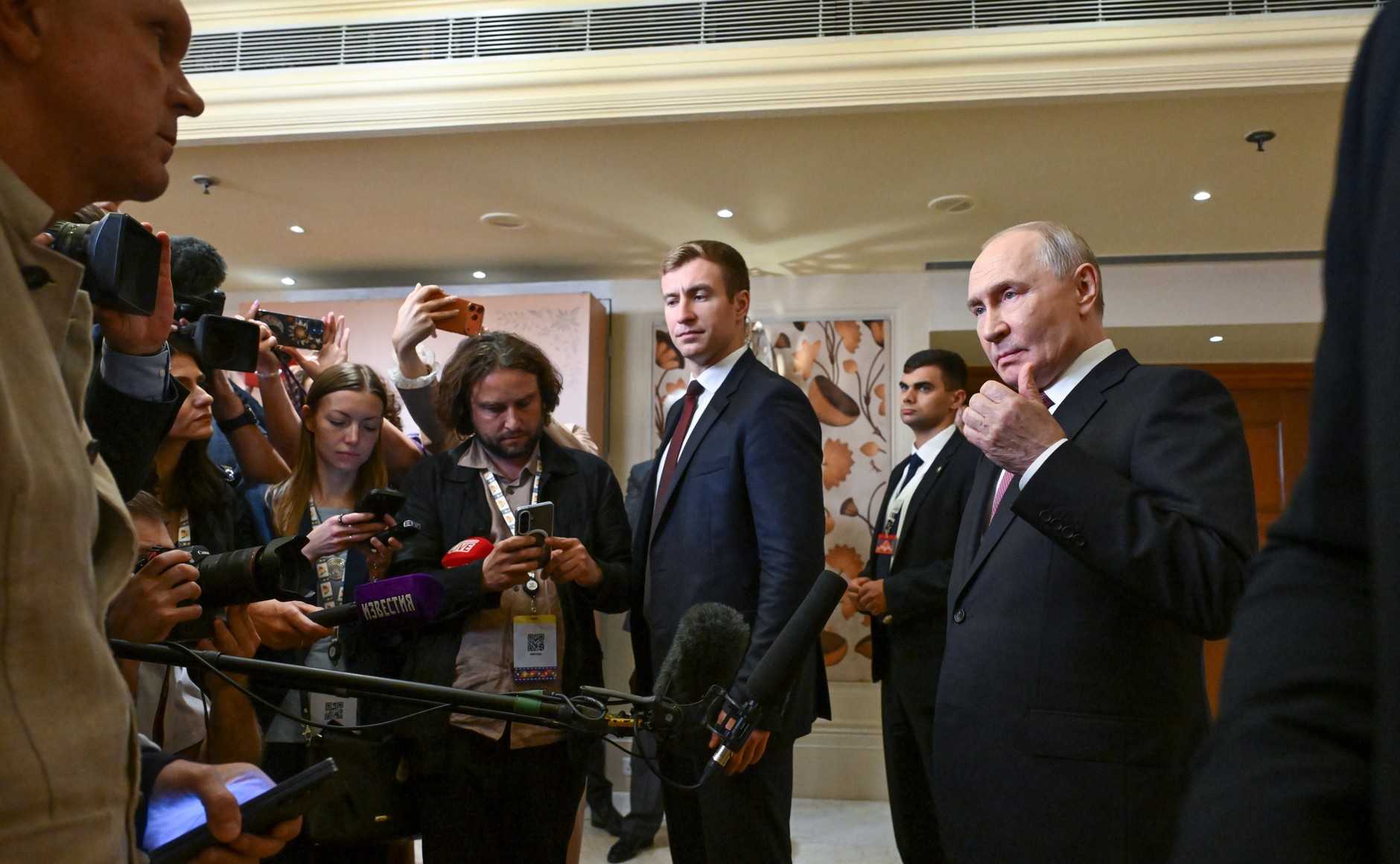
Concluding the first day of his working visit to India for the BRICS meeting, Vladimir Putin answered a media question about the EU and used this reference to outline why the financial system of the EU is actually the underlying reason for their need to have conflict with Russia.  This is really interesting.

Question: You have spoken at length today about the BRICS countries. I would like to raise a question concerning a nation which, though geographically more distant from here, is perhaps closer to you personally – Germany. As is known, elections have recently taken place in Saxony, where the Alternative for Germany secured a decisive victory. It appears a similar trend is emerging in Mecklenburg-Western Pomerania as well. How do you view these developments?

President of Russia Vladimir Putin: I do not wish to, nor will I, comment on matters of the internal political developments currently unfolding in the Federal Republic.

However, there are points which merit attention in this context – and I will explain why. In my view, all that is now happening across Europe as a whole is the consequence of systemic errors committed by the so‑called West, or, to be more precise, by the globalist circles of the West, in the political, security and economic spheres.

(more…)

“One Ping Only, Vasily”

♦President Trump’s foreign policy approach brought North and South Korea together away from the table of conflict.  ♦President Trump’s foreign policy approach brought Serbia and Kosovo together away from the table of conflict.  ♦President Trump’s foreign policy rallied the Gulf Cooperation Council to stop Qatar’s support for Islamic extremists via the Muslim Brotherhood. ♦President Trump’s foreign policy brought Turkey and the Kurdish forces together away from war and conflict.  ♦President Trump’s foreign policy created a ceasefire to stop the bloodshed in Syria.  President Trump mediated a cessation of hostilities between India & Pakistan in the Kashmir region. ♦President Trump’s foreign policy brought Israel and the UAE together… and then Bahrain… and then Sudan in the Abraham Accords.

President Trump executes a clear foreign policy, a unique doctrine of sorts, where national security is achieved by leveraging U.S. economic power. It has been a fundamental shift in approaching both allies and adversaries; summarized within the oft repeated phrase: “economic security is national security.”

The Trump Doctrine of using economics to achieve national security objectives is a paradigm shift in American politics.  Modern U.S. history provides no easy reference strategy, because until now no American president has ever leveraged this approach.

U.S. B-2 bombers struck Iran on June 22, 2025, as part of Operation Midnight Hammer, targeting key nuclear facilities.

Immediately following the August 2025, Alaska summit between Russian President Vladimir Putin and President Trump, Russia restarted Arctic-2 LNG terminals and began increasing natural gas (LNG) production for storage on ‘floating platforms.’

President Trump met with President Putin on August 15, 2025, and the curious increase in Russian production began on August 18, 2025.

It absolutely did not make sense that Russia would start producing even more LNG considering the previously imposed western sanctions against them, and the fact that Russia was already overproducing LNG. As noted by analysts at the time. Russia had no market for this LNG, yet Russia began increasing LNG supply anyway.  For six months Vladimir Putin extracted and stored LNG.

Two months later, on October 25, 2025, President Trump did something odd.  President Trump had attended the ASEAN summit in Asia before; however, this time instead of flying West over the Pacific, he flew east to Malaysia.  This put a refueling stop in Qatar, which everyone just ignored as a routine part of the travel plan.

However, upon arrival in Qatar, the Amir of Qatar came to the airport to pay a courtesy visit to President Trump.  They spoke aboard Airforce One during the refueling stop.

(more…)

Mexico and U.S. Working Faster on Bilateral Trade Agreement to Conclude Before Midterm Election

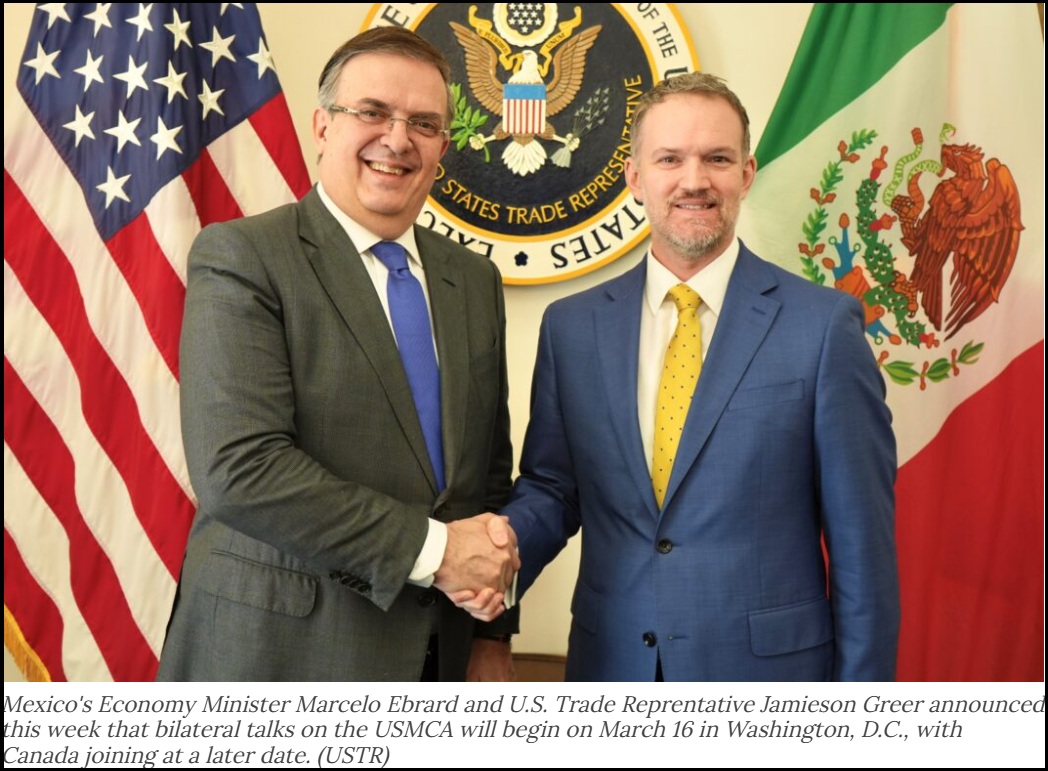
The missing aspect in all USMCA/CUSMA trade discussions is the simple fact that President Trump and U.S. Trade Ambassador Jamieson Greer would prefer bilateral trade agreements.  The reason is simple and is highlighted in all the problems with the three-party USMCA.

Two countries can negotiate based on their individual interests; multiple country assemblies get complicated.  Canadian Prime Minister Mark Carney and his “middle power” strategy of multiple interests assembling to create larger influence simply doesn’t work in trade discussion.  That’s the bottom line.

Reuters is reporting the obvious.  Mexico and the United States are racing to reach a bilateral trade deal before the U.S. midterm elections in less than eight weeks, according to six sources in both countries familiar with the talks, an effort made more urgent by the collapse of Canadian negotiations with Washington. Both USTR Jamieson Greer and President Trump have previously said the deal with Mexico would likely come first.

Mexico has played this very well.  Mexican President Claudia Sheinbaum has not participated in any antagonisms toward the U.S. position; they are simply negotiating for their best outcome.  The Mexican government officials don’t try to hide their U.S. dependency under the misguided premise of patriotism.  They understand the nature of the relationship.

If President Sheinbaum wants to keep a strong economy, she needs the USA.  Both leaders want a trade agreement; it’s business beyond politics.  Canada on the other hand is playing pure politics and trying to carve out a deal for themselves the rest of the world doesn’t have.  Canada wants to be excluded from the baseline tariffs applied to everyone, that’s not going to happen.

(more…)

Barbara Boyd Looks at German Election Outcome and Ukraine-Russia Conflict Negotiations

Promethean Action’s Barbara Boyd presents her review of the election outcome in Germany, the alignment of Canada with the EU and the Ukraine negotiations headed by Steve Witkoff and Jared Kushner.

“A Saxony-Anhalt provincial election saw Germany’s nationalist AfD win 43.8% to the next party’s 17.2%, prompting alarm in the British press and among EU-linked elites because the AfD campaign pledged to end open borders and halt German funding for the Ukraine war. The script argues the surge reflects a broader European revolt driven largely by economics: China’s industrial strategy and competition are squeezing Germany’s Mittelstand, with the Wall Street Journal cited on job losses and a shift toward importing more advanced machinery from China, while green policies, nuclear shutdowns, and the ban on cheap Russian energy have pushed prices 40–50% higher and cut energy-intensive production by 15%.

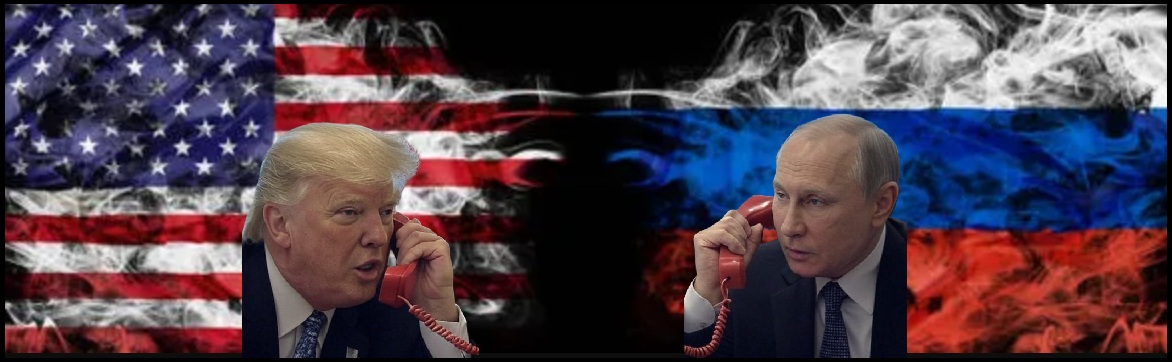
It links Germany’s downturn to EU war-mobilization plans, casts doubt on Mark Carney’s planned EU-Canada alignment, and contrasts that with Trump-era peace efforts, including a Trump-Putin call, corruption probes in Ukraine, and U.S. officials downplaying inflation impacts from Canada’s tariffs.”

.

(more…)

Canadian Minister Who Organized Govt Targeting of Opposition to Seize Bank Accounts Now Accuses U.S. of Authoritarianism

Chrystia Freeland is an exceptional representative of the mindset showcased by 80% of Canadians.  During her tenure as Deputy Minister to Justin Trudeau, Freeland organized “emergency powers” to target government opposition which included the seizure of bank accounts and government control over the income of Canadian citizens they disliked.  The events described are not in question.

Current Prime Minister Mark Carney then placed Freeland as the advisor to Ukraine President Zelenskyy on the Ukraine reconstruction banking and finance agenda.  A charter member of the globalist control mechanisms within the World Economic Forum, Chrystia Freeland is currently working for Ukraine and the EU-NATO allies in the banking and finance capacity; inside the mechanics of the system that controls the financial fraud within Ukraine.

As Mark Carney is desperately trying to organize a globalist response to President Trump’s program of economic nationalism and sovereignty, Freeland travels back to the U.S. to appear on leftist media outlets and proclaim that Trump’s economic perspective is evidence of “authoritarianism.” The current Canadian approach is to try and influence domestic politics inside the United States, on behalf of the global interests opposed to Trump.

It should be noted that the activity underway by Canadian officials inside the USA is against the law in Canada.  The Canadian govt do not permit foreign influence to undermine them and have strict controls over their media. WATCH (prompted):

.

Don’t lose sight of the forest while looking at the trees.  Ultimately this fear by the Canadians and others is about economics, it’s about money, it’s the “there are trillions at stake” aspect to globalism.  There are ideological components, yes; however, the ideology is evident because it is a tool. At the root of their apoplexy all of this is about control of money.

Leftists, progressives, communists et al, use money as a tool and weapon in the dynamic of their power and control.  Hence, the banking example previously in Canada.  Take away the leftist’s ability to weaponize affluence, and their influence diminishes.  Take away their money and they lose power. That’s the heart of the matter, and why President Trump’s economic approach toward geopolitics is so fundamentally against their interests.

(more…)

Secretary of State Marco Rubio Visits Colombia – Video and Transcript

Earlier today U.S. Secretary of State Marco Rubio participated in a joint signing ceremony with Colombian President Abelardo De La Espriella at a Strategic Civil Nuclear Cooperation and Critical Minerals Framework discussion. Both leaders signed the Memorandum of understanding and delivered remarks to the assembled media.

Secretary Rubio delivered the majority of his remarks in Spanish for the audience and media.  His bilingual skills come in very handy as Secretary Rubio travels Latin America carrying forth the U.S. strategic policy for the western hemisphere. Video and Transcript Below:

[Transcript] – MODERATOR:  (Via interpreter) Good afternoon.  Good afternoon.  The Presidency of Colombia and the Ministry of Foreign Affairs would like to welcome you to the – to the ceremony of two memorandums of understanding between the Government of Colombia and the Government of the U.S. of America.

We are pleased to have His Highness President Abelardo De La Espriella, who is the president of Colombia, that’s going to be in this act as the witness – as a witness of honor.  And we would also like to greet Omar Bula Escobar, who is the Minister of Foreign Affairs of Colombia, and His Excellency Marco Rubio, who is the Secretary of State of the United States of America, who are going to sign both agreements.

(In English) Good afternoon.  The Presidency of the Republic of Colombia and the Ministry of Foreign Affairs welcome you to the signing ceremony of two memoranda of understanding between the Government of the Republic of Colombia and the Government of the United States of America.  We are honored by the presence of His Excellency Abelardo De La Espriella, President of the Republic of Colombia, who joins us as witness of honor.  We also welcome His Excellency Omar Bula Escobar, Minister of Foreign Affairs of Colombia, and the Honorable Marco Rubio, Secretary of State of the United States of America, who will sign both instruments.

(more…)