Quantcast

Canadian Prime Minister Claims All Nations Tell Him Privately They Regret Making Trade Deals with President Trump

Today is not a good day for the Canadian trade team.

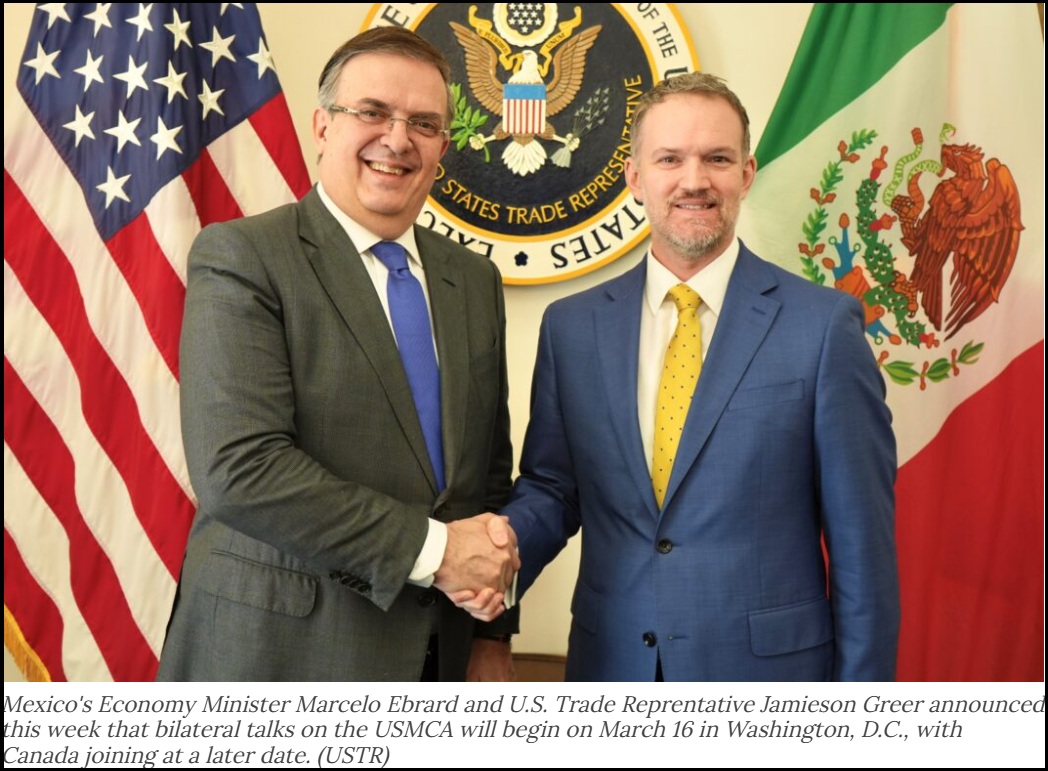
It started with Quebec’s new Premier in Washington DC meeting with U.S. Trade Representative Jamieson Greer {citation} in order to talk trade {SEE TIMELINE} saying on Twitter, “Quebec wants a renewal of the [USMCA] to ensure a stable and predictable framework for our economic exchanges.” However, Mrs. Christine Fréchette (pictured left) then bragged about having strategic discussions with the U.S. Chamber of Commerce. {citation}

For those who might not know, the U.S. Chamber of Commerce is a parasitic Wall Street and K-Street lobbying organization that has been locked out of trade influence since President Trump took office in 2017.  It was the U.S. CoC who sold out our manufacturing base, paid-off prior administrations and wrote the actual trade language in almost every trade deal that destroyed U.S. manufacturing.

The U.S. Chamber of Commerce is a lobbying organization who focuses on the bottom-line profits of U.S. multinational corporations, and they don’t care what happens domestically to American jobs, American manufacturing and American wages.  The CoC is the organization who created the rust belt and destroyed our manufacturing base under the guise of promoting a “service driven economy.”

If Canada want’s a successful trade negotiation with the USA, the Chamber of Commerce is the last organization they should be strategizing with.

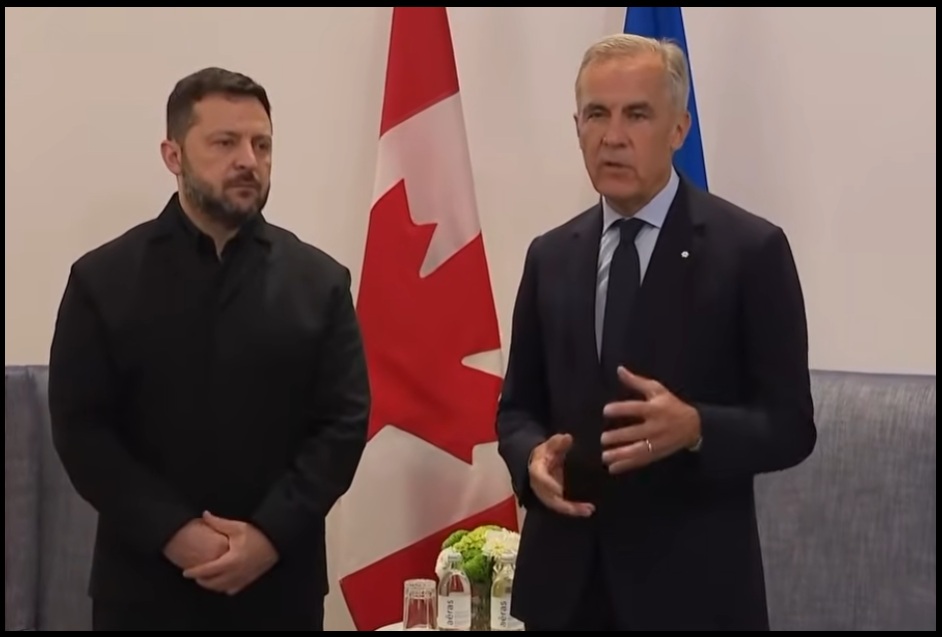
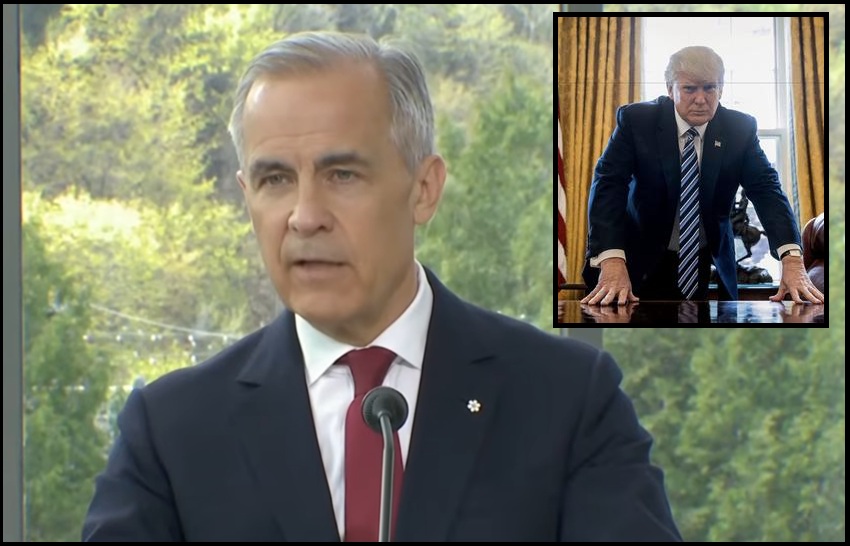
Then comes Prime Minister Mark Carney who not only steps on a rake, but he also publicly insults President Trump and the entire U.S. trade team by saying every country in the world privately tells him they regret making a trade agreement with President Trump. ¹{Citation at 28:10 of Video}

I’m going to post the entire video of Prime Minister Mark Carney discussing USMCA (Canada calls CUSMA) trade negotiations because the tone deafness of it is off the charts. That includes the Canadian Prime Minister saying that Section 232 national security reviews are a violation of the U.S-Canada trade agreement.  Carney believes any independent U.S. trade position that negates trade with any Canadian sector is a violation of trade rules, yet he is afraid to sue over Sec 232 because he doesn’t want to discover the flaw in his mindset.

(more…)

Canada Pushes Closer to the FAFO Threshold as Prime Minister Carney Says USA Will Not Dictate Terms of USMCA Renegotiations

Following direct remarks from both Commerce Secretary Howard Lutnick and U.S. Trade Representative Jamieson Greer, a triggered Canadian Prime Minister Mark Carney says the U.S. will not be permitted to dictate terms of the USMCA renegotiation, now scheduled for formal talks with Mexico only beginning May 25th.

According to the Canadian leadership they do not need the United States in order to maintain their economy.  The unfortunate people of Canada are very close to finding out exactly what that level of arrogance delivers.

USTR Jamieson Greer was just in Mexico meeting with Mexican President Claudia Sheinbaum and the Mexican trade delegation. “Mexico’s economy minister Marcelo Ebrard ​said on Monday that ‌formal negotiations to review the U.S.-Mexico-Canada trade pact, known ​as the USMCA, ​are due to begin the ⁠week of May ​25.”

“Tomorrow and this afternoon we ​will hear the U.S. side’s views. Once that is done, ​we will move ​on to the next phase, which ‌is ⁠formal negotiations. We expect formal negotiations to begin the week of May ​25,” ​Ebrard ⁠said following a meeting with U.S. Trade ​Representative Jamieson Greer.” {source}

Meanwhile Canadian Prime Minister Mark Carney continues talking to his domestic audience about fighting Donald Trump and refusing to accept any terms that do not meet his current pontifications: “It’s not a case that the United States dictates the terms. We have a negotiation, we can come to a mutually successful outcome – it will take some time,” he continued.

In Washington, Trade Representative Jamieson Greer said unless Canada engaged in talks about broadening the so-called rules of origin that allow goods to enter the United States tariff-free, Washington might have to impose other border controls. {source}

As the rhetoric continues increasing, the possibility of a full block against the import of Canadian goods increases.

It is worth remembering, the recent Supreme Court decision that overturned the IEEPA tariffs also reinforced the unilateral power of the U.S. President to regulate any/all trade with any foreign country including a full block of trade if designated.  Canada is positioned to be the first nation to discover the expressed power of the U.S. President as affirmed by the United States Supreme Court.

One of the reasons why Canadians are oblivious to the potential collapse of their economy is because U.S. media reports are blocked from Canadian social media sites.  One of the infringements within the USMCA is the Canadian Law Bill [C-18, the Online News Act] that blocks information to Canadian citizens that is not supported by the Canadian government.

The people of Canada are stuck inside an Orwellian government constructed echo-chamber unable to hear opposing viewpoints.  They simply have no idea what is heading in their direction.  Which is incredibly ironic considering how much Mark Carney rails against Russian President Vladimir Putin, yet Canada has more restrictions on information than Russia.  Think about it. The need for control is a reaction to fear.

(more…)

U.S. Trade Representative Jamieson Greer Discusses USMCA Review and Two Different “Protocols”

During an appearance at the Hudson Institute, U.S. Trade Representative Jamieson Greer is asked to summarize the administration’s approach to upcoming USMCA (CUSMA) renegotiations.

USTR Greer emphasized the focus is on outcomes in review of the USMCA, not focusing on the previous trade structure itself. The results carry more weight than reviewing what was intended.  On June 1st Greer anticipates telling congress that the U.S. intends withdrawal, pending unilateral negotiations with both Canada and Mexico to resolve conflict.

Greer describes two different protocols within any negotiation to deal with the structural differences between both Canada and Mexico.  Those differences include a completely different import/export profile with each country, different sectors of goods, difference in the wage rates within each country and a structural difference in the way each country is establishing their own, independent free trade agreements with other third-party countries.  These baselines form the reason to tell congress of the dissolution, and on July 1st inform both Canada and Mexico about it.

In the interim, the points of conflict are currently being negotiated with Mexico toward resolution.  The same negotiation is expected later between the U.S. and Canada; however, it sounds like that engagement will take place after congress is informed of the points of conflict.  WATCH (prompted):

.

(more…)

Chinese EV Manufacturers BYD and Gely Accelerate Plans for Canadian Dealerships

Put this in the USMCA (CUSMA) elimination/negotiation file.  Europe has already been the visible example of what happens when you open your market to low price Chinese EVs.

With the recent agreement by Canadian Prime Minister Mark Carney, Chinese auto manufacturers are now rushing to establish the dealerships, before the Beijing-Canada deal becomes an issue in the USMCA negotiation.

China is NOT going into Canada because they foresee a great market of Snow Mexicans purchasing their low price EVs.  They are going into Canada as a proactive measure to establish a North American footprint with an eye toward the USA.

(VIA MSM) – BYD and Chery are accelerating plans to establish a dealership network in Canada after the country introduced a quota allowing tens of thousands of Chinese-made EVs to enter at reduced tariffs. The rollout will begin in Toronto before expanding to other major cities, with BYD targeting about 20 dealerships in its first year. This marks a significant new front in North American EV competition, as Chinese automakers seek growth outside the U.S., where prohibitive tariffs keep them out.

(more…)

Democrat Senator Ruben Gallego Urges President Trump to Renegotiate USMCA

It is transparently obvious now that Canada is going to rely on UniParty (Corporate) opposition to President Trump in the dissolution of the USMCA (CUSMA) in favor of two distinctly different bilateral trade agreements; one with Canada and one with Mexico.

A bilateral trade negotiation between the United States and Canada would be devastating to the interests of the Canadian government.  Particularly after the Venezuela operation and new strategic relationship with the United States, Canada has almost zero points of leverage to negotiate anything similar to their current exploitative trade position.

Canada is going to rely on congress to stop Trump from forcing reciprocity in the bilateral discussions. However, as a positive indicator that President Trump will factually have congressional support for the elimination of the USMCA, Democrat Senator Ruben Gallego has written a letter to President Trump requesting a comprehensive review. [LETTER HERE]

[SOURCE]

This is a key Senate democrat who notes the problem.  One of Gallego’s top points of concern is the loophole that Canada uses to assemble Chinese component parts into finished goods for tariff free distribution into the United States.

Ever since President Trump won the 2024 election, Mexico has been taking proactive independent action to block Chinese component goods. But Canada has done the opposite and begun to enhance their trade relationship with China to take even more Chinese component and finished goods.

Gallego writes to U.S. Trade Representative Jamieson Greer from the position of wanting to increase wages and enhance jobs in both Mexico and the USA, growing both economies. However, Gallego’s advocacy simultaneously bolsters why the USMCA should be dissolved and also puts Canada at a distinct disadvantage.

(more…)

Volkswagen Loses Half Their Profit, Now Plan to Cut 50,000 Jobs Over Next Four Years

The origin of this issue goes back to 2021 and the relaunch of the Build Back Better European green energy program to fight the non-existent climate change problem.  We have been highlighting the consequences within the EU auto sector.

We noted in October of last year, the EU’s mandated fines against auto manufacturers who do not hit their production goals for electric vehicle sales began in 2025.  EU automakers unable to meet the regulatory compliance goal began purchasing carbon credits to avoid stiff EU fines.  Many of those carbon credits were purchased from Chinese EV automakers, who then turned around and started using the extra EU revenue to discount Chinese cars sold in Europe.

At the same time as Chinese autos hit record highs in Europe, EU car sales are flat or declining.  Now, Volkswagen is announcing they lost half their profits in one year and will be cutting 50,000 jobs in the next four years.

(MSM – Europe) – Volkswagen just revealed its operating profit sank like a stone last year, dropping by more than half as tariffs, Chinese competition, and shifting strategies took a serious bite out of the bottom line. And that performance now has the VW Group’s execs reaching for the cost-cutting scissors, including plans to shed 50,000 jobs by the end of the decade.

The German automaker reported an operating profit of €8.9 billion ($10.3 bn at current rates) for 2025. That’s down a hefty 53 percent from the year before and well below what analysts were expecting. Revenue, meanwhile, barely moved, slipping only slightly to around €322 billion ($374 bn). (read more)

This was very predictable. In essence, EU car companies buy Chinese car company carbon credits, to avoid the EU fines.  The Chinese car companies then use the carbon credit revenue to subsidize lower priced Chinese EVs to the European car market, thereby undercutting the European EV car companies.

(more…)

Mexico and USA Begin Bilateral Preparations to Dissolve USMCA Without Canada

One of the most curious aspects to the predictable USMCA review, ie. dissolution, has been the incapacity of the Canadian government or trade delegation to accept the United States is going to create two distinctly different bilateral trade agreements and eliminate the trilateral USMCA.

For 16 months the Canadians have refused to fathom the reality of what is going to happen this year.

The Canadians just cannot believe it is possible they will be forced to negotiate a free trade agreement without the cover of a multilateral construct. It has been remarkable to watch their dissonance.

Last week President Donald Trump and Mexican President Claudia Sheinbaum held a phone call. At the conclusion of the call, Sheinbaum publicly asserted the reality the Canadians just refuse to accept.

MEXICO – Mexico’s President Claudia Sheinbaum told reporters during her morning news briefing on Wednesday that her U.S. counterpart, Donald Trump, is open to doing away with the U.S.-Mexico-Canada trade agreement (USMCA) and replace it with individual trade deals with each country.

[…] “There might be revisions that create bilateral deals instead of involving the three countries because some things are more important between Mexico and the United Sates or between Canada and the United States,” said Sheinbaum. “Not everything has to be trilateral.”

Mexico’s president said the subject was brought up by Trump during a Tuesday phone conversation. […] According to Sheinbaum, her country is ready to consider possible changes. (read more)

Canadian Prime Minister Mark Carney finally started to realize President Trump was likely to ignore Canada and begin direct discussions with Sheinbaum. So, Carney went to Mexico to try and get assurances from Sheinbaum that Mexico would not proceed without Canadian interests in mind.

(more…)

President Trump Announces U.S. Economic Boycott of Spain During Meeting with German Chancellor Friedrich Merz

President Trump holds a bilateral meeting with German Chancellor Friedrich Merz in the Oval Office.  After brief remarks of mutual appreciation, President Trump and Chancellor Merz responded to questions from the assembled press pool.

Chancellor Merz expressed support for the objective of eliminating the regime threat from Iran.  President Trump notes at the beginning how Iran is targeting civilian targets in the region and generating even more support from the Gulf states for the USA.

When asked about the British and Spanish refusal to support U.S. military logistics and deployment, President Trump let the media be aware he is not happy with the position of Spain and the U.K.  President Trump also announced [11:00 of video] an economic embargo of trade with Spain as an outcome of their position.

.

(more…)

Cutting Through the SCOTUS Tariff Fog, USTR Jamieson Greer Discusses Baseline Tariff Reset Shifts and Reciprocity Tariffs

The Supreme Court tariff ruling has created the need for U.S. Trade Representative Jamieson Greer and U.S. Commerce Secretary Howard Lutnick to modify the baseline tariff approach with the approvals of President Trump.

The baseline tariffs are being reset to 10% with upward adjustment to 15% as planned.  The reciprocal tariffs will not require any substantive modifications as most of the Free Trade Agreements have been cemented with reciprocity tariffs as part of the negotiated deals.

USTR Greer appears on Bloomberg to clarify the current situation and provide some information as to the transitional baseline tariffs as now modified. Additionally, and importantly, Greer begins discussing the USMCA review and his acceptance that President Trump is openly questioning the value for us. Greer notes Mexico and Canada being used as import hubs to avoid tariffs is a big issue. WATCH:

Section 232 [Steel and Aluminum examples] of the Trade Expansion Act of 1962 (19 U.S.C. §1862, as amended) authorizes the President to impose trade restrictions—such as a tariff or quota—if the Secretary of Commerce determines, following an investigation, that imports of a good “threaten to impair” U.S. national security. {SOURCE}

Section 301 tariffs are a trade enforcement mechanism established under the Trade Act of 1974. They allow the U.S. government to impose tariffs on imports from countries that are found to be engaging in unfair trade practices. The Office of the United States Trade Representative (USTR) conducts investigations to determine if a country is violating trade agreements, and if so, it can impose tariffs as a corrective measure {SOURCE}

Section 122 of the Trade Act of 1974 allows the U.S. president to impose tariffs of up to 15% to address “large and serious” balance-of-payments deficits. This authority can be exercised without prior congressional approval for a limited duration of 150 days. After this period, any tariffs must be extended by Congress. {SOURCE}

*FYI, there is a lot of distracting noise in the various social media platforms about internecine MAGA battles and ego-driven points of specific interest.  CTH chooses to focus energy and attention on the substantive policy issues that will generate substantive policy outcomes for America.

(more…)

Canadians Embrace Cheap Chinese Electric Vehicles

While the government of Canadian Prime Minister Mark Carney has inked a trade agreement with China to accept cheap imported vehicles in exchange for Beijing purchasing some agricultural products, President Trump has promised those cheap Chinese EVs will never cross the border into the USA.

The Canadian polling on the issue has done a remarkable chang in the past few years.  Now, the majority of Canadians are willing to purchase cheap Chinese EVs. As outlined by Bloomberg, “More than half of Canadians, or 53%, say that knowing an EV was made in China would have no effect on their purchasing decision, according to a new poll by Nanos Research Group for Bloomberg News.”

Approximately 50,000 Chinese electric vehicles will enter the Canadian market in the first year. “The pact with China includes a provision that part of the quota will be reserved for electric vehicles priced at C$35,000 ($25,700) or less, the government has said.” {SOURCE}

The Canadian government wants a Chinese auto manufacturer, any Chinese auto manufacturer, to build factories in Canada to produce these electric vehicles.  Canada wants the jobs and economic activity because Canada is currently bleeding jobs and economic activity due to the trade conflict with the U.S.

Building cheap Chinese EVs in Canada might help offset a few thousand job losses, but building Chinese EVs in Canada only further ensures there will not be a substantive trade agreement between the USA and Canada once the USMCA (CUSMA) is dissolved.  [More on that coming]

(more…)