The AP is reporting that Ukraine President Volodymyr Zelenskyy has restarted drone attacks against Russian oil refineries despite the request by President Trump to halt targeting energy infrastructure. There are a lot of aspects within this dynamic.
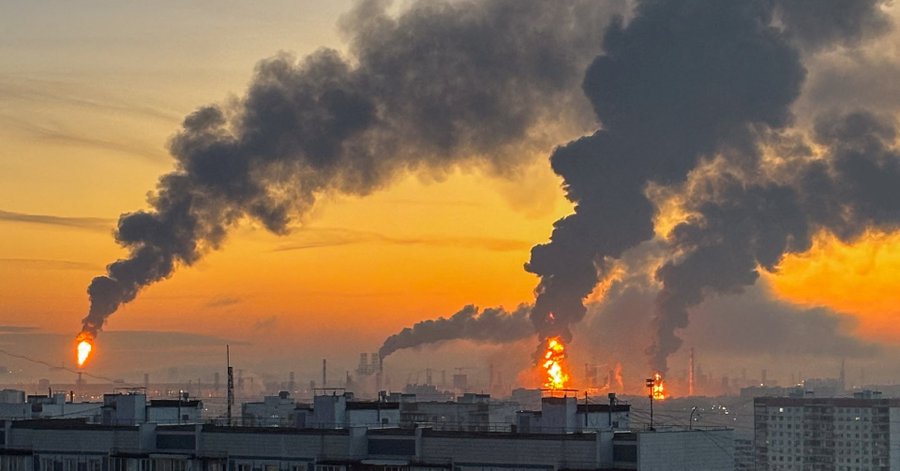
♦ First, keep in mind that any attacks against Russian infrastructure should always be evaluated against the capability of Russia to effectively mitigate such attacks. Russia is an analog infrastructure in a digital world, and one of the benefits to their system is the rapid repair capability in the old-school systems.
This may seem like a small detail, however, as noted in the prior attacks against almost all Russian infrastructure, Russia continued energy operations and exports of diesel fuel despite Ukraine targeting. Russia is remarkably resilient and they build out their capabilities with redundancies no longer used in most of the western industrial systems.
Due to their analog systems Russia may be less efficient in maximizing productivity; but what they lose in industrial productivity becomes an actual asset when shifting between internal systems becomes a matter of physically opening and closing valves to shift from damaged to operational stations. Russia’s slow adaption of technological innovation factually becomes a strategic advantage in this type of kinetic war.
♦ Second, it is worth remembering that oil refining capacity has been curtailed by the “climate change advocates” who now assemble to support Zelenskyy. The nations now aligned against the interests of Russia are yet dependent on the dirty industrial carbon energy resources provided by Russia and other oil exporting countries.