There is a certain irony in the timing all things considered. President Trump has given the EU until July 4, 2026, to fulfill the trade agreement previously negotiated (ie. the Turnberry Agreement) or 25% tariffs on EU automobiles will be triggered.
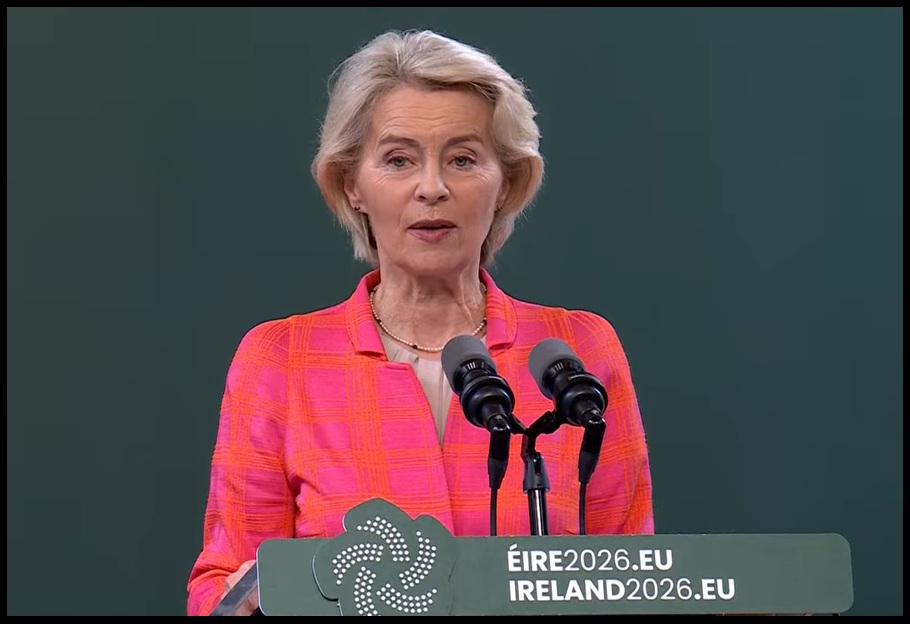
(Via Truth Social) – “I had a great call with The President of the European Commission, Ursula von der Leyen. We discussed many topics, including that we are completely united that Iran can never have a Nuclear Weapon. We agreed that a regime that kills its own people cannot control a bomb that can kill millions. I’ve been waiting patiently for the EU to fulfill their side of the Historic Trade Deal we agreed in Turnberry, Scotland, the largest Trade Deal, ever! A promise was made that the EU would deliver their side of the Deal and, as per Agreement, cut their Tariffs to ZERO! I agreed to give her until our Country’s 250th Birthday or, unfortunately, their Tariffs would immediately jump to much higher levels. Thank you for your attention to this matter.” ~President DONALD J. TRUMP
U.S. Trade Representative Jamieson Greer recently spoke directly about what was creating this problem. His interview and explanation in detail is below (MUST WATCH):
Previously, Toyota Inc informed the Canadian trade delegation that if the USMCA (CUSMA) was dissolved, the most important auto manufacturing operation they have in the country would end. Toyota was being respectful and brutally honest with the Canadians.
Last year, at almost the same time as Toyota made their position clear, Honda put a pause on the plan to build EVs in Ontario [2025 Notice] pending additional review. Today, according to Nikkei, Honda has now completed that review and cancelled the plan. Honda will not build EVs in Canada.
Asahi Kasei, the Japanese material supplier that makes battery separators, a core component used in lithium-ion batteries, will likely make a similar announcement soon. The decision is in response to declining EV sales in combination with current U.S-Canada trade friction. Without guaranteed access to the U.S. market, it makes no sense to invest in Canada.
Electrek – “Honda is shelving its massive C$15 billion ($11 billion) EV and battery manufacturing hub in Ontario, Canada, according to a new report from Nikkei. The move escalates what was initially framed as a temporary pause into what increasingly looks like an indefinite retreat.
[…] When Honda announced the Alliston, Ontario project in April 2024, it was billed as the company’s most ambitious EV commitment yet. The plan called for a new EV assembly plant capable of producing 240,000 vehicles per year, a 36 GWh battery factory, and cathode material processing facilities through joint ventures with POSCO Future M and Asahi Kasei. Production was targeted for 2028.
How do you sum up the economic forecast for Europe? This story highlights one of the craziest stories in a long time. This is so blindingly suicidal, it cannot be stupidity. This is intentional.
BACKGROUND – You might remember last year due to climate/carbon emission regulations inside Europe EU automakers had to pay fines to the EU Commission if they did not meet electric vehicle targets. In order to avoid the penalties many EU automakers began purchasing ‘carbon credit’ offsets from Chinese EV automakers.
European car makers were paying China for carbon credits, and Chinese car companies began using the payments to lower prices. Europe was, essentially, paying China to undercut their own auto market. The result was European car makers, specifically those in Germany, losing market share to lower price EVs from China. German industry began shrinking.
If that wasn’t crazy enough, what comes next is beyond laughable. As a result of lost sales and diminished volumes, Volkswagen had shut down auto plants. Now, Volkswagen is announcing that Chinese automakers, their China “partners,” will take over the underutilized facilities and start building Chinese cars in Germany.
GERMANY – Volkswagen Group is facing increased pressure from its board to further cut costs despite already announcing radical measures, such as axing around 50,000 jobs in Germany by 2030 and reducing production capacity by up to 3 million units per year to 9 million, which would make it very difficult to avoid plant closures or sales. Overall, Europe’s largest automaker aims to reduce costs by 20% by the end of 2028.
In an attempt to mitigate the effect of these measures, the automaker appears ready to do what not too long ago would have seemed unthinkable, namely selling China-developed cars in Europe and even sharing its underutilized plants in the region with its Chinese partners.
White House National Economic Council Director, Kevin Hassett, appears on CBS news to dispatch the narrative engineering of Margaret Brennan.
I completely understand why the White House appears to have finally had enough of Ms. Brennan’s dramatic performances and has chosen not to send most representatives into this nonsense pantomime any longer. She’s even more insufferable than Jake Tapper. That said, Kevin Hassett is likely the only member of the administration kindhearted enough to deal with the snark and lack of substance.
What I don’t understand is why the White House just doesn’t tell her in brutally honest terms: Margaret, your dramatic performances are tiresome, and your intellectual vigor is running at a continual deficit. Regards.
True to form, Ms. Brennan wanted desperately to pontificate about the terrible state of the U.S. economy blaming the White House for the failure of Spirit Airlines, and demanding Kevin Hassett address the Iran conflict that is not in his portfolio. Director Hassett stayed comfortably in his lane, smiled and took apart the fake news construct as professional as possible given the absurdity of Brennan’s presentation.
[Transcript] – MARGARET BRENNAN: We begin this morning with the director of the White House Economic Council. Kevin Hassett joins us from Los Angeles. Good early morning to you.
KEVIN HASSETT: Oh yeah, good morning.
MARGARET BRENNAN: Well Director, President Trump sent a letter to Congress on Friday saying a few things. One that the conflict with Iran, the ceasefire has been extended. He also said the hostilities have been terminated. He also said the threat posed by Iran remains significant, and the force posture will continue to be updated. Then overnight, we saw the President said Iran has not yet paid a big enough price for what they’ve done to humanity. What exactly is the message to the market?
KEVIN HASSETT: Right. Well, I think the market has been pretty consistent. The fact is that what the President is seeing is that the blockade is working. It’s putting an enormous amount of pressure on Iran, and Iran’s threats to put mines in the straits have even made it so that humanitarian aid that, of course, we would let through to Iran, that there are a lot of those ship captains that are wary of going to Iranian ports because they’re worried about where the Iranians have put the mines. And so, you know, I go down to the sit room many times a week and get briefed on what’s going on in Iran, and they’re an economy that’s really on the precipice of extreme calamity. They are having a hyperinflation. They’re starting to have hunger. The bottom line is that the pressure on the great American people, because of these people who are like really intent on American and Israeli destruction with their nuclear weapons, are still in power. One last thing, Margaret, I don’t know if you noticed, but the UN Human Rights folks came out this week condemning Iran because they’re killing people who are trying to stand up to this regime that’s potentially, you know, causing starvation and even famine.
Keep in mind the background issue of Germany supplying Ukraine with weapons and material to keep fighting Russia, while the Merz administration triggers policy to force increased German military troop levels.
Facing crushingly high increases in energy costs, last Monday in Marsberg, German Chancellor Friedrich Merz criticized the U.S. approach to Iran, saying Washington was being “humiliated by the Iranian leadership” and demanding the conflict end “as quickly as possible.”
Germany is facing a perfect storm of economic consequences following their decision to chase the climate change agenda (Build Back Better) and eliminate their coal and nuclear power plants. Combine the German/EU policy to stop purchasing cheap LNG and oil from Russia, in addition to skyrocketing energy costs from oil/gas flows from the Middle East, and the outcome is rising manufacturing costs leading to massive layoffs.
The German industrial economy is the heart of the EU economy, and President Trump is now hitting them both right where it hurts.
Today two announcements hit an already vulnerable Germany directly. The first is: “The Secretary of War has ordered the withdrawal of approximately 5,000 troops from Germany,” chief Pentagon spokesman Sean Parnell told Fox News Digital. “This decision follows a thorough review of the Department’s force posture in Europe and is in recognition of theater requirements and conditions on the ground.” {source}
The second announcement is even more brutal for Chancellor Merz:
Several key economic reports were released today highlighting a broad and strong U.S. economy with a very strong labor market.
♦ The first quarter Gross Domestic Product (GDP) was released by the Bureau of Economic Analysis (BEA) [DATA HERE] The first estimate is for growth at 2.0 percent. At first glance that is lower than we expected; however, a deeper look shows a large increase in imported goods that are deductions to the equation. The imported goods increased 25.8% more than the fourth quarter of 2025 [Table 1.1], that led to a net -1.30 percent deduction [Table 1.5].
The jump in imports is a result of massive capital expenditures on tools and equipment for the ongoing manufacturing boom. All the manufacturing machines and industrial tools that are not made in the USA become imported goods deducted from our economic valuation.
Exports were very strong rising 12.9 percent over the prior quarter. However, the 25.8% increase in imports created a net deduction from GDP (-1.30%). The last time we imported this much was just before the tariffs went into place and companies were rushing advanced orders, in the first quarter of 2025; this created a rebound effect in the second quarter.
I estimate the second quarter rebound will be even greater this year because we are exporting massive amounts of oil and LNG right now. Simultaneously, the capital expenditure imports will likely soften.
U.S. Treasury Secretary Scott Bessent outlines Operation Economic Fury and the financial pressure campaign against the Iranian regime with Larry Kudlow.
KEY POINTS:
0:00 Introduction: Operation Economic Fury
0:39 Max Pressure: The Strategy to Freeze Iran’s Economy
2:04 Tracking the Money: Seizing IRGC Assets and Crypto
3:14 The Oil Blockade: Kharg Island at a Standstill
4:10 US Economic Resilience: Why Critics Are Wrong
6:04 IRS Modernization and Signature Tax Policies
7:33 Global Reshoring and the Manufacturing Boom
8:10 Geopolitical Chess: The UAE’s Break from OPEC
10:27 Federal Reserve Friction: Jay Powell vs. Kevin Warsh
As you are aware, CTH is watching the small details closely on the U.S-Russia alignment against the backdrop of friction with the European Union, the U.K and NATO on issues surrounding Iran. In the past several days there have been several smaller moments lost amid media chatter of bigger news items, this is one such example today in the Oval Office.
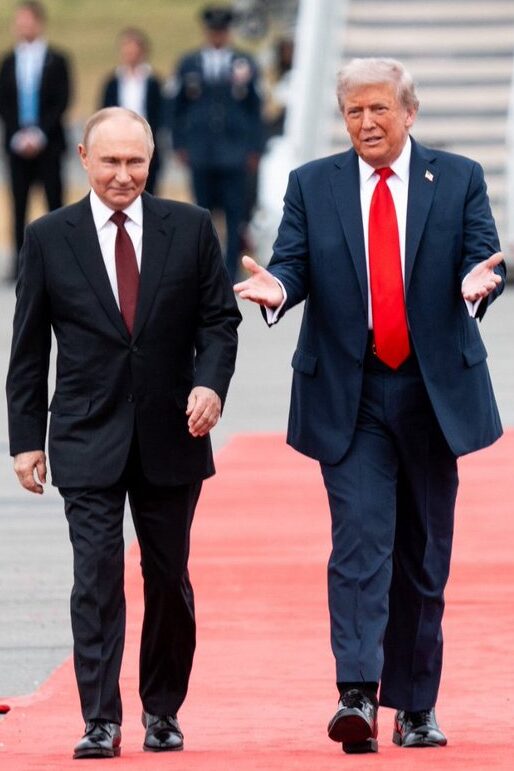
During a press availability with the Artemis II astronauts, President Trump was asked for an update on the Ukraine conflict and seemingly stalled negotiations between U.S. intermediaries and Russia. At 04:12 of the video below, President Trump notes he spoke at length with Russian Federation President Vladimir Putin today on issues related to the Ukraine conflict, and {{{thoughtful-pause}}} Iran. WATCH:
President Vladimir Putin is in no hurry to ceasefire in Ukraine, and the U.S. military operation in Iran is not against his interests.
On April 12, 2026, Treasury Secretary Scott Bessent quietly extended the sanction relief for Russia, permitting oil/gas sales loaded on vessels by 4/17/26 for transit and sale through 5/16/26. This permits Russia to push oil to Asia, specifically China, India and ASEAN countries where it is needed, while simultaneously the UAE and Saudi Arabia increase oil pumping avoiding the issues with the Strait of Hormuz.
This is happening while the U.S. is providing large oil and LNG supply increases to South/Central America, Europe and Japan to offset any global shortages.
Russia supplies China, India and Southeast Asia; the U.S. supplies Europe and Japan; the UAE supplies India and Australia; while Saudi Arabia supplies Africa and Europe. Global markets stable, Iran then faces operation financial fury led by Treasury Secretary Scott Bessent. {Go Deep}
Big things are happening quickly as President Trump continues to disrupt historic global structures of control and influence.
The United Arab Emirates (UAE) has announced they are leaving OPEC in order to manifest their own sovereign economic destiny and increase domestic oil production without the limits and rules of the OPEC cartel. This is a significant alignment with President Donald Trump who has actively argued against the OPEC assembly and the oil price controls they have historically imposed.
DUBAI, United Arab Emirates (AP) — The United Arab Emirates said Tuesday it will leave OPEC effective May 1, stripping the oil cartel of one of its largest producers and further weakening its leverage over global oil supplies and prices.
The UAE’s decision had been rumored as a possibility for some time, as it pushed back in recent years against OPEC production quotas it felt had been too low — meaning it wasn’t able to sell as much oil to the world as it had wanted.
Following direct remarks from both Commerce Secretary Howard Lutnick and U.S. Trade Representative Jamieson Greer, a triggered Canadian Prime Minister Mark Carney says the U.S. will not be permitted to dictate terms of the USMCA renegotiation, now scheduled for formal talks with Mexico only beginning May 25th.
According to the Canadian leadership they do not need the United States in order to maintain their economy. The unfortunate people of Canada are very close to finding out exactly what that level of arrogance delivers.
USTR Jamieson Greer was just in Mexico meeting with Mexican President Claudia Sheinbaum and the Mexican trade delegation. “Mexico’s economy minister Marcelo Ebrard said on Monday that formal negotiations to review the U.S.-Mexico-Canada trade pact, known as the USMCA, are due to begin the week of May 25.”
“Tomorrow and this afternoon we will hear the U.S. side’s views. Once that is done, we will move on to the next phase, which is formal negotiations. We expect formal negotiations to begin the week of May 25,” Ebrard said following a meeting with U.S. Trade Representative Jamieson Greer.” {source}
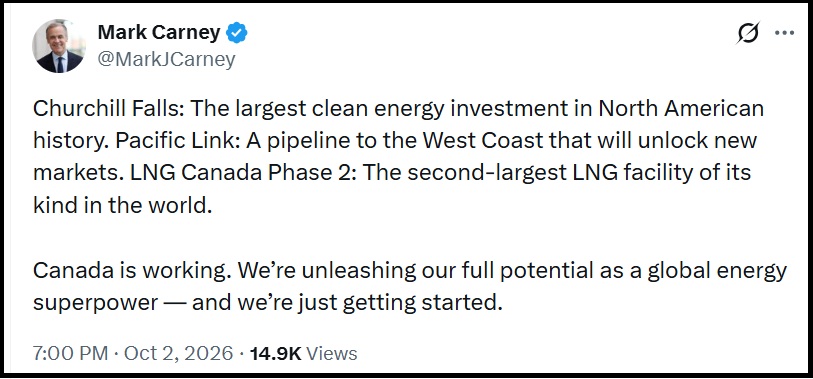
Meanwhile Canadian Prime Minister Mark Carney continues talking to his domestic audience about fighting Donald Trump and refusing to accept any terms that do not meet his current pontifications: “It’s not a case that the United States dictates the terms. We have a negotiation, we can come to a mutually successful outcome – it will take some time,” he continued.
In Washington, Trade Representative Jamieson Greer said unless Canada engaged in talks about broadening the so-called rules of origin that allow goods to enter the United States tariff-free, Washington might have to impose other border controls. {source}
It is worth remembering, the recent Supreme Court decision that overturned the IEEPA tariffs also reinforced the unilateral power of the U.S. President to regulate any/all trade with any foreign country including a full block of trade if designated. Canada is positioned to be the first nation to discover the expressed power of the U.S. President as affirmed by the United States Supreme Court.
One of the reasons why Canadians are oblivious to the potential collapse of their economy is because U.S. media reports are blocked from Canadian social media sites. One of the infringements within the USMCA is the Canadian Law Bill [C-18, the Online News Act] that blocks information to Canadian citizens that is not supported by the Canadian government.
The people of Canada are stuck inside an Orwellian government constructed echo-chamber unable to hear opposing viewpoints. They simply have no idea what is heading in their direction. Which is incredibly ironic considering how much Mark Carney rails against Russian President Vladimir Putin, yet Canada has more restrictions on information than Russia. Think about it. The need for control is a reaction to fear.