Quebec Premier Paul St-Pierre Plamondon said he’s considering all legal options after a judge ruled Members of the National Assembly must swear an oath to the King of England before taking their seat in the legislature. WATCH:
.
German Chancellor Friedrich Merz and NATO General Secretary Mark Rutte said earlier today that Europe was now prepared for direct negotiations with Russia for a peace agreement between Ukraine and Russia. [Video Below]
Here’s a thought. Rather than this constant background chatter, why not just man-up and cut to the chase.
Instead of sending intermediaries, why doesn’t the UK Andy Burnham, France Emmanuel Macron, Germany Friedrich Merz and NATO Mark Rutte directly and personally negotiate with Vladimir Putin for a peace deal in Ukraine, with U.S. President Donald Trump as moderator.
If it is a matter of “utmost European importance”, and if everyone wants to stop the bloodshed, then why don’t the leaders of the countries just negotiate directly? …Oh, and by the way, all of them are going to be in Miami on December 15th for the G20, so scheduling isn’t a problem.
.
We’ve known for a long time that U.S. military and CIA “advisors” were on the ground in Ukraine assisting with military operations. Germany also has combatant advisors supporting the German hardware sent to Ukraine.
Additionally, the U.K. are building drones and missiles for Ukraine, while Canada has admitted to 2,500 forward positioned Canadian troops in Latvia as drones are launched from Latvia targeting the Leningrad (St Petersburg) region. Now, French media are reporting that French military are on the ground in Ukraine.
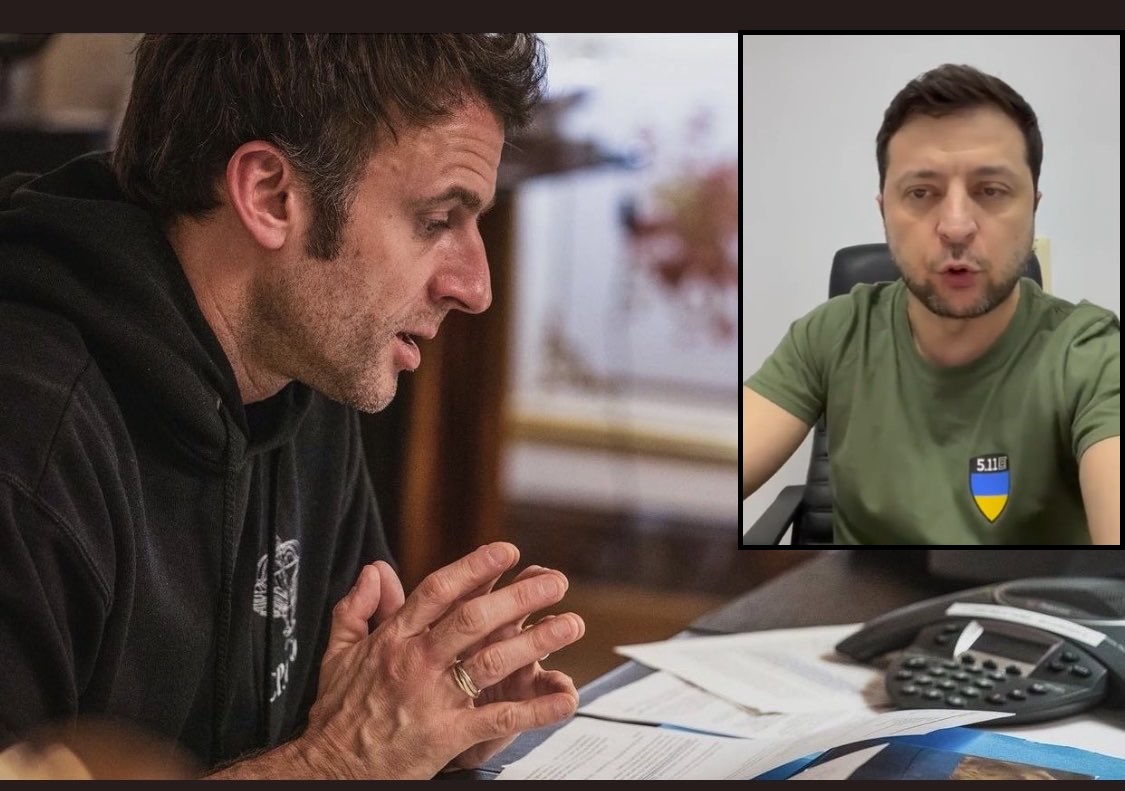
RFI FRANCE – […] France has supplied a number of advanced equipment to Kyiv: Caesar cannons, Mirage 2000 aircraft, and precision missiles. A varied park whose maintenance requires great expertise.
For this mission, the choice of civilian technicians was discarded because Ukraine is at war. And the French armies decided to send their men, drawn from conventional units. A presence in Ukraine that is also rich in feedback.
The Army has several regiments dedicated to supporting the forces. There are seasoned soldiers with rare skills. To ensure the safety of these soldiers and their entourages, RFI chose not to reveal the regiments involved. (read more)
Apparently, the French Parliament have not been informed.
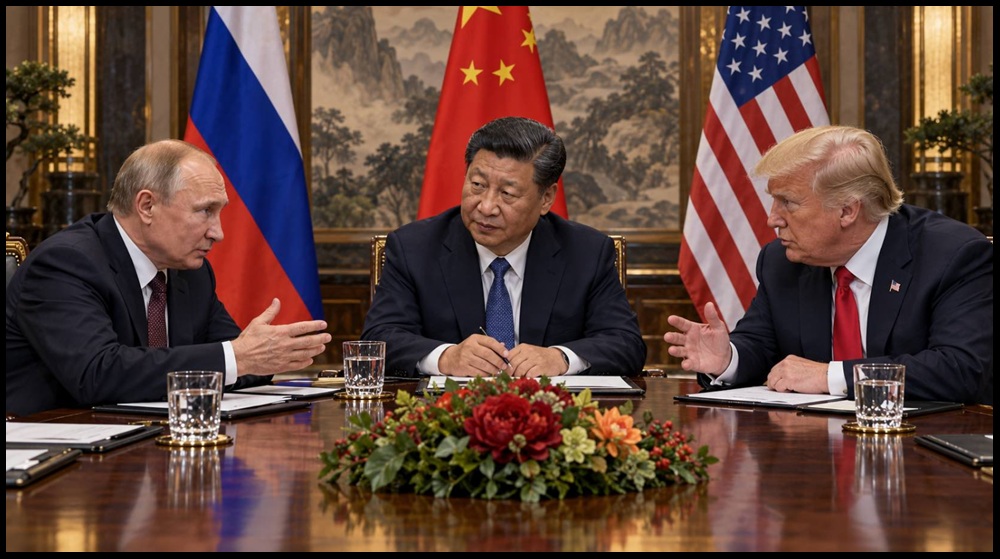
There is no upper limit on what western globalist allies will do to disrupt the meeting between President Trump, Chairman Xi and President Putin. There are trillions at stake, and the soft middle-powers are very angry at this meeting.
No narrative is too extreme; no lies are beyond the pale; no amount of Machiavellian media manipulation if off limits; absolutely nothing -NOTHING- is out of bounds, if that action creates friction, noise and interference in this upcoming meeting on November 19th.
All western intelligence agencies are fully activated. All markers are being called in. Every allied narrative engineer is on maximum pressure. All influencers in every sphere are fully responsible to their benefactors, and all accusations are permissible so long as the narrative it advances helps the disruption goal.
This and more helps frame the stakes of this historic meeting at this specific moment in history. This is the first ever trilateral meeting between the leaders of China, Russia and the United States.
According to Volodymyr Zelenskyy, who is relaying information to his comrades in western sympathetic media based on the private conversation he is having with Trump emissaries Steve Witkoff and Jared Kushner, the U.S. team has probed the willingness of Russia to accept Ukraine entering into the protection of NATO in exchange for Ukraine pulling back completely from the Donbas region in Eastern Ukraine.
Now, here we must overlay a tremendous amount of background context, starting with the U.S. team being diplomatically private (as they should), while contrast against the Ukraine Team -specifically Zelenskyy- making private conversations very public in order to bolster his western support system. Keep this aspect in mind.
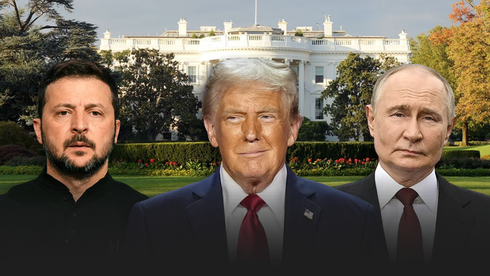
Zelenskyy is deflecting leadership by refusing to negotiate as an elected Ukrainian voice and instead making things public under the justification of his desire to make the Ukraine people the determining factor. This is a method of weaponized democracy, where ‘paralysis by analysis’ is the outcome.
That said, the baseline of the proposal is the U.S. offering NATO-type protection, entirely led by and the responsibility of Europe in Ukraine. The U.S. will NOT put American military on the ground in Ukraine under any circumstance. The absence of the U.S. military is intended to provide Russia with security guarantees because Putin knows that Europe alone cannot, is not and will not pose a substantive military threat. Without the USA military the EU-NATO team is irrelevant.
In exchange for Putin accepting an EU-NATO security element in Ukraine, Zelenskyy will cede the Donbas region back to the care and custody of Russia. That’s the general proposal.
According to what can be discerned by Zelenskyy’s leaks to media, Putin is open to this approach. Russia gets the Donbas, Ukraine officially gets European military support, but all interests must accept that the USA will not be a participant in any security measure. This is seemingly Trump approved, but this is where it gets sticky.
As long as the Iran conflict continues, energy speculators have the justification for higher oil, gas, fuel and energy prices. Even if global oil and gas flows return to their pre-conflict levels, so long as the conflict itself is in place the market traders, speculators and manipulators have a justification for higher prices. The center for this global financial matter is London.
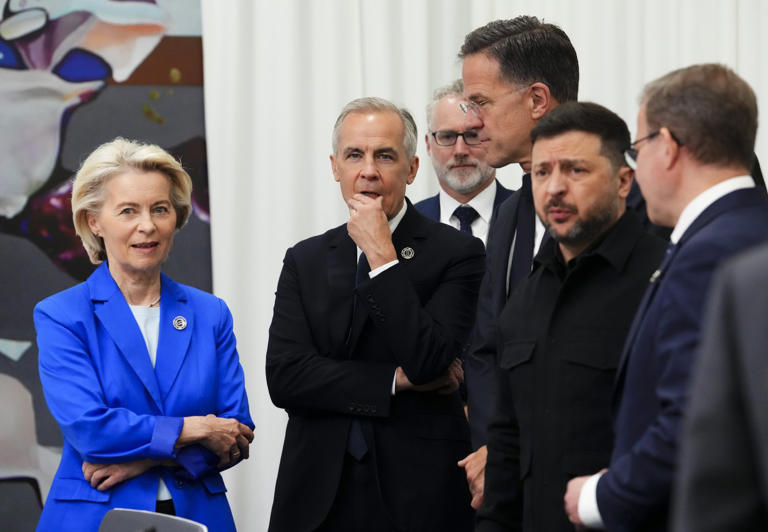
If you are an EU minded ‘climate change’ ideologue having constructed decades of fabricated net-zero objectives, the Iran conflict now serves your interests. The Iran conflict does not assist the interests of the people of Europe, but rather the interests of the political and powerful elite in finance control who benefit from higher prices of traditional energy.
The blame for higher EU energy costs now shifts from EU climate advocates to Trump.
Here’s where it takes a Machiavellian twist. One way to keep the Iran situation in place is to place ancillary pressure on the key to the solution, Russia.
So long as the EU keeps threatening Russia with expanded conflict, there is no motive for Russia to assist President Trump in the solution within Iran. Solving the crisis within Iran is against Putin’s security interests, as long as the EU threat holds some reasonable possibility, because Iran -a Russian ally- can strike Europe with their remaining ballistic missile inventory.
What we see is the creation of a Gordian Knot. You cannot resolve the Iran conflict so long as Russian security interests are threatened, and you cannot resolve the Russian security interests as long as the Ukraine-Russia conflict continues.
President Trump wants the Iran conflict resolved. Russia is the key; which is why President Trump has redirected diplomatic resources to resolve the Ukraine-Russia war. However, that war underpins the justification for expanded conflict espoused by Europe toward Russia. The EU take a hostile position toward Russia knowing a peaceful resolution is against their ‘climate change’ agenda. There are trillions of pre-positioned interests at stake.
Ukraine President Vladimir Zelensky (correct name) tells his western supporters that President Trump is too favorable toward the position of Russian Federation President Vladimir Putin. {SOURCE} This is not fully accurate, nor is it entirely false. The missing element is ‘why’.
Peace envoy Jared Kushner says the second day of US-Russia-Ukraine peace talks in Abu Dhabi was difficult but productive, revealing plans for himself and Steve Witkoff to travel to Moscow tomorrow to meet again with Russian President Vladimir Putin.
Many people are critical of Kushner, I am not. Kushner is earnestly working through a complicated negotiation strategy, and this renewed session was shifted slightly with both Russia and Ukraine being asked to consider what the post conflict would look like and how would that scenario for each be best achieved. [Begin with the end in mind]
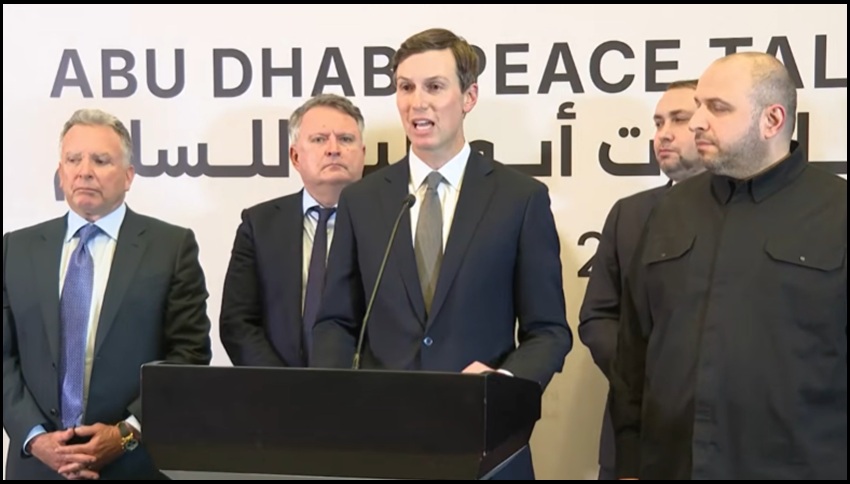
All parties spoke optimistically about a major prisoner exchange becoming more likely, yet territorial disputes remain the toughest obstacle to ending the war. Ukrainian officials welcome progress on security guarantees, where they are requesting the U.S. military backstop the EU alliance therein. This part is touchy.
Ukraine negotiators seek broader European participation in these talks; an issue that Russia has be averse to. From Russia’s former perspective Ukraine is not an EU member state, nor is it a NATO member state, so Russia does not easily accept the EU and/or NATO being involved as they seem to complicate matters.
In a humorous exchange, Kusher was asked if it would be better for Europe to select a single person to represent their interests in the negotiations, as opposed to multiple figures from NATO, the EU, Germany, France, the U.K all sitting outside and awaiting participation. Kushner said, “if Europe could identify one person to speak on their behalf that would be a bigger achievement than getting the Russians to include them in the negotiation.” [09:20] 😬😂
The entire presser is below, and it’s worth watching. However, there are a few dynamics worth discussing that are not directly mentioned and generally missing from western media review.
Against the background of the Oleshky ceasefire, Fox News’ Trey Yingst sat down with Ukraine President Volodymyr Zelenskyy to discuss the current situation in the ongoing NATO proxy conflict with the Russian Federation.
Zelenskyy’s recent attacks into Russia, or at least to the extent we can call them ‘Zelenskyy’s attacks’ when we really don’t know what interests are directing the targeting, have been hitting very specific Russian energy infrastructure. Ukraine targeted Novokuybyshevsk oil refinery, and another big refinery in the Samara oblast owned by the Russian state energy giant Rosneft.
Then came another major drone strike. According to ASTRA on November 1, a drone attack targeted the LUKOIL refinery, also known as NORSI, in the city of Kstovo. The facility is among Russia’s five largest oil refineries and has an annual processing capacity of approximately 15–17 million metric tons of crude oil. The NORSI refinery produces gasoline, diesel, aviation fuel, fuel oil, bitumen, and other petroleum products. It is Lukoil’s largest facility.
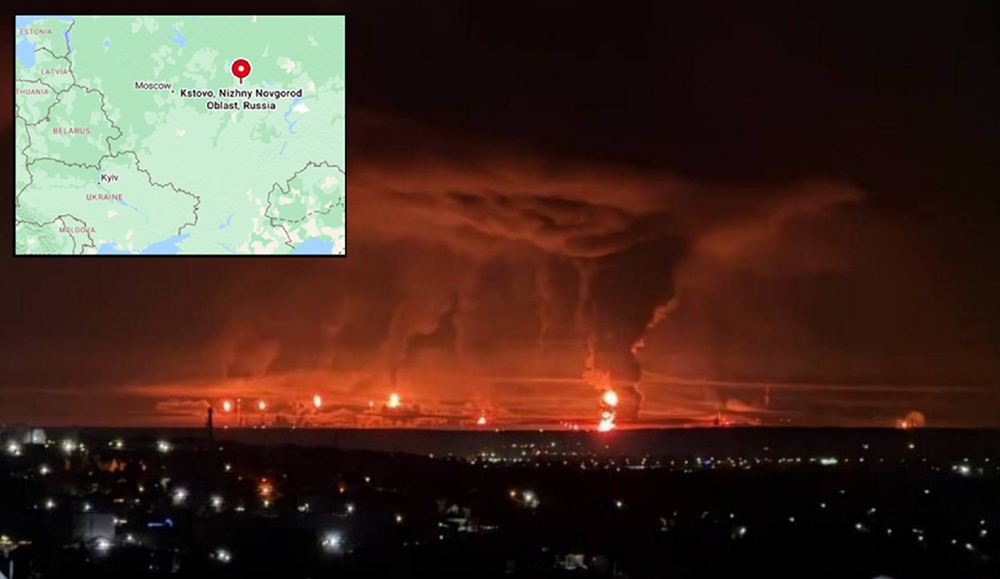
You can see from the insert (image above) the drone attacks into the city of Kstovo travelled a considerable distance to reach their LUKOIL target. It should also be noted that since the time of the Trump administration’s requests to stop targeting Russian oil refining capacity, Ukraine has actually expanded those attacks specifically targeting refining capacity.
The attacks against Russian oil refining in the Samara region happened at the same time western media attention was following the ceasefire in Oleshky, southern Ukraine. The full geopolitical context here needs to be considered.
Ukraine officials told the Kyiv Independent newspaper they never agreed to a request from President Trump, Emissary Steve Witkoff and Jared Kushner to pause refinery strikes for 30 days. The raids on Russia restarted during the ceasefire in Oleshky apparently as Zelenskyy sought to take advantage of the media distraction. As a consequence, Kremlin officials said, Kyiv was “simply ignoring” US wishes.
The strikes deep into Russia also restarted immediately following statements last week by Zelenskyy about the full restoration of their ability to use Starlink satellite guidance systems. The timing cannot be simply coincidental.
Remember when former Canadian Prime Minister Justin Trudeau told President Trump the Canadian government could not continue its economic policy if the United States demanded they become self-sufficient.
One of the key reasons cited by Trudeau was the Canadian dependence on the USA for defense. Canada simply could not spend the amount of money needed to create their own military at a level required for independent defense and simultaneously follow their govt spending plan. Canada relied on the U.S. military as their defense strategy.
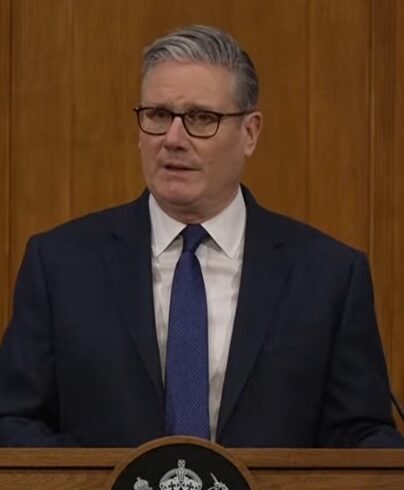 Yesterday, former British Prime Minister Keir Starmer said the same thing; only this time Starmer was saying the United States is no longer willing to “bankroll” Europe’s defense and both the U.K and European Union were going to need to find money to build their own military.
(VIA BBC) – Sir Keir Starmer has said Europe should build a common security framework, warning the change in its defence relationship with the US is permanent rather than “an aberration of the Trump presidency”.
The former prime minister was speaking at a British Irish Chamber of Commerce (BICC) dinner in Dublin on Friday evening.
Sir Keir said a “common security framework” for Europe was needed as much as a common market, with the UK at its centre.
He warned that “things will not go back to the way they were,” adding that the US had made clear it will no longer “bankroll” its European allies. (read more)
This public statement and admission by Keir Starmer follow remarks by current Canadian Prime Minister Mark Carney to Politico on the heels of the Canadian-EU summit, also yesterday.
“If you’re connected to a satellite system that a billionaire, almost trillionaire, decides to turn off at one moment or not, that’s not a good idea,” Carney said. (source)
Think about this for a few moments. Canada, the U.K and Europe are all facing the same problem…. MONEY! Where are they going to come up with the funds to pay for a military investment they have declined to make for the past 50+ years?
 For example, the Canadian trade relationship with the single state of Texas, USA, is larger than the total Canadian trade relationship with the European Union, yet Carney is spending an inordinate amount of time chasing a trade deal with the EU that is never going to amount to anything. Seriously, it’s a literal dead-end.
First, there’s not a scintilla of alignment between the USMCA (Canada says CUSMA) and the European Union. There’s two entirely different sets of economic baselines, standards, rules and regulations between trading with the United States and trading with the EU. If Canada wants a trade relationship with the USA, they have to give up trying to structure their economy to align with the EU; both systems are entirely different.
Canada cannot have a comprehensive Free Trade Agreement with the EU that contains structural regulations on the flow of goods that substantively restricts Canadian products from entering the USA. The same issue exists with China.
Now, if Canada wants to separate from the North American trade agreement, then by all means – go for the deal with the EU and/or China. However, as long as Canada wants to retain their USA dependencies and benefits, there’s no mechanism that permits an FTA of substance with Europe or China. Mark Carney cannot have it both ways.
Secondly, do you remember when CTH noted the second quarter GDP for Canada appeared to be entirely manipulated by the movement of Dutch Central Bank gold from Ottawa to London. People laughed at me for noticing the timing and the mysterious (completely unexplained) gain in economic output in the second quarter. Q4 2025 was flat, Q1 2026 was negative, then mysteriously Q2 had a bounce – and, well, now Q3 is showing a return to flatline or negative.
OTTAWA—Canada’s economy cooled in the latest quarter after activity unexpectedly stalled two months running and early data points to a slight contraction in September.
Gross domestic product was essentially unchanged in August from the month before at 2.372 trillion Canadian dollars, the equivalent of US$1.695 trillion, Statistics Canada said on Friday. That was softer than the 0.2% expansion expected by economists following a similarly flat result in July.
The national data agency’s advance data indicates output edged down 0.1% in September.