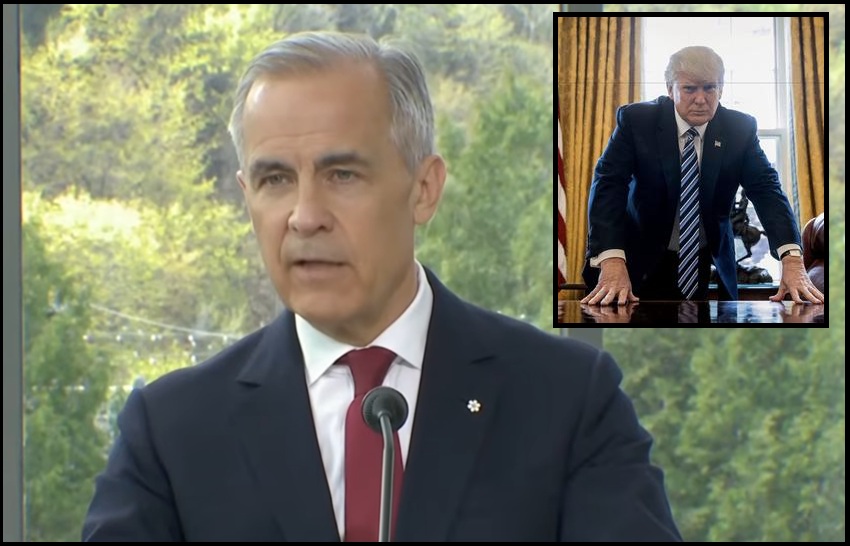
On one hand you have Canadian Prime Minister seeking to attain “associate member” status in the European Union {SOURCE}. On the other hand, you have U.S. President Trump speaking about a “united Ireland.” {SOURCE} At first blush the stories seem disconnected, until you think about them.
Canada is a commonwealth country of the United Kingdom (UK) and seeking to achieve ‘associate membership’ status within the European Union is Carney’s way to counter the geopolitical reset currently underway by President Trump. A reset that diminishes the influence of Great Britian’s, ie. London’s. historic economic influences. One way to hit back against the scheme would be to leverage populist sentiment to take down London and Ottawa simultaneously. That approach would support the breakup of the U.K commonwealth governing structure. There’s the connection.
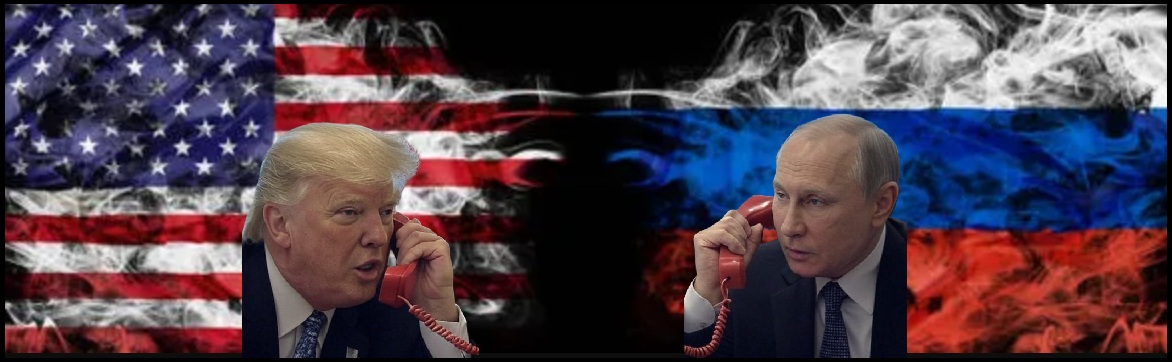
As we review the media reports, keep the U.S-Russia “strategic relationship” approach in mind.
CANADA – Canadian officials are negotiating with the European Union for closer ties with the economic bloc in response to the breakdown of trade negotiations with the United States earlier this summer, the Wall Street Journal reported on Saturday—including potentially becoming an “associate member” of the union.
Although the EU is historically not known for allowing flexible membership arrangements with individual countries, European officials are reportedly open to Canada joining as an “associate member,” anonymous officials from both Canada and the EU told the Journal.
This could mark the largest reorientation of the Canadian economy in decades—the U.S. has long been Canada’s largest trading partner, with about going across the southern border in 2025.
President Trump executes a clear foreign policy, a unique doctrine of sorts, where national security is achieved by leveraging U.S. economic power. It has been a fundamental shift in approaching both allies and adversaries; summarized within the oft repeated phrase: “economic security is national security.”
The Trump Doctrine of using economics to achieve national security objectives is a paradigm shift in American politics. Modern U.S. history provides no easy reference strategy, because until now no American president has ever leveraged this approach.
U.S. B-2 bombers struck Iran on June 22, 2025, as part of Operation Midnight Hammer, targeting key nuclear facilities.
Immediately following the August 2025, Alaska summit between Russian President Vladimir Putin and President Trump, Russia restarted Arctic-2 LNG terminals and began increasing natural gas (LNG) production for storage on ‘floating platforms.’
It absolutely did not make sense that Russia would start producing even more LNG considering the previously imposed western sanctions against them, and the fact that Russia was already overproducing LNG. As noted by analysts at the time. Russia had no market for this LNG, yet Russia began increasing LNG supply anyway. For six months Vladimir Putin extracted and stored LNG.
Two months later, on October 25, 2025, President Trump did something odd. President Trump had attended the ASEAN summit in Asia before; however, this time instead of flying West over the Pacific, he flew east to Malaysia. This put a refueling stop in Qatar, which everyone just ignored as a routine part of the travel plan.
However, upon arrival in Qatar, the Amir of Qatar came to the airport to pay a courtesy visit to President Trump. They spoke aboard Airforce One during the refueling stop.
Here’s the fact bomb that silences Canadians almost immediately when delivered.
In December 2024 then Prime Minister Justin Trudeau, told President-elect Donald Trump that Canada could not comply with a renewed trade agreement based on reciprocity because: (1) Canada had deindustrialized; their manufacturing was now “light” manufacturing and assembling of component goods made by others. (2) Canada had legislated energy policy based on climate change, and high carbon emitting industrial production was no longer an option [coking coal burning etc.]. (3) The NATO military spending goal was too high for Canada to reach [they were 19th and it wasn’t a priority because the USA was the crutch]. (4) Internal provincial rules, restrictions and cross-border trade regulations did not align with a Canadian federal trade policy effort, and (5) the political power of the ‘dairy cartel’ inside Canada tied the hands of Canadian trade representatives.
That was the gist of it. That’s why Canada cannot now or ever find a path to a U.S. reciprocal or balanced trade agreement. #1 and #2 is specifically why Canadian govt officials repeatedly use the word “intertwined.” They say intertwined because they can no longer function separately. Canada is economically dependent on proximal and economic subsidies from the United States.
That outline by Trudeau led Trump to say that Canada should then become a 51st state….. And, well, you know the rest. Someone in Canada should ask Trudeau about it. The former Prime Minister has no reason to deny it, and too many people were witness. Then, perhaps, Canadians will understand.
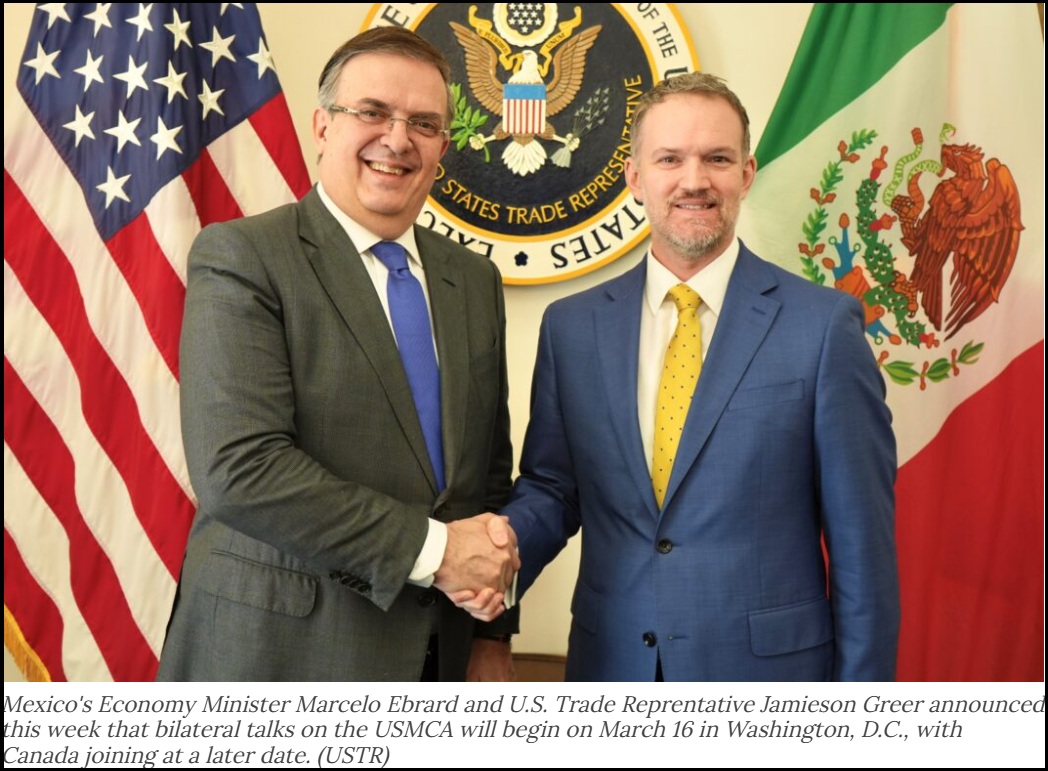
The missing aspect in all USMCA/CUSMA trade discussions is the simple fact that President Trump and U.S. Trade Ambassador Jamieson Greer would prefer bilateral trade agreements. The reason is simple and is highlighted in all the problems with the three-party USMCA.
Two countries can negotiate based on their individual interests; multiple country assemblies get complicated. Canadian Prime Minister Mark Carney and his “middle power” strategy of multiple interests assembling to create larger influence simply doesn’t work in trade discussion. That’s the bottom line.
Reuters is reporting the obvious. Mexico and the United States are racing to reach a bilateral trade deal before the U.S. midterm elections in less than eight weeks, according to six sources in both countries familiar with the talks, an effort made more urgent by the collapse of Canadian negotiations with Washington. Both USTR Jamieson Greer and President Trump have previously said the deal with Mexico would likely come first.
Mexico has played this very well. Mexican President Claudia Sheinbaum has not participated in any antagonisms toward the U.S. position; they are simply negotiating for their best outcome. The Mexican government officials don’t try to hide their U.S. dependency under the misguided premise of patriotism. They understand the nature of the relationship.
If President Sheinbaum wants to keep a strong economy, she needs the USA. Both leaders want a trade agreement; it’s business beyond politics. Canada on the other hand is playing pure politics and trying to carve out a deal for themselves the rest of the world doesn’t have. Canada wants to be excluded from the baseline tariffs applied to everyone, that’s not going to happen.
Secretary of State Marco Rubio continues to impress; however, his response to the Wall Street Journalist narrative engineer is absolutely brilliant.
Following visits to Colombia and Ecuador, Secretary Rubio is in Peru today to discuss the “Shield of The Americas”; a joint collaboration and intensely strategic partnership between the United States and Latin American countries to eliminate corruption, arrest narcotraffickers and remove all corrupt elements.
During a news conference with Peruvian President Keiko Fujimori, Secretary Rubio addressed the Peruvian people in both English and Spanish as he explained the specifics of the Shield and what the partnership entails. During the Q&A session of the press conference, a Wall Street Journal narrative engineer asked a question about sovereignty and the U.S. acting unilaterally if Peru didn’t agree to address the threat.
Essentially, Rubio responded by telling the journalist to stop working for the ‘Bureau of Imaginary Problems’. I have prompted the video at the point of the question and then provided the transcript from that moment to the end. The overall English audio-dub is not bad, so the entire presser is well worth watching:
[Transcript] – QUESTION: Vera Bergengruen with The Wall Street Journal. Mr. Secretary, you have stressed that the members of the Shield of the Americas are sovereign partners. But if one of these governments refuses to act against one of these groups that Washington deems a terrorist threat, does the U.S. reserve the right to act unilaterally, including here in Peru?
And President Fujimori: (Via interpreter) The question wanted more information about the partner of the Shield of the Americas. This will include to collaborate with the United States here in the country.
SECRETARY RUBIO: I’ll answer that question in English and Spanish. I don’t know if you guys heard it. Basically, the gist of the question is, if you’re a member of the Shield and refuse to act, does the United States – will the United States act unilaterally?
Well, if we were going to act unilaterally, why would we need the Shield? We’re not – if we were interested in acting unilaterally, we have the capacity to act unilaterally. The reason why we’re not doing it is because we want to do it with our partners. It’s the most effective way to do it. For us to confront transnational criminal groups, we need to do it inside the sovereign territory of countries, and we want to partner with those countries. It’s in their interest to do it. That is why we have the Shield. That is why the Shield exists.
People make up these problems that don’t exist. They’re getting ahead of themselves with these – these ridiculous sort of things that no one’s even contemplating. The bottom line is the reason why we have a Shield is because we choose to act in partnership with our partners. So it’s very simple. This is not very complicated; let me explain this to you. It’s a very, very simple equation. We have a country that says we want to defeat these criminals, these terrorists, these evil, despicable human beings; we want to defeat them. We want to work with America to defeat them. And so we say, of course we want to work – what should we say to them? No, we don’t want to work with you? No, we’d like you not to do anything about these groups?
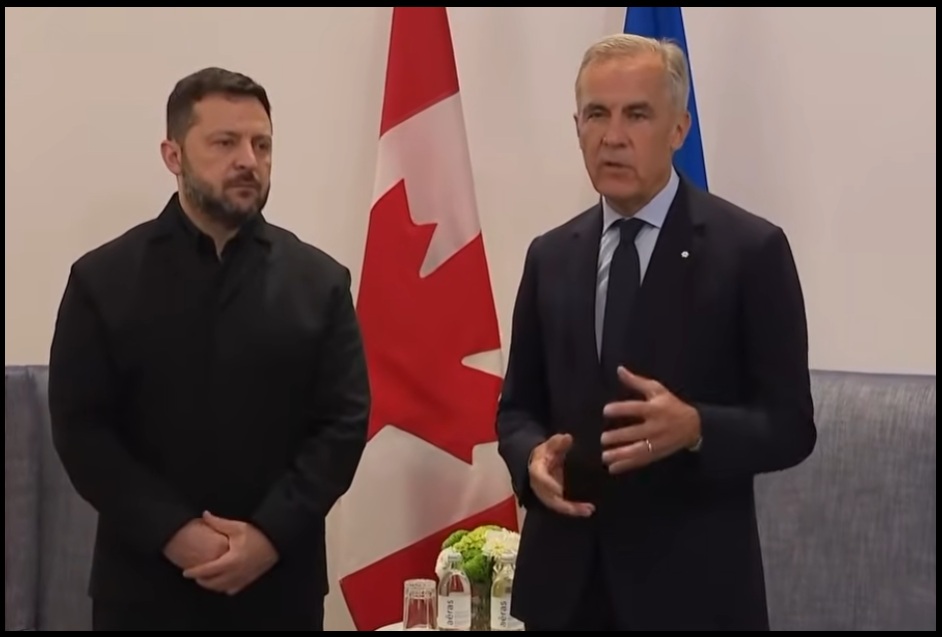
Prime Minister Mark Carney really is a globalist piece of work. As Ukraine Prime Minister Volodymr Zelenskyy arrives in Alberta, Canada, to coordinate with the latest European leader Mark Carney, the remarks said in this brief greeting and introduction video are stunning in a geopolitical context.
It is obvious that Prime Minister Carney is trying to position himself as a decisionmaker in the outcome of the Russia-Ukraine conflict by pushing Zelenskyy even deeper into intransigent positions that will only lead to greater conflict.
Carney positions Canada squarely on the side of Ukraine and in violent opposition to Russia. Not coincidentally, this is the exact opposite ¹position of the United States, and that is a feature not a flaw.
Carney really does view himself as European first and foremost. He even remarks that Canada in general, and he as the Prime Minister specifically, will ensure that Ukraine advances to become a European member state. How, exactly, does he as a North American leader expect to make this happen?
Worse still, Prime Minister Carney injects himself into the Ukraine-Russia negotiations by stating his intention to ensure that Ukraine becomes a member of NATO. Ukraine not becoming a NATO member state is a hardline for Russia, and that aspect is deeply enmeshed in the ongoing negotiations between the U.S. led discussions with Russia and Ukraine.
Carney is putting his nation and himself into direct conflict with President Trump and the goals/objectives of peace.
No one outside of Canada gives a tinkers’ damn about Canada giving more money to Ukraine; however, when Carney directly aligns his military with Ukraine and pledges to support Zelenskyy with military hardware, NORAD defense missiles, things change. Do the Canadian people really want to get pulled into this quagmire as an outcome of Mark Carney’s grand aspirations to become a protectorate of the European Union?
Carney is playing a very dangerous game, and I hope the Canadian people can see just how far over his skis he is putting them.
Watch these remarks carefully and contemplate just how much Carney is positioning Canada to be a direct enemy of the United States. This will not end well. SEE BELOW:
Chrystia Freeland is an exceptional representative of the mindset showcased by 80% of Canadians. During her tenure as Deputy Minister to Justin Trudeau, Freeland organized “emergency powers” to target government opposition which included the seizure of bank accounts and government control over the income of Canadian citizens they disliked. The events described are not in question.
Current Prime Minister Mark Carney then placed Freeland as the advisor to Ukraine President Zelenskyy on the Ukraine reconstruction banking and finance agenda. A charter member of the globalist control mechanisms within the World Economic Forum, Chrystia Freeland is currently working for Ukraine and the EU-NATO allies in the banking and finance capacity; inside the mechanics of the system that controls the financial fraud within Ukraine.
As Mark Carney is desperately trying to organize a globalist response to President Trump’s program of economic nationalism and sovereignty, Freeland travels back to the U.S. to appear on leftist media outlets and proclaim that Trump’s economic perspective is evidence of “authoritarianism.” The current Canadian approach is to try and influence domestic politics inside the United States, on behalf of the global interests opposed to Trump.
It should be noted that the activity underway by Canadian officials inside the USA is against the law in Canada. The Canadian govt do not permit foreign influence to undermine them and have strict controls over their media. WATCH (prompted):
.
Don’t lose sight of the forest while looking at the trees. Ultimately this fear by the Canadians and others is about economics, it’s about money, it’s the “there are trillions at stake” aspect to globalism. There are ideological components, yes; however, the ideology is evident because it is a tool. At the root of their apoplexy all of this is about control of money.
Leftists, progressives, communists et al, use money as a tool and weapon in the dynamic of their power and control. Hence, the banking example previously in Canada. Take away the leftist’s ability to weaponize affluence, and their influence diminishes. Take away their money and they lose power. That’s the heart of the matter, and why President Trump’s economic approach toward geopolitics is so fundamentally against their interests.
President Trump and U.S. Trade Representative Jamieson Greer waited to see if Canada was going to follow through with their retaliatory tariffs against U.S. imports.
The Canadian government carried out their tariffs, so today the White House introduced 50% ‘stacking tariffs’, on top of pre-existing tariff rates, and additional import bans against several Canadian products.
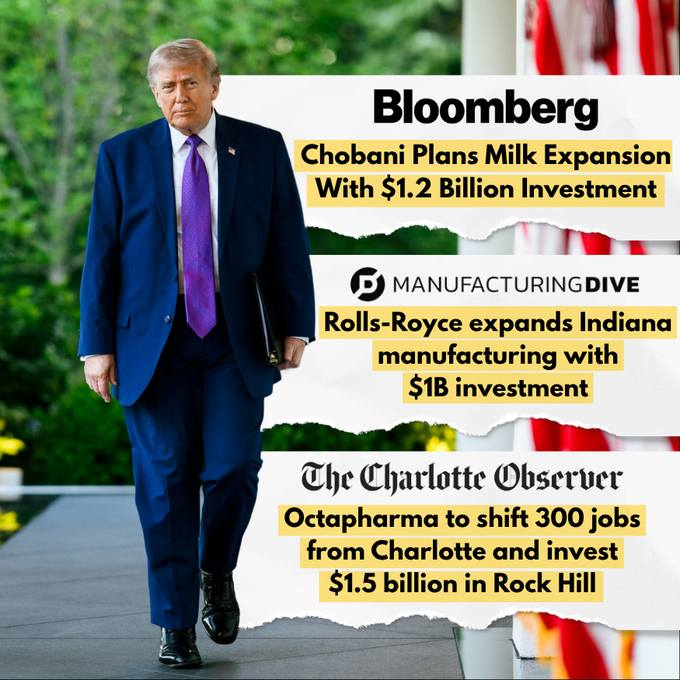
It should be quickly noted that several North American corporations are already making moves to avoid the issues by shifting production lines and adding additional investment into U.S. manufacturing. As expected, getting locked out of a 32 trillion economy is not an option for survivability.
The easiest way to review the issues is not to read media reports, but rather to read the actual outcomes as announced by the White House and USTR. CTH has noticed several Canadian outlets are already making false claims.
It is worth reviewing both sets of outlines as well as accompanying links to determine the exact types of Canadian products being targeted by stacking tariffs and import bans.
WHITE HOUSE – Today, to address Canada’s increased discrimination against U.S. commerce, President Trump signed five Proclamations pursuant to Section 338 of the Tariff Act of 1930 to ban certain products from Canada and modify the scope of the tariffs on certain Canadian products previously announced on July 20, 2026. President Trump is taking decisive and appropriate action to respond to Canada’s additional retaliation and continued discriminatory treatment of crucial American exports.
As noted by President Trump, U.S. businesses and contractors are blocked from bidding on most Canadian federal and provincial contracts for goods and services. However, the U.S. does not restrict Canadian companies from bidding on U.S. state and federal contracts.
Effective today, that one-way benefit ends.
Keep in mind, as this Truth Social post was made, USTR Jamieson Greer is in a meeting with Canadian USMCA negotiator, Dominick LeBlanc.
(Via Truth Social) – “Everyone knows that Canada doesn’t let our Great Dairy Farmers sell into the Canadian Market, and that the only reason Canada makes Autos is because of previous disastrous Trade Agreements while other Presidents were in Office. Canada has been ripping us off for years, but what many do not realize is that the Canadian Government, including Canadian Provinces, have banned American Small Businesses and Companies from selling into their Government Procurement Markets.
This is the case even though Canada gets broad access into the massive American Government Procurement Market, including those of our States. That is not reciprocity, it is a Canadian Trade Scam. From now on, NO RECIPROCITY – NO ACCESS! I am hereby directing the GSA, working with the USTR, to take all necessary steps to REMOVE Canadian-origin products from GSA’s Multiple Award Schedules unless Canada restores full and fair reciprocity for American Farmers and Companies. Those schedules account for more than 50 BILLION DOLLARS a year. This should have been cut off years ago, by other Administrations, like it was by mine, only to reinstituted by Sleepy Joe Biden. Thank you for your attention to this matter!”
This is also a good opportunity to point out that several media reports on a Deloitte analysis of the Canadian economy, centered around what would happen if the USMCA was terminated, are fundamentally false. The Deloitte analysis has a baseline assumption that is structurally flawed.
You can read the Deloitte Report HERE. In the forward you will notice they ‘assume’ all trade between the U.S. and Canada continues, they assume Canada will retain “most favored nation” status, and they assume without the USMCA Canada will face a global 10% baseline tariff. Each of these assumptions is structurally false.
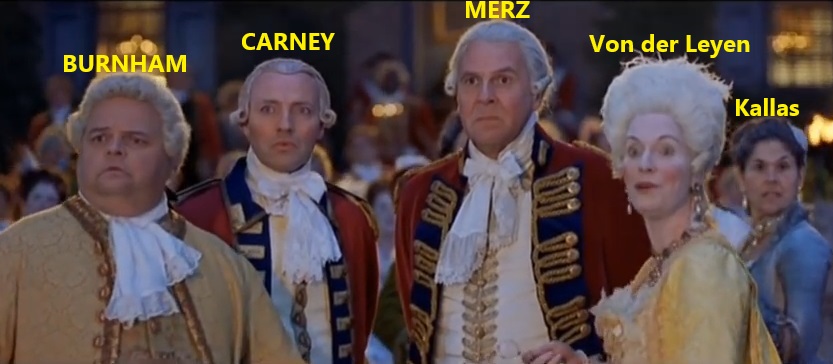
Bloomberg is reporting that EU Commissioner Ursula von der Leyen and Prime Minister Mark Carney are scheduled to formalize a strategic partnership with details to be delivered during remarks on September 16th.
In the big picture this does not come as a surprise as Prime Minister Mark Carney has called Canada the most European of non-European states. The ideology of the EU bureaucracy in Brussels and the Carney government in Ottawa is in full alignment. Canada yearns to be European in part to help defend the British Commonwealth from the global reset underway by U.S. President Donald Trump.
President Trump is assembling a sovereign global structure where the tentacles of the British commonwealth system are removed. A sovereign USA, China, India, Russia and Saudi Arabia acting independently, albeit with each nation organizing their interests by forming bilateral trade and economic attachments with each other nation.
In essence President Trump is emphasizing ‘Nationalism’ over ‘Globalism’, where the influences of the old, mostly British or colonial systems are removed. In order to combat this strategic reset the U.K commonwealth countries Australia, New Zealand, the British Caribbean states and Canada are organizing themselves into a cluster with the European nations as “middle powers.”
According to the expressed defensive plan outlined by Prime Minister Mark Carney, the totality of the “middle powers” assembly would then be large enough to block the influences of the USA, China, Russia, India or Saudi Arabia.
This new alignment will be interesting against the geopolitical backdrop of the economically aligned G7 or G20 construct. However, there is a big upside. Given the nature of the expressed intent for collective defense and security, there is an immediate opportunity created by the assembly for the United States to exit NATO.
 Canada is a commonwealth country of the United Kingdom (UK) and seeking to achieve ‘associate membership’ status within the European Union is Carney’s way to counter the geopolitical reset currently underway by President Trump. A reset that diminishes the influence of Great Britian’s, ie. London’s. historic economic influences. One way to hit back against the scheme would be to leverage populist sentiment to take down London and Ottawa simultaneously. That approach would support the breakup of the U.K commonwealth governing structure. There’s the connection.