Quantcast

Canada and Europe to Formalize Strategic Partnership on Sept 16th, with Canada Becoming a de facto European Protectorate

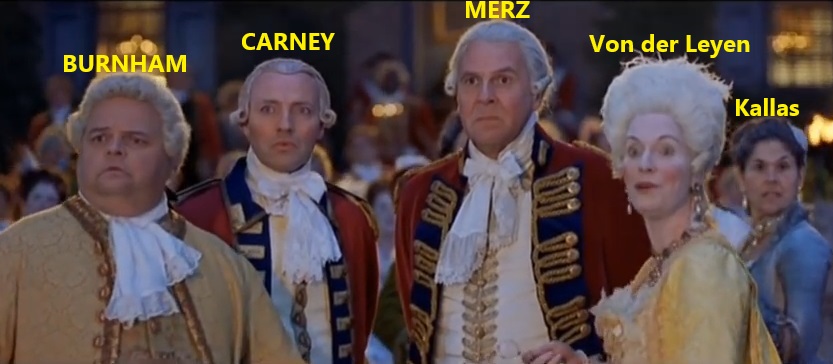
Bloomberg is reporting that EU Commissioner Ursula von der Leyen and Prime Minister Mark Carney are scheduled to formalize a strategic partnership with details to be delivered during remarks on September 16th.

In the big picture this does not come as a surprise as Prime Minister Mark Carney has called Canada the most European of non-European states. The ideology of the EU bureaucracy in Brussels and the Carney government in Ottawa is in full alignment. Canada yearns to be European in part to help defend the British Commonwealth from the global reset underway by U.S. President Donald Trump.

President Trump is assembling a sovereign global structure where the tentacles of the British commonwealth system are removed. A sovereign USA, China, India, Russia and Saudi Arabia acting independently, albeit with each nation organizing their interests by forming bilateral trade and economic attachments with each other nation.

In essence President Trump is emphasizing ‘Nationalism’ over ‘Globalism’, where the influences of the old, mostly British or colonial systems are removed. In order to combat this strategic reset the U.K commonwealth countries Australia, New Zealand, the British Caribbean states and Canada are organizing themselves into a cluster with the European nations as “middle powers.”

According to the expressed defensive plan outlined by Prime Minister Mark Carney, the totality of the “middle powers” assembly would then be large enough to block the influences of the USA, China, Russia, India or Saudi Arabia.

This new alignment will be interesting against the geopolitical backdrop of the economically aligned G7 or G20 construct. However, there is a big upside. Given the nature of the expressed intent for collective defense and security, there is an immediate opportunity created by the assembly for the United States to exit NATO.

(more…)

Zelenskyy Blames Russia for Drone Attack on Office of Ukraine Security Service, SBU

It is an unfortunate reality that leaders of Ukraine military, intelligence and security services are more concerned with money, affluence, exotic cars and beachfront villas in Europe than functionally carrying out the duty. Alas, that is the nature of Ukraine and President Volodymyr Zelenskyy has very little control over it.

A few days ago, a shootout in the capital between rival powers of the Ukraine Intelligence Service (SBU) and Ukraine Military Intelligence (HUR) broke out bringing increased embarrassment to an already tenuous situation {citation}.  Therefore, it does not come as a surprise today when an explosive drone that hit the headquarters of SBU security chief Oleksandr Poklad is argued amid Ukraine rank and file to have originated from within.

However, Ukraine President Zelenskyy is quick to point fingers at Russia for the drone that flew in the window of SBU Chief Poklad. I mean, what else could Zelenskyy say and still retain some semblance of face-saving toward the NATO alliance he is dependent on.

Up to this point, Russia has never targeted a specific Ukraine leader for assassination; Zelenskyy’s constant visibility is seemingly confirmation of this lack of interest.  But Zelenskyy is certain that Russia tried to kill Oleksandr Poklad. Go figure.

UKRAINE – A Russian drone has hit the headquarters of the Security Service of Ukraine (SBU) during a strike in the heart of Kyiv, Ukrainian President Volodymyr Zelensky has said.

The unmanned aerial vehicle crashed into the SBU headquarters on Friday afternoon, targeting a room used by security chief Oleksandr Poklad.  It is not clear whether Poklad was in the building, but Zelensky said he had since spoken to him to order an “appropriate, tangible response”.

“The drone was aimed directly at the office of the Head of the Security Service in that building,” Zelensky confirmed. It suggests Russia’s new drones are growing in accuracy and signals Moscow could step up strikes before possible US mediation talks this weekend.

(more…)

Toyota Positions – Shifts Truck Plant from Mexico to Texas

Both Toyota and Honda had previously warned the Canadian government that without the USMCA they would shift production from Canada to the U.S. to avoid tariffs and secure long-term manufacturing stability.  We presume a similar message was conveyed to Mexico.

Earlier today Toyota announced they were moving half of their Tacoma Truck production from Mexico to an expanded facility in Texas that will now encompass 5 million square feet in San Antonio.

(Bloomberg) — Toyota Motor Corp. is moving production of its popular Tacoma midsize truck from a plant in Mexico to San Antonio as part of a $3.6 billion investment in the Texas facility.

The Japanese carmaker will build a second production line in San Antonio, where it currently makes full-size pickups and SUVs, and add some 2,000 new jobs by 2030, it said Monday.

The shift, following Toyota’s pledge last year to spend $10 billion on its US manufacturing operations over the next decade, comes as talks between the US and Mexico to renew a North American free trade agreement have stalled. President Donald Trump, who has pressed Toyota to invest more in the US, let a July 1 deadline pass without a trade pact extension.

(more…)

Honda Cancels EV Plant in Canada – Despite Prior Deal for Billions in Subsidies

Previously, Toyota Inc informed the Canadian trade delegation that if the USMCA (CUSMA) was dissolved, the most important auto manufacturing operation they have in the country would end.  Toyota was being respectful and brutally honest with the Canadians.

Last year, at almost the same time as Toyota made their position clear, Honda put a pause on the plan to build EVs in Ontario [2025 Notice] pending additional review.  Today, according to Nikkei, Honda has now completed that review and cancelled the plan.  Honda will not build EVs in Canada.

Asahi Kasei, the Japanese material supplier that makes battery separators, a core component used in lithium-ion batteries, will likely make a similar announcement soon.  The decision is in response to declining EV sales in combination with current U.S-Canada trade friction.  Without guaranteed access to the U.S. market, it makes no sense to invest in Canada.

Electrek – “Honda is shelving its massive C$15 billion ($11 billion) EV and battery manufacturing hub in Ontario, Canada, according to a new report from Nikkei. The move escalates what was initially framed as a temporary pause into what increasingly looks like an indefinite retreat.

[…] When Honda announced the Alliston, Ontario project in April 2024, it was billed as the company’s most ambitious EV commitment yet. The plan called for a new EV assembly plant capable of producing 240,000 vehicles per year, a 36 GWh battery factory, and cathode material processing facilities through joint ventures with POSCO Future M and Asahi Kasei. Production was targeted for 2028.

(more…)

President Trump Hosts a Dinner Honoring Japanese Prime Minister Sanae Takaichi

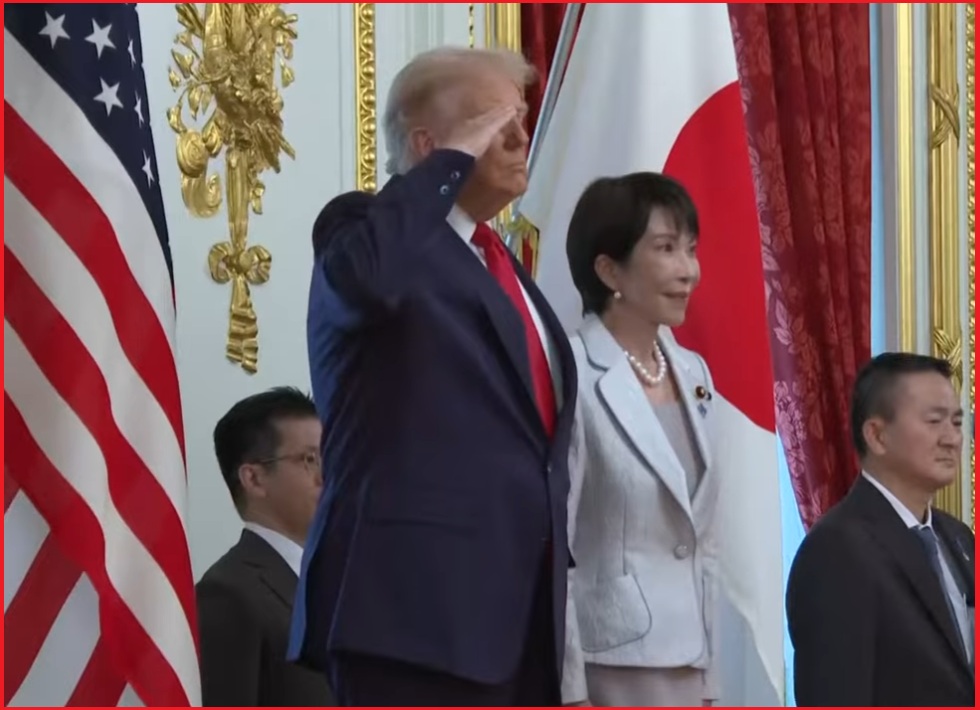
President Trump hosts a dinner at the White House honoring Japanese Prime Minister Sanae Takaichi and the close relationship between the USA and Japan.

At the beginning of the dinner, President Trump and Prime Minister Sanae Takaichi delivered remarks. WATCH:

.

(more…)

President Trump Holds a Bilateral Meeting with Japanese Prime Minister Sanae Takaichi

Today, President Donald Trump holds a bilateral meeting with Japanese Prime Minister Sanae Takaichi at the White House.  The anticipated start time is 12:00pm ET with Livestream Links Below:

UPDATE: VIDEO ADDED

.

(more…)

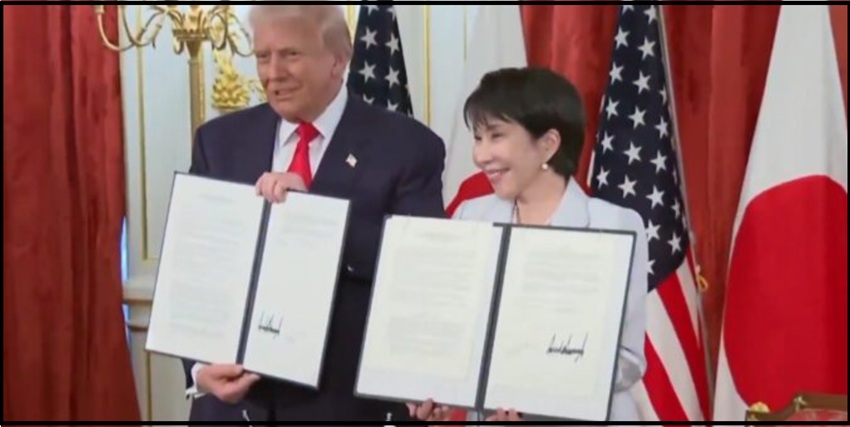
Japan Signs Major $56 Billion Energy Deal with U.S, Strategically Boosting Energy Relationship

CTH has said to watch the U.S.-Japan trade relationship closely because the outlines of multiple geopolitical shifts can be referenced from a new strategic relationship surrounding multiple sectors, including energy.

The U.S, relationship with Japan is both leverage and a hedge against old alliances that may seek to disrupt the global reset currently underway through President Trump policy.  The issues with the European Union, U.K, USMCA and other tenuous allies, look entirely different when President Trump has alternative partnerships for massive energy exports.

ENERGY NEWS – In a major move to secure stable energy supplies amid escalating geopolitical tensions, Japan has inked deals worth up to $56 billion with the United States for oil, natural gas, and liquefied natural gas (LNG) purchases and investments.

This agreement, finalized at the Asia-Pacific Energy Security Forum in Tokyo on March 14, 2026, underscores Japan’s push to diversify its energy imports and deepen economic ties with the US under Prime Minister Sanae Takaichi’s administration.

The deals come as part of a broader framework stemming from the 2025 US-Japan trade agreement, where Japan pledged $550 billion in US investments over several years, with energy as a key pillar.

(more…)

Japanese Prime Minister Sanae Takaichi Emphasizes Constitutional Inability to Conduct Overseas Military Operations

Responding to questions about whether Japan would send military ships to the middle east to participate in escorts through the Strait of Hormuz, Japanese Prime Minister Sanae Takaichi noted the current constitution blocks Japan from conducting overseas military operations.

Exactly as we outlined when President Trump first made the request via Truth Social {SEE HERE} Prime Minister Sanae Takaichi may want to support the request, but Japan’s post WWII constitution about military operations doesn’t permit it.

Japan’s military can be constitutionally defensive only.

While an argument might be made that escorting oil destined for eventual arrival in Japan may technically squeeze within a narrow interpretation of ‘defense’, considering the operation would take place far from Japan a highly conservative Sanae Takaichi is not going to try and thread that precarious needle.

TOKYO, March 16 (Reuters) – Japan has no plan to dispatch naval vessels to escort vessels in the Middle East, Prime Minister Sanae Takaichi said on Monday, after U.S. President Donald Trump called on allies to protect tankers traversing through the Strait of Hormuz.

“We have not made any decisions whatsoever about dispatching escort ships. We are continuing to examine what Japan can do independently and what can be done within the legal framework,” Takaichi told parliament.

(more…)

All Things Considered – A Good Geopolitical Recap

Some additional contexts not included in the British-centric financial review below.

(1) Japanese Prime Minister Takaichi Sanae will be at the White House next week.  This meeting was scheduled several weeks before Operation Epic Fury began.  The timeline continues to indicate that President Trump’s primary geopolitical focus is on China, not necessarily the U.K-EU angle, although that is a materially significant overlay.

(2) “A major U.S. weapons package for Taiwan worth about 14 billion dollars is awaiting approval from Donald Trump and could be announced after his planned visit to China later this month, according to sources familiar with the discussions. The proposed deal would be the largest U.S. arms sale ever to Taiwan and comes as military tensions between China and the self-ruled island continue to rise.” {SOURCE}

.

(more…)

Iran Conflict – Oil Disruption Hits Key BRICS Members Hard

Consider the severe economic body blows to China in the past 14 months.

♦ First blow, the Trump tariffs hit Beijing hardest. ♦ Second blow, the Beijing tentacle on the Panama Canal is severed.  ♦ Third blow, global tariff threats changed the risk dynamic for southeast Asia countries who acted as transnational shippers for China. ♦ Fourth blow, cheap sanctioned oil from Venezuela was cut-off. ♦ Now, the fifth blow; cheap, sanctioned Iranian oil is disrupted.

As noted by Politico: Following USA military strikes, “ships have begun to avoid the Strait of Hormuz off the coast of Iran — a critical shipping lane for Gulf nations to export oil to Asia. China in 2025 received about half of its imported oil from the six Gulf countries that rely on the strait. Other large crude oil producers in the region — including Saudi Arabia, Iraq and the United Arab Emirates — transport almost all their crude exports through the geographic bottleneck.

[SOURCE]

It’s not just a factor of oil flow, but also the price that China will ultimately end up having to pay.  Beijing was buying oil from Venezuela, Iran and Russia at steep discounts because their purchases were skirting western sanctions.

With Iranian oil production now no longer a market option, China will seek to replace their needs with more Russian alternative. However, that diversion means the oil India was purchasing from Russia will come at a higher price, and the refined final product that was exported by India will arrive to the European Union carrying an additional cost.

Simultaneously, Vladimir Putin was asked about Russia’s lack of military support to Iran in response to the U.S. military action, to wit the Russian president noted the technical terms of their joint military agreements did not include Russia’s immediate involvement.  In shorthand, Russia is busy and is not getting involved.

(more…)