Quantcast

The Global Trade and Economic Restructuring That Centers Around Energy Use

Anyone can tell those nations who are at greatest risk from the current oil/gas shortage are those nations who either: (a) do not have the infrastructure or capability to derive their own oil/gas, or (b) those nations who intentionally chased the “net-zero” climate change nonsense and thereby created the same problem as group (a).

The middle east oil/gas disruption is clearly showing which nations intentionally put themselves into the worst possible position.  The U.K and Europe are at the top of that list.  In this 20-minute recap, Mike Steger expands on his former outline about a new global reset and points out how the crisis in Iran is only a symptom of a more structural geopolitical shift that is underway and irreversible.

Steger’s analysis explores how the United States is mobilizing its industrial base, securing global energy flows, and positioning itself for a new century of economic and strategic dominance. From emergency energy directives and nuclear expansion… to the rebuilding of the American grid and supply chains… to the unraveling of Europe’s political order — this is a turning point moment. The question is not whether the world is changing, but rather who will shape what comes next. WATCH (prompted):

TIMESTAMPS:
0:00 A new American century begins
2:30 The global energy crisis explained
5:15 Trump’s industrial strategy
8:20 Ending the climate agenda
10:50 Defense Production Act mobilization
13:50 Rebuilding America’s energy system
16:25 The global order shifts
19:10 Final message

(more…)

With Strait Open, British Prime Minister Kier Starmer Says He’s Organizing EU Security Force in Effort to Remain Relevant

British Prime Minister Kier Starmer, French President Emmanuel Macron, Italian Prime Minister Giorgia Meloni and German Chancellor Friedrich Merz issue a joint statement on their plan to open the Strait of Hormuz, after President Trump secured and opened the Strait of Hormuz.

Essentially, after holding an international teleconference, leaders from the U.K, France, Italy and Germany gather to express their importance on an issue that has been entirely resolved without them.  The result is akin to a Monty Python skit that’s missing the part where a guy comes out and slaps them in the face with a big fish.  WATCH (prompted):

.

(more…)

NATO Head Coming to Washington DC as Germany Passes Law Requiring 17 to 45-year-old Men to Get Govt Permission for Travel

There are approximately 45,000 U.S. troops on NATO bases within Germany.  NATO General Secretary Mark Rutte is scheduled to arrive in Washington DC on Wednesday, following remarks by President Trump and Secretary of State Rubio about possible changes in the U.S. relationship with NATO.

Simultaneous to this, the German government has now enhanced their conscription laws with a requirement for all males aged 17 to 45 to request permission for travel out of Germany if their exit will be longer than 3 months.

As part of a rather unusual Russian invasion deterrence, Germany is trying to hit a new target of between 255,000 and 270,ooo active and trained military troops by 2030.  The new conscription targets seemingly underpin a travel permit system for German men.

GERMANY – Germany has implemented a significant reform to its military conscription law effective in 2026, mandating that nearly all men aged 17 to 45 must obtain approval from the Bundeswehr before leaving the country for more than three months. This change, part of the Wehrdienst-Modernisierungsgesetz, expands the previous restrictions beyond crisis periods, applying continuously regardless of Germany’s security situation.

The reform aims to bolster the Bundeswehr’s personnel from about 184,000 to between 255,000 and 270,000 by 2035 by reintroducing mandatory conscription examinations for young men. However, the implementation details—such as the approval process and possible exceptions—remain unclear, creating uncertainty among affected individuals. The Bundeswehr is actively working to clarify these procedures and reduce bureaucratic hurdles but has not yet specified consequences for those who depart without permission.

(more…)

Secretary of State Marco Rubio, the Question Must be Asked: “Why are we in NATO”?

Secretary of State Marco Rubio appears on Fox News to discuss the various goals and objectives of the U.S. military operation against Iran.  As part of the interview Secretary Rubio was asked about the strategic conflicts and hypocrisies now flowing from NATO member states.

The U.S. supports our NATO posture in Europe in part because it provides us with strategic military bases and operations that are considered vital to our national interests.  However, as outlined in the Iran conflict, when we need to use those strategic bases the NATO member states withdraw previous permissions.  France has blocked us from flying over their airspace, Spain and Italy have said the U.S. cannot use our military bases on their soil for operations. The U.K has refused to protect and/or escort their own energy assets.

The NATO membership is now a one-way street where they demand our military protection, but Europe blocks us from using our own military assets for our independent operations.

Europe, while hiding behind the NATO protection skirt of the U.S, is simultaneously telling the U.S. what we can and cannot do with our own military.  Secretary Rubio and President Trump are now confronting this very visible one-way benefit head on. WATCH (prompted).

.

(more…)

Regional Election in Center of German Auto Manufacturing Reflects Major Gains for AfD Nationalist Party

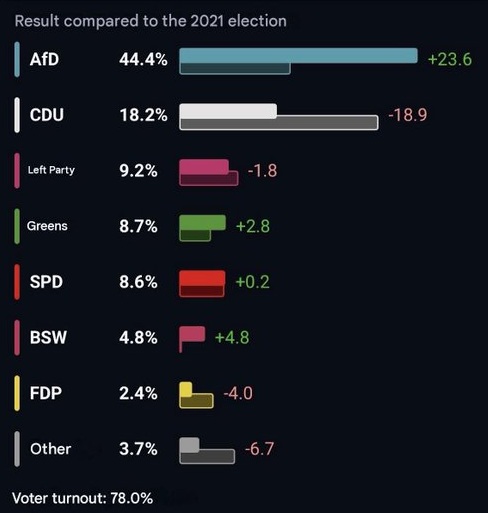
Within Germany the Rhineland-Palatinate regional parliament election was held yesterday. The region is the heart of the German industrial sector and home to the massively important auto-manufacturing sector.

Chancellor Friedrich Merz’s conservative party the Christian Democratic Union (CDU) won the biggest portion of the election, defeating the Social Democratic Party (SPD) who lost ground in the western area bordering France. However, the biggest electoral gains were for the Alternative for Germany (AfD) party, with gains that more than doubled its previous vote share.

There is intense interest throughout Europe on the ideological shift in political sentiment mostly driven by economic concerns as well as rising nationalistic sentiment against the elitist minds in Brussels.  Essentially those being ‘ruled’ are increasingly fed-up by those doing the ‘ruling.’   The AfD party is akin to the pragmatic MAGA base more focused on economic nationalism than all the nonsense associated with multiculturalism, green energy programs and terrible immigration policy.

The ideological battle within Europe is ongoing, with some gains by nationalist parties over the collective mindset of the European elites.  However, the European Commission doesn’t just have a finger on the scales, they have full control over the mechanics of the elections themselves.   Yes, AfD more than doubled their share of votes to 20%, but CDU at 31% and the socialists at 26% is akin to mainstream corporate republicans and progressives respectively controlling 57% of the support base.

(more…)

German Chancellor Friedrich Merz Rejects Request to Send Escorts to Middle East to Support EU Oil Shipments

The EU has balked at the request of President Trump to support military escorts for EU oil shipments through the Strait of Hormuz destined for European Ports.  However, it is the position of German Chancellor Fredrich Merz which really highlights the arrogance of the issue.

Germany has deactivated its nuclear reactors and decided not to purchase Russian oil/gas. As a consequence, the German industrial economy is contracting; the German auto industry is collapsing; German manufacturing plants are closing – and mass layoffs have been announced.

Into this self-created dynamic, Germany has become dependent on (1) Oil and Gas from the middle east, and (2) LNG from the USA. Germany is a completely dependent nation on the issue of energy production. Yet, this is Germanys position:

[SOURCE]

Setting aside for a moment that “the middle east is not a matter for NATO,” while reminding ourselves Ukraine is also not a NATO member state – yet Germany is supporting the pro-war ‘coalition of the willing,’  President Trump previously pointed out that NATO would never come to the aid of the USA when the Greenland Arctic Security debate was going on.

The EU in general, and Germany specifically, is essentially proving President Trump’s point.  However, as a result of intentional migration, Germany has over five million Muslim residents now residing inside the country.  We should consider that this overlay is also part of their internal political consideration.

What Chancellor Merz said next is almost too European to be real, but it is:

(more…)

Volkswagen Loses Half Their Profit, Now Plan to Cut 50,000 Jobs Over Next Four Years

The origin of this issue goes back to 2021 and the relaunch of the Build Back Better European green energy program to fight the non-existent climate change problem.  We have been highlighting the consequences within the EU auto sector.

We noted in October of last year, the EU’s mandated fines against auto manufacturers who do not hit their production goals for electric vehicle sales began in 2025.  EU automakers unable to meet the regulatory compliance goal began purchasing carbon credits to avoid stiff EU fines.  Many of those carbon credits were purchased from Chinese EV automakers, who then turned around and started using the extra EU revenue to discount Chinese cars sold in Europe.

At the same time as Chinese autos hit record highs in Europe, EU car sales are flat or declining.  Now, Volkswagen is announcing they lost half their profits in one year and will be cutting 50,000 jobs in the next four years.

(MSM – Europe) – Volkswagen just revealed its operating profit sank like a stone last year, dropping by more than half as tariffs, Chinese competition, and shifting strategies took a serious bite out of the bottom line. And that performance now has the VW Group’s execs reaching for the cost-cutting scissors, including plans to shed 50,000 jobs by the end of the decade.

The German automaker reported an operating profit of €8.9 billion ($10.3 bn at current rates) for 2025. That’s down a hefty 53 percent from the year before and well below what analysts were expecting. Revenue, meanwhile, barely moved, slipping only slightly to around €322 billion ($374 bn). (read more)

This was very predictable. In essence, EU car companies buy Chinese car company carbon credits, to avoid the EU fines.  The Chinese car companies then use the carbon credit revenue to subsidize lower priced Chinese EVs to the European car market, thereby undercutting the European EV car companies.

(more…)

Importers, Exporters and Producers Trigger Force Majeure Notifications for Gulf LNG Shipments

Force Majeure is a common clause in contracts which essentially frees both parties from liability or obligation when an extraordinary event or circumstance beyond the control of the parties, such as a war, strike, riot, crime, epidemic, or sudden legal change prevents one or both parties from fulfilling their obligations under the contract.

People would be well advised to wait a few days when announcements are made before jumping to immediate conclusions. The announcement by Qatar Energy of a force majeure notification did not originate from Qatar’s inability to produce contractual LNG supplies…..

[SOURCE]

…. two days prior to this announcement, India’s top gas importer Petronet LNG Ltd issued a force majeure notice to Qatar Energy and local buyers because its LNG tanker ships were unable to reach the Ras Laffan load port due to the crisis in the Middle East.  Without ships arriving to take the LNG Qatar Energy cannot keep producing.

Qatar Energy operates 14 liquefied natural gas (LNG) trains with a total annual production capacity of 77 million tonnes {SOURCE}.  If ships don’t reach the terminals, there’s no need for Qatar Energy to keep pumping and liquifying from well heads.  It’s a downstream issue.

Bahrain made the same announcement for their refined aluminum exports {SOURCE}. Indonesian company Chandra Asri made the same announcement for petrochemicals {SOURCE}. Chevron made the same announcement two days ago after Israel shut down the Leviathan natural gas field {SOURCE}.  Thus, we see the ramifications for the entire region around the Iran conflict zone and the downstream destinations (Asia and Europe) for energy products therein.

(more…)

President Trump Announces U.S. Economic Boycott of Spain During Meeting with German Chancellor Friedrich Merz

President Trump holds a bilateral meeting with German Chancellor Friedrich Merz in the Oval Office.  After brief remarks of mutual appreciation, President Trump and Chancellor Merz responded to questions from the assembled press pool.

Chancellor Merz expressed support for the objective of eliminating the regime threat from Iran.  President Trump notes at the beginning how Iran is targeting civilian targets in the region and generating even more support from the Gulf states for the USA.

When asked about the British and Spanish refusal to support U.S. military logistics and deployment, President Trump let the media be aware he is not happy with the position of Spain and the U.K.  President Trump also announced [11:00 of video] an economic embargo of trade with Spain as an outcome of their position.

.

(more…)

President Trump Identifies the Roadblock to a Ceasefire Between Ukraine and Russia

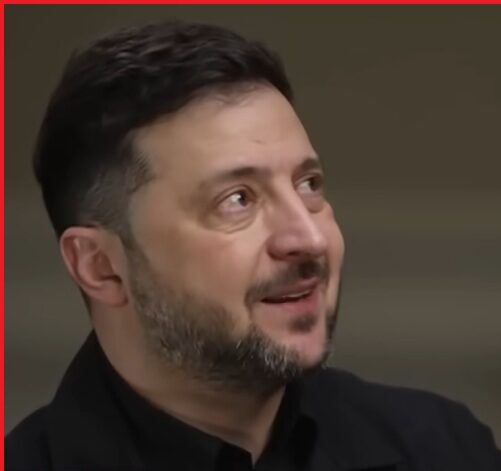
In an interview with Reuters, President Trump was asked why the Russia/Ukraine negotiations appear to have stalled.  President Trump responded with one word, “Zelenskyy.”

WASHINGTON, Jan 14 (Reuters) – U.S. President Donald Trump told Reuters that Ukraine – not Russia – is holding up a potential peace deal, rhetoric that stands in marked contrast to that of European allies, who have consistently argued Moscow has little interest in ending its war in Ukraine.

In an exclusive interview in the Oval Office on Wednesday, Trump said Russian President Vladimir Putin is ready to wrap up his nearly four-year-old invasion of Ukraine. Zelenskiy, the U.S. president said, was more reticent.

“I think he’s ready to make a deal,” Trump said of the Russian president. “I think Ukraine is less ready to make a deal.”

Asked why U.S.-led negotiations had not yet resolved Europe’s largest land conflict since World War Two, Trump responded: “Zelenskiy.”

(more…)