Quantcast

India Rejects President Trump Tariff Pressure, Pledges to Continue Purchasing Russian Oil

India is now facing a 50% import tariff against the majority of their goods (electronics and pharmaceuticals exempted). However, Indian Prime Minister Narendra Modi has vowed not to yield to the pressure. Modi said the world was witnessing a “politics of economic selfishness.”

For approximately a decade many western countries including the U.S. have heaped effusive praise on India as corporations viewed the massive Indian population, the world’s largest democracy, as both workers and consumers.  However, after the western sanctions against Russia were delivered, India -a BRICS nation- began pulling back from western alignment and influence.

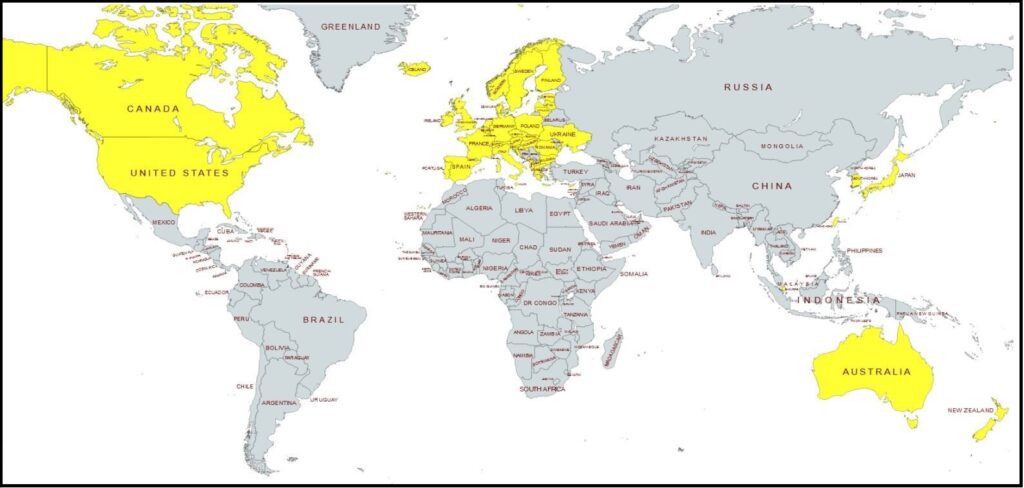
Western sanctions map against Russia (yellow = agree with USA).

What we are witnessing now is one of the ramifications of the U.S. forcefully putting an “us or them” aspect into the strategic economic relationship, where “them” is Russia.  Currently, India is not flinching.

One could make the argument that undeveloped regions in Brazil, Russia, India, China and South Africa (BRICS) contain the majority of the valuable rare earth minerals and magnets the ‘western’ nations need for manufacturing.  BRICS has a pressure point to apply leverage, but no global trade currency, if the trade conflict escalates.

(more…)

Big Problems Erupt in Angola – Chinese Citizens Flee as Anger Erupts Due to Belt and Road Consequences

HatTip to Ben for calling attention to this remarkable story.

Essentially China’s “Belt and Road” initiative is a system of China putting massive infrastructure investment funds into a targeted country in exchange for their ability to extract resources needed for Chinese expansion. However, several nations are now rising up against the Chinese influence as it surfaces in the lives of the citizens.

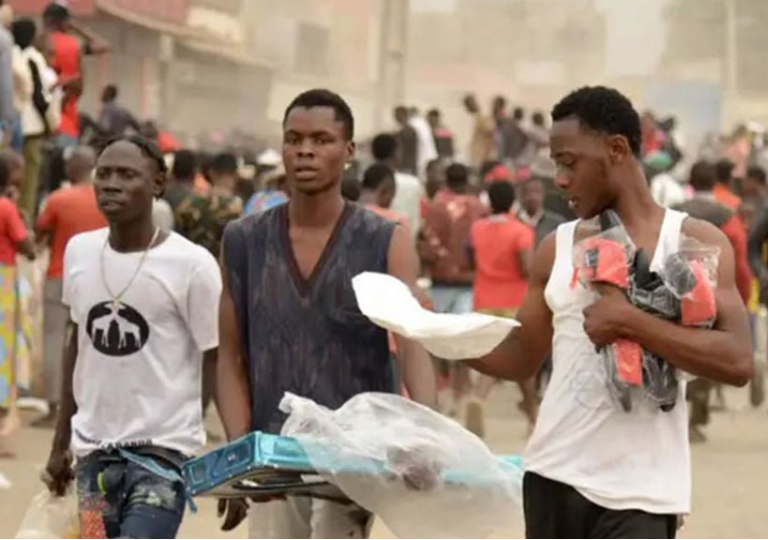
Angola is a case study in China investing billions and with the investment a large number of Chinese citizens arrive set up businesses there.  Over time resentment against the Chinese has been building.  Then a flashpoint with a massive jump in gas prices.  Suddenly, anarchy erupts, and all the Chinese businesses are looted, some even killed in the violence.

[READ STORY HERE]

China is now evacuating some of the 300,000+ Chinese citizens from the region, and the Chinese embassy is urgently warning people about the escalating crisis.

Remember when Tunis erupted at the origin of the “Arab Spring”?  That was a combined economic and cultural flashpoint. This escalating problem in Africa has a similar theme to it.

(more…)

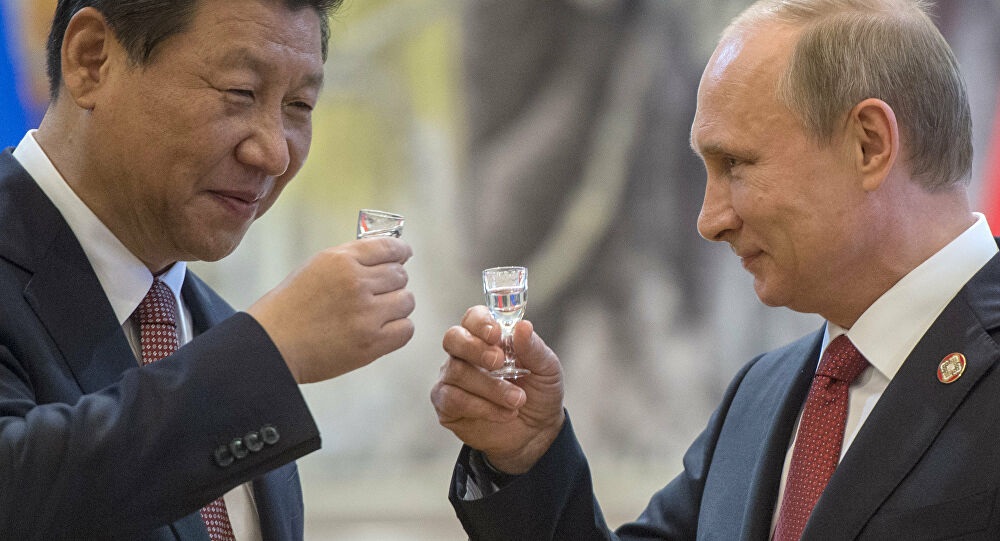
Neil Oliver Contemplates Western Leaders Squeezing Jello in a Closed Fist, While BRICS Leaders Smile

Comrade rebels, for his weekly monologue UK pundit Neil Oliver reviews the ever-controlling, increasingly totalitarian, western political landscape, and then gives his perspective on how the BRICS formation seems to be benefiting from it.  It is an interesting contrast worth review.  WATCH:

.

(more…)

Against the Backdrop of Western Energy Policy, Media Begin Understanding the Scope of a Created Global Food Crisis

We have been watching the predictable outcomes surrounding the western government shift to change energy policy for almost two years.  Approximately a year ago we first said, “the absence of food will change things.”

As energy resources like natural gas were curtailed the resulting price increase and subsequent shortage of fertilizer was discussed in great detail well in advance.

Now, we are starting to see exactly what those warning voices were talking about.

An interesting article in ZeroHedge Saturday [SEE HERE] draws attention to how the media can no longer try to ignore the created global food crisis.

ZeroHedge – People on the other side of the planet are dropping dead from starvation right now, but most people don’t even realize that this is happening.  Unfortunately, most people just assume that everything is fine and dandy.  If you are one of those people that believe that everything is just wonderful, I would encourage you to pay close attention to the details that I am about to share with you.  Global hunger is rapidly spreading, and that is because global food supplies have been getting tighter and tighter. 

If current trends continue, we could potentially be facing a nightmare scenario before this calendar year is over. (read more)

The article then goes on to detail the issues and food shortages in Pakistan, India and the entire African continent.  Factually, according to media reports on the region, the worst food crisis in history is happening – yet most U.S. and European Union media are avoiding it.  The famine is happening in almost complete western silence.

Keep in mind, none of this is unexpected.  In fact, the G7 countries discussed the pending problem in mid 2022, yet no one took any steps to avoid it.

(more…)

Cleaving Beginning? – Climate Change Policy Makes Europe Too Expensive for Low-Cost EV Manufacturing

We have been closely monitoring the signs of a global cleaving around the energy sector taking place.  Essentially, western governments’ following the “Build Back Better” climate change agenda which stops using coal, oil and gas to power their economic engine, while the rest of the growing economic world continues using the more efficient and traditional forms of energy to power their economies.

Within the BBB western group (identified on map in yellow), the logical consequences are increased living costs for those who live in the BBB zone, and increased prices for goods manufactured in the BBB zone.  In the zone where traditional low-cost energy resources continue to be developed (grey on map), we would expect to see a lower cost of living and lower costs to create goods.   Two divergent economic zones based on two different energy systems.

This potential outcome just seemed to track with the logical conclusion.  The yellow zone also represented by the World Economic Forum, and the gray zone also represented by an expanding BRICS alliance.  Against this predictable backdrop we have been watching various events unfold, some obvious and some less so.

Today, we get an obvious example:

(more…)

South Africa Confirms Likelihood of Saudi Arabia Joining BRICS Economic Alliance

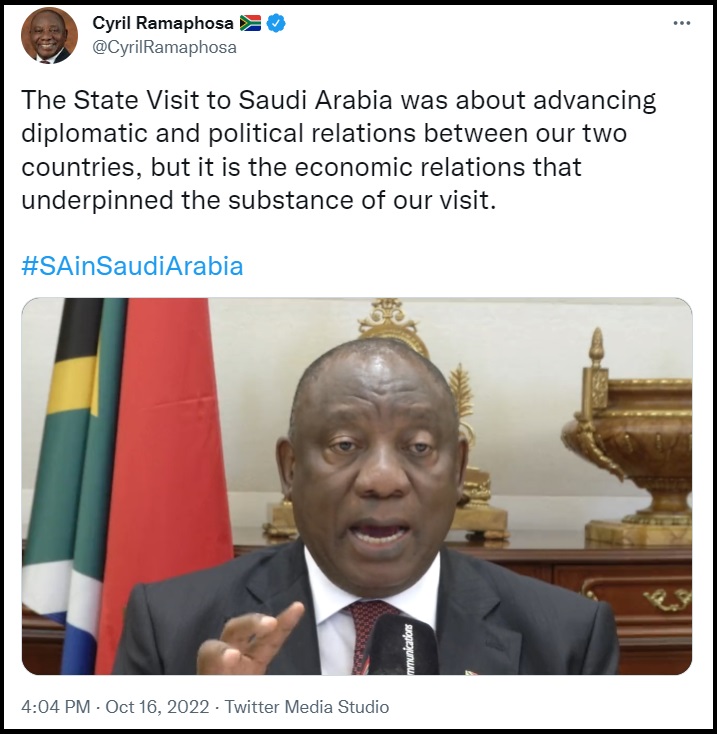
South African President Cyril Ramaphosa held a two-day summit with Saudi Arabia on mostly economic matters.

At the conclusion of the summit, he confirmed the intent of Saudi Arabia to join the BRICS economic coalition, which should not come as a surprise given the previous statements by Saudi leader and Crown Prince Mohamed Bin Salman (MbS).
(MSM) Ramaphosa confirms Saudi Arabia wants to join Brics family.  This was revealed by President Cyril Ramaphosa during his two-day state visit to the kingdom on Sunday.

“The Crown Prince (prime minister Mohammad bin Salman bin Abdulaziz al Saud) did express Saudi Arabia’s desire to be part of Brics and they are not the only country,” said Ramaphosa. He confirmed this on Sunday during an engagement with the media.

Brics held its first summit in 2009, with SA joining the following year. The bloc has generally been seen as an alternative to the dominance of the western economies.

“We did say that Brics having a summit next year under the chairship of South Africa in SA and the matter is going to be under consideration.

“A number of countries are making approaches to Brics members, and we have given them the same answer that it will be discussed by the Brics partners and thereafter a decision will be made.” (read more)

Since the outset of the Western Alliance sanctions against Russia, we have been predicting an increased geopolitical influence from the BRICS team.  A global financial and economic cleaving is underway created by the western nations chasing ideological climate change energy policy, while the rest of the world remains pragmatic toward oil, coal and natural gas as energy resources.

(more…)

Global Energy Cleaving Continues, Iran and Argentina Apply to Join BRICS Economic Partnership

This is not some grand conspiracy, ‘out there‘ deep geopolitical possibility, or foreboding likelihood as an outcome of short-sighted western emotion.  No, this is just a predictable outcome from western created events that pushed specific countries to a natural conclusion based on their best interests.

You can debate the motives of the western leaders who structured the sanctions against Russia, and whether they knew the outcome would happen as a consequence of their effort, but the outcome was never really in doubt.  Personally, I believe this outcome is what the west intended. The people inside the World Economic Forum are not stupid – ideological, yes, but not stupid. They knew this global cleaving would happen.

In April the finance ministers of the BRICS alliance (Brazil, Russia, India, China and South Africa) decided to create their own financial mechanisms to continue trade between nations of similar disposition despite Western/NATO sanctions {LINK}. Earlier this month Fed Chairman Jerome Powell stated, “rapid changes are taking place in the global monetary system that may affect the international role of the dollar.”  {LINK} Additionally, as the proverbial ‘west’ follows the corporate instructions from the World Economic Forum, Powell expanded his points to note the creation of a central bank digital currency (CBDC) is also being reviewed. {LINK}

Following a recent meeting of the BRICS group, Iran (86 million people) and Argentina (46 million people) are now applying to join BRICS, possibly creating BRICS+

(Reuters) – Iran has submitted an application to become a member in the group of emerging economies known as the BRICS, an Iranian official said on Monday.

Iran’s membership in the BRICS group, which includes Brazil, Russia, India, China and South Africa, “would result in added values for both sides,” Iran’s Foreign Ministry spokesperson said.

(more…)

BRICS Ministers of Finance Hold a Meeting – It Is Time to Replace Western Financial Trade Mechanisms and Remove The Dollar

This is not some grand conspiracy, ‘out there‘ deep geopolitical possibility, or foreboding likelihood as an outcome of short-sighted western emotion.  No, this is just a predictable outcome from western created events that pushed specific countries to a natural conclusion based on their best interests.

You can debate the motives of the western leaders who structured the sanctions against Russia, and whether they knew the outcome would happen as a consequence of their effort, but the outcome was never really in doubt.  Personally, I believe this outcome is what the west intended. The people inside the World Economic Forum are not stupid – ideological, yes, but not stupid. They knew this would happen.

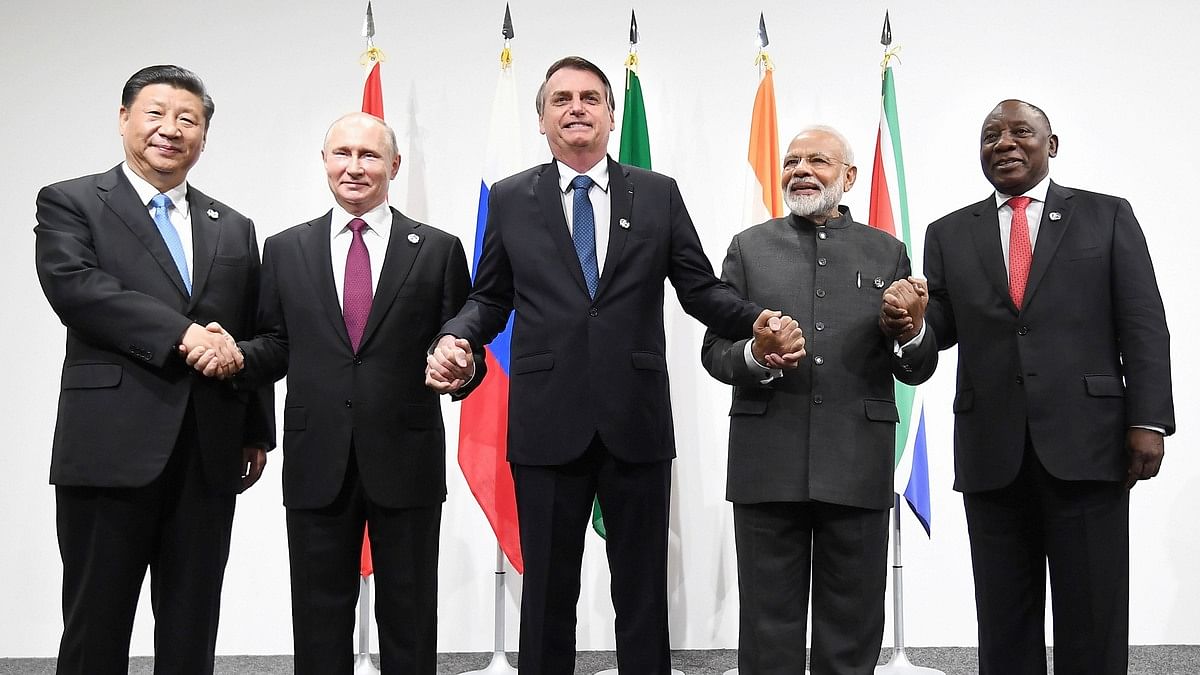
[Left to Right] Xi Jinping (China), Vladimir Putin (Russia), Jair Bolsonaro (Brazil), Narendra Modi (India) and Cyril Ramaphosa (South Africa), the BRICS group.
The finance ministers of the BRICS alliance (Brazil, Russia, India, China and South Africa) have decided to create their own financial mechanisms to continue trade between nations of similar disposition.  Once the internal issues inside the BRICS alliance are resolved, and once the mechanisms are created, then other nations will be able to decide to join or not.  The great global cleaving will commence.

(Reuters) – Russia, hit by Western sanctions, has called on the BRICS group of emerging economies to extend the use of national currencies and integrate payment systems, the finance ministry said on Saturday.

[…] On Friday, Finance Minister Anton Siluanov told a ministerial meeting with BRICS, which consists of Brazil, Russia, India, China and South Africa, that the global economic situation had worsened substantially due to the sanctions, the ministry’s statement said.

(more…)

The Motive for the Strategic Creation of BRICS Resurfaces in the Ukraine Conflict

The BRICS alliance is a strategic geopolitical partnership between Brazil, Russia, India, China and South Africa.  The nature of the alliance is based on trade and big picture economics.

Readers familiar with our discussions of trade and international finance, will remember the importance we previously discussed with BRICS after the 2016 election and President Trump representing economic nationalism for the first time in several generations.  In this outline, we are going to share the bigger picture of why BRICS should now be back on the center stage of American focus.

Xi Jinping (China), Vladimir Putin (Russia), Jair Bolsonaro (Brazil), Narendra Modi (India) and Cyril Ramaphosa (South Africa), the BRICS group.

The BRICS economic partnership was formed during the Obama administration.  Brazil, Russia, India, China and South Africa (BRICS) saw President Obama sub-contracting, actually giving away, U.S. trade policy to the U.S. Chamber of Commerce.  In the aftermath of the 2007 economic crisis created by the financial system, the BRICS group connected two central points that concerned them.

In the aftermath of the great housing/financial crisis, the relationships around the World Bank (WB), International Monetary Fund (IMF), EU central banking system and various multinational institutions and, more importantly, multinational corporations, merged even closer with the government.  The priorities of the Davos and World Economic Forum (WEF) crowd were now virtually indistinguishable from many national governments.

We are fifteen years downstream from that inflection point, and we are now seeing the outcomes.  The WEF is now giving direct instructions to installed politicians for government policy.  Put another way, multinational corporations are now telling government officials what to do.

Think of “The Great Reset” or “Build Back Better” or climate change, as examples.  Worse yet, those governments are doing exactly what the WEF has told them to do.

This corporate control of government is exactly what the BRICS assembly foresaw when they first assembled.  When multinational corporations run the policy of western government, there is going to be a problem.  In the bigger picture, the BRICS assembly are essentially leaders who do not want corporations and multinational banks running their government.

As a result, if you really boil it down to the common denominator what you find is the BRICS group are the opposing element to the WEF assembly.

(more…)

Has The Great Global Food War Just Begun?

Hindsight is not only 20/20, in this case it’s a little alarming. 

Last year, we were discussing the massive increases in food and farming costs associated with increased fertilizer prices.  By the time we got to late January, the World Bank (WB), United Nations (UN) and the Davos / World Economic Forum (WEF) group were discussing it.  At first the perspective was the potential for lower crop yields creating increased global famine.

However, if we apply a little hindsight from the geopolitical world surrounding the current issues in Europe, specifically Ukraine, and then consider the background of what the Biden team were doing, while Russia, Belarus and China were stockpiling, things look a little more concerning than just lower crop yields as an outcome of higher natural gas prices – vis-a-vis nitrogen fertilizer.

As noted by Forbes last month, “Russia and China have imposed export restrictions on fertilizer. Both are, or were, big exporters of plant food. The decline in exports makes getting the vital nutrients harder across the globe. China and Russia account for 29% of world exports for nitrogen-based plant food. The two countries also have significant, albeit, smaller shares of the phosphate and potash markets, respectively, the report states.”

Now, keep in mind how Belarus helped Russia with the current military operation.

In August of 2021 the United States, Canada and the EU hit Belarus with punitive sanctions on the one-year anniversary of what they called a fraudulent election.  As noted by Politico at the time, “The sanctions partially ban imports of potash fertilizer, petrol and petrol-based products from Belarus.”  […] Targeting Belarus’ potash sector was a strategic move insofar as the country is the second largest exporter of the fertilizer behind Canada, covering 21 percent of the world’s potash exports in 2019.

In September of 2021, at the same time as China was investing heavily in the purchase of U.S. farmland, Beijing simultaneously announced a ban of export for phosphates until June of 2022.  With China banning export of the source material, the global fertilizer market now needed to look elsewhere for future purchases.

(more…)