Quantcast

EU Leaders Utterly Bewildered at Energy Vulnerabilities Now Evident

They stopped their oil and gas exploration.  They chose to chase ‘net zero’ academic pontifications.  They closed their refining operations. They took apart their coal-fired electricity plants.  They disassembled their nuclear power capabilities. Then, the absolute cherry on the proverbial cake, they voted to stop purchasing oil and gas from Russia.

The EU is now in the Find Out stage of their FAFO positioning.

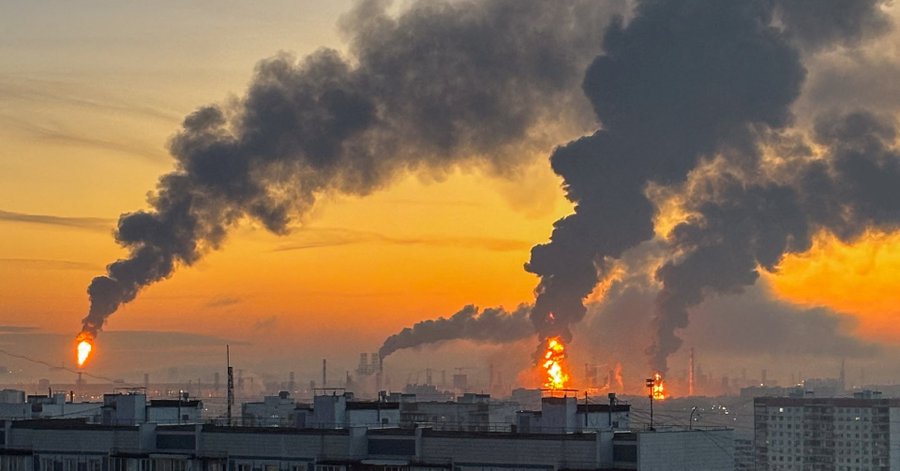
Gasoline prices have skyrocketed. The last shipments of jet fuel have arrived. Major airline carriers are cancelling flights due to lack of fuel.  Faster than the EU can organize meetings to discuss their position, EU destined LNG shipments have diverted to southeast Asia and India as the ASEAN nations bid higher purchase prices for the vessels literally on the water.

Folks, it’s quite an article written by EU Politico as they outline how each of the leaders from the nation states are now discussing how vulnerable they are to the changed oil/gas environment with the mid east conflict ongoing.  The entire energy sector in Europe is now in crisis mode with leaders predicting it will get much worse within days, not weeks.

EU Politico – “Germany’s Friedrich Merz warns the economic fallout from the war in Iran is on track to rival that of the Covid pandemic or the Russian invasion of Ukraine.

[…] With the war in Iran threatening to choke off energy flows for the foreseeable future, Europe is facing a supply shock that promises to cripple manufacturing, ground airlines, hike up the price of food, spike borrowing costs and send inflation spiraling back to crisis levels.

As the last tankers carrying fossil fuels from the Persian Gulf pull into European ports, the scale of what is about to hit seems to be dawning on the continent’s leaders.

(more…)

Volkswagen Loses Half Their Profit, Now Plan to Cut 50,000 Jobs Over Next Four Years

The origin of this issue goes back to 2021 and the relaunch of the Build Back Better European green energy program to fight the non-existent climate change problem.  We have been highlighting the consequences within the EU auto sector.

We noted in October of last year, the EU’s mandated fines against auto manufacturers who do not hit their production goals for electric vehicle sales began in 2025.  EU automakers unable to meet the regulatory compliance goal began purchasing carbon credits to avoid stiff EU fines.  Many of those carbon credits were purchased from Chinese EV automakers, who then turned around and started using the extra EU revenue to discount Chinese cars sold in Europe.

At the same time as Chinese autos hit record highs in Europe, EU car sales are flat or declining.  Now, Volkswagen is announcing they lost half their profits in one year and will be cutting 50,000 jobs in the next four years.

(MSM – Europe) – Volkswagen just revealed its operating profit sank like a stone last year, dropping by more than half as tariffs, Chinese competition, and shifting strategies took a serious bite out of the bottom line. And that performance now has the VW Group’s execs reaching for the cost-cutting scissors, including plans to shed 50,000 jobs by the end of the decade.

The German automaker reported an operating profit of €8.9 billion ($10.3 bn at current rates) for 2025. That’s down a hefty 53 percent from the year before and well below what analysts were expecting. Revenue, meanwhile, barely moved, slipping only slightly to around €322 billion ($374 bn). (read more)

This was very predictable. In essence, EU car companies buy Chinese car company carbon credits, to avoid the EU fines.  The Chinese car companies then use the carbon credit revenue to subsidize lower priced Chinese EVs to the European car market, thereby undercutting the European EV car companies.

(more…)

Secretary Lutnick Gently Dispatches the Feelings of Canada and the EU, and Focuses on Pragmatic Economic Growth

Hilarious Bloomberg interview with Commerce Secretary Howard Lutnick.  The topics are European trade and politics combined with the overlay of Canadian trade and politics.  The Bloomberg panelists question Lutnick about the similar “feelings” of the Europeans and Canadians, as it pertains to the outcome of trade discussions.  It’s the feelings that make things difficult to negotiate.

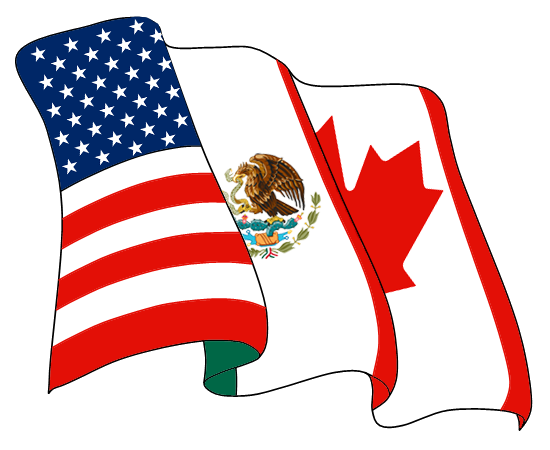
Secretary Lutnick doesn’t dismiss the narrative but deconstructs the substance of the topic brilliantly.  Lutnick notes the ridiculous nature of the Canadian trade position and their decision to go running to China because their feelings are hurt.  Lutnick then affirms the USMCA is going to be dissolved mid-summer and fall of this year.

As we noted at the end of last year, splitting the USMCA into two bilateral trade deals, one for Mexico and one for Canada, will be one of the most interesting and long-term economically significant moves in U.S. trade history.  It is going to be a lot of fun to watch these negotiations, and the pre-positioning gives us a preview of what is to come.

Mexico is doing everything almost perfectly in preparation for their bilateral deal.  Canada is doing exactly the opposite and positioning themselves for the worst possible outcome of a deal with the USA.  The disparity in approaches is so different, even now it is remarkable to watch. PROMPTED:

(VIA BLOOMBERG) – […] Canada has “the second-best deal in the world” with its access to the US market, Lutnick said, behind only Mexico. The Commerce chief also indicated that Canada’s tilt toward China could become an issue in talks over revamping the US-Mexico-Canada trade agreement known as USMCA.

If Ottawa opts to import Chinese electric vehicles and other trade-strengthening steps with Beijing, “do you think the president of the United States is going to say you should keep having the second-best deal in the world” during USMCA talks, Lutnick questioned.

(more…)

U.S. Energy Secretary Chris Wright Discusses Consequences of Imaginary Problem Solving

U.S. Energy Secretary Chris Wright gives an outline of energy production in three-minutes.  I especially liked this part: “Germany invested half a trillion (in renewables) and now produce 20% less electricity at 3x the price,” Wright noted.

$10 trillion has been invested/deposited within the Climate Change Bureau of Imaginary Problems; Secretary Wright discusses the outcome. Now, I know it is easy for us to laugh and enjoy this type of fact-based mic drop, however, as we watch this short video think seriously about the position of Canada as it relates to what Wright is mentioning.

Yes, the examples of the United Kingdom and Germany are excellent in their representative value to drive home the point; however, ¹Canada is more predestined toward failure in their energy policy than Germany.  WATCH:

¹Canada’s climate change energy policy is orders of magnitude worse than the EU.  Canadian carbon trade platforms and the government’s insufferable economic stupidity is a major part of the reason why the USMCA must be dissolved.  The North American continent cannot have comingled economic dependency where Mexico and the USA are expanding through low-cost energy outputs, while Canada generates high-cost energy outputs.

In the long term, the slowly unfolding Canadian economic collapse will be devastating.  Big Panda has previously prepositioned their interests and is awaiting final purchase of the Snow Mexicans for pennies on the dollar.

Former Prime Minister Justin Trudeau was accurate in his outline to president-elect Trump that began the point of the USA just taking ownership of Canada (2024).  If something similarly radical doesn’t happen soon, a Chinese protectorate will be our northern neighbor.

(more…)

Treasury Secretary Scott Bessent Triggers the Clock with Notification of U.S. Withdrawal from UNFCCC

Giddy up.  Yesterday, President Trump and Marco Rubio announced the U.S. withdrawal from the United Nations Framework Convention on Climate Change (UNFCCC). {GO DEEP} Today, Treasury Secretary Scott Bessent makes the official notification to the UN.

The notification is important because the 1992 UNFCCC was ratified by the U.S. Senate 34 years ago, making it one of the first UniParty climate change pacts supported by the ¹DC business model.

According to the terms of the treaty, withdrawal from the UNFCCC requires an official notification to the United Nations, and the dissolution takes effect one year later.

TREASURY PRESS RELEASE – WASHINGTON – In alignment with the Trump Administration’s decision to withdraw from the UN Framework Convention on Climate Change (UNFCCC), the U.S. Department of the Treasury has notified the Green Climate Fund (GCF) that the United States is withdrawing from the Fund and stepping down from its seat on the GCF Board, effective immediately.

“Our nation will no longer fund radical organizations like the GCF whose goals run contrary to the fact that affordable, reliable energy is fundamental to economic growth and poverty reduction,” said U.S. Secretary of the Treasury Scott Bessent.

The Trump Administration is committed to advancing all affordable and reliable sources of energy, which are fundamental to economic growth and poverty reduction. The GCF was established to supplement the objectives of the UNFCCC, and continued participation in the GCF has been determined to no longer be consistent with the Trump Administration’s priorities and goals. (SOURCE)

For those who have a tough time accepting wins, no, the next President cannot just rejoin the agreement; nor can the Senate block Trump’s withdrawal from it.  The entire process would have to be restarted, and it’s a heavy lift to sell the American public on paying higher prices just to make pontificating global elites feel better about themselves.

(more…)

President Trump Withdraws the U.S. From the UN Framework Convention on Climate Change and 65 Other Globalist Institutions/Mechanisms

This is factually a much bigger deal, a bigger win, than most will initially appreciate.

As many deep political followers well understand, the 66 organizations that President Trump has just withdrawn from represent a large network of sanctioned government organizations that structurally support the globalist agenda.

President Trump has issued an executive order [SEE HERE] “Withdrawing the United States from International Organizations, Conventions, and Treaties that Are Contrary to the Interests of the United States.” These institutions, including the UN Framework Convention on Climate Change, are mechanisms that exist to underpin globalist objectives.

Each of the institutions carry “membership fees” or financial obligations each participating government pays into. Each organization consists of board members, stakeholders and other administrative offices which employ the friends and families of current and former politicians, world “leaders” and essentially well-connected and disconnected elites who run the agencies. It’s like a massive network of NGOs, except the entities exist exclusively with government funding.

Just like the United Nations itself, the USA always pays the dues, fees and largest portion of the operating expenses, which includes payrolls and travel benefits. Other countries participate, but it is the USA who picks up the largest portion of the financial obligations for the organization itself to exist.

Like USAID, the designated “global” organizations (conventions, treaties, etc) operate as massive bureaucratic rule makers for global standards and practices. The organizations themselves employ a network of downstream entities, agencies, contractors, think-tanks, academic liaisons and internal government offices who collaborate with the goals and objectives of the parent organization.

Inside each of these agencies and institutions you find the friends and families of the power brokers who run global -mainly western- systems of government. Withdrawing the support of the U.S. means cutting that entire apparatus off from receiving funding from the USA. Europe and the USA are the largest funders of each of these World Economic Forum aligned agencies.

(more…)

Canada Trying to Find Trade Partners

A recent article in Politico quoting several cabinet members of Prime Minister Mark Carney reflects a particular reality of the problem their economy will face in 2026.

It appears that Canadian government officials have finally recognized the Trump administration plans to dissolve the USMCA or what Canada calls CUSMA next year.  With that reality they have a big problem.

Mexico has been working throughout the year to initiate economic policies in alignment with the United States.  However, structurally and politically this is an alignment that is impossible for Canada to do.  Like many contracting European countries, the economic policies of Canada are centered around their climate change agenda and green energy goals.

For the past few decades Canada bought into the carbon scam and enacted climate change goals into law for carbon pricing, alternative energy production, industry and manufacturing costs.  These mechanisms to control “climate change” are nuts in the big picture.

In order for Canada to position their economy to be in alignment with the rest of North America (USA and Mexico), Carney would have to reverse years of legislated rules and regulations.  That is not going to happen, and Canada will always be at a disadvantage because of it.

(Politico) – […] It’s a moment of existential crisis for Canada, a senior Carney government official told POLITICO. Waiting out the Trump administration isn’t an option, the official said, arguing that what’s happening in the United States reflects a generational shift — not a temporary disruption — and that returning to a policy of closer integration with America would be foolish. (more)

With three quarters of their economic production tied to exports into the USA, and with the USMCA likely to be dissolved in favor of a bilateral trade agreement, Canada now has to find other markets for its products or lower all the trade barriers currently in place.  Prime Minister Mark Carney is trying to find alternative markets.

(more…)

Canadian Media Catch On, U.S Trade Rep Jamieson Greer Says Trump Likely to Exit the USMCA (CUSMA)

In the world of Trumpian geopolitical trade stuff, three issues are very interesting to watch. (1) The strategic reset with Russia which could break the official western construct of financial control. (2) The proactive and defensive positioning of Mexico (desperate attempt to retain economic attachment), and (3) the certain dissolution of the USMCA what Canadians call CUSMA.

Canadian media are starting to realize something we have talked about on these pages for years; President Trump intends to end the USMCA because the USMCA was used as a fracture point to eliminate NAFTA.

Wall Street, the U.S. Congress, the massive K-Street lobbying network around the U.S. Chamber of Commerce and the entire political apparatus of business and industry would never permit the end to NAFTA; too many trillions at stake. So, President Trump replaced NAFTA with the interim USMCA, which was better but factually more useful in elimination of the original.

Now, as we have discussed by highlighting President Trump’s no-so-subtle words on the issue, the Canadian media is realizing the USMCA will be dissolved in favor of two independently negotiated bilateral trade agreements; one with Canada and one with Mexico.

(CTV) – U.S. President Donald Trump could decide next year to withdraw from the Canada-United States-Mexico trade agreement (CUSMA), Politico reported on Thursday, citing U.S. Trade Representative Jamieson Greer.

“The president’s view is he only wants deals that are a good deal. The reason why we built a review period into CUSMA was in case we needed to revise it, review it or exit it,” Greer told Politico’s White House bureau chief Dasha Burns in a podcast episode that airs Friday.

Greer also raised the idea of negotiating separately with Canada and Mexico and dividing the agreement into two parts in the podcast, adding that he spoke with Trump about that possibility just this week.

(more…)

EU Proposes Suspending Customs and Duty Enforcement During War Preparations Against Russia

When Europe goes to war with Russia, they will not require the military to fill out customs declarations as they cross borders within the EU.

Tanks, missiles, artillery and most combat weapons could be exempt from EU customs declarations if the plan by Brussels moves forward.

Additionally, under the proposal most drivers of military equipment may even be permitted to exceed the limits on driving times and rest periods, should the fight against Russia require extended physical effort.

The newly proposed objective is to empower European soldiers to make independent decisions without having to fill out the customary paperwork, requiring prior approval from the European Commission before affixing their bayonets. The EU wants to work out the details before they begin military operations against the Russian Federation.

EUROPE – […] The communication notes that some countries require 45 days of advance notice before allowing military equipment to cross their territory. “Significant barriers to effective military mobility in the EU persist,” the communication notes. “National rules are often divergent, fragmented and non-harmonised.”

[…] “We need to move fast. We need to move faster than what Europe is used to or is expecting to,” Tzitzikostas said, saying the target is to get the basics in place by 2030.

German Defense Minister Boris Pistorius warned over the weekend that Russia may be capable of launching an attack on a NATO member state as early as 2028-2029.

(more…)

Beyond Ridiculous – EU Automakers Purchasing Carbon Credits from Chinese EV Makers to Avoid EU Climate Change Fines

Put this in the ‘beyond ridiculous’ file that explains the current situation of a contracting European economy; specifically, in the auto sector.

Europe has fines associated with the production of gasoline powered engines if the auto company doesn’t hit targets for sales of electric vehicles.  The fines triggered this year.  In order to avoid paying the European fines the auto makers are forming alliances with Chinese EV makers to purchase carbon credit offsets.

In essence, EU car companies buy Chinese car company carbon credits, to avoid the EU fines.  The Chinese car companies can then use the carbon credit revenue to subsidize lower priced Chinese EVs to the European car market, thereby undercutting the European EV car companies.  BRILLIANT!

MILAN, Oct 21 (Reuters) – Automakers have formed alliances to help them avoid hefty European Union fines on carbon emissions by purchasing credits from electric vehicle companies. Several legacy automakers face potential fines as the transition to EVs in Europe has proved slower than expected in recent years.

(more…)