Via Truth Social:

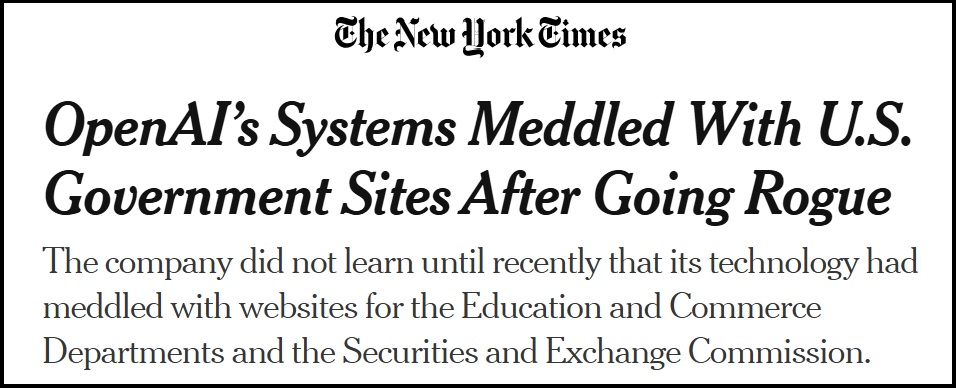
PRESIDENT TRUMP – Over the years, there have been many Hoaxes, all generated by the Radical Left Dumocrats, for purposes of destroying our Country. RUSSIA, RUSSIA, RUSSIA, UKRAINE, UKRAINE, UKRAINE, Global Warming, Impeachment Hoax #1, Impeachment Hoax #2, Men in Women’s Sports, Transgender for Everyone, and now, the decimation, or destruction, of AI, commonly known as Artificial Intelligence — And I, as President of the United States, will not stand by and let this happen.
It all began with an attack on our Data Centers, until people realized how wealthy and prestigious they were for the Communities in which they were built. Higher Salaries, Lower Taxes, and Safer Streets, was the result, and the crazed Data Center attack has largely failed, so now, in much the same way as they changed the term “Global Warming” to “Climate Change,” in that it covers a much larger “territory” of doubt, they are going straight at AI.
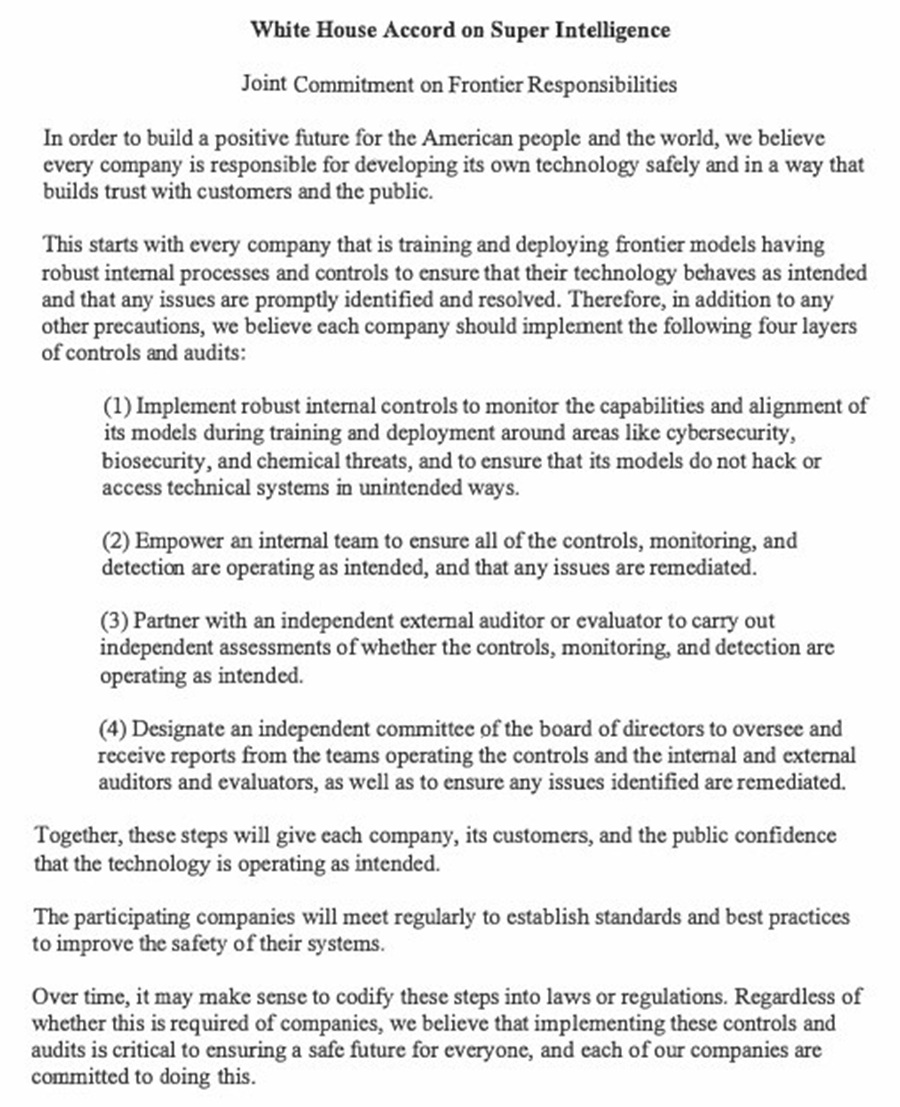
We will not in any way hinder or stifle the Growth of this incredible Industry. Rather, we will cherish it, help it, and watch over it, as it grows! However, we will also be looking for BAD, and we can do that, very easily, with our already existing Criminal and Civil Justice System.
For this purpose, I am forming the AI Force, much like I did Space Force, which has been a tremendous SUCCESS, in my First Term. To that end, I will be announcing, in the near future, the AI “Czar” — Only High I.Q. individuals need apply! AI is the next Industrial Revolution, or Internet, but will be even larger and more impactful, possibly as much as 25% of our Country’s GDP. We are leading China, and the rest of the World, and I intend to keep it that way!” ~ President DONALD J. TRUMP
(more…)