Quantcast

The Global Trade and Economic Restructuring That Centers Around Energy Use

Anyone can tell those nations who are at greatest risk from the current oil/gas shortage are those nations who either: (a) do not have the infrastructure or capability to derive their own oil/gas, or (b) those nations who intentionally chased the “net-zero” climate change nonsense and thereby created the same problem as group (a).

The middle east oil/gas disruption is clearly showing which nations intentionally put themselves into the worst possible position.  The U.K and Europe are at the top of that list.  In this 20-minute recap, Mike Steger expands on his former outline about a new global reset and points out how the crisis in Iran is only a symptom of a more structural geopolitical shift that is underway and irreversible.

Steger’s analysis explores how the United States is mobilizing its industrial base, securing global energy flows, and positioning itself for a new century of economic and strategic dominance. From emergency energy directives and nuclear expansion… to the rebuilding of the American grid and supply chains… to the unraveling of Europe’s political order — this is a turning point moment. The question is not whether the world is changing, but rather who will shape what comes next. WATCH (prompted):

TIMESTAMPS:
0:00 A new American century begins
2:30 The global energy crisis explained
5:15 Trump’s industrial strategy
8:20 Ending the climate agenda
10:50 Defense Production Act mobilization
13:50 Rebuilding America’s energy system
16:25 The global order shifts
19:10 Final message

(more…)

Canada Does NOT Want to Open USMCA (CUSMA) for Renegotiations

Consider the amount of money involved in the trilateral USMCA trade agreement.  It’s not just about trade and commerce between the USA, Canada and Mexico; the totality of the equation is derived from all of the third-party nations who trade into the North American trade bloc.  There are tens-of-trillions at stake.

As we have outlined for several years the trilateral trade agreement has several material flaws.  With the U.S. economy as the primary consumption economy, both Mexico and Canada derive significant benefits within the USMCA.  Additionally, both Canada and Mexico leverage their unique positions to gain economic benefit from third parties who want to use either country as a backdoor into the U.S. market.

President Trump has long wanted to eliminate the trilateral trade deal in favor of two more controllable bilateral deals, one with Mexico and one with Canada.  In large measure this approach is specifically to end the exploitation by third parties.  President Trump also noted in his discussions with Canadian Prime Minister Mark Carney that the primary function of the USMCA was to eliminate NAFTA.

Keep this in mind.  The purpose of the USMCA was to eliminate NAFTA.

Now we enter the phase of the USMCA where President Trump can exit the agreement or modify the core foundation of the agreement.

For the past fourteen months Mexico has been modifying their trade and economic policy in anticipation of a USMCA change. However, for the past fourteen months Canada has been combative against President Trump, stoking anger toward Trump, and the government of Canada has been openly proclaiming their intention to economically and politically fight and defeat President Trump.

Again, remember the scale of the money involved here.  Additionally, Canada doesn’t have an organic economy if they cannot exploit their market access.  If Trump restricts third party exploitation, Canada loses massive amounts of money.  This is the baseline for Canada’s reluctance to open up the USMCA for renegotiation; they cannot lose their third-party loophole or else they are really in a bad place.

This sets the stage for trillion-dollar interests to frame opposition not only toward President Trump, but also toward any of his economic team who are in alignment with the renegotiation of the USMCA.  Commerce Secretary Howard Lutnick is chief among those targets along with U.S. Trade Representative Jamieson Greer.

Commerce Secretary Howard Lutnick outlines the issue in the first part of this recent discussion. WATCH:

(more…)

Sunday Talks – U.N. Ambassador Mike Waltz Discusses Ongoing Objectives with Current Status of Iran

U.S. Ambassador to the U.N. Mike Waltz appears on CBS Face the Nation to discuss the difficulty of negotiating with Iran, a regime based on fanatical religious zealotry and control.  The video and transcript are below:

[Transcript] – MARGARET BRENNAN: Imtiaz Tyab reporting from Dubai. We turn now to the U.S. Ambassador to the United Nations, Mike Waltz, who joins us this morning from New York. Welcome back to Face The Nation, ambassador.

AMBASSADOR MIKE WALTZ: Thank you, good to be with you.

MARGARET BRENNAN: So the President said Iran broke the ceasefire, but he is still offering them a deal. Is this a presentation of terms, or should we expect an actual, prolonged negotiation?

MIKE WALTZ: Well, I think this will be a continuation of the terms that the vice president offered a week ago. And look, we have to take a step back here in that – President Trump, the US Navy is controlling what is coming out of the straits. We’ve had the highest level engagement in the history of the Iranian regime, with the vice president leading. We have historic ceasefire talks going on between the Israelis and the Lebanese. The markets are up. Oil prices are relatively stable. The Iranian economy is devastated, and they’ve never been, I can tell you here at the United Nations, they’ve never been more diplomatically isolated. So Iran does not have the cards, and we are confident they will come to the table and finally give up their obsession with having a nuclear weapon.

(more…)

Blockade Successful – Deal Reached – Strait Open – Oil Prices Plummet

In a series of posts on Truth Social, President Trump has announced that a deconfliction deal with Iran has been agreed.

It appears the blockade was successful in finally convincing Iran they had very few options.  Additionally, as we all well understand here, the blockade was halting oil shipments to China. It is very likely that Beijing was also putting pressure on Iran to reach a deal.

[SOURCE]

“THE STRAIT OF HORMUZ IS COMPLETELY OPEN AND READY FOR BUSINESS AND FULL PASSAGE, BUT THE NAVAL BLOCKADE WILL REMAIN IN FULL FORCE AND EFFECT AS IT PERTAINS TO IRAN, ONLY, UNTIL SUCH TIME AS OUR TRANSACTION WITH IRAN IS 100% COMPLETE. THIS PROCESS SHOULD GO VERY QUICKLY IN THAT MOST OF THE POINTS ARE ALREADY NEGOTIATED. THANK YOU FOR YOUR ATTENTION TO THIS MATTER!” ~ PRESIDENT DONALD J.TRUMP

“The U.S.A. will get all Nuclear “Dust,” created by our great B2 Bombers – No money will exchange hands in any way, shape, or form. This deal is in no way subject to Lebanon, either, but the USA will, separately, work with Lebanon, and deal with the Hezboolah situation in an appropriate manner. Israel will not be bombing Lebanon any longer. They are PROHIBITED from doing so by the U.S.A. Enough is enough!!! Thank you!” ~ President DJT

(more…)

President Trump Speaks of Jobs, Iran and the Economy with Maria Bartiromo

President Trump talks with Maria Bartiromo about Iran and the U.S. economy. Part II

In this section of the interview, President Trump outlines the ongoing conflict with Iran, what it means on a geopolitical level, and his new perspective on how Trump views the European/NATO allies against their refusal to engage in eliminating the Iran nuclear threat they all consistently debated and claimed to be important.

In short, President Trump no longer looks at the EU allies through the prism of an alliance. As a loyal member of the Council on Foreign Relations (CFR) Maria Bartiromo quickly, VERY QUICKLY, changes the subject.  Don’t take my word for it, WATCH: 

.

(more…)

President Trump Discusses Iran, Energy, the Economy and Ongoing Current Events

President Trump appeared for an extensive interview with Maria Bartiromo on Fox Business.  The interview is essentially broken down into two interrelated contexts, the Iran conflict and the overall economic issues.  There are two segments, in this post we focus on the first segment.

Here President Trump is discussing the overall economy and there is an unusual dynamic in the background.   As the Iran conflict unsettles the oil/gas markets and the overall global energy sector, there are two facets to the USA impact.

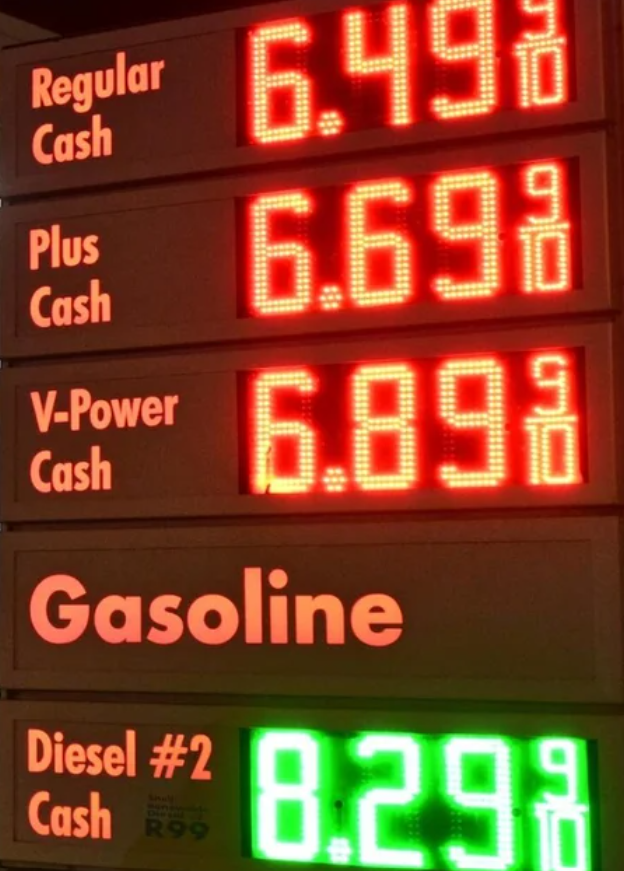
On one hand, say the Main Street side, President Trump understands the price of gasoline is being impacted by the overall price of oil.  For Americans the increase in gasoline price is moderate compared to the rest of the world; however, each dollar spent on gasoline is a dollar the middle-class doesn’t have to spend on something else. That can have a negative impact on GDP overall, but the dollar spent stays in the U.S. economy.

On the other hand, say the Wall Street side, President Trump also understand as more global markets seek to export U.S. oil, the U.S. energy sector expands GDP through increased export value.  In my estimation, the Quarter #2 GDP is expanding at a much higher rate (due to the export of Oil/Gas) than the internal impact from higher gas prices.  I expect to see significant increases in GDP growth as a result. Those Q2 calculations will come at the end of July this year.

President Trump also hits on a good -albeit politically incorrect-point about the preceding illegal alien influx, supported by Joe Biden.  The economic migrants who entered the country illegally were not -as a whole- the type of migrant looking to be responsible for their own economic outcome. These were illegal aliens comfortable with govt handouts and govt subsidies. This is why it remains critical for the U.S. economy to capture and deport those who entered illegally during that period.

(more…)

Vice President JD Vance Discusses Primary Point of Disagreement with Iran Negotiations

Vice President JD Vance appeared on Fox News for a discussion of what structural differences exist between the position of Iran and the position of the U.S. and allied nations surrounding Iran’s nuclear ambitions.

JD Vance notes the key point of conflict surrounds Iran’s desire to retain the ability to construct a nuclear weapon and the refusal to give up custody of currently refined nuclear fuel.  Vance also noted the negotiators in the Iran delegation did not appear to have the ability to make a deal without going back to talk to other Iranian officials.

.

(more…)

President Trump Speaks to Reporters from Joint Base Andrews – Video

Arriving at Joint Base Andrews, President Trump delivers remarks to the assembled press pool and answers questions from the media. WATCH:

.

(more…)

Cut Off the Money – U.S Military Will Start Enforcing Embargo of Product No One Is Supposed to Be Buying

The headline is the reality of the thing.

Oil and gas sales from Iran are under international sanction and not supposed to be taking place.  However, oil and gas sales from Iran -violating the sanctions- have been taking place.

CENTCOM is announcing that the U.S. military will now ensure the oil and gas from Iran doesn’t move.

The U.S. will physically enforce the pre-existing global sanctions. A blockade begins tomorrow morning.

TAMPA, Fla. — U.S. Central Command (CENTCOM) forces will begin implementing a blockade of all maritime traffic entering and exiting Iranian ports on April 13 at 10 a.m. ET, in accordance with the President’s proclamation.

The blockade will be enforced impartially against vessels of all nations entering or departing Iranian ports and coastal areas, including all Iranian ports on the Arabian Gulf and Gulf of Oman. CENTCOM forces will not impede freedom of navigation for vessels transiting the Strait of Hormuz to and from non-Iranian ports.

Additional information will be provided to commercial mariners through a formal notice prior to the start of the blockade.

All mariners are advised to monitor Notice to Mariners broadcasts and contact U.S. naval forces on bridge-to-bridge channel 16 when operating in the Gulf of Oman and Strait of Hormuz approaches. (SOURCE)

Oil and gas from Kuwait will be allowed transit and passage.  Oil and gas from the UAE, Saudi Arabia, Bahrain and Qatar will also transit without issue.  However, oil or gas from Iran will be blocked.  China takes the biggest hit, again.

(more…)

A Pragmatic Perspective on the Iran Conflict

Many people have requested that I outline some context on the Iran conflict; so, here it is.

What follows is my own researched perspective on the challenge that President Trump is facing.  I anticipate the non-interventionists will not be happy with it, and also the Israel First crowd will not like the brutal pragmatism of it. Alas, having spent a great deal of time watching things unfold, here’s my take.

Start with this question: Considering all the years the debate over Iran’s nuclear ambitions has persisted, why haven’t its strongest allies, China and Russia, ever provided Iran with a nuclear weapon?

Now, before anyone jumps into the nuclear non-proliferation perspective, let me remind you we are not going to pretend things here. You can pretend that Beijing didn’t give the DPRK nuclear weapons by pretending that North Korea isn’t a proxy province of China. Or you can stop pretending. The choice is yours!

So, what’s different?  Well, in the DPRK example, Beijing holds the control mechanism.  For Iran, giving religious fanatics a nuclear weapon would be tantamount to giving the Muslim Brotherhood the ability to start World War III.

As recently noted, Saudi Arabia’s Crown Prince Mohammed Bin Salman urged President Trump not to back down from this moment of consequence and to eliminate the Iranian threat once and for all. MbS is about as close to a Middle East pragmatist as you can find.  In response, a desperate British Prime Minister Keir Starmer rushed to Saudi Arabia hoping to change the position of MbS.  Great Britain is almost out of fuel.

That’s a good place to start looking at the regional perspectives.

(more…)