Well, I have not written about the events with Wagner in Russia, in part because coincidentally I have a good source in St Petersburg who told me several days ago to look out for something with Wagner and Putin. Wagner’s leader, Yevgeny Prigozhin, was born in St Pete (Leningrad).
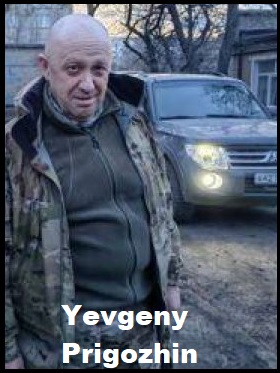 Born in 1961, Prigozhin grew up as a somewhat snarky Soviet Robin Hood, a street urchin who flowed invisibly between Finland and Leningrad in a black-market social circle that, well, let’s just say I am familiar with.
When he was 20, Prigozhin was arrested for a heist and federally imprisoned for 9 years while the Soviet Union collapsed. When he exited prison Russia was different, and with St Pete now becoming a tourist destination, he joined the capitalist opportunity with a street food vending business.
Prigozhin is hard as nails, snarky as hell and very tricky.
He is one of the apex gremlins and very much still connected to the streets, very connected. He was never connected to the towers of Russian politics as the West portrays. Prigozhin doesn’t have the pedigree nor the disposition for political power.
Let me put it this way, no one knows how to play gremlin mind games against the West better than Yevgeny Prigozhin. He’s a little bit like a less refined Oleg Deripaska, and much scruffier. Also remember, in February 2018, Prigozhin was one of 13 Russians indicted by Andrew Weissmann and Rod Rosenstein for interfering in the American election through the Internet Research Agency, lol {insert eyeroll}.
Here’s where it gets interesting. Don’t share this; it’s for CTH audience only. Back in April of this year, a blogger in St Pete named Vladlen Tatarsky (real name Maxim Fomin) was killed by a bomb disguised as a gift for his work reporting on behalf of free people in Russia. The bomb was inside a bust of Tatarsky given to him shortly before he was giving a speech in a cafe. A 26-year-old woman named Darya Trepova gave him the gift; she was arrested and disappeared.
Speculation, strong speculation, was that the cafe bomb was a CIA operation, because Tatarsky was considered an enemy of Ukraine. His death was a hit to the pro-Russia morale inside the region. The target, Vladlen Tatarsky, and the head of the Wagner mercenary military units, Yevgeny Prigozhin, were good friends.