Quantcast

Chinese Car Company BYD Inquires to Purchase Stellantis Auto Plant in Canada

For about a year CTH has predicted Chinese auto manufacturers BYD and GEELY would take over shuttered auto plants in Canada.  Specifically, six months ago, against the backdrop warning of Stellantis, Toyota and Honda telling the Canadian government that without the USMCA they would shift auto production to the USA, CTH predicted BYD and GEELY would make moves on those closed facilities.
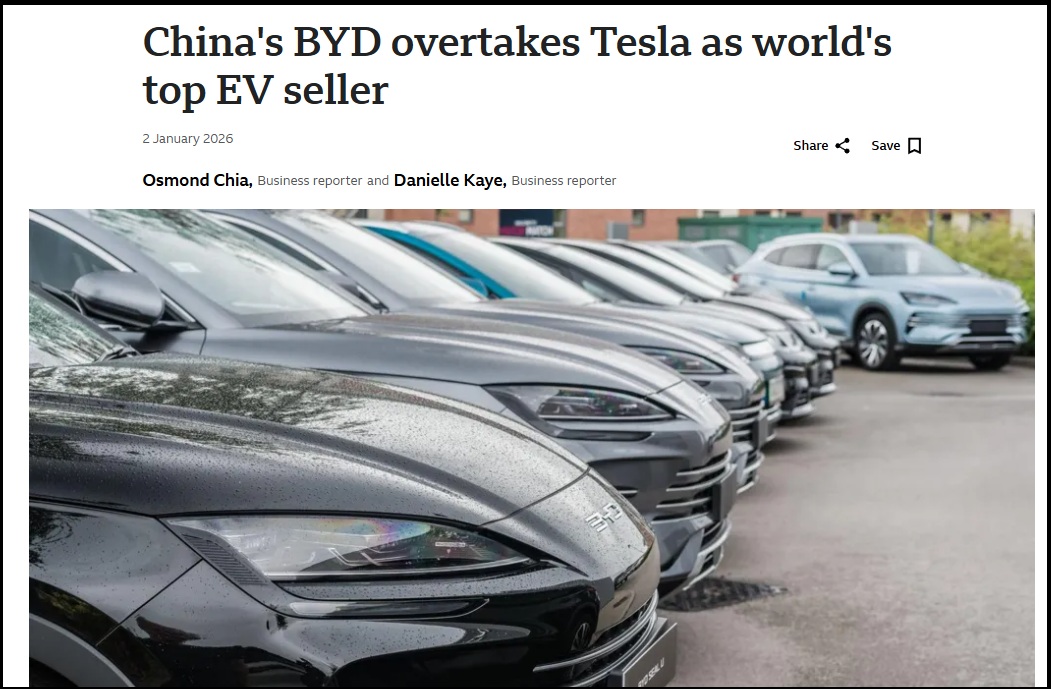
The move by China is easy to predict.  Prime Minister Mark Carney has opened the door to Chinese EVs.  It would be in Beijing’s best interest to retool and take control of closed plants to begin mass production in North America.

Chinese EV manufacturing in Canada serves two purposes.

First, they would not be limited in production to the cars that remain in Canada as part of the agreement.  Factually, China would use their Canadian footprint as an export hub into Europe and save money on current distribution.   Remember, Europe is losing their auto manufacturing base to China and Germany is laying off 100,000+ auto workers.

Second, the appearance of Chinese auto manufacturing in North America would put pressure on the United States to permit their cheap EVs to enter the market.

Today Bloomberg is reporting exactly what we predicted.  Chinese automaker BYD (Build Your Dream) is asking local officials about the currently idled Stellantis auto plant.  Things are following a very predictable timeline.

BLOOMBERG – Chinese carmaker BYD Co. inquired about taking over an idled Stellantis NV plant in the Toronto suburbs, according to a local politician, signaling possible global interest in Canadian auto hubs in the midst of a trade battle with the US.
(more…)

Canadian Govt Gaslighting Is Off the Charts

CTH continues to get considerable questioning about how the U.S-Canada fracture will take place, what it means for the Canadian dollar (CAD) and when the issues can be expected to apex.  It appears that part of the reasoned disconnect people are struggling with is directly related to the messaging from the Canadian government in combination with the financial media.

In short, despite the increased trade friction, a decoupling of the U.S. economy from the Canadian economy just seems unfathomable to most observers. The main question we receive is ‘when will things happen‘?  Meaning when will financial markets react?  The most obvious answer to that question is, when the USA announces the termination of the USMCA (CUSMA) trilateral.

If you hold the opinion that all of these trade friction points will be resolved within the margins of the USMCA, then it is correct to predict that no significant material impact will be felt north of the border.  If, however, you hold the opinion that the USMCA will be terminated because the core of the issues between the two countries are irreconcilable, then the material impact will come as soon as that announcement is made.

Alberta Premier Danielle Smith, the only Canadian government official to attend President Trump’s inauguration, appears on Fox Business. Like all other Canadian officials, she cannot contemplate the elimination of CUSMA/NAFTA.  Such an outcome is simply beyond her comprehension. WATCH:

In previous interviews and broadcasts, Mrs Smith claimed if Canada was to introduce an export tax the USA would respond accordingly.  This is not accurate.  The U.S. has no mechanism to place a tax on exports.

Additionally, inside Canada the structure is provincial.  That means each province taxes each other province for goods and services.  In the USA we have state sales taxes, but those taxes are applied across all goods sold to/inside an individual state.  Ex. Florida does not tax Texas.  Florida has one sales tax for all goods regardless of their origin.

(more…)

Canadian State Media Tells Journalists: “Do not refer to the Sept. 11 attacks as terrorist attacks”

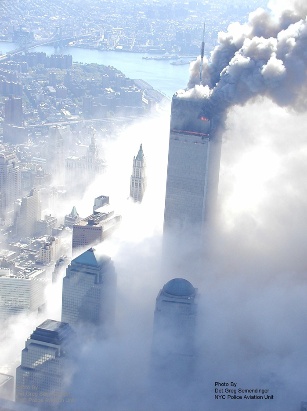
The Canadian state media outlet, the Canadian Broadcasting Corporation (CBC), responds to the tensions of the Canada-USA relationship by telling all state funded journalists: “Do not refer to the Sept. 11 attacks as terrorist attacks.”

According to the internal communication: “The memo instead described the 9-11 events as hijackings that led to passenger jet crashes in Washington, D.C., Pennsylvania and Manhattan. It also said the World Trade Center was destroyed. {citation}

CANADA – The Canadian Broadcasting Corporation on Thursday defended an internal memo directing its reporters and editors to refrain from describing the Sept. 11, 2001, attacks as “terrorist attacks,” telling Fox News Digital the guidance reflected its longstanding practice of attributing terms it considers politically and emotionally loaded.

“It is the practice of the CBC to exercise extreme caution before using the words ‘terrorist’ and ‘terrorism,'” CBC Public Affairs Director Kerry Kelly said in a statement to Fox News Digital. “The memo was a reminder of the longstanding practice that favours the use of these terms with attribution in our reporting.”

The memo was authored by Basem Boshra, CBC News’ senior director of journalistic standards and public trust, and surfaced ahead of the attacks’ 25th anniversary. The directive was first reported by Toronto Sun columnist Warren Kinsella, who said it was addressed to CBC News staff. “Do not refer to the Sept. 11 attacks as terrorist attacks,” the memo said.

The memo instead described the events as hijackings that led to passenger jet crashes in Washington, D.C., Pennsylvania and Manhattan. It also said the World Trade Center was destroyed. (read more)

(more…)

President Trump and USGS Officially Change Name of Lake Ontario to Lake America

President Trump holds a press availability in the oval office for a signing ceremony changing the name of Lake Ontario to Lake America.  Additionally, President Trump answered questions about the U.S relationship with the Canadian government.

Listen to the presser and you fully understand President Trump’s position on U.S-Canadian trade and the trilateral NAFTA/USMCA agreement.  Trump noted he is now finishing the North American trade and economic policy that he began in his first term.  There is not a single moment of hesitation in his responses.  WATCH:

President Trump also fielded questions about the Ukraine war and the status of relationship with Russian Federation President Vladimir Putin.  President Trump succinctly said, “he’s not going to attack NATO.”

(more…)

Must Watch: U.S. Trade Rep Jamieson Greer -vs- Canadian State Controlled Media Rosemary Barton

This is a must watch interview.  Most Americans have no idea that Canadian media is controlled by the Canadian government; it’s what they call “cultural protection” where the rules and regulations of permissible speech are controlled by govt regulators and media are subsidized by govt.  The overall objective is to control information and censor viewpoints that might be averse to the interests of the Canadian govt. That’s why most Canadians have no concept of granular details on policy matters; they just don’t get the information.

In this interview with the Canadian Broadcasting Corporation (CBC), U.S Trade Representative Jamieson Greer is discussing the trade conflict and breakdown with Canada’s version of Baghdad Bob, Rosemary Barton.  I’m a little surprised the CBC would even entertain the discussion. However, as noted in the past few days there is increasing skepticism amid Canadians about who and what actually blew up the trade talks. Canadians are starting to show signs of suspicion; enter Ms. Barton on behalf of the Canadian government to try and control things.

USTR Jamieson Greer answers the questions in a most unfortunate manner; meaning, he told the truth.  Greer outlined exactly why he suspects the trade talks broke down, and it has nothing to do with economics or trade, it’s all politics on the Canadian side.  As Greer noted, there was no change to the trade agreement between President Trump and Prime Minister Carney’s lengthy phone call on Tuesday, and the Canadian decision to walk away on Friday.  Greer was being very diplomatic, but Barton started getting the vapors. WATCH:

Greer noted the Carney administration had requested “Fortress North America” a synergetic alignment of U.S-Canada trade principles.  Canada wanted a united North American continent against the world on trade.  Therefore, this talk of Canada being upset about joint collaboration and agreement on trade agreements with third countries, a point brought up by Carney in the walk-away just doesn’t make sense.

If you want a united trade policy for North America, then each nation in North America must hold the same baseline on terms and conditions with other nations.  That was the discussion. Those were the agreed principles; until all of a sudden Canada accused the U.S. of dictating terms.

(more…)

Barbara Boyd Outlines Canadian Prime Minister Mark Carney’s Role in EU and Ukraine Friction, With Planned Antagonism Against President Trump

Barbara Boyd does a solid job connecting the recent U.S-Canada trade friction to the globalist plans of Mark Carney in alignment with the European Union.  The goal is to create and maintain broad opposition to the geopolitical reset underway as an outcome of President Trump’s larger and nationalistic economic agenda.

This is worth the watch as many of the background happenings are interconnected, yet few people are putting it all together. Barbara Boyd argues that the most dangerous escalation is the proxy war with Russia, highlighting Russia’s warning that direct British involvement in strikes on Russian territory could make Britain a combatant.

She says the UK has long driven the ¹Ukraine conflict and that Trump has sought peace while Britain and Europe resist, relying on war production amid failing economies. The episode focuses on Canada’s Mark Carney as a key spokesman for a permanent-warfare economic strategy, detailing his global financial roles and Canada’s creation of a Defense Security and Resilience Bank to fund defense mobilization without citizen involvement.

Boyd also describes Carney’s actions against the U.S., including trade disputes, deeper EU alignment, and Arctic defense plans. She claims a coordinated “chaos” and “psychological warfare” campaign targets U.S. voters ahead of the midterms.  WATCH:

¹There is little doubt European NATO countries, led by the U.K, France and Germany, are stimulating and supporting increased direct military conflict against Russia.  We are beginning to see not-so-covert events happening in/around border nations with Russia -carried out by Ukraine- that continue to raise the stakes.

Moldova, Romania and now Finland are starting to become increasingly visible as launch regions for Ukraine drone attacks into Russia. Meanwhile the Russian enclave of Kaliningrad (between Lithuania and Poland) is surrounded by provocative NATO military activity. Keep watching.

(more…)

White House Press Release: “Ending Canada’s Free Ride”

Hopefully CTH readers have followed this story close enough to be able to predict where it ends. The White House has released an official and scathing press release outlining the lengthy and long-term issues with Canada and trade disputes.

WHITE HOUSE – Canada has been ripping off the United States for decades — and President Donald J. Trump is done letting them get away with it. Last week, the U.S. offered Canada the most preferential market access of any country on Earth, with deep cuts on steel, aluminum, autos, lumber, and more. Instead of partnership, Canada chose unreasonable demands, walk-backs, and flat-out rejection.

The record of Canadian abuse is clear and deliberate:

  • FACT: Canada is joined only by the People’s Republic of China in choosing retaliation over negotiation. Their continued discriminatory treatment of U.S. commerce has burdened American workers, farmers, and businesses.
  • FACT: Canada alone imposed discriminatory 25% tariffs and company-specific quotas on U.S. motor vehicles — measures applied to no other country. As a result, U.S. vehicle exports to Canada crashed 22% over the last year.
  • FACT: Canada banned American wine, beer, and spirits in nearly every province and territory — while other countries have faced no such restrictions. As a result, U.S. alcohol exports to Canada collapsed 81% in a single year.
  • FACT: Canada locks out U.S. dairy with tariff-rate quotas far more restrictive than those given to Europe, plus over-quota tariffs of nearly 300% — rates so extreme they function as a near-total ban and rank among the highest agricultural tariffs in the developed world.

(more…)

Promethean Action Outlines the Background of Mark Carney Working with DNC Officials and Operatives

This is a pretty good encapsulation of the relationship between Canadian Prime Minister Mark Carney and the DNC officials within the United States. Although Kokinda missed mentioning the meeting between Barack Obama and Mark Carney shortly before the G7 summit in France.

After Prime Minister Mark Carney abruptly pulled Canada out of U.S. trade talks and framed the dispute as a “war,” this episode argues the rupture isn’t really about tariffs but about political and financial strategy aimed at the U.S. midterm elections. Citing U.S. Trade Representative Jamieson Greer’s account of negotiations and Canada’s unique retaliation, the script claims Carney is pursuing “geo-industrialization” and a “donut strategy” to go around the White House and influence American public opinion, aided by U.S.-connected advisers and outreach to mostly Democrats.

Kokinda also highlights comments from Iran’s foreign minister about U.S. debt and links the broader conflict to competing economic systems. The episode concludes that Treasury Secretary Scott Bessent is fighting a parallel battle to manage risks from the yen carry trade using tools like FIMA to prevent destabilizing Treasury selloffs.

.

(more…)

MUST WATCH – U.S. Trade Representative Jamieson Greer Explains the Breakdown Triggers in U.S-Canada Trade Talks

In short, as Canadian conservatives suspected, Mark Carney lied about everything!

U.S. Trade Representative (USTR) Jamieson Greer appeared on CNBC this morning to discuss the trade agreement between the U.S. and Canada and what caused the final breakdown at the last minute.  Greer notes the Canadian team appeared to be negotiating at the end from the position of politics as the Canadian team were aligning themselves with a domestic effort.

Greer draws attention to the friction points being very small. The U.S. tariffs were on less than 5% of overall Canadian exports and less than .06% of U.S. imports.  The U.S. made several offers to present Canada with the best trade terms in the world; however, Canada wanted more.  Canada wanted to retain all their market barriers, retain all quotas, retain all tariffs and restrictions against U.S. goods and services, but remove all the tariffs against them.

This is a really solid interview to watch because USTR Greer doesn’t need to pretend anything.  The terms offered were direct and consistent with benefit to both America and Canada.  On the language issue, Greer completely refutes the claims by Mark Carney about the U.S. seeking to change the language of Quebec and starts laughing at the premise. The issue relates to Canada demanding that five percent of all tech income be given to Canadian tech companies they compete against. That demand is ridiculous.  WATCH:

.

(more…)

Prime Minister Mark Carney Pledges to Become a European Protectorate

Every time he has the opportunity, Canadian Prime Minister Mark Carney reminds the world he views Canada as a part of Europe.  As the trade conflict between the USA and Canada deepens, Mark Carney looks toward Europe for a financial and security lifeline.

During remarks earlier today Commonwealth Prime Minister Carney noted his intention to join with Europe this fall for increased economic and national security.  This is an alignment the former Bank of England head has been operating since his installation. [X Link]

From my perspective this is Commonwealth banker Carney’s financial hedge against the looming USMCA termination.

Carney will be counting on U.K and EU financial support when the Canadian dollar declines quickly.  You might remember the Bank of Canada warning about this.

May 2026: – […] A cascading series of events could cause a sharp loss of investor confidence and lead to a spike in demand for liquidity or rapid asset sales. Funding markets could come under pressure, and stress could spread more broadly.

To be clear, the FSR is not about what we expect will happen. It is an assessment of how existing vulnerabilities—or pockets of stress—could amplify shocks and ultimately spread across the financial system.” (more)

(more…)