Quantcast

German Economic Minister Announces Restart of Coal Power Plants for Electricity Due to NATO Sanctions and German Dependence on Russian Oil and Gas

To say the recent remarks from German Economic and Climate Minister Robert Habeck showcase the stupidity of the western sanctions would be an understatement.  In a broad energy policy announcement to the German people, Minister Habeck has announced that natural gas is now urgently being stored and built up in order to survive next winter.

Additionally, the German parliament is being called into emergency session to re-write climate laws allowing coal-fired electricity power plants to be brought back on-line.  Essentially, years of German renewable energy investments and initiatives are now being reversed in order to maintain the commitment to NATO sanctions against Russia.

You can read the full translated remarks HERE.  Some of the more stunning excerpts are below.

GERMANY – Minister Robert Habeck […] “The situation on the gas market has deteriorated in recent days. The missing quantities can still be replaced, and the gas storage tanks are still being filled, albeit at high prices. Security of supply is currently guaranteed. But the situation is serious. We are therefore further strengthening precautions and taking additional measures to reduce gas consumption. 

(more…)

Central EU Economy, Inflation Rate in Germany Jumps Far Beyond Expectations in May to 8.7 Percent

Germany is the central and largest economy within the European Union; it is also the most influential for anything related to the response from the European Central Bank and EU Central Bank President Christine Lagarde.   Today, Germany is reporting a massive (unexpected) jump in overall inflation for May of 8.7%, up from the previous month’s 7.8%.

Ironically, it was a little more than a month ago when EU Central Bank President Christine Lagarde said she did not expect the EU inflation to be quite as bad as the U.S. inflation crisis due to the EU spending less on COVID relief and focusing on employment retention.  This was the ECB justification for not raising interest rates until later this summer.  Obviously Lagarde has joined Jerome Powell in the room filled with bad financial decisionmakers.

Germany is the largest and most influential economy inside the EU. If the German economy falters, the entire EU slips into a recession.  The massive inflation now being reported by Germany, that continues climbing each month, will increase the urgency for of Lagarde to raise rates.  They too are in the inflation spiral, and this issue will quickly fracture the EU response to Ukraine.

(Via Reuters) – […]  German consumer prices, harmonised to make them comparable with inflation data across the European Union, increased to 8.7% from 7.8% a month earlier, well ahead of expectations for 8%, data from the Federal Statistics Office showed on Monday.

(more…)

German Govt Release Inflation Data, Hyper Production Inflation Surpasses 30 Percent, Highest Rate Since 1949

The German government released their version of the producer price index for inflation, and they are reporting 30.9% inflation for products leaving German factories.  [DETAILS HERE] That’s the highest rate of inflation since shortly after the second world war.

The inflation rate is being driven mostly by energy costs which are more than 80% higher than last year.   However, each nation’s overall inflation rate is also driven by the amount of central bank spending they used during the COVID economic lockdowns.  The more any govt spent on subsidies, the more money they printed, the more they devalued their money and subsequently, the higher their current rate of inflation.

Germany is the largest economy in the European Union.  This level of inflation within Germany has major ramifications.

First, with this level of energy inflation Germany cannot afford to stop purchasing Russian energy products.  There’s no way for Germany to join or increase western sanctions against oil and gas they need to stay sufficient.  Germany is dependent on Russian energy.

Second, with Germany’s economy this vulnerable; and with Germany being so dependent on Russian energy; Germany will have to distance itself further from any Ukraine assistance.   In the background of western voices already being upset with Germany for not providing more support for Ukraine, their economic vulnerability explains their unwillingness.   The U.S. proxy war against Russia does not benefit Germany, at all.

(more…)

German Parliament Rejects Vaccine Mandate

Despite western media presentations of vaccine outlooks in what they frame as progressive Germany, the country actually has one of the lower vaccination rates in Europe. About 76% of Germans have one dose of vaccine compared to an average of 80% in France, Italy and Spain.

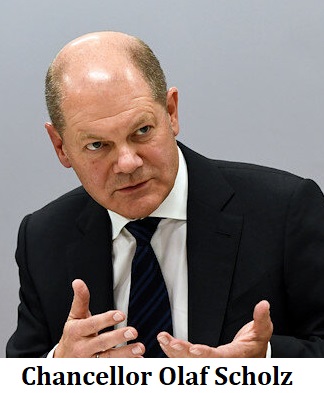
German Chancellor Olaf Scholz stated earlier in the year, the only way forward through the COVID-19 pandemic was a national vaccine mandate.

Anticipating limited support for the measure, Scholz’s tenuous coalition government constructed a law they thought would have widespread support.  Those over 60-years of age would have a mandatory vaccination, and those 18 to 59 would have a mandatory conversation with their doctors about the vaccination.

The members of parliament were told to follow their conscience as Scholz’s law was brought to the floor for a vote.  The vaccine law failed to pass parliament as 378 members voted against it, 296 voted in favor.  The legislative defeat has stunned the ruling German coalition.

BERLIN, April 7 (Reuters) – Germany’s lower house of parliament on Thursday voted against a bill requiring anyone aged 60 and over to get vaccinated against COVID-19 in a defeat for Chancellor Olaf Scholz.

(more…)