Quantcast

Treasury Secretary Scott Bessent Delivers Remarks from Minneapolis, Minnesota – Full Video

Prior to the discovery of rampant fraud in Minnesota, Treasury Secretary Scott Bessent was already scheduled to deliver remarks to the Economic Club of Minnesota. Treasury Secretary Bessent is also the Acting IRS Commissioner, which gives him a very unique position from which to review and discuss the explosive issues of fraud within the state.

This is a MUST WATCH video in totality to understand exactly what Secretary Bessent is focused on.

Secretary Bessent begins visit by delivering prepared remarks to the audience outlining the success in President Trump’s economic policy approach, giving specific examples of granular policy accomplishments and what they mean to the average American. Secretary Bessent then sits down for a question-and-answer session where he drills into the issue of the fraud within the Minneapolis, Minnesota region.

Regarding the Somali fraud issue, Bessent notes the IRS Criminal Investigations department are leading the charge to identify the specific individuals and larger network groups within the region who will be held to account.  In the bigger picture roughly 10% of all government spending has been identified by the General Accounting Office as fraud.  This is a really good overall review of the current approach being taken by the Trump administration. WATCH:

.

(more…)

Canada Trying to Find Trade Partners

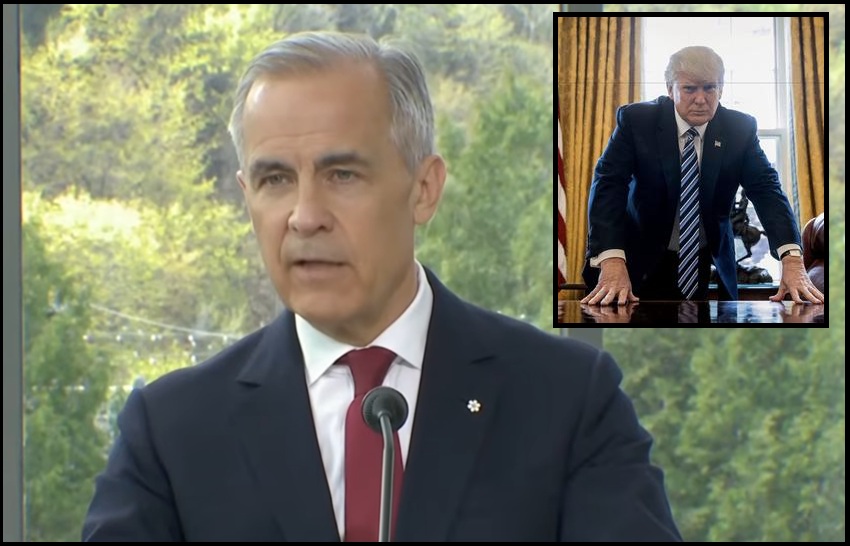
A recent article in Politico quoting several cabinet members of Prime Minister Mark Carney reflects a particular reality of the problem their economy will face in 2026.

It appears that Canadian government officials have finally recognized the Trump administration plans to dissolve the USMCA or what Canada calls CUSMA next year.  With that reality they have a big problem.

Mexico has been working throughout the year to initiate economic policies in alignment with the United States.  However, structurally and politically this is an alignment that is impossible for Canada to do.  Like many contracting European countries, the economic policies of Canada are centered around their climate change agenda and green energy goals.

For the past few decades Canada bought into the carbon scam and enacted climate change goals into law for carbon pricing, alternative energy production, industry and manufacturing costs.  These mechanisms to control “climate change” are nuts in the big picture.

In order for Canada to position their economy to be in alignment with the rest of North America (USA and Mexico), Carney would have to reverse years of legislated rules and regulations.  That is not going to happen, and Canada will always be at a disadvantage because of it.

(Politico) – […] It’s a moment of existential crisis for Canada, a senior Carney government official told POLITICO. Waiting out the Trump administration isn’t an option, the official said, arguing that what’s happening in the United States reflects a generational shift — not a temporary disruption — and that returning to a policy of closer integration with America would be foolish. (more)

With three quarters of their economic production tied to exports into the USA, and with the USMCA likely to be dissolved in favor of a bilateral trade agreement, Canada now has to find other markets for its products or lower all the trade barriers currently in place.  Prime Minister Mark Carney is trying to find alternative markets.

(more…)

U.S. Trade Representative Jamieson Greer Gives Strong Recap of President Trump Trade Policy

Outlining why there literally is not enough time for a lengthy dual-track legislative trade policy to be constructed, Ambassador Jamieson Greer gives a great encapsulation of the urgency behind the trade policies, tariffs and negotiations between the U.S. and trade partners.

If President Donald Trump did not win in 2024, another four years of parasitic trade policy would have crossed the Rubicon of U.S. manufacturing recovery.   The urgently applied tariff strategy gave the administration breathing room to reestablish domestic economic growth.  USTR Greer and President Trump are now fine-tuning the tariffs country by country, sector by sector, to achieve ultimate economic benefit.  WATCH:

.

(more…)

Half of Germany’s Manufacturing Sectors Anticipate Significant Layoffs and Job Losses in 2026

In addition to being the main economic engine in Europe, Germany is the epicenter of the European Union’s overall goal to chase the green energy agenda.

For the past several years Germany has been deconstructing their fossil fuel energy production and replacing it with far more expensive alternatives.  This has led to large increases in overall energy prices, and downstream increases in manufacturing costs.

The consequences have been snowballing throughout 2025, while cheap competitive alternatives coming into the EU from China have compounded their problem.  Recently a survey of major industries was conducted in Germany to determine the forecast for 2026, the results are not good.

Approximately half of the industrial sectors in Germany are anticipating job losses, cuts or layoffs this year.

22 out of 46 business associations are preparing to downsize their labor force.  Only 9 of the 46 are expected to increase hiring.

At a top-line this looks bad.  However, when you look at the sectors contracting versus the sectors stable or expanding, you suddenly realize there is a bigger geopolitical problem within the forecast.

Job losses are expected in auto manufacturing, the textile sector, wood and paper fabrication.  Job gains are expected in aerospace, shipbuilding and defense production – i.e. the war machinery.

When the largest and most developed industrial economy in Europe is pinning its economic survival on war machinery, a particular momentum is created.  It is never a good outcome for Europe when Germany becomes reliant on war to maintain employment.

(more…)

Big Pharma Takes a Knee – Agreement to Deliver Low-Cost Pharmaceuticals to America

The look on the faces of the CEOs representing some of the biggest drug manufacturers tells the story. Against the stern backdrop of collapsed resistance, President Trump announces the results of his “most favored nation” policy demand toward major pharmaceutical companies.

President Trump delivers remarks from the oval office, outlining the result of demanding pharmaceutical companies give the same pricing structure to USA medication users as they do to the rest of the world. In addition to noting how his administration has begun reducing the number of federal workers, President Trump announces that 100% of all job growth is in the private sector.

Nine, visibly strained, drug manufacturers were present as President Trump makes the announcement of their new drug pricing structure. Even the buckets of winnamins will be lower priced. WATCH:

A large part of healthcare costs overall are the costs of prescription medication.  President Trump is putting major pressure on all of the drug manufacturers to give the lowest price to the USA.  “As of today, 14 out of 17 pharmaceutical companies have agreed to drastically lower drug prices for American patients,” President Trump noted.

(more…)

Chinese Auto Sales to Europe Expected to Top 700,000 Units Sold This year

The geopolitical baseline for Europe is often determined by the economics of their situation.  In 2024 approximately 408,000 cars from China were sold in Europe.  For 2025 that number is now expected to exceed 700,000 units despite tariffs.

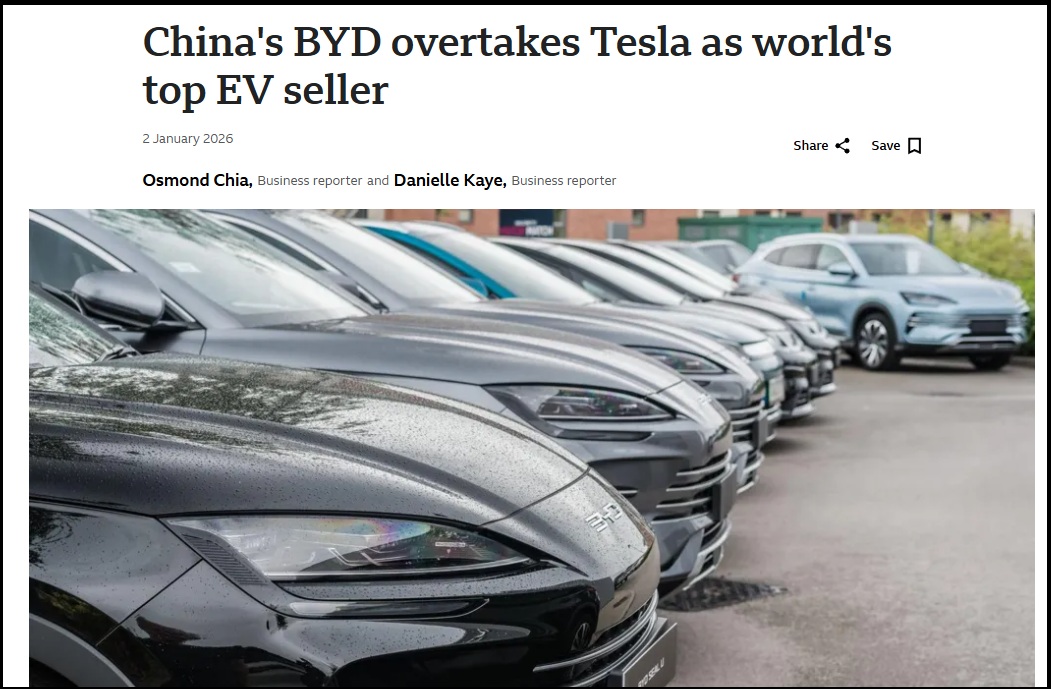
Previously we highlighted the short-term ramifications of the European Union push to force the sale of electric vehicle (EVs) upon the consumer base.  {SEE HERE} EU automakers unable to meet the compliance goal began purchasing carbon credits to avoid stiff EU fines.  Many of those carbon credits were purchased from Chinese automakers, who then turned around and started using the extra EU revenue to discount Chinese cars sold in Europe.

In essence, EU car companies started subsiding China to undercut their own market. An outcome of the EU chasing the ridiculous green energy project throughout the European free trade zone.

Now reports are beginning to surface of how the non-EV segment of the industry is being lost to less expensive Chinese hybrid autos that: (1) are much cheaper, (2) not bad in quality, and (3) are not subject to the 35% EV tariff rate.

The EU tariff applied to gasoline powered cars or hybrids from China is 10%.  That tariff is not enough to stop the imports. The Chinese hybrid autos are substantially less than European car brands, and there’s no financial incentive for China to build auto plants in the EU zone especially when you consider the EU is subsidizing those cars by purchasing carbon credits.

When analyzed from a cost and consequence, the entire EU dynamic toward car companies is a little funny.  However, for Germany this is a serious issue, and with the German industrial economy already stagnant – every impact to their auto industry only makes the situation worse.

(more…)

Strategic Positioning: Mexican Legislature Passes Trump-Level Tariffs Against Chinese Textiles, Shoes, Appliances and Autos

Taking a very significant step to be in alignment with President Trump’s North American trade bloc construct, Mexico has passed a sweeping set of tariffs against Chinese imports.

The motive for the move by President Claudia Sheinbaum and her political party, Morena, which controls both legislative chambers is clear.  Mexico is moving into direct alignment with President Trump as the likelihood for the end of the current USMCA trade agreement looms.

President Trump has sent clear signals expressing his intent to dissolve the USMCA trade agreement in favor of two bilateral agreements, one with Mexico and one with Canada.

The Mexican government led by Sheinbaum have made moves throughout the year to stay in alignment with a favorable trade agreement, while the Canadian government led by Mark Carney has been more antagonistic toward any change.

The Mexican trade leadership seem to have long expected the change to the USMCA, and now there are indications Canada realizes what is about to happen, albeit reluctantly.

As a consequence of their proactive position, Mexico has now passed up to 50% tariffs against a host of imports, mostly textiles, shoes, appliances, cars and automobile parts.  The tariffs will apply to any imports that are not part of a previously organized free trade agreement, which has the practical outcome of hitting mostly imports from China. That approach aligns directly with the tariff rate applied by President Trump toward Beijing.

(more…)

President Trump Holds a Roundtable Discussion on Agriculture and Farm Support

President Trump holds a roundtable discussion with Agriculture Secretary Brooke Rollins and various farm state senators as he outlines $12 billion in support and subsidy for American farmers.

With energy prices lowered, the costs for natural gas, fertilizer, diesel and gasoline prices have fallen; however, food costs have remained high.  President Trump announced with Brooke Rollins an initiative to help support American farmers with the intended objective to lower production costs from the field that will hopefully transfer to the fork.

Secretary Rollins and President Trump announce a $12 billion bridge subsidy to assist farmers with proactive planning for the 2026 planting season.  The money is coming from revenue generated by tariffs, and row crop farming will be the first subsidies delivered.  WATCH (media questions begin at 31:40):

.

(more…)

USTR Jamieson Greer Outlines U.S. Trade Strategy, Free Trade Agreements and Trade Policy

U.S. Trade Representative Jamieson Greer is questioned about the Trump administration strategy or lack thereof. “Yes, there’s a strategy,” Greer says in this new interview. “First of all, you don’t change 70 years of trade policy overnight. And second of all, when some people say, ‘Oh, well, this is chaos. What’s your strategy?’, what they really want to know is can we go back to how it was before? And that’s not going to happen.”

The interview is in an audio file presented by Politico and shared below. This is some really good information on the various free trade agreements and the regions represented by some of our largest trade partners. Well worth listening to as you go about your day and travels today. Embed below:

USTR Greer notes how the tariffs are being used, the upcoming Supreme Court decision, the need for congress to codify the tariff regime in legislation and the various regional strategies for the deployment of countervailing duties.

(more…)

Canadian Media Catch On, U.S Trade Rep Jamieson Greer Says Trump Likely to Exit the USMCA (CUSMA)

In the world of Trumpian geopolitical trade stuff, three issues are very interesting to watch. (1) The strategic reset with Russia which could break the official western construct of financial control. (2) The proactive and defensive positioning of Mexico (desperate attempt to retain economic attachment), and (3) the certain dissolution of the USMCA what Canadians call CUSMA.

Canadian media are starting to realize something we have talked about on these pages for years; President Trump intends to end the USMCA because the USMCA was used as a fracture point to eliminate NAFTA.

Wall Street, the U.S. Congress, the massive K-Street lobbying network around the U.S. Chamber of Commerce and the entire political apparatus of business and industry would never permit the end to NAFTA; too many trillions at stake. So, President Trump replaced NAFTA with the interim USMCA, which was better but factually more useful in elimination of the original.

Now, as we have discussed by highlighting President Trump’s no-so-subtle words on the issue, the Canadian media is realizing the USMCA will be dissolved in favor of two independently negotiated bilateral trade agreements; one with Canada and one with Mexico.

(CTV) – U.S. President Donald Trump could decide next year to withdraw from the Canada-United States-Mexico trade agreement (CUSMA), Politico reported on Thursday, citing U.S. Trade Representative Jamieson Greer.

“The president’s view is he only wants deals that are a good deal. The reason why we built a review period into CUSMA was in case we needed to revise it, review it or exit it,” Greer told Politico’s White House bureau chief Dasha Burns in a podcast episode that airs Friday.

Greer also raised the idea of negotiating separately with Canada and Mexico and dividing the agreement into two parts in the podcast, adding that he spoke with Trump about that possibility just this week.

(more…)