Treasury Secretary Scott Bessent appears on ABC News with narrative engineer Jonathan Karl to discuss the outcomes of the Davos assembly, the Canadian trade conflict and the U.S-NATO deal over Greenland. Video and Transcript Below:
[Transcript] – KARL: I’m joined now exclusively by Treasury Secretary Scott Bessent, who is just back from Davos and joins us here in the studio.
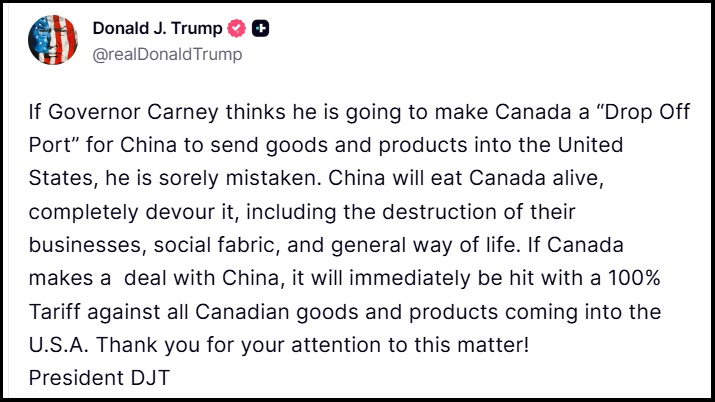
Thank you for being here, Mr. Secretary. Let me start with the threat that the president made just yesterday to Canada. He said, if Canada makes a deal with China, it will immediately be hit with a one hundred percent tariffs against all Canadian goods. Why is Donald Trump threatening Canada again with another trade war?
SCOTT BESSENT, (R) UNITED STATES TREASURY SECRETARY: Well, Jonathan, good to be with you. And look, Prime Minister Carney went to — went to China, came back, dropped some industry specific tariffs on Chinese goods, and we have a highly integrated market with Canada, sometimes in autos, which he dropped the E.V. tariff, I believe, from a hundred percent to six percent.
The goods can cross across the border during the manufacturing process six times. And we can’t let Canada become an opening that the Chinese pour their cheap goods into the U.S. We have a USMCA agreement, but based on — based on that, which is going to be renegotiated this summer, and I’m not sure what Prime Minister Carney is doing here, other than trying to virtue-signal to his globalist friends at Davos.
I don’t think he’s doing the best job for the Canadian people.