{Bumped – By Request More Analysis Added}
It is very obvious from the construct and details of this announcement that U.S. Trade Representative Jamieson Greer has completed a comprehensive review of the retaliatory action by Canada that followed the U.S. Section 232 tariffs on Steel and Aluminum. {FACT SHEET HERE}
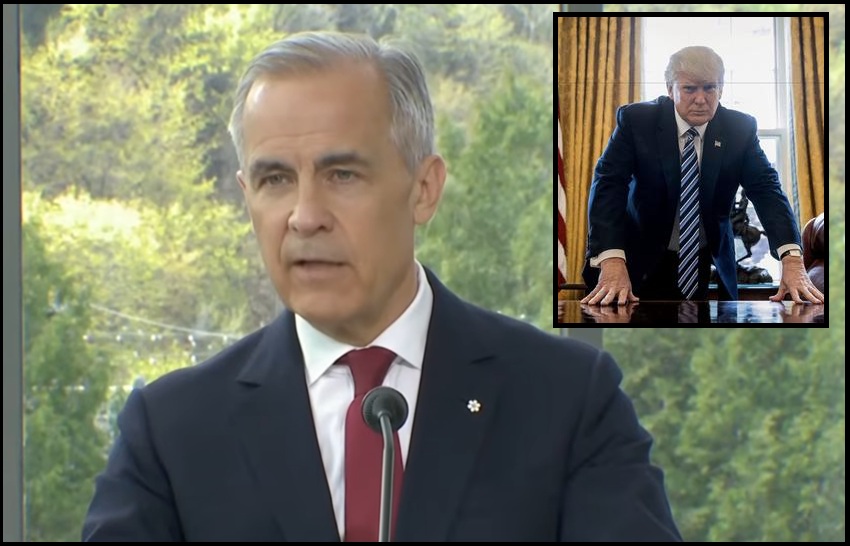 Last year two countries retaliated against the U.S. for the 232 (steel and aluminum) tariffs, China and Canada. The USTR office has now quantified the tariff and non-tariff barriers triggered by Canada in 2025 and provided President Trump with a financial quantification of the trade impact.
The three Canadian retaliatory sectors highlighted include: (1) Alcoholic Beverages, (2) Motor Vehicles, (3) Dairy Products. These are the three segments quantified by USTR Greer that form the baseline for the U.S. to retaliate with countervailing duties.
Effective 30 days from now, August 16, 2026, President Trump has established a 50% tariff rate against a wide variety of Canadian imports. Essentially three major Annexes: {LIST 1 – LIST 2 – LIST 3} under the authority of Section 338.
♦ Section 338 authorizes the President, if he determines it will serve the public interest, to offset any burden or disadvantage placed on the commerce of the United States by an unequal imposition or discrimination by a foreign country by specifying and declaring additional duties not to exceed 50 percent ad valorem (or its equivalent) and not to take effect earlier than 30 days after the President’s proclamation finding that a foreign country imposes an unreasonable charge, exaction, regulation, or limitation that is not equally enforced on the like articles of every foreign country, or discriminates in fact against U.S. commerce in a way that places the commerce of the United States at a disadvantage compared to the commerce of any foreign country.
Section 338 also authorizes the President to suspend, revoke, supplement, or amend any proclamation under section 338 whenever the President deems that the public interests require such action. Further, section 338 authorizes the President to exclude products of the foreign country if the foreign country maintains or increases the discrimination against the commerce of the United States and the President deems the exclusion to be consistent with the public interests and the interests of the United States. (more)
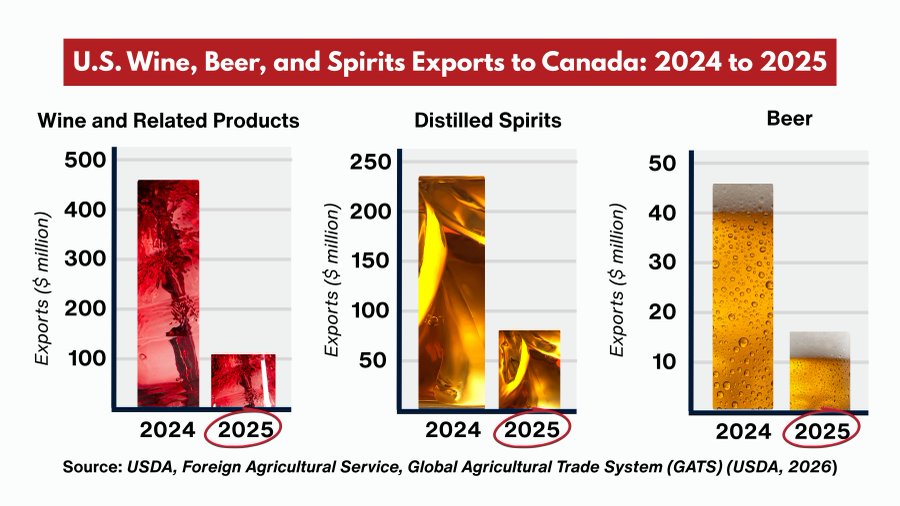
The 50% tariffs apply to food, alcohol, beer, clothing, chemicals, electronics, flowers, fragrance oils, chemical raw materials and importantly wood products.
The wood products are a big hit to the Canadian export sector. This includes paper goods, cardboard, plywood and fabricated pulp wood derivatives like particle board (MDF). This is a huge export sector for Canada that will now trigger a 50% tariff rate.
Essentially, the list is very long and includes almost every assembled component part created by Canadian manufacturing.
FACT SHEET HERE – {LIST 1 – LIST 2 – LIST 3}
We can surmise the baseline is part of the non-negotiable trade calculation done by President Trump and USTR Greer, that will carry forward into any further trade agreement inside or outside the USMCA construct.
Meaning if the trilateral agreement holds (USMCA), these valuation targets will be part of the expectation from the USA side of the discussion toward Canada. However, in the more likely scenario a bilateral trade agreement is preferred, this now quantifies the tariff reciprocity anticipated by the USA, in addition to the elimination of non-tariff barriers.
ADD:
Some Canadian people think this round of U.S. tariffs is not serious, not realistic and easy to negotiate away. I suggest they go back and look at the details outlined. These are methodical tariffs, well-grounded and extremely difficult to challenge.
What USTR Jamieson Greer has quantified is the dollar value of Canada’s prior 2025 retaliation. Yes, it was driven by Canadian govt leadership; however, no, the dollar losses were created by a Canadian cultural response.
The Canadian govt cannot require Canadian citizens to purchase U.S. goods (think alcohol). Canadian citizens are emotionally angry at the USA (Trump), because -in part- they have been whipped into a frenzy by leftist politicians and pundits as part of the Canadian identity.
Even if the various provincial governments’ removed bans on products, the revenue is not going to return because the issue is now a cultural boycott. Canadians are defining themselves by being hostile to America. This is their national identity now.
This emotionally detached outcome is likely what President Trump needed in the dynamic of eliminating the USMCA: (1) Canada boycotts U.S. goods, (2) that behavior creates lost revenue that can be quantified, and (3) that quantified loss then becomes a tariff regime. Wash-Rinse-Repeat.
Canada cannot exit the spiral without stopping their emotional identification. Additionally, the Canadian government cannot reverse the quantified trade loss because it is not based on economic activity under their control.
Beyond the quantifications, data and mathematics, that’s the reality of the matter.

While both China and Canada retaliated to the 2025 U.S. Sec.232 tariffs on Steel and Aluminum, there is a big difference between China and Canada when it comes to finance and strategic economics.
China is thoughtful, calculated and cunning.
Canada is emotional and reactive.
What happened after the 2025 Sec.232 tariffs was easily predictable if you accept each government for who they are, not what they pretend to be.
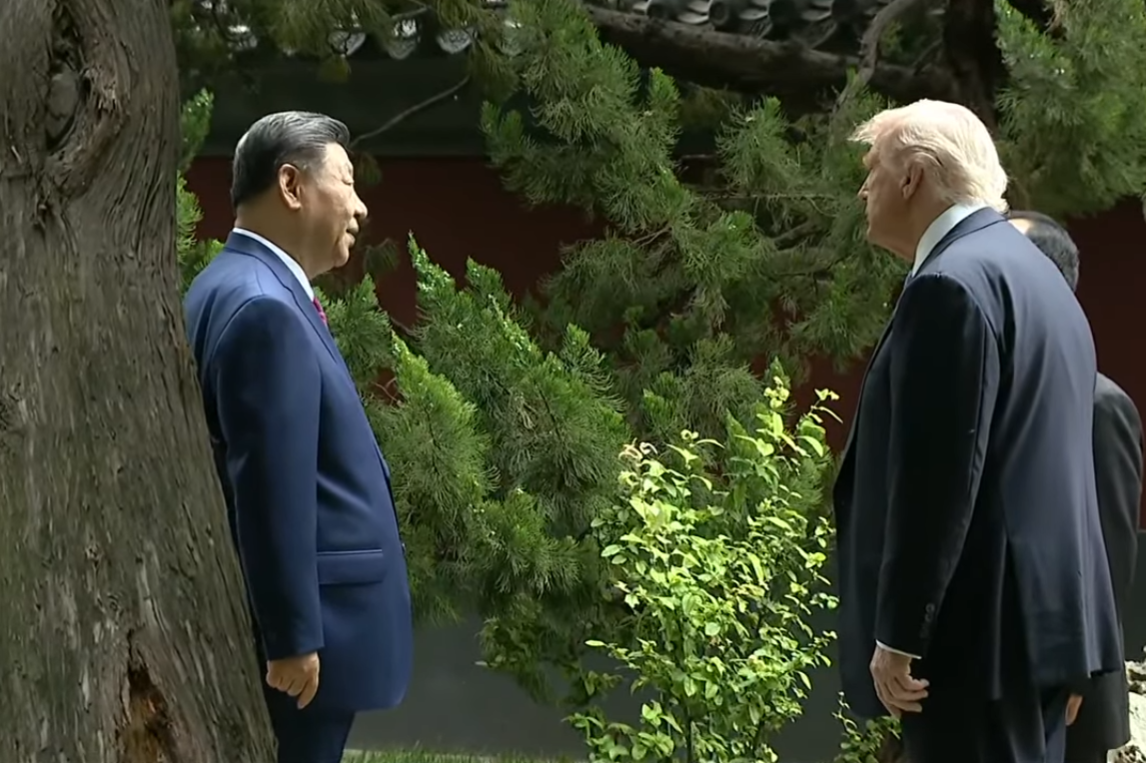
China (Chairman Xi and FM Liu) didn’t initially react to the Trump tariffs. Instead, they quantified the outcome. They estimated a vulnerability of roughly $30 billion in the sectoral tariffs, more in the baseline.
China then evaluated the cost/benefit of response. A calculated decision looking at the totality of the trade landscape. If they lost $30B USD, could it be recaptured in another sector? What other measures could China take etc., etc.?
China then folded the $30B loss into other global trade constructs. Europe was used to recapture most of it (deep industrial seeds planted); some from South America (foodstuffs).
By leveraging EU, Asia and South American trade agreements, China offset their $30B loss.
Canada however, reacted emotionally to the Sec.232 tariffs. Immediately boycotted various sector goods, levied retaliatory tariffs and instituted new non-tariff barriers and regulations in an effort to punish Trump.
See the difference in strategy?
China then ends up leveraging the emotion of Canada into a bilateral that puts BYD/GEELY into a manufacturing position within North America. This is the same thing Beijing did in Europe using EU self-imposed climate change mandates as the foot in the door.
China understands all those soon to be empty industrial buildings in Canada can be purchased for pennies on the dollar. Beijing keeps the panda mask and promises to purchase canola oil in exchange (lol).
Canada’s emotional response to the USA plays into the hands of both Chairman Xi and President Trump, and to make matters worse from the perspective of the Canadians their best play is to be even more emotional and angry (Carney/Ford).
Trump doesn’t want Xi in Canada, but that’s a battle for another day… Today, squishing Carney works for both.
China is calculated, serious, methodical and cunning.
Canada is emotional, reactive and, well, if we’re honest, kinda stupid.
No comment from CTH on the bi-lateral meeting of Mexico and Canada in Ottawa last week , mainly regarding the auto industry. I’m here for the Canada bashing and disappointed at this oversight.
Shucks, I can help a bit with that. It ain’t bashing, it’s just the truth.
If Mexico and Canada create an agreement to attempt to get around President Trump stopping the cheap Chinese auto part business from getting into the US via Canada, Mexico will get hammered in the same way Canada is getting hammered.
Toyota production in Mexico is already taking a hit, from the Mexico perspective, and moving to the US. Same thing *WILL* happen to Toyota production in Canada.
Toyota in Kentucky sends a LOT of engines to Canada for auto production there. We have the ability to produce some of those vehicles here in Kentucky. In fact, we have some rather large construction projects underway right now….
Canada is messing up……badly.
Sundance is NOT wrong about Toyota production being able to be shifted to the US.
It’s a mighty rare thing when Sundance is wrong. And he usually admits it when/IF he is.
On the ground here the few who are awake agree that the local Toyota and Honda plants will likely be gone within a year. Also Hyundai just cancelled a massive investment in hydrogen fuel (was madness anyway if you ask me).
But Ford seems to be increasing investment here – over $2bn into Oakville for trucks. Never been quite sure about Jim Farley tbh, but the Canadian gov’t is kicking in about $350 mil. So there’s that. 😉
Canadian built trucks for the Canadian market might make sense.
Good point. But the market is only about 1/13th of America. Not sure how the numbers equate to their US investment though.
I’ll have a dig. 😉
Yes, most Canadians are messing up badly, but Carney is doing exactly what he was installed to do…to stop Trump, and failing that, to destroy Canada, thereby leaving a failed state behind for American to clean up. The German submarine deal was likely just a money laundering operation, to transfer Canada’s remaining wealth to the EU/UK.
“The last official act of any government is to loot the treasury” – George Washington
I don’t think anyone here takes much joy in this situation or is Canada bashing. I think we’re all gobsmacked at how emotional and stupid Canada is being in this situation. I have many Canadian friends and former coworkers and I’m sad for their future. This is TDS at a nation state level.
By gingerly placing tariffs on our alcoholic beverages…
Carney rendered Canada Dry 🙂
Nicely played.
I’m more amazed at them using our media against us and our media going along.
H.v. — it isn’t OUR media. 📺
THE media is against us.
There is no OUR— just a weaponized machine designed to distort, create propaganda and lie.
I’ll never bash Dudley Do-Right. He’s a prime example of Canada’s finest.
And sgt preston of the canaduh mounties.😂
There was no “Principal” bilateral meeting between Mexico and Canada in Ottawa last week.
There were ZERO trade negotiators present.
It was optics only.
But aside from that?
It appears that Canadia has been, and still is, being unwittingly yet willingly used as a tool.
My opinion.
A rare, non paywalled NY Times article about this. They obviously want a full court press defense of Canada and globalism
https://www.nytimes.com/2026/07/21/world/canada/trump-carney-trade-tariffs.html?unlocked_article_code=1.zVA.vA3T.9qmkykQ78_Za&smid=url-share
Thanks for the article. The comments are worth browsing. They are full of anti-American, anti-Trump, anti-MAGA talking points. The commenters are full of self-righteous superiority and all seem to be “economic experts” who want Canada to retaliate against the latest round of tariffs. They really have ZERO awareness of how much Canada has taken advantage of US, and are going to be royally screwed once they get to the FO portion of the negotiations. The number of over-educated leftist Americans clutching their pearls is concerning.
Over the years I have observed many conservatives change their minds on issues once presented with new-to-them information. I have never seen a leftist do that. They will deny that water is wet if it doesn’t conform to their uncritical, unchanging worldview.
Conservatives are logical, leftists are emotional. Talking to leftists is very much like trying to reason with toddlers. The term “useful idiot” came about for a reason.
💯 🎯 The adder is outstanding in detail and accuracy. As always!
Carnage got “elected” by leveraging the woke boomer’s all-encompassing TDS above all else. Note how the Conservatives steadily improved during Justine Castreau’s destructive term. But right about the time when that traitorous turncoat scumbag Mike Myers did the Elbows Up thing, the tables turned.
Liberal ownership/funding and control over the entire MSM and all the national pollsters created a psyop that I consider to be even more effective than mRNA jabs.
(Red and blue are t’other way around up here obvs)
“Everyone has a plan until they get punched in the face.”
(Right, Carney? 😎 🇺🇸 )
My 0.2 Maple Peso’s worth:
Carney’s plan is going perfectly. For him. Only.
Canada’s future is of no consequence to him. His sprawling web o’ grift has been intricately crafted over time so that if America wins, he wins. If CCP wins, he wins. And in the now highly unlikely event that the Great Green Grift wins, he wins.
Ever seen him wear a Maple Leaf pin? Nope. Always the Order of Canada pin. A personal accolade from his WEF puppet-masters awarded for developing financial policy in Canada and around the world. While he was Governor of the Bank of England!
Satanic lizards can’t keep themselves from signalling. 😉
“…going perfectly. For him. Only.”
And, dear Frostback, I will add…for the moment.
Unforeseen events have always tripped up the arrogant who believe they will forevermore be on steady footing.
I’m sure his predecessors thought similarly.
One right after another.
We wait….
💯 🎯 🤞 “Events, dear boy (girl), events.” 😉
You know….😁👍🏻
👍 Not my first dressage – er – rodeo! 😉
🏴🏴🏴
👍 💯 😎
With apologies to all and sundry:
Tune: Men of Harlech
What’s the good of wearing braces,
Vests and pants and boots with laces,
Spats or hats you buy in places
Down the Brompton Road?
What’s the use of shirts of cotton,
Studs that always get forgotten?
These affairs are simply rotten:
Better far is woad.
Woad’s the stuff to show, men.
Woad to scare your foemen:
Boil it to a brilliant hue
And rub it on your back and abdomen.
Ancient Briton ne’er did hit on
Anything good as woad to fit on
Neck, or knees, or where you sit on.
Tailors, you be blowed.
Romans came across the Channel
All wrapped up in tin and flannel:
Half a pint of woad per man’ll
Dress us more than these.
Saxons, you can waste your stitches
Building beds for bugs in britches:
We have woad to clothe us, which is
Not a nest for fleas.
Romans keep your armours;
Saxons your pyjamas:
Hairy coats were meant for goats,
Gorillas, yaks, retriever dogs and llamas.
Tramp up Snowdon with our woad on:
Never mind if we get rained or blowed on.
Never want a button sewed on.
Go it, Ancient Bs!
Did I imagine POTUS mentioned locking up his US money?
Oops.
See Concerned Canadian
July 21, 2026 12:52 pm
I was rooting for the American senators who wanted to freeze Carney’s assets, which are mostly in America. It would have been poetic justice since he was in favor of freezing the bank accounts of Canadians supporting the trucker protest.
“My 0.2 Maple Peso’s worth”
That right there is FUNNY.ALL.DAY!
Glad you’ve got a sense of humor, it helps.
Thanks Greg! Trust me it’s the only way when you’re stuck up here in the belly of the boomer beast. 🤣
Besides, I get the last laugh for once, as I moved my meagre RRSP (401K equivalent) into all US stocks held in USD the day after Carnage was elected. I’m up 32% on the year! 😎
“China is calculated, serious, methodical and cunning.
Canada is emotional, reactive and, well, if we’re honest, kinda stupid.”
These two sentences should answer a lot of questions that have been raised here in The Treehouse about President Trump’s relationships with Carney (Canada) and Xi (China).
President Trump is a brilliant deal maker. He knows that it is easier to make a mutually beneficial deal with someone who is smart and predictable (even if they are evil) than it is to make a good deal with someone who is stupid and emotional (and who also happens to be evil.)
President Trump treats Chairman Xi with respect because he has earned that respect.
President Trump treats Carney the Clown like the jester that he is, because he richly deserves it.
Carney is a globalist banker. The only one who could be trusted to replace Trudeau. That’s not to say he’s not stupid. That is to say, he follows his orders and believes they are good.
just kinda?
How much can Canada benefits by allowing Sun-Americans and others to have country-cabins in northern rural Canadian Provinces?
Counterpoint to Snow Mexican!!!
Interesting to see the ABC and MS NOW globalist propaganda on this topic.
China is officially divided into 34 provincial-level administrative divisions
What happens when Canada become province of China?
massive influx of bullhorns on poles everywhere.😳
Speaking of kind of stupid,
Live by inflaming cultural resentment,
Die by inflaming cultural resentment.
They Can stop and work to undo all their cultural resentment they inflamed,
But Nooo Waaay will they ever stop.
That IS what it truly means to be Canadian. Hating America is where it is at. And has been for some time.
I would say that is their problem, not ours.
Hatred is self defeating, IMO.
Spiritual acid.
It destroys the vessel which contains it.
Indeed, dear Betsy. It’s a hard reality for them to see.
Well, I just ordered some Vermont Maple Syrup, from Vermont.
do they get mix theirs with canaduh maple syrup like olive oil is cut?
Sundance thanks for all the ammo lately about our relations with Canada.
My BIL and wife are coming in late August for my wife’s family weekend.
They’re both Canadian but live most of the time in St. Maarten-not Canada. They’re not rich but they are old leftists, still wanting to “stick it to the man”.
I’ll be boning up on all your recent Canada posts!
👍 💯 Great stuff BCS!
Sorry to all here for yet another wall o’ text, but here’s some extra rounds for backup. Hope it helps!
Carney notes:
Financially smart. Intelligent by education. Connected globally at the highest levels. But the street cred of a baby rabbit and zero morals.
His brother is the manager of Wills and Kate’s estate:
https://x.com/slk55again/status/1928083214070935778
He hangs with 2 of the most accomplished Handlers in the business – Ghislaine and his wife Diane Fox-Carney (she’s worth a bit of research if you’ve a mind 😉 ).
https://www.instagram.com/p/DHEPnWRJACc/?hl=en
He has a trans child that attended Tavistock:
https://www.junonews.com/p/exclusive-mark-carney-sent-daughter?referrer=grok.com
Despite his writings and musings he’s not actually a true green believer. His only goal is to become a billionaire and he’s selected green as his MO. Here’s a chart that hints at why he has no care for Canada, indeed it’s in his personal interest to ensure America succeeds.
https://miro.com/app/board/uXjVIgUjvog=/
The chart is the work of David at Moose on the Loose, an independent news channel:
https://www.youtube.com/@themooseontheloose/videos
Carney’s education:
Graduated as valedictorian from St. Francis Xavier High School in Edmonton (1983).
Harvard University: BA in Economics (magna cum laude, 1987). He played backup goalie on the varsity ice hockey team.
University of Oxford: MPhil (1993) and DPhil (PhD, 1995) in Economics. His doctoral thesis was titled “The Dynamic Advantage of Competition.” He returned to Goldman Sachs between his master’s and doctorate.
Carney’s early career at Goldman Sachs (1988–2003):
1988–1990: Started as an Analyst in the credit risk department in London.
~1990–1991: Transferred to the Tokyo office for about a year.Returned to London after Oxford graduate studies. Served as Co-Head of Sovereign Risk and Executive Director, Debt Capital Markets. Advised sovereign clients in Europe, the Middle East, and Africa on debt issuance and related matters. He was involved in work around South Africa’s post-apartheid entry into international bond markets and aspects of the 1998 Russian financial crisis.
1998: Moved to New York as Vice President, Corporate Finance, working on mergers and corporate finance transactions.
2000: Transferred to Toronto to manage investment banking relationships in Canada.
2002: Promoted to Managing Director of the firm.By the end of his tenure, he had built expertise in international finance, risk management, sovereign advisory, and emerging markets.
During 5 years of advising Justine followed by 1 year as Prime Minister, he’s used the bought-and-paid-for MSM to foment all-consuming TDS in the arrogant and selfish boomers. They’ve sacrificed their children’s and grandchildren’s futures on the combined altar of safeguarding home equity and competitive virtue signalling of their TDS and suicidal empathy.
And he’s just getting started.
You will be amazed at how quickly Canada spirals down now that he’s bought his majority. EU membership next, along with the end of USMCA.
But he still loves America. His wife and children live there. His children were educated there. He moved the headquarters of Brookfield to America 2 months before being “elected”. This enables Brookfield to escape Canada’s stifling tax and regulatory regimes, and makes it much harder for us to require information about his positions there.
And over 550 of his almost 600 stocks and shares are American. Only 3 are Canadian.
He’s carried out his masters’ bidding – WEF and CCP – as Governor of the Bank of Canada, then Governor of the Bank of England, followed by a spell leading the Brookfield empire, and now this role which he secured by leveraging Canadians near-universal TDS.
He’s been an ally and advocate of the CCP for all of that time. And their active business partner during his time leading Brookfield. He endeared himself to the CCP when at the Bank of England. He established the RMB clearing hub in London in 2014 which significantly increased China’s commercial power and reach globally.
This enabled him to later leverage that relationship while Chairman of Brookfield and concurrently economic advisor to Justine for the last five years of his time in power.
He stands to make tens if not hundreds of millions from Brookfield’s future success via Global Transition Fund 1 and 2 that he established there. Note that he negotiated carried interest contracts not shareholdings. This makes them almost impossible to rescind, unlike shareholdings, should he ever get called on his conflicts of interest.
All of this together made him the optimum choice to lead the WEF and CCPs assault on President Trump’s burgeoning America from inside CCP-owned Canada, and cleared the path to his personal goal of being a billionaire through Brookfield.
Crap, looks like my links got mangled, sorry. Hopefully these work:
https://x.com/slk55again/status/1928083214070935778
https://www.instagram.com/p/DHEPnWRJACc/?hl=en
https://www.junonews.com/p/exclusive-mark-carney-sent-daughter?referrer=grok.com
https://miro.com/app/board/uXjVIgUjvog=/
canaduh’s darth vader with a phd in tricky dicky politics.😳
Wow, thanks for that Frost!
You’re welcome! Probably best to ease into it with such folk. 😉
If you have time, peruse the Moosechart (the miro.com link) ahead of time. It takes while to load but it has receipts for everything. David is a relentless digger!
You will be amazed at the sheer scope and scale of Carney’s intricately crafted global web of grift.
You have my sympathy.
You used the Dutch spelling but I would guess they live on the french side?
Furthermore, to hell with hate! 🙂
Works for me.
In the Summer of 2020, a buddy of mine and I hauled two oversized machines to load on a boat at Hudson Bay. Got through Customs at Thousand Island crossing and headed North. Spent the day doing 55 mph and parked in a field across the road from a Tim Hortens and spent the night. Next morning me and David walked over to the restaurant. Get up to the counter and Dave gives the lady his order. She asks him what name is and David goes “Donald J Trump”! She backs off and asks him again. David replies, “Donald J Trump”! lol. The lady gives a big tsk and says to me” what is his name. I said “Lady he told ya, Donald J Trump “.By now the entire restaurant is watching , so the lady goes for I guess the manager. He comes stomping over and asks David again. “Donald J Trump”! Lol! We were told to leave! Drank Thermos coffee that morning but it was well worth it!! Canada and Canadians can jump in the nearest lake for all I care!!
And this is how Canadian Politicians react, double down. Statistically, we can’t win – yet foolishly we are surrounded by low IQ Canadians who think “elbows up” is a strategy. Little do they understand the strategy fits right into the destruction of Canada via Communist control. Carney’s response is getting major support: blame Trump. It got him elected so why not? https://www.ctvnews.ca/world/trumps-tariffs/article/carney-says-new-tariffs-in-violation-of-our-agreement-but-agrees-to-intensify-negotiations-after-call-with-trump-live-updates-here/
Honestly, I just want to live in a Country where I’m free to drink Bourbon and California Red again. That’s progress at this point.
President Trump wants Canada to diversify.
Trump wants Canada to go make other bilateral deals; he has repeatedly said so.
Why? Two main reasons.
#1) If Canada has to enter a bilateral with another country, suddenly they learn what reciprocity means. They have to give something in order to get trade benefit. This is completely new concept to Canada who have taken advantage of the USA for a long time with ZERO reciprocity in mind.
This is what Trudeau was talking to Trump about in Mar-a-Lago (December ’24). In essence, Trump wants Canada to go and try to cut more favorable trade deals, so they will learn how good they had it.
#2) If Canada cuts a trade agreement with, say, Europe, the terms of that FTA purchase in/out then become a standard in their trade allowances.
This permits team USA to turn to Canada and say, “wait, we want the same terms”. We might even ask for most favored nation terms due to scale and scope.
Canada is not prepared for this at all. CUSMA Trade Minister Dominic LeBlanc just discovered the problem in the current Canadian effort to diversify FTAs, and LeBlanc has admitted quietly they have no response.
Pride and ignorance.
We are watching Canada implode.
Thank you Sundance for helping us understand.
💯 🎯 again!
Also, Carney saying in his letter “Canada believes in free and fair trade” in the same sentence is a tell.
The difference between these two arrangements is at the very heart of this imho. America has been plundered by free trade since WWII, especially by Canada and Mexico.
President Trump rightly wants fair trade. To get access to the giant US market, you need to be offering something that’s in demand and at a price (tariffed if needed) that doesn’t damage the US economy.
Not that he would heed the advice, but here’s some for Mr. carney:
“When people get used to preferential treatment, equal treatment seems like discrimination.”
AND
“It takes considerable knowledge just to realize the extent of your own ignorance.”
~ Thomas Sowell
🎯 💯
But given his 30+ years in global finance he must know the difference between free and fair trade.
I feel he’s deliberately conflating them for Canadian Liberal TDS-addled woketards so that he can continue to foment their TDS with anti-Trump outrage, whichever way the deal (or not) unfolds.
You’re correct …
I know that he is a sociopathic & narcissistic – maybe psychopathic – pirate-parasite rather than ‘uninformed’ about the difference.
I personally think it’s ignorant to screw over an entire country… as in ‘sooner or later, there will be negative consequences’;
“You can ignore reality but you cannot ignore the consequences of ignoring reality.”
~Ayn Rand
I’d like to see US freeze his major investment assets here as collateral for recompense of the damages from smoke pollution imposed by his deliberate negligence. He needs some *personally painful consequences* – imo.
I’m tired of seeing pirate-parasites in positions of authority reaping profits & going scot-free leaving the swindled citizens paying the price.
Here, there, & everywhere.
🎯 💯 “…sociopathic & narcissistic – maybe psychopathic – pirate-parasite…”
I’m gonna need a bigger epithet! 🤣
All I had so far was: “…the ultimate WEF puppet psycho-lizard green (fake) zealot, CCP-lackey Fabian-disciple child-mutilation-enabling Satanist…” 😉
Houthis cutting off alternate route for saudi oil
MAP OF THE DAY: Starting to see some oil tankers either U-turning or slowing down on their approach to the Bab El-Mandeb Strait (near Yemen). First sign that the Houthi treat is having an impact — HOWEVER, many otherS are still going ahead from the Gulf of Aden into the Red Sea
Image
https://x.com/JavierBlas/status/2079555072199893353?ref_src=twsrc%5Etfw%7Ctwcamp%5Etweetembed%7Ctwterm%5E2079555072199893353%7Ctwgr%5Ed7eace2c24a97b174b8422b5062bc50b97c12fb1%7Ctwcon%5Es1_&ref_url=https%3A%2F%2Fwww.zerohedge.com%2Fgeopolitical%2Fus-iran-fighting-enters-10th-day-tanker-hit-hormuz-houthis-threaten-red-sea-chokepoint
Canada has a population of barely 40 million. Approximately the same as Poland. Less than all the European majors, and less than Vietnam and many other S.E. Asia basin nations.
Carney is a goldfish attempting to intimidate sharks and whales. It’s comical, except for the long term damage to the unwitting Canadian people.
Other than geopolitical proximity, Canada is an economic wart on America’s world-running keister. And warts are easily removed.
Canada has a population of barely 40 million.
About like our illegal alien population.
Question about China/Canada/USA trade and tariffs if anyone knows:
Most everyone is aware that the Dollar Tree stores sell Chinese products.
Looking at the sticker on the bottom of those plastic storage baskets, the tag reads that the product is made in China and imported from Canada.
Since the plastic products apparently don’t fall on the tariff list (imports from Canada into the United States), are these products imported into Canada from China and then imported into the US so that the tariffs paid by Canada or China can be avoided?
0.o
I am all for major US tariffs on Canadian forest products into USA. Canada needs to start basic forest management practices and become good stewards of land management. It would make us more friendly towards them as neighbors…bill
Finally, some common sense.
The past policies that allowed the unfair practice of Canada dumping subsidized timber products, along with the regulations that squeezed the domestic timber production is what has made Oregon pivot from an independent minded state into what it is.
Simply put, no sawmills, no jobs in rural areas. This directly leads to economic hardship where the social fabric changes from a “can-do” mindset to a place where the liberal welfare state takes root.
The volume of cheese produced in Canada in 2024 amounted to 528,207 metric tonnes vs 1.6 million metric tons for Wisconsin alone. Imports of cheese into Canada from the USA up to 6,250 metric tonnes enter Canada duty free, BUT anything in excess of that limit has a 245% tariff. imposed by Canada.
Statistics Canada in 2023 reported 99.5 percent of greenhouse vegetables exported from Canada went to the United States.
Greenhouse produce in Canada makes up a $2.5 billion industry.
And according to Ambassador Greer, US dairy products imported into Canada cannot be sold direct to retail. They must be sold to Canadian dairy co-ops who are competing with the US product.
I did not see maple syrup or maple anything on the lists.
Can canaduh survive off of maple syrup and pancakes?
Thanks for the additional info added @Sundance. it helps explain much more.
Give ‘em hell —
Mighty 🦁 👑 !
If this mouth-breather CarNYE hadn’t sidled up with Xi, he wouldn’t be in this predicament with the USA.
President Trump is trying to right our Ship of State. That he does that at the expense of Canada, so what. They’re a neighbor and benefit from us in the area of protection. Their own goob’mint is a mess of one world governance, parliamentary goo, forest fires and leftists. Try to do better!