Quantcast

Global Energy Cleaving Continues, Iran and Argentina Apply to Join BRICS Economic Partnership

This is not some grand conspiracy, ‘out there‘ deep geopolitical possibility, or foreboding likelihood as an outcome of short-sighted western emotion.  No, this is just a predictable outcome from western created events that pushed specific countries to a natural conclusion based on their best interests.

You can debate the motives of the western leaders who structured the sanctions against Russia, and whether they knew the outcome would happen as a consequence of their effort, but the outcome was never really in doubt.  Personally, I believe this outcome is what the west intended. The people inside the World Economic Forum are not stupid – ideological, yes, but not stupid. They knew this global cleaving would happen.

In April the finance ministers of the BRICS alliance (Brazil, Russia, India, China and South Africa) decided to create their own financial mechanisms to continue trade between nations of similar disposition despite Western/NATO sanctions {LINK}. Earlier this month Fed Chairman Jerome Powell stated, “rapid changes are taking place in the global monetary system that may affect the international role of the dollar.”  {LINK} Additionally, as the proverbial ‘west’ follows the corporate instructions from the World Economic Forum, Powell expanded his points to note the creation of a central bank digital currency (CBDC) is also being reviewed. {LINK}

Following a recent meeting of the BRICS group, Iran (86 million people) and Argentina (46 million people) are now applying to join BRICS, possibly creating BRICS+

(Reuters) – Iran has submitted an application to become a member in the group of emerging economies known as the BRICS, an Iranian official said on Monday.

Iran’s membership in the BRICS group, which includes Brazil, Russia, India, China and South Africa, “would result in added values for both sides,” Iran’s Foreign Ministry spokesperson said.

(more…)

India Reverses Prior Position and Will Now Block Further Wheat Exports, Triggering G7 Concerns

In April India said it was hoping to expand its wheat exports from 7 million tons to 10 million.  However, as precarious winter wheat harvests reflect lower outputs, they are reversing position and will now block any wheat exports in order to ensure their own supply.

INDIA – […] The announcement drew sharp criticism from the Group of Seven industrialized nations’ agriculture ministers meeting in Germany, who said that such measures “would worsen the crisis” of rising commodity prices.

“If everyone starts to impose export restrictions or to close markets, that would worsen the crisis,” German Agriculture Minister Cem Ozdemir said at a press conference in Stuttgart.

Global wheat prices have soared on supply fears following Russia’s February invasion of Ukraine, which previously accounted for 12% of global exports.

(more…)

Biden Schedules Meeting With India Prime Minister to “Discuss” Russian Trade and Sanction Compliance

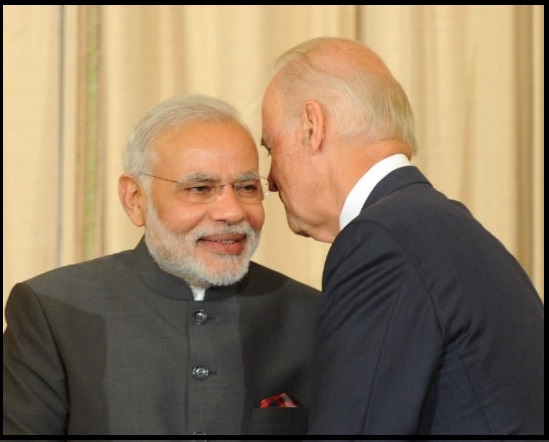
Against the backdrop of increased Russia-India trade {link}, and the BRICS discussions about new trade payment mechanisms to avoid being shackled to the dollar {link}, it would appear the people behind the White House operation to create/maintain conflict with Russia are scheduling a stern conversation with India’s Prime Minister Narendra Modi.

WHITE HOUSE – ” President Joseph R. Biden, Jr. will meet virtually with Prime Minister Narendra Modi of India on Monday, April 11 to further deepen ties between our governments, economies, and our people. President Biden and Prime Minister Modi will discuss cooperation on a range of issues.” …

“President Biden will continue our close consultations on the consequences of Russia’s brutal war against Ukraine and mitigating its destabilizing impact on global food supply and commodity markets.” (read more)

The message from the White House will likely be akin to: ‘Nice country of 1.5 billion hungry people you got there Modi.  With all this talk of global famine going around, it’d be a shame if you couldn’t feed them.’ Oh, and by the way, did you happen to catch what just rolled out in Pakistan?  Imagine that – what with common borders and such… 

For those unfamiliar, it appears the DoS/CIA were up to their old tricks again, because Pakistan was favorable to the position of China and Russia in the Ukraine conflict and would not take sides with NATO and western allied leaders.

(more…)

Sunday Talks, Hillary Creeps Out from the Catacombs to Demand More War and Bloodlust

If there’s one political figure who should remain stewing over her toxic cauldron in the dark recesses of political caves, it’s Hillary.  The same creature who purposefully destroyed the nation of Libya by organizing a NATO invasion, has no credibility to discuss foreign invasion by Russia.

Regardless of the outcome in Ukraine, whenever the conflict finishes, there will not be modern human slave markets in the streets, widespread graphic violence using machetes, race-driven and tribal genocide and tens of thousands of people continually shoveled by the dump trucks into mass graves.  That’s the current status of ‘life’ in the north African country of Libya following the aftermath of Hillary’s war.

I would not normally even think about sharing any viewpoint from this evil and maniacal creature if it wasn’t for Clinton recently reopening the Clinton Foundation and Clinton Global Initiative so she could scrape off some of the $14 billion in aid congress has allocated for Ukraine.  Watch as she starts to frame her attack position and position Saudi Arabia, India, parts of Europe and China as targets for more “diplomatic leverage,” vis-a-vis blackmail sanctions, if they do not adhere to her call for the destruction of Russia.

She’s transparently trying to promote her influence – Tony Blinken was her former protege’ – as a potential influence broker if countries want to avoid being on the wrong side of the Biden-Blinken operation in Ukraine.  Clinton is the Al Sharpton of shakedowns using geopolitical blackmail.

.

(more…)

Germany Says G7 Reject Russia Demand to Pay for Oil and Gas in Rubles, Sort of

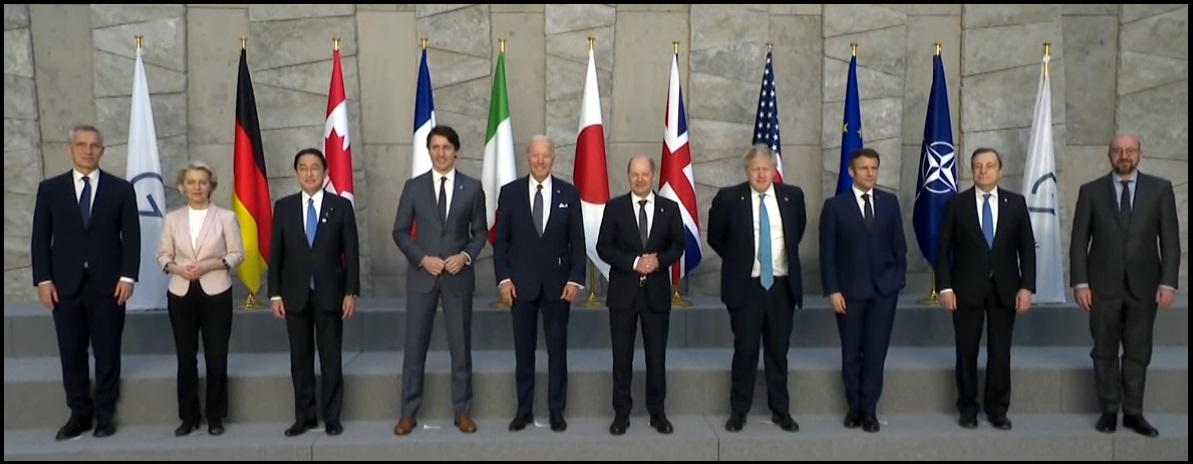
Behind the headline is a qualifier that most will miss. “We will urge the companies affected not to follow Putin’s demand.”  The problem for the G7 political leaders is that most of the transactions are between private companies.  The heads of the U.S, France, Germany, Italy, Japan, Canada and the U.K, can stake a position, but the ultimate decision around the transaction in the hands of the private company buyers.

Russia can set the terms.  Whether the G7 political leaders shout ‘breach of contract‘ is seemingly a moot point.  In the big picture, the politicians have already breached the terms of prior trade agreements with sanctions.  Russia can turn off the supply or demand payment in rubles as terms of sale.

BERLIN (AP) — The Group of Seven major economies agreed Monday to reject Moscow’s demand to pay for Russian natural gas exports in rubles.

German energy minister Robert Habeck told reporters that “all G-7 ministers agreed completely that this (would be) a one-sided and clear breach of the existing contracts” for natural gas, which is used to heat homes, generate electricity and power industry.

(more…)

India-Russia Rupee-Ruble Financial Trade Arrangement Could Be Ready in a Week

The Federation of Indian Export Organizations (FIEO) announced today they are likely to have the financial mechanism for a Russia-India currency exchange and trade process in place within a week.   Previously, India announced their decision to continue purchasing oil from Russia despite the western sanctions.  Prime Minister Modi is a pragmatic, tactical and shrewd business-minded politician.

India is becoming a major player in the geopolitical world, as recognized by former President Trump during his Indo-Pacific trade partnership discussions.  The population of India is over 1.4 billion people, and they are industrializing as a more democratic counterbalance to China. Prime Minister Modi has been a key political leader in generating economic alliances to the benefit of his nation, while maintaining a prudent stiff-arm toward the influence of major multinational corporations.
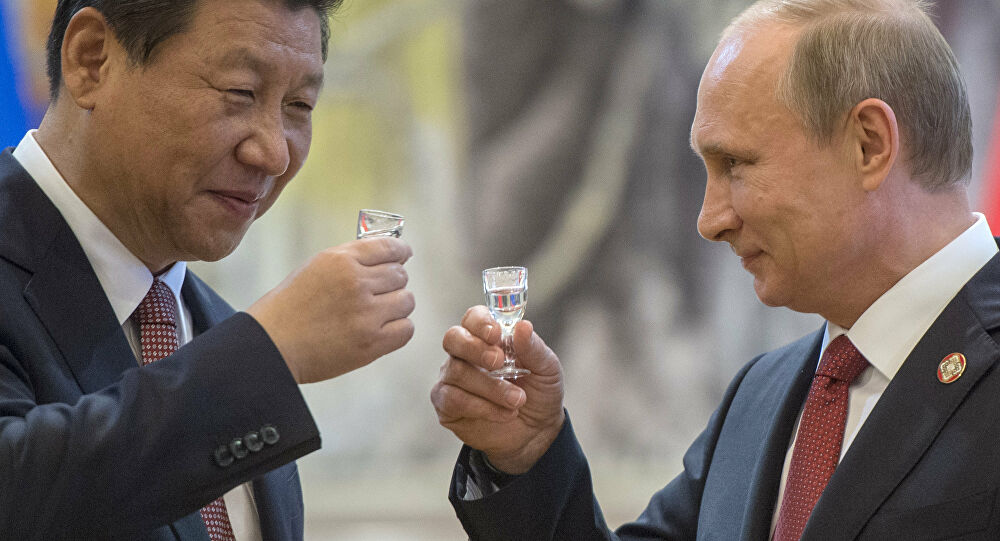
(Via CNBC) – India is expected to announce a payment arrangement that would allow trade with Russia to continue, the president of an Indian exporters’ association told CNBC’s “Street Signs” on Wednesday. 

The so-called rupee-ruble trade mechanism could come as early as next week, according to A Sakthivel, president of the Federation of Indian Export Organisations (FIEO).  The FIEO, a government-backed association representing over 200,000 exporters, oversees India’s export promotion councils.

(more…)

BRICS Is Working, India Purchases 3 million Barrels Russian Crude This Week

A report in the AP shows the BRICS (Brazil, Russia, India, China and South Africa) trade alliance seems to remain strong despite western sanctions.  India admitted to purchasing 3 million barrels of Russian oil at a 20% discount rate this week.

There’s no mention of how the purchase will be transacted, what currency they would use; however, the top-line story of India refusing to follow western trade sanctions reflects the BRICS alliance is delivering economic results.

[Via AP] – […] NEW DELHI — The state-run Indian Oil Corp. bought 3 million barrels of crude oil from Russia earlier this week to secure its energy needs, resisting Western pressure to avoid such purchases, an Indian government official said Friday.

The official said India has not imposed sanctions against buying oil and will be looking to purchase more from Russia despite calls not to from the U.S. and other countries.

The United States, Britain and other western countries are urging India to avoid buying Russian oil and gas. Indian media reports said Russia was offering a discount on oil purchases of 20% below global benchmark prices.

(more…)

Russia, India Exploring New Trade Payment Channels in Aftermath of Sanctions

The BRICS trade and economic partnership group is made up of Brazil, Russia, India, China and South Africa {GO DEEP}.  The alliance was originated in part to explore alternatives to the dollar as a global trade currency.  They discussed several options in their prior meetings long before Russia took action into Ukraine.

With western sanctions against Russia now in place, there are increasing reports that China and India have developed alternatives.  This is one such example:

(Via LiveMint) – Russia, many of whose banks have been cut off from the Swift financial network, is exploring opening alternative payment channels with India, including linking Unified Payments Interface (UPI) with the Faster Payments System (FPS) of the Bank of Russia, to continue cross-border trade.

According to Dmitry A. Solodov, a spokesperson for the Russian embassy in New Delhi, his government has also asked Indian lenders to connect to the financial messaging system of the Bank of Russia to facilitate interbank transactions. In addition, the two sides are discussing accepting RuPay and MIR Cards within national payment infrastructures, Solodov said in an emailed statement.

“All these options are on the table and are being discussed by the two governments, the Reserve Bank of India and the Bank of Russia,” said a senior Indian government official, requesting anonymity. (read more)

(more…)

Has The Great Global Food War Just Begun?

Hindsight is not only 20/20, in this case it’s a little alarming. 

Last year, we were discussing the massive increases in food and farming costs associated with increased fertilizer prices.  By the time we got to late January, the World Bank (WB), United Nations (UN) and the Davos / World Economic Forum (WEF) group were discussing it.  At first the perspective was the potential for lower crop yields creating increased global famine.

However, if we apply a little hindsight from the geopolitical world surrounding the current issues in Europe, specifically Ukraine, and then consider the background of what the Biden team were doing, while Russia, Belarus and China were stockpiling, things look a little more concerning than just lower crop yields as an outcome of higher natural gas prices – vis-a-vis nitrogen fertilizer.

As noted by Forbes last month, “Russia and China have imposed export restrictions on fertilizer. Both are, or were, big exporters of plant food. The decline in exports makes getting the vital nutrients harder across the globe. China and Russia account for 29% of world exports for nitrogen-based plant food. The two countries also have significant, albeit, smaller shares of the phosphate and potash markets, respectively, the report states.”

Now, keep in mind how Belarus helped Russia with the current military operation.

In August of 2021 the United States, Canada and the EU hit Belarus with punitive sanctions on the one-year anniversary of what they called a fraudulent election.  As noted by Politico at the time, “The sanctions partially ban imports of potash fertilizer, petrol and petrol-based products from Belarus.”  […] Targeting Belarus’ potash sector was a strategic move insofar as the country is the second largest exporter of the fertilizer behind Canada, covering 21 percent of the world’s potash exports in 2019.

In September of 2021, at the same time as China was investing heavily in the purchase of U.S. farmland, Beijing simultaneously announced a ban of export for phosphates until June of 2022.  With China banning export of the source material, the global fertilizer market now needed to look elsewhere for future purchases.

(more…)

Pfizer Promotes a New Pill Developed to Treat COVID-19, Claim 89 Percent Success Rate in Study

The majority of prior studies for the COVID-19 vaccinations -writ large- generate an efficacy range around 60 to 70 percent in prevention of COVID hospitalization.  The efficacy for virus infection is essentially nil.   The vaccine does nothing to prevent infection or transmission; their only claims are now a reduction in hospitalization rates.

Therapeutics, preventative medicines and healthy lifestyle choices to avoid negative outcomes, have been mostly ignored, often ridiculed, and largely downplayed by politicians, media and Big Pharma.   Instead their preferred collective strategy has been a massive, overemphasized and almost exclusive effort to force vaccinations as the only medical option for SARS-CoV-2 infections.

The most studied and widespread therapeutic treatment on a global scale has been the use of an oral antiviral pill known as Ivermectin and a regime of supportive medications.   Japan and India have embraced the Ivermectin protocol with reported large scale success rates.

However, the U.S., Europe and Australia have focused exclusively on treating and chasing the SARS-CoV-2 virus with vaccines for the virus and boosters for the variants.

Today Pfizer, the #1 vaccine maker on a global scale, is introducing their version of a pill form of therapeutic.   With Ivermectin, a Merck product, costing somewhere around 30¢/dose, it appears Pfizer sees an opening for a $xx/dose pill option to enhance their growing profit margin.  It is interesting to note the Pfizer study for their pill was conducted on a non-vaccinated population.

(more…)