Quantcast

Susan Kokinda on Trump’s Gambit: Civilizational Expansion or Nihilistic Western Decline

Susan Kokinda from Promethean Action gives her perspective on the negotiated ceasefire with Iran.  Kokinda notes the key players were Pakistan, Saudi Arabia, Qatar and Turkey (she missed China).

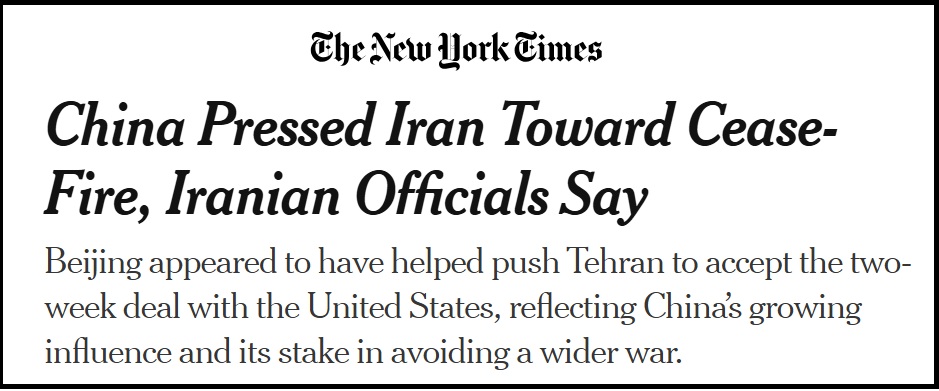
In a lesser reported part of the background, Chairman Xi Jinping summoned the Pakistani negotiators to Beijing prior to the terms of agreement with Trump.  The summoning happened right after Trump said he was going to target the full force of the U.S. military against Iranian infrastructure.

Why does that matter to China?  Belt and Road.  Beijing has built a railway from China into Iran for the transport of goods and raw materials (including energy products) out of Iran (sanctions avoidance) in exchange for shipments of weapons. If President Trump targeted the railway infrastructure, in combination with the oil shipments being hampered, ¹China would be in a very bad place.  Hence the summoning to get a ceasefire.

Focusing too narrowly on the British Empire as the source of all problems and you miss things.  Mrs Kokinda missed this:
[SOURCE]

¹China in a bad place due to the middle east in crisis, means China becomes more dependent on Russia for oil, gas and ultimately fuel.  Internally, Russia isn’t a big fan of their Chinese dependencies.

If FUBAR in Iran remained the statis, the two countries not in any crisis would be the USA and Russia, both with oil/gas and extra refining capacity.  The countries/regions in biggest crisis would be China, Europe and Southeast Asia.

The U.S. and Russia less affected.  China and the EU more affected.  A significant geopolitical paradigm shift, all things considered…. and it appears that Beijing saw it coming.
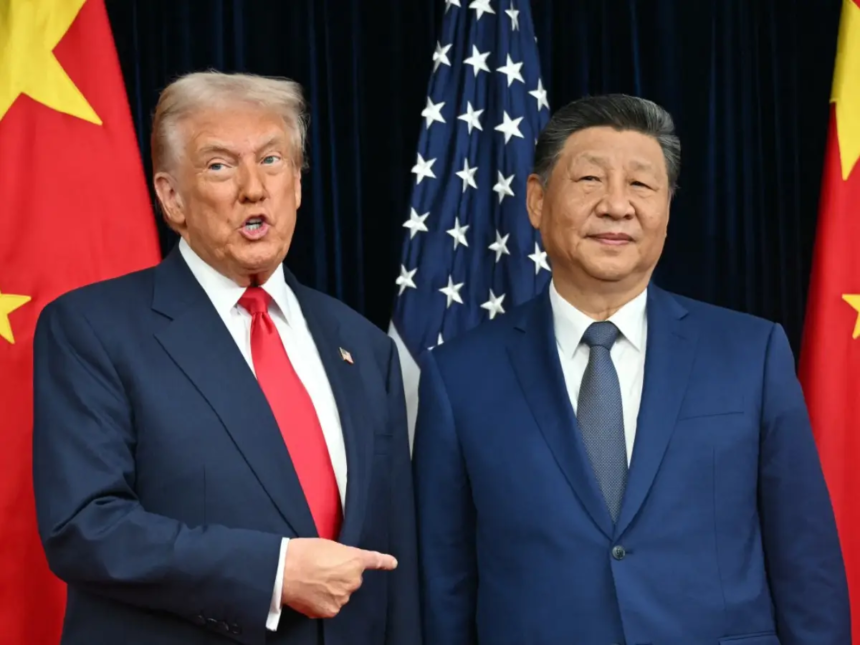
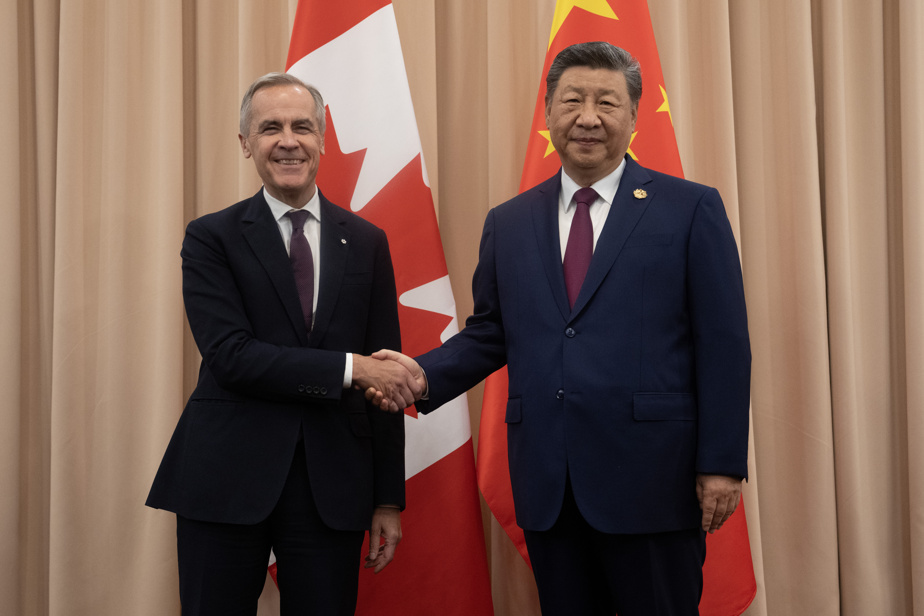
(more…)

President Trump Summit with Chairman Xi Now Scheduled for May 14th and 15th

This is good news from the standpoint of us wanting to see President Trump continue to make MAGAnomic progress on trade as well as geopolitical alliances.

It will be a very interesting summit against the backdrop of Venezuela, Iran, oil/gas energy shifts, the previous Alaska summit with Russian Federation President Vladimir Putin, the renegotiation of the USMCA and the Chinese auto deal in Canada…

There are a lot of important topics within a Trump-Xi summit.

PRESIDENT TRUMP – “My meeting with the Highly Respected President of China, President Xi Jinping, which was originally postponed due to our Military operation in Iran, has been rescheduled, and will take place in Beijing on May 14th and 15th.”

“First Lady Melania and I will also host President Xi and Madame Peng for a reciprocal visit in Washington, D.C., at a later date, this year. Our Representatives are finalizing preparations for these Historic Visits. I look very much forward to spending time with President Xi in what will be, I am sure, a Monumental Event. Thank you for your attention to this matter!”  ~ President DONALD J. TRUMP

(more…)

Chinese EV Manufacturers BYD and Gely Accelerate Plans for Canadian Dealerships

Put this in the USMCA (CUSMA) elimination/negotiation file.  Europe has already been the visible example of what happens when you open your market to low price Chinese EVs.

With the recent agreement by Canadian Prime Minister Mark Carney, Chinese auto manufacturers are now rushing to establish the dealerships, before the Beijing-Canada deal becomes an issue in the USMCA negotiation.

China is NOT going into Canada because they foresee a great market of Snow Mexicans purchasing their low price EVs.  They are going into Canada as a proactive measure to establish a North American footprint with an eye toward the USA.

(VIA MSM) – BYD and Chery are accelerating plans to establish a dealership network in Canada after the country introduced a quota allowing tens of thousands of Chinese-made EVs to enter at reduced tariffs. The rollout will begin in Toronto before expanding to other major cities, with BYD targeting about 20 dealerships in its first year. This marks a significant new front in North American EV competition, as Chinese automakers seek growth outside the U.S., where prohibitive tariffs keep them out.

(more…)

Karoline Leavitt Confirms President Trump China Trip Indefinitely Postponed

This is very interesting because Treasury Secretary Scott Bessent and U.S. Trade Representative Jamieson Greer went to Paris last weekend to meet with their Chinese counterparts and organize the deliverables for the upcoming summit between Chairman Xi Jinping and President Trump.

At roughly the same moment that Bessent and Greer were meeting with China, President Trump sent out the Truth Social message requesting Chinese ships to come to the Strait of Hormuz and escort their oil.  I said at the time of Trump’s message that Chairman Xi was going to have to negotiate through this issue carefully because it was very obvious that President Trump was not going to maintain any diplomatic pretenses when he met with Chairman Xi.

Yesterday, during the St Patrick’s Day celebration President Trump said the summit was cancelled. “We’re resetting the meeting and it looks like it’ll take place in about five weeks,” President Trump told reporters in the Oval Office in an event with Micheál Martin, the Irish prime minister.

Today, Press Secretary Karoline Leavitt confirmed there is no scheduled replacement date for the cancelled summit.

.

Keep watching.  Bessent and Greer didn’t go to Paris for nothing.

(more…)

All Things Considered – A Good Geopolitical Recap

Some additional contexts not included in the British-centric financial review below.

(1) Japanese Prime Minister Takaichi Sanae will be at the White House next week.  This meeting was scheduled several weeks before Operation Epic Fury began.  The timeline continues to indicate that President Trump’s primary geopolitical focus is on China, not necessarily the U.K-EU angle, although that is a materially significant overlay.

(2) “A major U.S. weapons package for Taiwan worth about 14 billion dollars is awaiting approval from Donald Trump and could be announced after his planned visit to China later this month, according to sources familiar with the discussions. The proposed deal would be the largest U.S. arms sale ever to Taiwan and comes as military tensions between China and the self-ruled island continue to rise.” {SOURCE}

.

(more…)

President Trump Calls on Oil Dependent Nations to Send Military Ships to Backstop Security in Hormuz

President Trump’s latest two messages via Truth Social present an interesting geopolitical approach with multiple enmeshed aspects.

First, some background context is needed.  Treasury Secretary Scott Bessent and USTR Jamieson Greer are in Paris to meet with Chinese government officials ahead of a scheduled meeting between Chairman Xi Jinping and President Trump.

The main objective of the pre-summit assembly before President Trump goes to Beijing, is to hammer out the actionable agreement details that can be signed off by Xi and Trump.  Bessent and Greer are looking to put a deal together with their Chinese counterparts so that Trump and Xi can announce mutually beneficial outcomes during their summit.

Second, President Trump has already indicated the March 31/April 1 meeting with Xi will be all business. The traditional pomp and splendor will not be present, and Trump will only be visiting Beijing – no sidelines.

Third, Secretary Rubio will be accompanying Trump on this trip to Beijing, which might seem ordinary were it not for the fact that in 2020 China sanctioned and banned Rubio from entering China for criticizing Xinjiang and Hong Kong.

Fourth, there are rumors that President Trump is going to announce a significant weapons deal with Taiwan at some point immediately following the trip.  If those rumors are true, it would be a top priority for the Chinese advance team in Paris to stop that from happening.

Regardless of what happens in the next few weeks, President Trump will be meeting with Chairman Xi with full Eagle eye confrontation toward the returning dragon stare.  There will be no panda mask on this trip whatsoever; this face to face is an apex predator showdown, while the world watches intently.

(more…)

Ahead of Paris Meeting with Chinese Trade Officials, USTR Jamieson Greer Discusses Goals and Objectives

U.S. Trade Representative Jamieson Greer and U.S. Treasury Secretary Scott Bessent are traveling to Paris this weekend to meet with the Chinese trade officials.  This meeting is in advance of President Trump’s visit to China for direct face-to-face discussions with Chairman Xi Jinping.

Given the recent events in Venezuela and Iran a lot of groundwork must be taking place for the Trump-Xi meeting.  Multiple Chinese interests have been impacted directly.  USTR Jamieson Greer discusses those preparatory issues as well as the recent announcement for Section 301 investigations and tariffs.  WATCH:

.

(more…)

Secretary Bessent Announces “Narrowly Tailored, Short Term Sanction Relief” for Russia

Trump, you magnificent bastard, I read your book!’

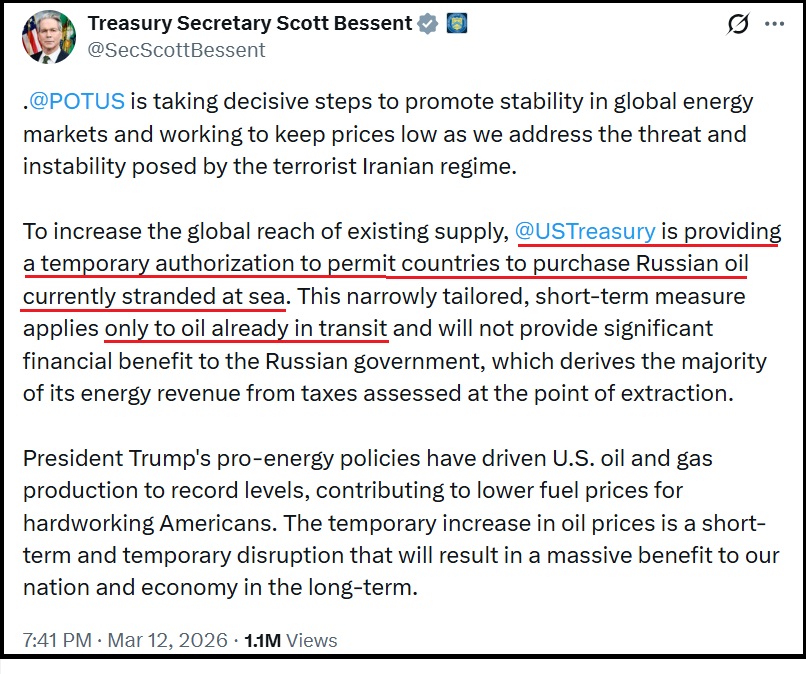
President Trump and Treasury Secretary Scott Bessent are facing mounting criticism for creating a window for Russia to sell oil and gas to the global market via “narrowly tailored, short-term” sanction relief.  However, few people are putting the issue into context, and the background here is exceptionally interesting.

According to the terms announced by Secretary Bessent, the license to sell applies solely to Russian crude or petroleum products loaded onto vessels as of March 12 and is valid through midnight Washington time on April 11. [Treasury Notice HereOFAC Technical Details Here]

[source]

The sanction relief license to sell will be done in globally recognized petrodollars and applies only to preexisting oil and petroleum products that are already in transit at sea.  However, here’s where it gets very interesting and the ramifications are significant.

Immediately following the Alaska summit between Russian President Vladimir Putin and President Trump, Russia restarted Arctic-2 LNG terminals and began increasing oil production for storage on ‘floating platforms.’  President Trump met with Putin on August 15, 2025, and the curious increase in Russian production began on August 18, 2025.

In the past six months Russia has been pumping sanctioned oil and gas and storing it on ships and mobile sea platforms, seemingly (at the time) with no customers.  Suddenly, against the background of the Iran conflict, all of that previously stored ‘on the water‘ production, now worth double, is authorized for global sale (in petrodollars).

Either Russian President Putin is the luckiest guy in the world, or Russia knew something.

In 2025 what Russia did following the Alaska summit did not make sense; now it does and the ramifications are stunning.

(more…)

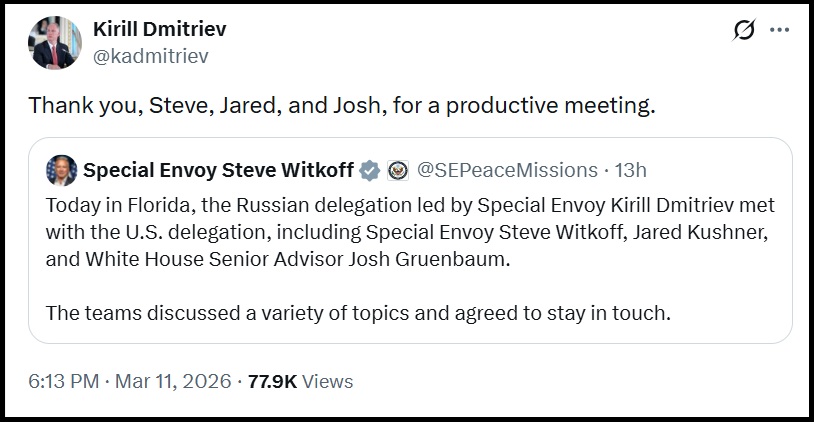
Witkoff and Kushner Meet Russian Delegation in Florida – Reports Indicate Discussions of Strategic Economic Cooperation on Oil

The fact that Team Russia and Team USA would be discussing a strategic economic alliance on the issue of energy is not a surprise to those who watched both President Putin and President Trump outline that same content discussion in Alaska last August.  However, given the current conflict with Iran and the escalating oil price issue, Russia and the USA discussing Russian oil capacity and U.S. sanctions therein takes on a new angle.

It has been obvious that domestic U.S. politics, in combination with the Russia-Ukraine war, has impeded President Trump from organizing a strategic reset with Russia pulling away from historic conflicts.  However, CTH is also clear-eyed on the longer-term ramifications for Eastern Europe when contrast with Putin’s ambitions to fix what he perceives as prior Russian Federation mistakes regarding the West (more on that at the end).

As noted in social media exchanges from Witkoff and Dmitriev, the discussion was productive.

[SOURCE]

All indications of this meeting give the appearance of less focus on progress in the Ukraine-Russia conflict, and a higher focus on current economic conditions -created by the Iran conflict- that could be enhanced with cooperation between the U.S. and Russia. {GO DEEP BACKGROUND}

According to Kirill Dmitriev, Russian special presidential envoy for investment and economic cooperation with foreign countries and director general of the Russian Direct Investment Fund (RDIF), relayed through the Russian News Agency (TASS), “he visited the US upon orders from Russian President Vladimir Putin, taking part in a meeting of the heads of a working group on economic cooperation between the two countries.”

(more…)

Volkswagen Loses Half Their Profit, Now Plan to Cut 50,000 Jobs Over Next Four Years

The origin of this issue goes back to 2021 and the relaunch of the Build Back Better European green energy program to fight the non-existent climate change problem.  We have been highlighting the consequences within the EU auto sector.

We noted in October of last year, the EU’s mandated fines against auto manufacturers who do not hit their production goals for electric vehicle sales began in 2025.  EU automakers unable to meet the regulatory compliance goal began purchasing carbon credits to avoid stiff EU fines.  Many of those carbon credits were purchased from Chinese EV automakers, who then turned around and started using the extra EU revenue to discount Chinese cars sold in Europe.

At the same time as Chinese autos hit record highs in Europe, EU car sales are flat or declining.  Now, Volkswagen is announcing they lost half their profits in one year and will be cutting 50,000 jobs in the next four years.

(MSM – Europe) – Volkswagen just revealed its operating profit sank like a stone last year, dropping by more than half as tariffs, Chinese competition, and shifting strategies took a serious bite out of the bottom line. And that performance now has the VW Group’s execs reaching for the cost-cutting scissors, including plans to shed 50,000 jobs by the end of the decade.

The German automaker reported an operating profit of €8.9 billion ($10.3 bn at current rates) for 2025. That’s down a hefty 53 percent from the year before and well below what analysts were expecting. Revenue, meanwhile, barely moved, slipping only slightly to around €322 billion ($374 bn). (read more)

This was very predictable. In essence, EU car companies buy Chinese car company carbon credits, to avoid the EU fines.  The Chinese car companies then use the carbon credit revenue to subsidize lower priced Chinese EVs to the European car market, thereby undercutting the European EV car companies.

(more…)