President Trump and Chairman Xi Jinping will be delivering remarks this evening during the official state dinner. Livestream Links Below:
UPDATE: Video Added
.
President Trump and Chairman Xi Jinping will be delivering remarks this evening during the official state dinner. Livestream Links Below:
UPDATE: Video Added
.
President Donald J. Trump and First Lady Melania Trump welcome His Excellency Xi Jinping, President of The People’s Republic of China, and Madame Peng Liyuan for a State Dinner in the East Room of the White House this evening.
The First Lady led the preparations for the dinner, which will be attended by the official delegations as well as business leaders and government officials.
MENU
The menu showcases American ingredients with subtle Chinese influence, bringing the culinary traditions of both nations together. The meal begins with a toast of Schramsberg “Blanc De Noir,” honoring the historic “Toast to Peace” shared by President Nixon and Premier Zhou Enlai in Beijing in 1972. The same American sparkling wine served at that historic gathering continues to be enjoyed at White House functions today.
First Course
Yellow Squash Velouté
Wild Mushroom Fricassée
Crispy Pancetta
Scallion Oil
The first course offers a refined and silky-smooth velouté made of sweet yellow squash. This course is gently blended to highlight its delicate seasonal flavors of earthy wild mushrooms, sautéed with fresh herbs. Together, these ingredients create a rich fricassee, complemented by crispy pancetta for a savory and smoky contrast. A finishing drizzle of scallion oil adds vibrance and a subtle allium brightness to the dish.
President Trump and Chairman Xi deliver remarks during the welcome ceremony for the official Chinese delegation state visit. The remarks are in both English and Chinese as interpreted within the ceremony.
Chairman Xi announced two giant pandas, Ping Ping and Fu Shuang, would arrive at Zoo Atlanta within days, continuing a tradition that began when Beijing sent a pair to Washington after Richard Nixon’s 1972 visit.
Cunning Panda Xi also said that as the world’s leading AI powers, both countries had the ‘capability and responsibility to develop and manage AI for good.’ ‘We do not need to avoid mentioning competition, but our competition should be a healthy one and should be kept within bounds. It should be a race of catching up with one another, not a wrestle in which either wins or loses,’ Xi said. FYI that’s the code-speak of the person chasing from behind. WATCH:
.
Canadian Prime Minister Mark Carney left the United Nations General Assembly and went directly to the New York Times for a pre-scheduled interview with fellow leftist travelers intent on influencing the U.S midterm election.
Carney having previously appointed Clinton/Obama Democratic operative Maia Johnson as his Chief Operating Officer within his office, obviously had one agenda in mind as he strolled into the Times office for his pre-planned operation.
Within the hour-long conversation, the Canadian Prime Minister had several key points of emphasis in his objective. The top-line hook to draw in the audience was his first statement about having prepared for military combat operations against the United States. [ARTICLE HERE] Key points below:
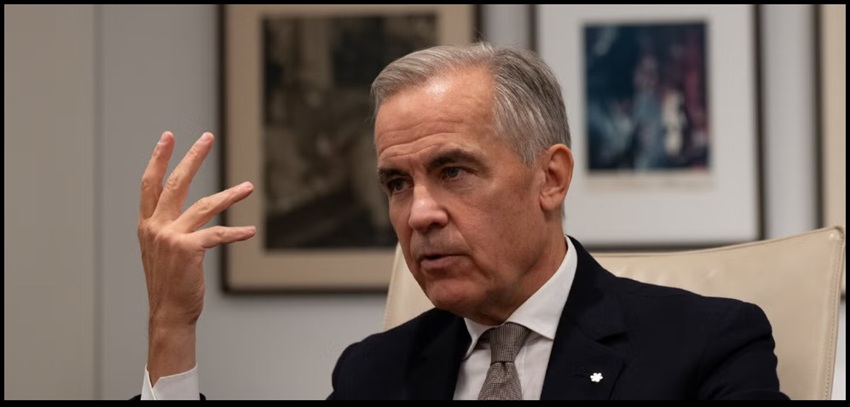
(1) Carney developed contingency plans to use military combat operations against the United States. Yes, it is transparently obvious this is a political statement. His mentioning of this is meant to create the traditional leftist victimhood position used in all psychological operations. Carney follows this outlandish statement by saying these military plans are no longer needed because he now feels he has “a good relationship” with President Trump.
[…] “Prime Minister Mark Carney of Canada said that he had prepared over the past year for the “extreme tail risk” that President Trump might order military action against Canada but disclosed that the two men have spoken “frequently,” even since trade talks collapsed last month, describing a tense, evolving relationship.
Mr. Carney suggested that he had carefully examined the possibility of U.S.-led military action, but declined to discuss in detail what that involved. “I think you have a responsibility in these roles to look at extreme tail risk,” said Mr. Carney, a former central banker for Britain and Canada. … “That’s just risk management. That’s not a base case, but it would be irresponsible not to” prepare.”
(2) Carney outlines how he intends to build a closer economic relationship with China as a hedge against Canadian dependency on the United States. Given the statements made by Carney in Beijing, this does not come as a surprise; however, it is the expressed open intent to further attach Canada to China that should raise eyebrows.
I’ll just highlight some of the events below as they took place earlier today.
First, the official welcome to the White House:
.
Next, the drill platoon event:
President Trump has drawn attention to this segment by Victor Davis Hanson outlining the status of the Canadian position thanks to Prime Minister Mark Carney. Why? Because VDH is the type of American that Canadians actually listen to.
VDH apparently talks in the tones and constructs that appeal to Canadians, therefore his remarks on how Mark Carney is manipulating Canada hit more directly than when other pundits do it. VDH has seen a remarkable uptick in the size of his audience ever since he started talking about Canada, because his new audience is almost exclusively Canadian.
Hanson speaks about the Canadian dynamic below. It’s monotone, but the “elbows crew’ like it. WATCH (prompted):
.
Prime Minister Carney asks why Victor Davis Hanson is doing this to him.
I’m not a big fan of Canadians switching positions and suddenly wanting to accept trade terms. CTH would prefer that we sever all ties with Canada, terminate the USMCA and watch them slowly spiral for a year or two. Carney Inc deserves it.
This should be fun. President Trump is making history by traveling to Joint Base Andrews to welcome Chinese Chairman Xi Jinping for an official state visit. First Lady Melania Trump has attended to all the formal details in advance of the two days the Trump’s and Xi’s will spend together.
Livestream links below to the first event; the arrival ceremony for Chairman Xi.
UPDATE: Video Added.
.
There is a genuine warmth between both Xi and Trump and it is visible in their interactions.
From First Lady Melania Trump:
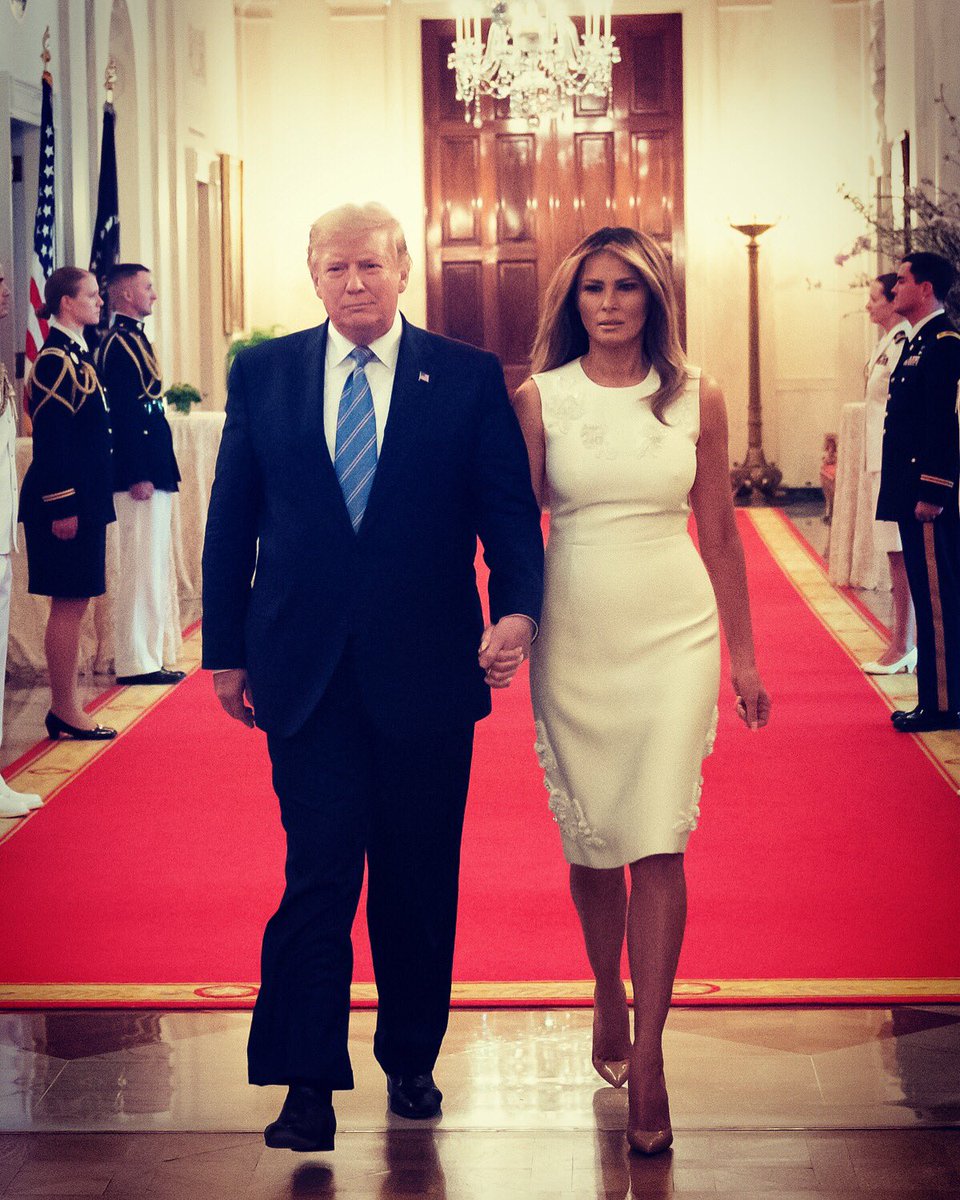 President Donald J. Trump and First Lady Melania Trump will welcome His Excellency Xi Jinping, President of the People’s Republic of China and Madame Peng Liyuan to the White House on Thursday, September 24, 2026, for an official state visit.
This visit comes more than a decade since President Xi and Madame Peng’s last visit to the White House, marking a significant milestone in the relationship between the two countries.
On Wednesday, September 23, the President will greet His Excellency, Xi Jinping, President of the People’s Republic of China and Madame Peng Liyuan at Joint Base Andrews.
On Thursday morning, September 24, the President and First Lady will host a State Arrival Ceremony honoring His Excellency, Xi Jinping, President of the People’s Republic of China and Madame Peng Liyuan.
The ceremony, which will be held on the South Lawn, State Floor, and Rose Garden of the White House, will feature 479 military personnel, representing all branches of the United States Armed Forces.
As the arrival begins, the South Drive will be lined with the Armed Forces Full Honor Cordon leading to a national flag display of U.S. and China flags where the United States Army Herald Trumpets will present a fanfare on the South Portico as the President and First Lady welcome His Excellency Xi Jinping and Madame Peng Liyuan to the White House.
On the State Floor, “The President’s Own” United States Marine Band will play the national anthems of the People’s Republic of China and the United States of America, followed by remarks from both The President and His Excellency Xi Jinping.
Treasury Secretary Scott Bessent joins CNBC ‘Squawk Box’ this morning to discuss his 12-hour meeting with Chinese Vice Premier He Lifeng. Within the interview Bessent details the ‘U.S.-China AI Dialogue’, the calls for a slowdown in AI development and whether regulation is needed.
Secretary Bessent notes President Trump is not going to deliver liability immunity to AI frontier labs and existing legal frameworks within the U.S. will remain as protective pathways as development moves from AI labs into engineering outcomes.
This is the core of the issue. The investors that poured money into the AI labs, now support immunity from legal liability that doesn’t exist in any other sector other than Big Pharma. AI wants the same protection as Big Pharma, and President Trump is not going to allow the shift in responsibility from AI developers to government. WATCH:
Also below is the full debriefing from Secretary Bessent and USTR Jamieson Greer that followed the Sunday meeting between the U.S. and Chinese counterparts.
As CTH has noted, the pace of these critical economic developments is going to speed up over the next several days and weeks. It becomes increasingly important to stay tuned-in to the granular issues as they unfold in order to fully appreciate the landscape that surrounds us. It can be challenging to absorb information as the pace increases, yet it is critical to remain aware so that each building block in the nationalist policy making remains in context.
Perhaps due to timing, or maybe content combined with the pragmatic answers dropping all pretense; or maybe, it’s just the two interviewers representing the globalist opposition and Greer facing them both down with easy dispatch. I’m not sure why, but this is one of the best discussions/interviews with USTR Jamieson Greer ever.
Soup to nuts Greer explains the policy, issues, friction points and pragmatic approaches that apply to economic adversaries like China. Greer just cuts to the chase, you cannot truly negotiate with China because nothing about them is going to change, ever. So, you manage your relationship with them, limit your exposure and limit as much risk as possible. Greer is exactly correct and makes no excuses. Pure economic pragmatism.
The same outlook applies to Canada. Again, Greer isn’t playing the pretending game, and the panelist inquisitors are left jaw-agape while trying to frame a headline capture. Listen to the conflict issues as outlined by Greer. Canada is “doubling down on globalism”, the USA is not. That means we can never reach agreement, period – full stop, end of it!
Greer comes back to this point several times, including at the end when he outlines all the reasons why President Trump will terminate the USMCA trade pact. This is a must watch interview:
.
This interview is like kryptonite to Canadians who are so caught up in their pontificating arrogance (Bloomberg) that they just cannot fathom the weakness of their position. Canadian’s have bought the lies and nonsense from Carney, and it is very challenging to remain respectful of the Canadian position.