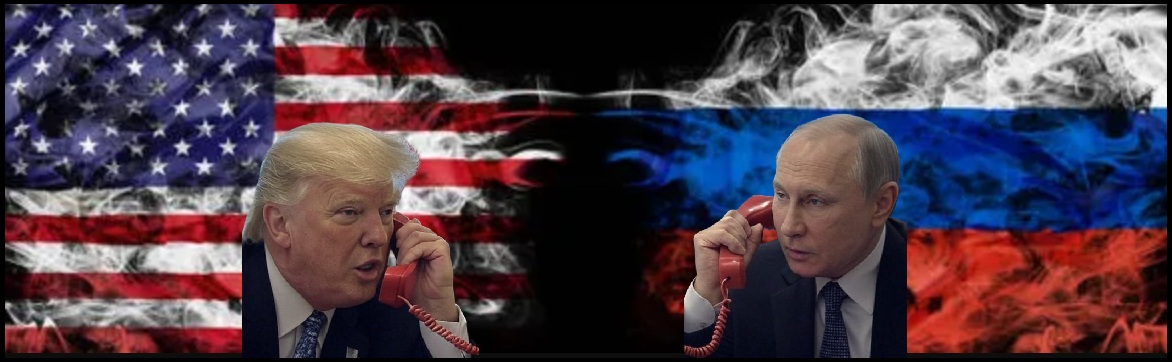
Susan Konkinda from Promethean Action, touches on the recent developments where President Trump and Secretary Bessent have distanced themselves from the old regimes of the former global alliances. Striking out anew, by charting a new course for sovereign nations.
“Susan Kokinda argues that RFK Jr.’s CPAC remarks—praising Trump’s use of power and saying JFK and RFK would back Trump on Iran, Ukraine, and rebuilding the middle class—cut through media narratives and signal a break from post–WWII imperial management. She says Britain and allied institutions are being sidelined, citing Chatham House’s warnings about UK limits and a “Not So Special Relationship” under Trump 2.0, while Pakistan, Saudi Arabia, Turkey, and Egypt convene in Islamabad to open U.S.-Iran dialogue without the UK, EU, or NATO.”
“Trump names Vice President JD Vance lead negotiator, presented as an anti–forever war interlocutor who has challenged Netanyahu’s regime-change expectations. Kokinda links this foreign-policy shift to a broader “American System” agenda: Peter Navarro’s protectionist trade revolution and Treasury Secretary Scott Bessent’s rejection of Bank of England–style Fed models, framing it as American System versus British System.” WATCH:
This is a rather remarkable and insightful short segment interview with the British Defense Secretary, who outlines how the great British Navy will defend their interests.
Once you realize what is said in this segment, you start to realize just how dependent NATO is on the protection provided by the United States. WATCH:
…”Britain was forced to ‘borrow’ a German vessel for a NATO operation next month, led by the United Kingdom, after HMS Dragon was deployed to Middle East.”…
Barbara Boyd gives her perspective on the latest developments and President Trump policy intersects with the Iran conflict and the Mideast oil disruption.
According to the latest information from the region, some ships have begun navigating the Strait of Hormuz despite the conflict. It is reported that Iran is charging a $2 million fee for safe passage, however those reports are not officially confirmed.
Mrs Boyd notes the Arab nations have historically -and recently- remained under the control of the British, and President Trump has fractured this financial control system. While there is an obvious historic reference to that relationship, I’m not as convinced the connective tissue is as deep as ¹claimed in the modern era (last 20 years). WATCH:
In the modern era, thanks to technological advancement and strategic policy (even before Trump), oil and gas development and use has increasingly become regional. Oil dependencies and the trade partnerships are now associated more with refinement capacity than simply global commodities. Not all oil is created equal.
In the “producers and users” chart below, you can see the origin of regional production and import relationships. The oil supplies from the middle east flow mainly to China and Asia. The oil from Russia is the current wildcard.
In a Truth Social post today, President Trump notes the lack of strategic support from the United Kingdom of Great Britain, and the disappointing response from Prime Minister Keir Starmer.
President Trump holds a bilateral meeting with German Chancellor Friedrich Merz in the Oval Office. After brief remarks of mutual appreciation, President Trump and Chancellor Merz responded to questions from the assembled press pool.
Chancellor Merz expressed support for the objective of eliminating the regime threat from Iran. President Trump notes at the beginning how Iran is targeting civilian targets in the region and generating even more support from the Gulf states for the USA.
When asked about the British and Spanish refusal to support U.S. military logistics and deployment, President Trump let the media be aware he is not happy with the position of Spain and the U.K. President Trump also announced [11:00 of video] an economic embargo of trade with Spain as an outcome of their position.
When addressing Greenland’s strategic value within U.S. Arctic defense efforts, President Trump argued that although the European Union and NATO insisted there was no need for American control —promising instead to marshal their combined military strength to defend the territory— he remained skeptical of their assurances. Trump’s remarks were met with swift shock and visible dismay. Pearls were clutched and jaws stood agape.
However, it only took a few weeks for a moment of clarity to surface following the Israeli/U.S. decision to strike Iran and eliminate the long-standing nuclear threat. Suddenly Great Britain and Spain tell the U.S. they will not allow American military use of their joint airbases. Once, again President Trump’s lack of trust in NATO proved correct.
This visible example of unidirectional self-interest is happening at the same time European and British leadership are requesting demanding the United States provide the security guarantees for their Ukraine ambitions. The contrast is stark.
Concerns about Islamist extremism within the U.K. appear to influence the thinking of British Prime Minister Keir Starmer. With a significant number of immigrants from Muslim-majority countries now living in Great Britain, some argue that actions perceived as antagonizing more radical elements abroad could have domestic repercussions within the U.K. That said, the contrast in support is so stark that opposition leadership inside the U.K. are now confronting the British Prime Minister.
Susan Kokinda and the Lyndon LaRouche network give their perspective on the British reaction to the U.S. strikes against Iran. The analysis has value from a review of the historic relationship of the British imperialist policy toward matters of foreign entanglement and the control mechanisms that have historically flowed from the U.K
As a consequence of British government policy much of the Kokinda analysis accurately touches on the root cause of U.K response. However, the emphasis on the modern UK government as the lead of a global network is not always as severe or ¹complicated as the Lyndon LaRouche network would espouse. WATCH:
¹Great Britain has imported a large percentage of extreme Islamists. As Iran is confronted, and as Israel is viewed as a significant beneficiary to that confrontation, the leftist British government -represented by majority base supporting Prime Minister Keir Starmer- is politically trying to retain stability. Starmer does not want to upset the Muslim population within the U.K. That is a significant political facet undiscussed in the Kokinda review of British response.
Additionally, the Trump Doctrine in confronting totalitarian dictators, or oppressive government systems, has always been to support the rise of the authentic ‘nationalist’ voice of the nation in question. President Trump has no personal or policy motive to drive the outcome when the authentic rise of the voice happens. Instead, he seeks to remove the anti-American sentiment carried by the former -hopefully replaced- regime.
In all of President Trump’s prior foreign policy examples we see he focuses on creating opportunity for liberty and freedom, but he does not seek to determine how that liberty and freedom are ultimately expressed – so long as there is no negative outcome to American interests.
The Supreme Court tariff ruling has created the need for U.S. Trade Representative Jamieson Greer and U.S. Commerce Secretary Howard Lutnick to modify the baseline tariff approach with the approvals of President Trump.
The baseline tariffs are being reset to 10% with upward adjustment to 15% as planned. The reciprocal tariffs will not require any substantive modifications as most of the Free Trade Agreements have been cemented with reciprocity tariffs as part of the negotiated deals.
USTR Greer appears on Bloomberg to clarify the current situation and provide some information as to the transitional baseline tariffs as now modified. Additionally, and importantly, Greer begins discussing the USMCA review and his acceptance that President Trump is openly questioning the value for us. Greer notes Mexico and Canada being used as import hubs to avoid tariffs is a big issue. WATCH:
Section 232 [Steel and Aluminum examples] of the Trade Expansion Act of 1962 (19 U.S.C. §1862, as amended) authorizes the President to impose trade restrictions—such as a tariff or quota—if the Secretary of Commerce determines, following an investigation, that imports of a good “threaten to impair” U.S. national security. {SOURCE}
Section 301 tariffs are a trade enforcement mechanism established under the Trade Act of 1974. They allow the U.S. government to impose tariffs on imports from countries that are found to be engaging in unfair trade practices. The Office of the United States Trade Representative (USTR) conducts investigations to determine if a country is violating trade agreements, and if so, it can impose tariffs as a corrective measure {SOURCE}
Section 122 of the Trade Act of 1974 allows the U.S. president to impose tariffs of up to 15% to address “large and serious” balance-of-payments deficits. This authority can be exercised without prior congressional approval for a limited duration of 150 days. After this period, any tariffs must be extended by Congress. {SOURCE}
*FYI, there is a lot of distracting noise in the various social media platforms about internecine MAGA battles and ego-driven points of specific interest. CTH chooses to focus energy and attention on the substantive policy issues that will generate substantive policy outcomes for America.
According to The Daily Mail, former British Ambassador Mandelson was arrested Monday around 4:00pm in the afternoon, questioned for several hours and then released on bail at approximately 2:00am Tuesday.
Mandelson was arrested on similar charges to those levied against Andrew Mountbatten-Windsor. Both charged with misconduct in public office.
Via Daily Mail – Peter Mandelson has been released on bail after being quizzed late into the night over allegations he leaked sensitive information to paedophile financier Jeffrey Epstein during his time as business secretary.
The disgraced former minister was led away by detectives from the Metropolitan Police’s Special Investigations Team – the unit dubbed the Yard’s ‘Celeb Squad’ – on suspicion of misconduct in public office yesterday afternoon.
British Member of Parliament (MP) Mr. Rupert Lowe shared a statement on the X platform, written by the Rape Gang Inquiry within the U.K. What is written about the abuse is horrific.
[…] ‘This inquiry is about action. We have gathered evidence, we will listen carefully over the coming two weeks, and we will then act. Our ultimate objective is justice – including the pursuit of private prosecutions where appropriate. Justice for the girls who were abused. Justice for the families who were ignored.
And justice for a country that was repeatedly misled about what was happening in its towns and cities.’ (more)