Quantcast

Cutting Through the SCOTUS Tariff Fog, USTR Jamieson Greer Discusses Baseline Tariff Reset Shifts and Reciprocity Tariffs

The Supreme Court tariff ruling has created the need for U.S. Trade Representative Jamieson Greer and U.S. Commerce Secretary Howard Lutnick to modify the baseline tariff approach with the approvals of President Trump.

The baseline tariffs are being reset to 10% with upward adjustment to 15% as planned.  The reciprocal tariffs will not require any substantive modifications as most of the Free Trade Agreements have been cemented with reciprocity tariffs as part of the negotiated deals.

USTR Greer appears on Bloomberg to clarify the current situation and provide some information as to the transitional baseline tariffs as now modified. Additionally, and importantly, Greer begins discussing the USMCA review and his acceptance that President Trump is openly questioning the value for us. Greer notes Mexico and Canada being used as import hubs to avoid tariffs is a big issue. WATCH:

Section 232 [Steel and Aluminum examples] of the Trade Expansion Act of 1962 (19 U.S.C. §1862, as amended) authorizes the President to impose trade restrictions—such as a tariff or quota—if the Secretary of Commerce determines, following an investigation, that imports of a good “threaten to impair” U.S. national security. {SOURCE}

Section 301 tariffs are a trade enforcement mechanism established under the Trade Act of 1974. They allow the U.S. government to impose tariffs on imports from countries that are found to be engaging in unfair trade practices. The Office of the United States Trade Representative (USTR) conducts investigations to determine if a country is violating trade agreements, and if so, it can impose tariffs as a corrective measure {SOURCE}

Section 122 of the Trade Act of 1974 allows the U.S. president to impose tariffs of up to 15% to address “large and serious” balance-of-payments deficits. This authority can be exercised without prior congressional approval for a limited duration of 150 days. After this period, any tariffs must be extended by Congress. {SOURCE}

*FYI, there is a lot of distracting noise in the various social media platforms about internecine MAGA battles and ego-driven points of specific interest.  CTH chooses to focus energy and attention on the substantive policy issues that will generate substantive policy outcomes for America.

(more…)

EU Schedules Permanent Ban on Russian Import Oil for Three Days After Hungarian Election

I guess we can put this in the open admission file surrounding the all-out effort by the European Union to defeat Hungarian Prime Minister Viktor Orban.

According to a leaked document received by Reuters, the European Union is scheduled to permanently ban all EU nations from importing Russian oil.  They have scheduled the ban to trigger on April 15th, three days after the Hungarian election.

BRUSSELS, Feb 24 (Reuters) – The European Commission will submit a legal proposal to permanently ban Russian oil imports on April 15, three days after Hungary’s parliamentary election, according to EU officials and a document seen by Reuters.

Two EU officials told Reuters the timing was designed to prevent the oil ban becoming a major factor in Hungary’s election campaign. Hungary and Slovakia, still reliant on Russian oil imports, are strongly opposed to any ban.

In the April 12 election, Hungarian Prime Minister Viktor Orban and his nationalist Fidesz party are facing the biggest challenge to their hold on power in 16 years.

(more…)

Ukraine (EU) Strikes Russian Oil Pumping Station that Transmits Oil into Hungary and Slovakia

The Ukraine military, technically and non-pretendingly accepted as the EU military, has targeted a key oil pumping station in Russia that feeds into the westerly directed oil supply.  However, if you stand back from the western media, what you will notice from this attack is not the target in Russia, but the customers at the end of the pipeline in Europe, mainly Hungary and Slovakia.

[…] Through local stations, including infrastructure around Kaleykino, oil from Tatarstan and neighboring regions feeds into the main pipeline, which runs through the Samara region and continues westward toward Belarus and further to countries in Eastern and Central Europe. […] There were also earlier reports that Ukrainian forces carried out several attacks on Druzhba pipeline infrastructure inside Russia, which at times disrupted Russian oil supplies to Hungary and Slovakia. {source}

So, what’s going on here?

Well, with the anniversary of the Russian Federation beginning the war into Ukraine, the Europeans who now control the military operations inside Ukraine are targeting European countries who do not align with their bloodlust, specifically Hungary and Slovakia.

Both Hungary and Slovakia are land locked countries without easy access seaports. Because of their geographic locations, they rely on Russian oil and gas for their energy needs.  Hungary and Slovakia have not wanted to expand the war against Russia.  The EU is demanding Hungary and Slovakia agree to expanded war.

The European ‘coalition of the willing’ is now targeting key Russian infrastructure that supplies energy products to European countries who are not in compliance with the EU dictates of war.

(more…)

German Court Rules X Platform Must Turn Over Data on Hungarian Govt Support

The European Union has a major targeting effort against Hungarian Prime Minister Viktor Orban, an ally of President Trump who does not support giving additional funding to the Ukraine war effort.  Hungary is having national elections in April.

Previously, USAID Administrator Samantha Power spent considerable time in Hungary organizing activist groups to conduct operations against the government {2023 – Go Deep}.  Last week a German based NGO called Democracy Reporting International, won a ruling from a Berlin judge to force the X platform to turn over data related to support for Viktor Orban and the government of Hungary.

All of this opposition to Prime Minister Orban seems to be coordinated by quasi government agencies on behalf of Brussels and their interventionist intentions.  We may remember it was also information from German intelligence, that was behind the nullification of the Romanian first-round election {GO DEEP}.

However, Viktor Orban is fighting back and refusing to approve the funding of the Ukraine war despite the massive pressure campaign from inside the European Union.

As noted by Hungarian Minister Zoltan Kovacs, “Many have asked how Hungary can block the €90 billion Ukrainian war loan if we are not participating in it. clarified that the loan does not affect Hungary and does not entail any financial commitment for us. As Hungary is not part of the cooperation, in most of the decision-making procedures we do not even vote.  However, he pointed out that for the scheme to function, the EU’s seven-year budget guarantee rules must be amended – and this requires the approval of all 27 member states, not only the financing member states. We are now blocking this decision, without which the war loan cannot be disbursed.”

(more…)

Europe Retreats from Climate Change During International Energy Agency Global Meeting

According to the Washington DC spin, the various EU energy ministers changed clean energy justification of ‘climate change’ during the International Energy Agency (IEA) summit because they were concerned the U.S. would pull out of the IEA group.  The IEA shifted to green energy as a security priority, no longer concerned with climate change.

However, given the situation with European energy costs and the severe problems they are having within their collective and individual economies, what they consider “national security” appears to be their need to control public outrage at the green energy consequences.

Affordable or ‘cheap’ energy production is directly linked to the underlying economy.  If energy production costs more, heating, electricity, fuel, transportation, just about everything costs more.  Energy prices drive consumer prices and that has become a serious problem for the U.K and EU who have chased the “Build Back Better” global energy reset.

With President Trump targeting reciprocity in a global trade balance, suddenly the economies of Europe, Canada and parts of Asia are feeling the impact.  Industrial manufacturing in Europe continues dropping and various sectors like the automotive manufacturing showcase the contraction.  The Gross Domestic Product (GDP) or economic output within each of the contracting nations is putting hard data behind the problem.

Suddenly, with their economies now quivering, the IEA meeting in Europe drops the climate change objective as justification for their ‘renewable’ energy programs.  They blame the USA, but in reality, they appear to be trying to save themselves from feeling the full consequences of their action.

(POLITICO) – […] Ministers, senior officials and ministerial advisers told POLITICO that the event had cemented a long-running rebranding of the green transition that emphasizes the security benefits of renewables rather than their climate-saving potential. It’s a change that has been slowly building since U.S. President Donald Trump returned to office 13 months ago, and that was turbocharged by Wright’s threats on Tuesday to quit the IEA and fears Washington might stop funding the body. The U.S. provides around 14 percent of the IEA’s funding.

(more…)

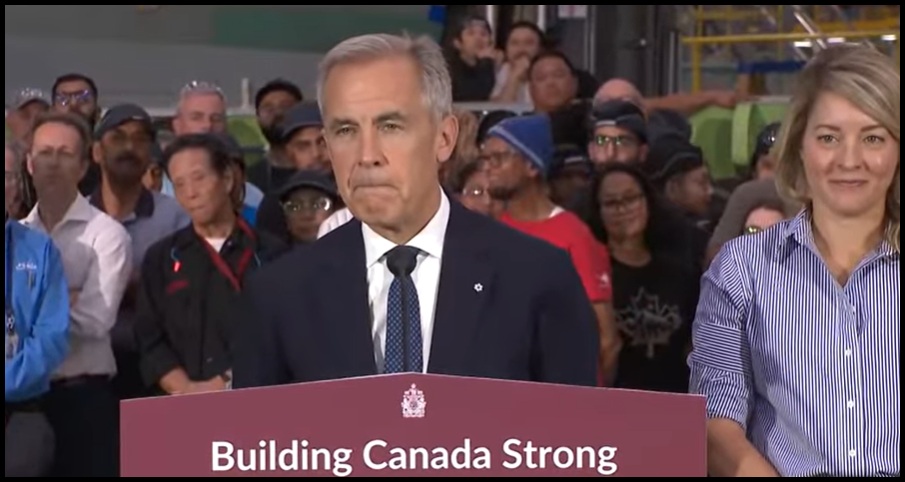
Canadian Prime Minister Pitching Global Trade Rules Agreement to Combat Trump – Connecting Trans-Atlantic to Trans-Pacific

There is an awful lot to unpack in this seemingly obscure article talking about Canadian Prime Minister Mark Carney and a new trade approach he is pitching to Pacific/Asia and Atlantic/European nations. [Story Here]

Before getting to the substance of the outline, something important needs to be shared for context.

Do you remember the 2014, 2015 and 2016 top story conversations and debates over the Transpacific Partnership trade deal known as TPP?

You might also remember the Transatlantic Trade and Investment Partnership trade deal known as TTIP.

The TPP (Pacific) and TTIP (Atlantic) were two major multinational trade deals negotiated between 2013 and 2016. While both sparked plenty of debate, most of the spotlight was on the TPP, the Trans-Pacific Partnership.

Hillary Clinton was in favor of TPP as were most of the traditional republican field of candidates in ’15/’16.  However, Donald Trump was strongly against TPP and pledged to exit out of any negotiations and scrap the U.S. participation if he was to win the 2016 election.  Some of you may begin to remember this.

Donald Trump agreed with our position, that TPP was being falsely sold as a beneficial 12-nation massive trade agreement between the USA and pacific rim countries including Australia and Southeast Asia nations.

With the history of NAFTA behind us, we could see two major issues with TPP:  #1: It was structured with a back door to let China into the deal. And #2) it was created to ensure the USA remained a “service driven economy.”

Supporters of TPP and TTIP claimed this multinational trade deals would create smooth supply chains and align on ‘rules of origin.’ They believed TPP would benefit companies and lead to cheaper products. Critics, however, argued that the agreements were designed to exploit the U.S. consumer market and prevent the country from ever regaining a strong manufacturing base.

I share those reminders to set up the big 800-lb gorilla question.

If the TPP was such a great trade deal for all parties involved, why didn’t the group finalize it after the USA withdrew? It’s been a decade, so why haven’t the TPP nations completed their trade agreement?

(more…)

Secretary Marco Rubio Joint Press Conference with Hungarian Prime Minister Viktor Orban

Secretary Marco Rubio went out of his way in this joint presser to emphasize the personal relationship between Hungarian Prime Minister Viktor Orban and U.S. President Donald Trump.  Orban is facing a serious election challenge this April and all of the EU/NATO systems are actively trying to create pressure points to remove him.

Secretary Marco Rubio is in Budapest today for meetings with Prime Minister Viktor Orbán and his government to include the signing of a civilian-nuclear cooperation agreement heralded by the Trump administration. Hungary is one of the few voices within the European Union who is pushing back against Brussels efforts to go to war against Russia.

Prime Minister Orban has been very critical of Ukraine, openly stating his opposition to EU membership for the embattled country. In response President Zelenskyy has weaponized Ukraine’s geographical stewardship of oil and gas pipelines to shut down Hungarian energy and drive-up prices. VIDEO:

[Transcript] – MODERATOR: (Via interpreter) Good morning, ladies and gentlemen.  May I extend my most cordial welcome to all of you, and may I extend my most special welcome to His Excellency Mr. Marco Rubio, Secretary of State of the United States of America, at the press conference and signing ceremony organized on the occasion of his visit to Hungary.  Let me also extend my warm welcome to Mr. Viktor Orban, Prime Minister of Hungary, members of the U.S. and Hungarian delegations, and all our esteemed guests.

At today’s event, the agreement between the Government of the United States of America and the Government of Hungary to facilitate cooperation on the civilian nuclear program in Hungary will be signed.  The signatories to the agreement on behalf of the United States of America, Secretary of State Marco Rubio, and on behalf of Hungary, Minister for Foreign Affairs and Trade Mr. Peter Szijjarto.

(more…)

Secretary of State Rubio Holds Interesting Press Conference with Slovak Prime Minister Fico

Secretary of State Marco Rubio took a different path on his European visit than Brussels wanted to see. After his time at the Munich Security Conference, Rubio headed to Slovakia and Hungary for conversations with the two nations who are not at all in alignment with Brussels leadership on the issue of Ukraine.

UPDATE: Better video and Transcript Added

Rubio speaks very bluntly on the topics that are of key concern to Prime Minister Robert Fico, including the topic of energy which is a major problem for both Slovakia and Hungary right now.  Toward the end of the presser, the very last response by Fico [44:20 of video] is very interesting.

Prime Minister Fico directly claims that Ukraine is purposefully withholding oil and gas from pipelines that travel from Russia through Ukraine, into Slovakia.  Fico notes he is not going to blame either Ukraine or Russia for previously detonations at the oil refinery and transport hub, but he is very sure Ukraine is purposefully withholding energy products from Hungary as blackmail until Hungary changes their position on Ukraine achieving status in the European Union.

You can tell from the way Fico presents the subject and from the prior points of Rubio this hot button issue is why Fico flew to Mar-a-Lago a few weeks ago for a talk with President Trump.  WATCH:

MODERATOR: (Via interpreter) Hello, ladies and gentlemen.  Please, welcome to our press conference after mutual meeting of the Prime Minister of Slovakia Robert Fico and Secretary of State of the U.S. Marco Rubio.  So, Prime Minister, please, you have the word.

PRIME MINISTER FICO: Thank you. (Via interpreter) Dear Secretary of State, dear Marco Rubio, please allow me to welcome you once again – you and your whole delegation – to Bratislava and our office of the Government of the Slovak Republic.  Dear ladies, dear gentlemen, we had a shared, short tete-a-tete meeting with the Secretary of State, and then we had delegations’ discussion when we went into details, where we discussed topics that are the point of our today’s meeting. I’ll try to briefly sum up the conclusions of our discussions, be it in Four Eyes or, let’s say, in our meeting of delegations.

First of all, I deeply appreciate the fact that this visit comes quickly after our meeting in Florida, where I had a chance to speak with the President of the United States Donald Trump with Mr. Rubio being present.  So, it’s a great follow-up and great country, nation.  And after a short while when we met in Florida, we could discuss how much we achieved during those few weeks about topics we discussed.

(more…)

Marco Rubio Expands on Purposeful Speech to Munich Security Conference

Marco Rubio appears for an interview with John Micklethwait of Bloomberg News. The interview was pre-scheduled as a follow up to the rather historic speech in Munich at the security conference. Within the interview {video and transcript below} Rubio expands on the baseline of the speech, the ‘why‘ is the U.S-EU alliance important.

Beginning with the end in mind, Rubio reminds the interviewer that an alliance must first accept the purpose of the assembly. There are common values and common social components to the relationship that sit at the core of the decision to be allies.

We have a shared civilization based on shared values, and within that central component the Trump administration is staring at the Europeans and saying they have lost focus on these values. Europe is diminishing itself; it is fracturing its culture and has lost its sovereign identity. The United States wants to stay partnered with Europe, but we are not going to be a partner anchored to a collective mindset that has lost its identity.

This culturally Marxist status, a gathering of nations infected with political correctness, pontificating wokeness and apologetic self-flagellation, is the core problem the Europeans are not willing to face. President Trump and Marco Rubio are essentially telling the EU to shake it off, quit being woke, get proud of your heritage, institute political systems that give benefit to the population and regain pride in themselves and their identity.

The process begins with national security, but that is not just about military spending.  Their energy industry needs to support economic independence; they cannot outsource component manufacturing; they need to reestablish economic baselines that are not dependent on Russia, China, India or any other risk vector that could be used to manipulate.

QUESTION:  Marco Rubio, Secretary of State, thank you for talking to Bloomberg.  You’ve just made this rather remarkable speech where you talked about the destiny of Europe and America always being intertwined.  You talked about the alliance which has stretched all the way, culturally, from Michelangelo to the Rolling Stones – a first, I suspect, for a secretary of state – but a culture that has bled and died together.  But the very common theme of your speech was the need to share the burden, the need for Europe and America to do things together, which was slightly different from the Vice President last year.  Were you kind of offering a carrot where perhaps he was offering a stick?

SECRETARY RUBIO:  I think it’s the same message.  I think what the Vice President said last year very clearly was that Europe had made a series of decisions internally that were threatening to the alliance and ultimately to themselves, not because we hate Europe or we don’t like Europeans but because – what is it that we fight for, what is it that binds us together?  And ultimately, it’s the fact that we are both heirs to the same civilization.  And it’s a great civilization and it’s one we should be proud of.  It’s one that’s contributed extraordinarily to the world and it’s one, frankly, upon which America is built, from our language to our system of government to our laws to the food we eat to the name of our cities and towns – all of it deeply linked to this Western civilization and culture that we should be proud of, and it’s worth defending.

And ultimately, that’s the point.  The point is that people – people don’t fight and die for abstract ideas.  They are willing to fight and defend who they are and what matters and is important to them.  And that was the foundation he laid last year in his speech – and we add on into this year – to explain to people that when we come off as urgent or even critical about decisions that Europe has failed to make or made, it is because we care.  It is because we understand that ultimately, our own fate will be intertwined with what happens with Europe.  We want Europe to survive, we want Europe to prosper, because we’re interconnected in so many different ways and because our alliance is so critical.  But it has to be an alliance of allies that are capable and willing to fight for who they are and what’s important.

(more…)

Secretary of State Marco Rubio Critically Important Speech to Munich Security Conference

Overnight in the USA time zones, Secretary of State Marco Rubio delivered a very important speech at the Munich Security Conference [3:00am ET].  The video is below [prompted] and a FULL transcription will soon follow Added Below:.

This is a critically worded speech that is very important to listen to with great deliberation.  Within his remarks Rubio is telling Europe that we want to remain allied in our interests, but we are no longer going to allow the system of “globalism” to destroy our uniquely American life.

The United States is separating from the madness; this is not up for debate. The only question is whether Europe is too far gone, or whether they will join us.

The euphoria that followed the collapse of the Berlin Wall, “led us to a dangerous delusion.  That we had entered quote the end of history. That every nation would now be a liberal democracy; that the ties formed by trade and by commerce alone would now replace nationhood. That the rules-based global order, an overused term, would now replace the national interest, and that we would now live in a world without borders where everyone became a citizen of the world. This was a foolish idea that ignored both human nature and it ignored the lessons of over 5,000 years of recorded human history, and it has cost us dearly.” 

[Transcript] SECRETARY RUBIO:  “Thank you very much.  We gather here today as members of a historic alliance, an alliance that saved and changed the world.  When this conference began in 1963, it was in a nation – actually, it was on a continent – that was divided against itself.  The line between communism and freedom ran through the heart of Germany.  The first barbed fences of the Berlin Wall had gone up just two years prior.

And just months before that first conference, before our predecessors first met here, here in Munich, the Cuban Missile Crisis had brought the world to the brink of nuclear destruction.  Even as World War II still burned fresh in the memory of Americans and Europeans alike, we found ourselves staring down the barrel of a new global catastrophe – one with the potential for a new kind of destruction, more apocalyptic and final than anything before in the history of mankind.

At the time of that first gathering, Soviet communism was on the march.  Thousands of years of Western civilization hung in the balance.  At that time, victory was far from certain.  But we were driven by a common purpose.  We were unified not just by what we were fighting against; we were unified by what we were fighting for.  And together, Europe and America prevailed and a continent was rebuilt.  Our people prospered.  In time, the East and West blocs were reunited. A civilization was once again made whole. ”

(more…)