Treasury Secretary Scott Bessent appears on Fox News morning program to discuss the current status of the U.S. economic targeting of Iran and the U.S. control of oil shipments through the Strait of Hormuz.
At 05:49 of the video below, Secretary Scott Bessent outlines the hypocrisy of the EU-NATO countries as it relates to purchases of energy from Russia. Secretary Bessent notes the same hypocrisy applies to voices in the U.S. congress who passed HR-5334, the Lindsey Graham Russian Sanctions Bill, authorizes the President to lift and/or impose sanctions related to Russia. {GO DEEP}
Many EU-NATO countries continue to purchase oil and gas from Russia, yet those same EU-NATO countries feign outrage at President Trump making a deal with President Putin to supply diesel fuel to the world market and USA to the benefit of consumers.
In fact, the EU is buying more energy from Russia this year than ever before, which is interesting because congress has authorized President Trump to deliver up to 500% tariffs against those same EU-NATO countries for purchasing Russian energy products.
EURONEWS – Europe paid around €7.88 billion for liquefied natural gas (LNG) from Russia’s Arctic energy project in the first nine months of 2026 despite Brussels’ efforts to phase out gas from Moscow, according to the campaign group Urgewald.
The figures, compiled by Urgewald using data from the market intelligence firm Kpler, expose just how reliant the EU remains on Russian energy, with a record of 12.18 million tonnes reaching European ports between January and September this year.
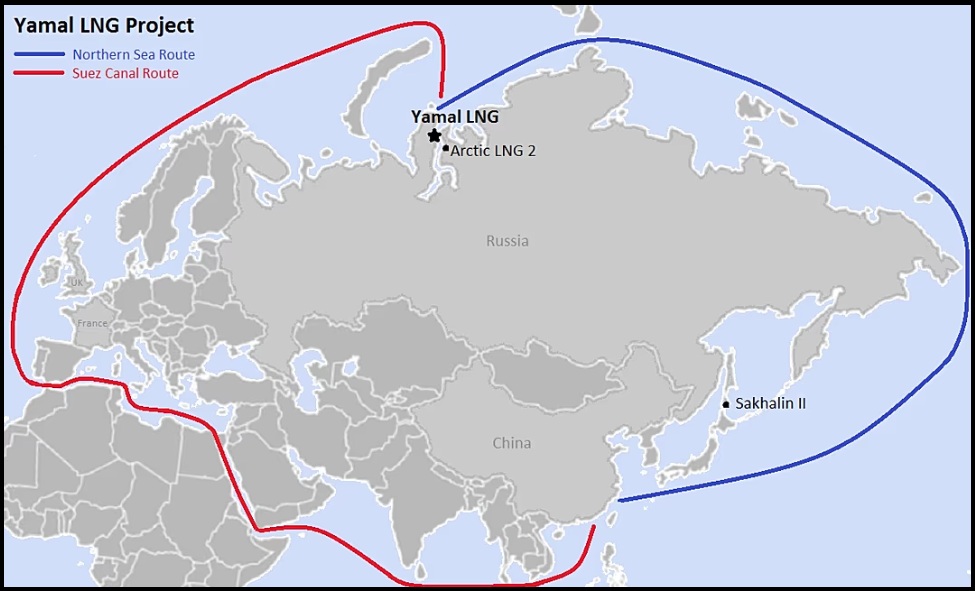
[…] European LNG imports from the Russian Yamal project rose 9.5% year-on-year between January and September, with EU ports receiving 85% of Yamal’s recorded deliveries.
France received nearly three-quarters of September’s EU deliveries, with the Dunkirk and Montoir ports receiving 571.716 million tonnes of Arctic LNG, according to Kpler.
The Netherlands imported 146.461 million tonnes of LNG and Portugal 74.263 million tonnes. No cargoes were recorded in Spain or at Belgium’s Zeebrugge terminal.
[…] US sanctions under the Lindsey Graham Act could disrupt trade before the EU’s ban on Russian LNG takes effect, forcing European governments and buyers to respond.
The US administration faces an 18 October deadline for its first review under the law. However, the deadline should not be mistaken for an automatic ban on Yamal deliveries, Urgewald say, as the law’s practical impact depends on how the administration exercises its powers.
“The US President must compile a list of ships transporting Russian LNG by October 18. These ships will then be subject to sanctions unless Trump issues so-called waivers. This is possible and, given Trump’s track record regarding Russia, not unlikely,” Rötters told Euronews.
EU imports from Yamal will depend on the goodwill of the US President from 18 October until the final embargo takes effect in 2027, Rötters stressed.
US sanctions have already severely restricted Russia’s Arctic LNG 2 project and the Northern Sea Route, while Yamal LNG continues to supply Europe. (read more)
 I will note again that not a single western analyst ever outlines the price India, China, or Southeast Asia pays to Russia for the energy products they purchase. That’s because those purchases are made outside the “western market price structure” used for energy sales. What western analysts call energy sold “at a discount” simply means at prices outside the western commodity exchange price; at prices determined by Putin and other nations.
That said, the energy products that flow to EU-NATO states, are sold at “western commodity market prices,” and are likely significantly higher than the energy products sold to China, India and beyond.
That brings us to the key and rather consequential question:
What price is Vladimir Putin selling diesel to President Trump?
The answer is likely inside the former discussion of purchasing potash from Belarus. Within the potash agreement, Belarus was/is willing to sell to the USA at a price significantly below the “western market price,” and that has upset Canada.
What few Americans and Europeans understand is there’s another entire system of global commodity sale that exists outside the “western market price.” Independent nations selling to other independent nations based on prices they agree to between each other. That has nothing to do with western commodity prices (‘market prices’).
This is one of the reasons we are seeing nations like the UAE leaving the OPEC system in favor of selling to a larger global audience at bespoke prices. The UAE announced on April 28, 2026, that it will leave both OPEC and OPEC+ effective May 1, 2026, citing national economic interests, production flexibility, and alignment with its “We the UAE 2031” vision.
Do you remember when President Trump said, “it’s great that the UAE is leaving OPEC“? What framed President Trump’s statement was his belief that sovereign nations should be selling their products to other sovereign nations based on mutually agreed prices. This is the opposite of the London-based construct of “western commodity pricing.”
♦ Organic geopolitical competition lowers prices. Russia may say we sell oil at $75 a barrel. Saudi Arabia may say we sell oil at $80 a barrel. Venezuela may say we will sell you oil at $65 a barrel. The nation states take control because these raw commodities are the assets of the nation state, not the multinational corporations.
This is a seismic distinction between the current system (western market price) and the system that is preferred by the BRICS assembly (national prices set by govt.). Competition among nation states for sales of oil/gas can make consumer oil/gas prices plummet. Purchasing nations can make purchase contract offers instead of being captive to the commodity price.
The BRICS issue before was that each nation would sell their commodity in their own currency. However, as we see in the Belarus (potash) and potentially the Russia (diesel) deals, President Trump is creating a hybrid system where the dollar remains the trade/transfer currency, but the price is entirely up to the two independent nations – one selling, one purchasing. This destroys the middlemen! Which is to say, this sovereign approach destroys the vulture capitalists and control mechanisms of the multinational banking interests (ie London).
Again, if you go back to the comments around that Alaska summit between Putin and Trump, the conversation about a strategic agreement between the two nations surrounding the energy sector was the primary statement at the end of the summit.
Keep in mind, the same system that controls the “western commodity market” is the same banking and finance system that controls the mechanisms of the green energy/climate change programs, including carbon trading schemes. It’s all manipulation by bureaucracy and ideology. Banks telling energy borrowers they cannot spend the funds on carbon extraction and climate friendly ESG systems are preferred for lending.
Take out these finance and banking “middlemen” and the western market control system collapses; at least for energy sales. Now put a value on that entire control system and you’ll likely agree it extends beyond the ‘trillions’ into the quadrillions. That’s the scale of opposition here!
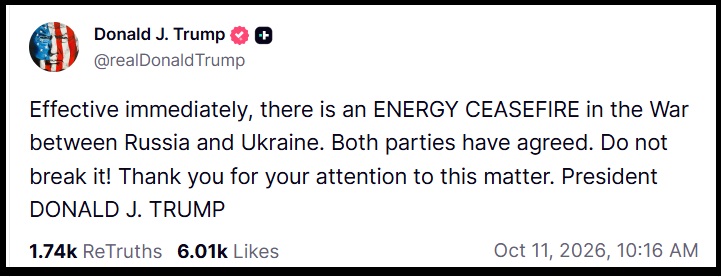
♦ Immediately following the August 2025, Alaska summit between Russian President Vladimir Putin and President Trump, Russia restarted Arctic-2 LNG terminals and began increasing natural gas (LNG) production for storage on ‘floating platforms.’
President Trump met with President Putin on August 15, 2025, and the curious increase in Russian production began on August 18, 2025.
It absolutely did not make sense that Russia would start producing even more LNG considering the previously imposed western sanctions against them, and the fact that Russia was already overproducing LNG. As noted by analysts at the time. Russia had no market for this LNG, yet Russia began increasing LNG supply anyway. For six months Vladimir Putin extracted and stored LNG.
Six months later, on February 28, 2026, Operation Epic Fury against Iran began.
Within 36 hours Qatar announced they were shutting down all LNG production, following retaliatory strikes carried out by Iran. Overnight the price of LNG skyrocketed, and immediate concerns were raised by ASEAN countries who are heavily reliant on LNG production from the Gulf.
Southeast Asia doesn’t use LNG for heating (don’t need it), that specific cheap energy resource powers everything else in their economy, cooking, transportation, electricity etc.
 Six months earlier Russia began storing LNG and oil on floating platforms with no customers.
A few days after Qatar made their March force majeure shutdown announcement, Treasury Secretary Scott Bessent issued an interim license for Russia to sell oil and gas that was loaded onto “floating platforms and vessels” before March 12 and was valid through midnight Washington time on April 11. [Treasury Notice Here – OFAC Technical Details Here]
Either Russian President Putin was the luckiest guy in the world, or Russia knew something.
In August 2025 what Russia did following the Alaska summit did not make sense. However, in March 2026 what they were doing for the past six months suddenly looked like something more than simply fortuitous timing.
♦ On September 5, 2026, Steve Witkoff and Jared Kushner traveled to Moscow to discuss ceasefire negotiations. On September 8, President Trump and President Putin held a telephone call to discuss the visit. President Putin’s senior aide Yury Ushakov documented the phone call in a Kremlin readout.
Part of the readout: “[Russia’s] vision of the overall progress on the battlefield and achieving the goals and objectives of the special military operation. Speaking of which, actual tangible actions that the Americans could take to expedite the cessation of the hostilities were outlined.”
President Putin outlined tangible actions “Americans could take”?
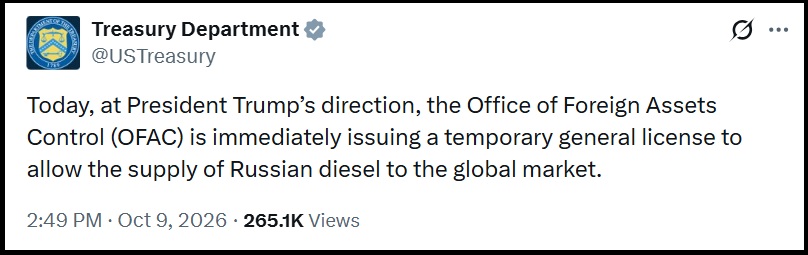
This proves that not only Americans, but the rest of the world has been getting ripped off for decades!
President Trump is trying to change that. The media will never give him credit for that. And the people who have become unbelievably wealthy from this scam will fight Trump with everything they have to maintain their control over energy worldwide.
God bless President Trump, may he be wildly successful!
If he wins, *WE* win!!!
Bessent is one of our best Treasury Secretaries. I would say within the top two or three.
President Trump is playing the LNG GAME.
😉 👍🏻 🇺🇸
Well Done…
🙂 🙂 🙂 🙂
No, the United States does not have to buy commodities at the listed CME (Chicago Mercantile Exchange) or LME (London Metal Exchange) prices.
Spot vs. Futures Pricing
Commodity prices are determined by supply and demand fundamentals, not fixed mandates.
Buyers can transact in:
Exchange Role
Exchanges like the CME and LME provide standardized futures contracts for price discovery and risk management. While these contracts set global benchmarks, physical buyers and sellers are free to negotiate prices based on regional premiums, logistics, and specific contract terms rather than adhering strictly to exchange listings.
Sovereign Economic World means: Eliminate the rent seeking middle men profiting of the vision and labor of others through market manipulation.
There are rent seekers. They are not the middlemen, not the bankers. The rent seekers are the GOVERNMENTS. The EU wants a Zero Carbon Emission Continent. It is expensive to do and makes all their industries uncompetitive. So they have to beggar the US to sink with them. It is sinking in. Russia and the US will be outside the sinking continent and make it look bad. The EU wants us to drown with them. What horrible allies, they need to be former allies.
The Government is telling the Banks what to do. It is why a dumbo like Carney got put in charge of Canada. You have to be stupid to do this.
Regarding the USA and the BRICS system; if you can’t beat ’em, join ’em! What a novel concept! Leave the Londowners behind, I say!
Rigged markets have been painfully obvious for many years now, but especially in the last decade or so!
Republicans used to be known as “Trust-Busters,” i.e. breaking what was known as “business trusts” i.e. monopolies to allow free, competitive markets, to stop price fixing and market rigging, and to lower prices.
President TRUMP’S Golden Age is seeing its foundation laid!
Forward thinking by smart leadership, well played! Some bureaucrats can only see from inside their feifdom with greed towards the Serf; champions of liberty and abundance envision a better way towards the future, not stuck in Grey, dismal scarcity and limitations upon the soul. Keep on thinking free!
During the Nixon Presidency OPEC controlled 50% of the supply of oil and 75% of global trade. Do you remember the gas lines we had when they did not want to sell oil?
There are middlemen or distributors in all market segments of business. I do not like them but in many cases they provide services and sell to the smaller purchaser that a large manufacturer or source may not want to sell direct.
Prices everywhere are set by buyer and seller. OPECs pressure came from a monopolistic point of view.
Remember Rockefeller’s Standard Oil. They controlled 90% of the US market and would have controlled it all.
OPEC had a quota system on the UAE for price and quantity. With all the war damage UAE needed to sell more oil and/or sell at a higher price. They left OPEC for the freedom to make their own deals.
Bye Bye Special Relationshippers!
This is very interesting given the power of benchmark pricing, locational price differences, energy content pricing impact, quality impact, delivery month, etc. on and on…
Eliminate the middle man and create compatition, bold and ingenious.
Ever wonder why there is such a thing as a middle man? A subject to be studied, for sure.
so much to learn concerning City of London. Is there a book that explains its importance? I get glimpses of influence in American Civil War. Glimpses of someone named Rothschild influencing anti Napoleon forces. How can some bankers in the City of London have so much power?
other weird stuff about the city of Washington DC.
is access to the US Market the hold America has over rest of the world? why don’t other countries just do their own thing?
When nations own the means of production then those Governments can charge whatever they want.
Our energy business is privatized and I have zero interest in nationalizing it which is collectivist. So I’m cool with Chevron charging whatever they think they can get and all capitalists should too.
no favors for a bitch american located company – unless they favor Americans.
the market can stay free, and the private company can survive any way it can.
President Trump met with President Putin on August 15, 2025, and the curious increase in Russian production began on August 18, 2025.
Immediately following the August 2025, Alaska summit between Russian President Vladimir Putin and President Trump, Russia restarted Arctic-2 LNG terminals and began increasing natural gas (LNG) production for storage on ‘floating platforms.’
Russia had no market for this LNG, yet Russia began increasing LNG supply anyway. For six months Vladimir Putin extracted and stored LNG.Six months later, on February 28, 2026, Operation Epic Fury against Iran began.
Within 36 hours Qatar announced they were shutting down all LNG production
A few days after Qatar made their March force majeure shutdown announcement, Treasury Secretary Scott Bessent issued an interim license for Russia to sell oil and gas that was loaded onto “floating platforms and vessels” before March 12 and was valid through midnight Washington time on April 11.
Either Russian President Putin was the luckiest guy in the world, or Russia knew something.
the West Euro bullshit was flanked via talks they were not privy too
As usual, it is greed that made us allow a monopoly of 3rd world savages over global energy prices.
private companies using America to conquer that world. while screwing us at the same time, because they have no borders.
no favors, no military support, nothing.
The next time Rand Paul talks of “free” trade, one is free to wonder where the hell he’s coming from. A good libertarian would insist that we should follow the money. I just think he has a lot of faith in his chosen religion.
global centralization is not free trade