National Economic Council Director Kevin Hassett appears on Bloomberg News to discuss the US March jobs report and oil market supply disruptions related to the military action in Iran against the impact of oil prices on the US economy.
Director Hassett notes the continued goal of the Trump MAGAnomic plan is to build momentum, keep driving domestic investment and the short-term impact from Iran should mitigate quickly. WATCH:
The Bureau of Labor and Statistics (BLS) has released the March employment report [DATA HERE] reflecting gains of 186,000 private sector jobs, with another 8,000 federal government jobs eliminated. Net gain 178,000 jobs.
Forecasters had anticipated around 63,000 net jobs gained: the actual result triples expectations.
This is a challenging time to use data to estimate overall employment strength, mainly due to the repatriation efforts underway that are removing illegal alien workers from the labor force.
As deportation efforts continue against the black-market workforce, in combination with targeting efforts toward fraudulent ‘mismatched’ social security records used to gain unlawful -albeit visible- market employment, it becomes challenging to quantify net realized job gains.
The overall goal is to remove the illegal alien workers, reestablish organic job market pressures to increase wages and pull American workers from the sidelines back into the labor market. Removing illegal workers drives up real wages, that should (re)incentivize the labor market. As these efforts continue, we are seeing wide variances, upward and downward swings, depending on the collection timing.
One of the positive aspects during this employment cycle is the reduction in the overall federal labor force. Overall, in the past year, President Trump has removed 271,000 federal jobs more than reversing all of the govt jobs added during Joe Biden’s term in office. This trend should continue.
They stopped their oil and gas exploration. They chose to chase ‘net zero’ academic pontifications. They closed their refining operations. They took apart their coal-fired electricity plants. They disassembled their nuclear power capabilities. Then, the absolute cherry on the proverbial cake, they voted to stop purchasing oil and gas from Russia.
The EU is now in the Find Out stage of their FAFO positioning.
Gasoline prices have skyrocketed. The last shipments of jet fuel have arrived. Major airline carriers are cancelling flights due to lack of fuel. Faster than the EU can organize meetings to discuss their position, EU destined LNG shipments have diverted to southeast Asia and India as the ASEAN nations bid higher purchase prices for the vessels literally on the water.
Folks, it’s quite an article written by EU Politico as they outline how each of the leaders from the nation states are now discussing how vulnerable they are to the changed oil/gas environment with the mid east conflict ongoing. The entire energy sector in Europe is now in crisis mode with leaders predicting it will get much worse within days, not weeks.
EU Politico – “Germany’s Friedrich Merz warns the economic fallout from the war in Iran is on track to rival that of the Covid pandemic or the Russian invasion of Ukraine.
[…] With the war in Iran threatening to choke off energy flows for the foreseeable future, Europe is facing a supply shock that promises to cripple manufacturing, ground airlines, hike up the price of food, spike borrowing costs and send inflation spiraling back to crisis levels.
As the last tankers carrying fossil fuels from the Persian Gulf pull into European ports, the scale of what is about to hit seems to be dawning on the continent’s leaders.
Three days ago, the Australian government was downplaying reports of a serious shortage of fuel. Today the Australian Prime Minister gives a national address and warns Aussies to conserve fuel, or else things will get sketchy.
In non-pretending terms: it’s Australia – PREPARE FOR THE SKETCHY!
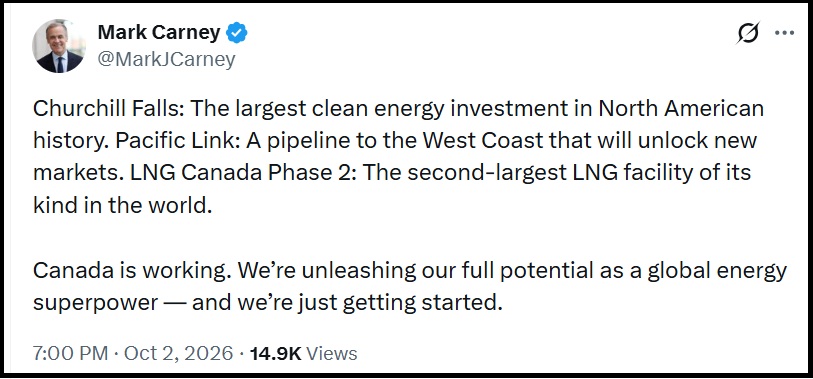
The leaders of Canada, Great Britain and now Australia have delivered national addresses in the past 36-hrs about Iran, the subsequent energy issues and the geopolitical shifts currently underway they cannot control. Keep in mind, the other thing these countries have in common is they are four (count NZ in AU) of the Five-Eyes countries. The remaining eye is the USA, and President Trump is scheduled to deliver his national address tonight at 9:00pm Eastern.
For the folks down under it is worth remembering their COVID-19 experience. When the government starts saying, ‘we hope you will voluntarily consider doing XXX’, the next thing that comes in the ‘conservation’ effort are government mandates, travel restrictions, lockdowns, rations and severe authoritarian control mechanisms. It’s the Australian way.
For this example, Prime Minister Anthony Albanese delivers “a rare address to the nation” outlining his government’s response to the Middle East conflict and fuel crisis. “The months ahead may not be easy. I want to be up front about that,” Albanese warns. He then continues, “we will deal with these global challenges, the ‘[¹]Australian way’,” which should forewarn every person in Australia that government control mechanisms are being planned immediately. Good luck! WATCH:
.
I always found it rather remarkable that the countries who pushed the Build Back Better agenda the hardest; the countries who pushed climate change and complete restructuring of energy policies the most; were the exact same countries who triggered the expansive sanction regime against Russia. (reminder map below)
Against the backdrop of the Iran conflict, crisis in the Middle East and the disruption of energy supplies due to the closure of the Strait of Hormuz, U.K Prime Minister Keir Starmer held an urgent meeting with British business leaders, finance and bankers as well as U.K insurance leaders. At the conclusion of that meeting, he informed media of a national address.
During the national address to the people of Great Britain, Prime Minister Starmer emphasized that events in the Middle East have forever changed the landscape of U.K. economic and geopolitical policy. Signaling an inflection point crossed, the British prime minister announced that urgent actions were being taken to mitigate a national crisis.
Additionally, accepting the U.S. position toward NATO, and the U.K appears to be permanently shifted, Starmer said the British relationship with Europe now becomes critical to their vital national security interests. Against the backdrop of an end to the “special relationship” with America, the Brexit independence from the European Union is now a threat.
The United Kingdom must find a way to reunite with the European Union, because if it remains alone, without key support and protection from the USA, the British Empire is at risk of collapse. WATCH:
.
President Trump is also scheduled to deliver a national address at 9:00pm Wednesday. Secretary of State Marco Rubio gave an interview with Fox News last night specifically centered around a changed U.S.-NATO relationship (that interview coming next).
Susan Konkinda from Promethean Action, touches on the recent developments where President Trump and Secretary Bessent have distanced themselves from the old regimes of the former global alliances. Striking out anew, by charting a new course for sovereign nations.
“Susan Kokinda argues that RFK Jr.’s CPAC remarks—praising Trump’s use of power and saying JFK and RFK would back Trump on Iran, Ukraine, and rebuilding the middle class—cut through media narratives and signal a break from post–WWII imperial management. She says Britain and allied institutions are being sidelined, citing Chatham House’s warnings about UK limits and a “Not So Special Relationship” under Trump 2.0, while Pakistan, Saudi Arabia, Turkey, and Egypt convene in Islamabad to open U.S.-Iran dialogue without the UK, EU, or NATO.”
“Trump names Vice President JD Vance lead negotiator, presented as an anti–forever war interlocutor who has challenged Netanyahu’s regime-change expectations. Kokinda links this foreign-policy shift to a broader “American System” agenda: Peter Navarro’s protectionist trade revolution and Treasury Secretary Scott Bessent’s rejection of Bank of England–style Fed models, framing it as American System versus British System.” WATCH:
Al Jazeera is essentially the state run media outlet of Qatar. Secretary of State Rubio sat down for a lengthy interview with Al Jazeera that will be shared throughout the Arab world.
“In an exclusive Al Jazeera interview, US Secretary of State Marco Rubio stated that President Trump always prefers diplomacy, with messages and indirect talks ongoing between the US and figures inside Iran. Rubio demanded that Iran abandon all nuclear weapons ambitions, end its missile and drone programmes, and stop sponsoring terrorism across the region. He rejected Iran’s conditions for ending the war — including sovereignty over the Strait of Hormuz and financial compensation — calling the strait demand illegal and a dangerous global precedent. Rubio declared that the strait “will be open one way or another” after US military objectives are achieved, whether through Iranian compliance or an international coalition.”
“He outlined those objectives as the destruction of Iran’s air force (achieved), navy (largely achieved), missile launchers, and weapons factories — all to be completed in weeks, not months. Rubio expressed disappointment with NATO allies like Spain for denying basing rights and airspace, warning that the US would re-examine its NATO commitment. He confirmed the US would welcome regime change in Iran but insisted it was not the official objective of the current military operation. The interview also covered post-Maduro stabilisation in Venezuela and called for serious economic and political reforms in Cuba.”
The rebranded Lyndon LaRouche PAC has another good outline on the new strategic alliances assembled by President Trump as the ongoing conflict with Iran continues.
Susan Kokinda reviews how the United Kingdom and Europe have been sidelined as President Trump directly negotiates with key stakeholders in the middle east and Asia. Kokinda correctly notes the messaging from Russia indicates a strategic awareness that old systems are fracturing and the potential for new strategic alliances is rising.
“Susan Kokinda argues President Trump has opened a new diplomatic space to de-escalate the Iran conflict by working through a regional roster—Saudi Arabia, Egypt, Turkey, Pakistan, Gulf States, and back channels into Iran—while the U.K., EU, and NATO are absent and increasingly irrelevant. Citing reporting that ministers met in Riyadh and that Egypt, Turkey, and Oman carried messages, she says this “Board of Peace” architecture is isolating Iran and weakening its proxies, pointing to Lebanon’s move against Hezbollah, the Palestinian Authority’s condemnation of Iran, and Hamas considering disarmament. Kokinda links Europe’s exclusion to self-inflicted energy weakness from Green and anti-Russia policies, noting rushed LNG moves and a delayed Russian oil ban vote. She concludes Ukraine’s outlook darkens as Europe and Britain lack leverage, highlighting Zelenskyy’s scramble for support in London and Washington.” WATCH:
This is good news from the standpoint of us wanting to see President Trump continue to make MAGAnomic progress on trade as well as geopolitical alliances.
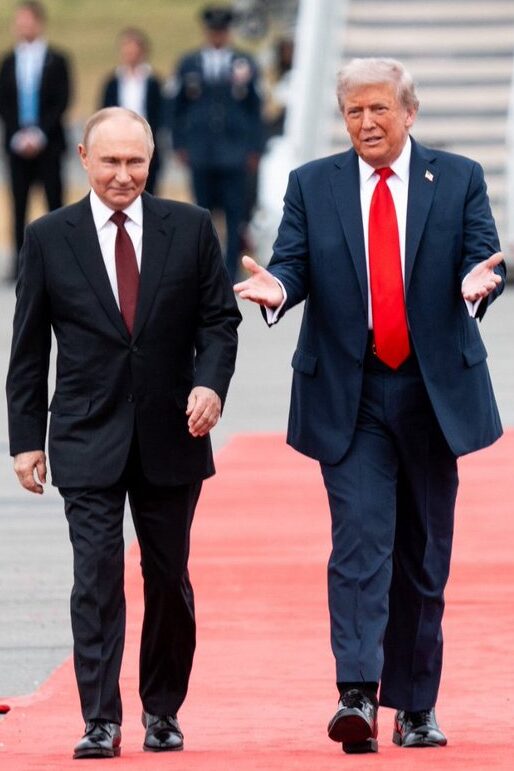
It will be a very interesting summit against the backdrop of Venezuela, Iran, oil/gas energy shifts, the previous Alaska summit with Russian Federation President Vladimir Putin, the renegotiation of the USMCA and the Chinese auto deal in Canada…
There are a lot of important topics within a Trump-Xi summit.
PRESIDENT TRUMP – “My meeting with the Highly Respected President of China, President Xi Jinping, which was originally postponed due to our Military operation in Iran, has been rescheduled, and will take place in Beijing on May 14th and 15th.”
“First Lady Melania and I will also host President Xi and Madame Peng for a reciprocal visit in Washington, D.C., at a later date, this year. Our Representatives are finalizing preparations for these Historic Visits. I look very much forward to spending time with President Xi in what will be, I am sure, a Monumental Event. Thank you for your attention to this matter!” ~ President DONALD J. TRUMP
With what she perceived as strong domestic support following her confrontation with President Trump, Danish Prime Minister Mette Frederiksen decided to trigger an early election. Frederiksen thought the timing was perfect; however, it backfired.
Mette Frederiksen’s political party suffered the biggest ruling party election defeat in 120+ years, and her coalition of left-wing parties now lost their majority.
As a result of the election, Prime Minister Mette Frederiksen has resigned.
COPENHAGEN, March 25 (Reuters) – Danish Prime Minister Mette Frederiksen on Wednesday submitted her government’s resignation to the king after her three-party coalition suffered a large defeat in a general election, the royal palace said in a statement.
Parties are set to launch potentially tough and long negotiations to determine whether the next government will be formed by Frederiksen or another party leader. (link)