Quantcast

Israel Not Happy with Trump Appointed Turkey and Qatar Roles in Assisting Gaza Stabilization and Executive Board

Last week President Donald Trump officially announced the members of the Gaza Board of Peace; an organization headed by President Trump and tasked to oversee the second phase of his plan to end the Israeli conflict in Gaza, specifically the reconstruction and disarmament of Gaza and Hamas respectively. [SEE HERE]

The members of the “Board of Peace,” chaired by Trump himself, includes Secretary of State Marco Rubio; Emissary Steve Witkoff; Jared Kushner; former British Prime Minister Tony Blair; an American-Jewish billionaire named Mark Rowan; World Bank President Ajay Banga; and Deputy National Security Advisor of the United States, Robert Gabriel. President/Chairman Donald Trump has also appointed Aryeh Lightstone and Josh Gruenbaum as senior advisors to the Board of Peace.

At the same time, President Trump announced another executive body that would operate under the Peace Council to assist with the facilitation of a new Palestinian government, the “Gaza Executive Board.” This structure is intended to manage day to day events on the ground instead of a Hamas loyalist govt.  The appointees to the executive board have upset the Netanyahu government of Israel.

According to the White House announcement, the Gaza Executive Board will include: Witkoff; Kushner; Turkish Foreign Minister Hakan Fidan; senior Qatari official Ali al-Thawadi; Egyptian intelligence chief Hassan Rashad; Tony Blair; billionaire Mark Rowan; UAE Minister Reem Al Hashimi; former Bulgarian Foreign and Defense Minister Nickolay Mladenov, who also served as the UN envoy for the Middle East peace process; U.N Representative Sigrid Kagg, and Israeli-Cypriot businessman Yakir Gabbay, who specializes in real estate, technology and international investments.

Additionally, to establish security, preserve peace, and establish a durable terror-free environment, Major General Jasper Jeffers has been appointed Commander of the International Stabilization Force (ISF), where he will lead security operations, support comprehensive demilitarization, and enable the safe delivery of humanitarian aid and reconstruction materials. [link]

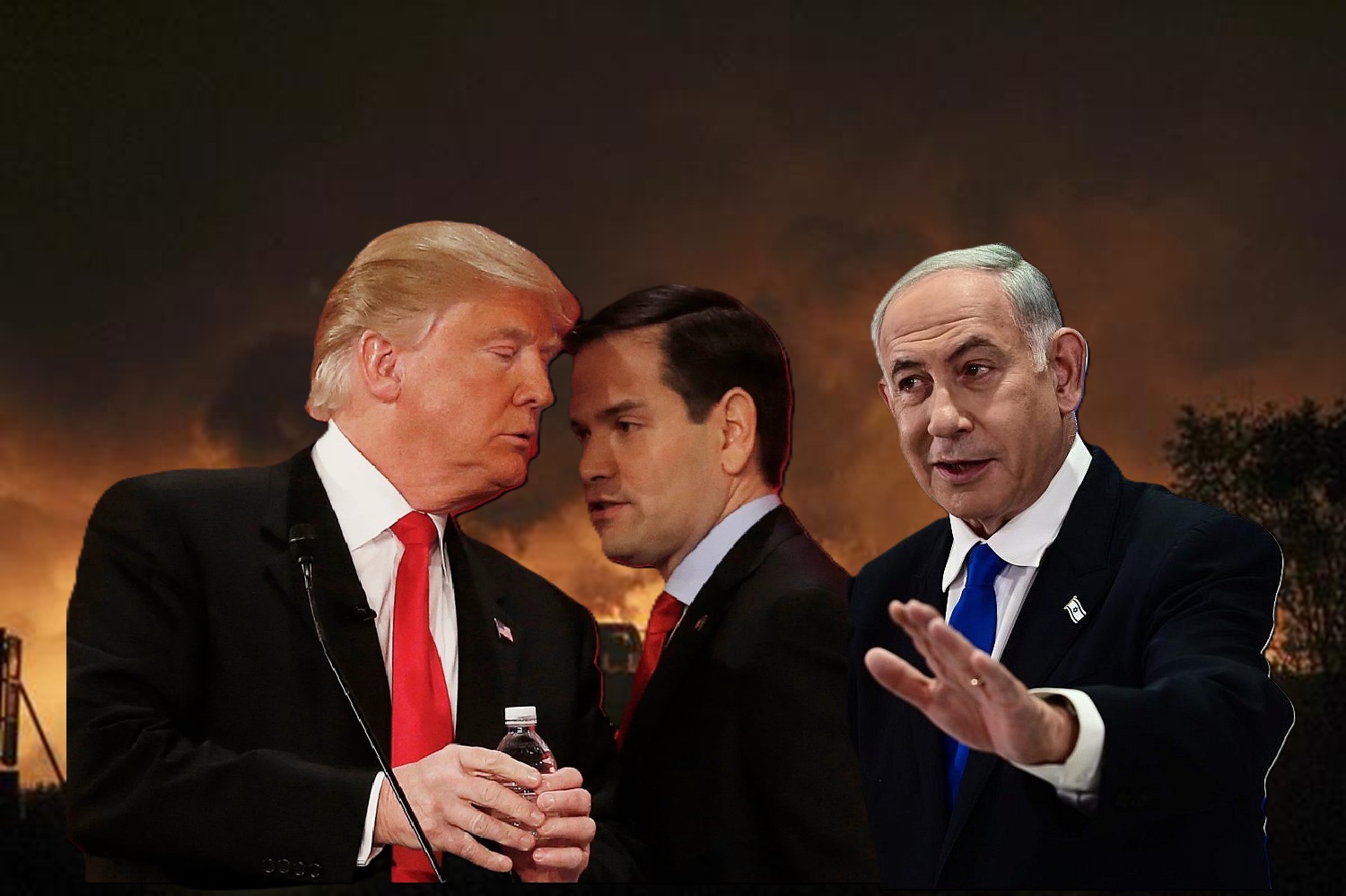
According to Israeli media Netanyahu is not happy, and planning to protest the Turkish, Qatari and UAE appointments to Marco Rubio (not Trump):

(more…)

President Trump Delivers Remarks to Press Departing for ASEAN Summit in Malaysia

There has been a slight bit of ambiguity in President Trump’s schedule as he heads to Asia for the first time in his second term.  The President will attend the Association of Southeast Asian Nations (ASEAN) summit in Malaysia first.  The focus of President Trump and the ASEAN nations will be economics and regional stability.  Then President Trump will then head to Japan.

Washington and Tokyo reached a trade agreement earlier this year, which included the promise of $550 billion of investments in U.S. projects. Interestingly, Japan is in a moment of political transition, as Sanae Takaichi was elected to be the country’s first female prime minister. Takaichi is a protégé of Shinzo Abe, a former prime minister and dear friend of President Trump.  The meeting between Takaichi and Trump will likely hold a lot of very positive energy for both leaders; there is great respect.

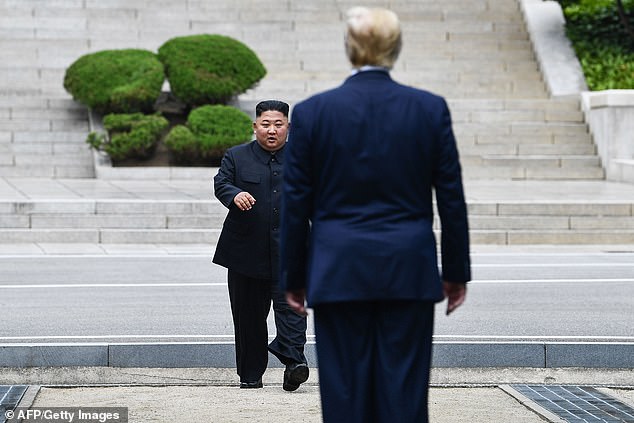
President Trump will then head to South Korea, which is hosting this year’s Asia-Pacific Economic Cooperation (APEC) summit. President Trump has said he’ll sit down with Chinese Chairman Xi Jinping while he’s there for a much-anticipated meeting.  Additionally, President Trump will be discussing tariffs on South Korean autos and directly addressing stalled trade negotiations.  There is also a possibility for President Trump to visit North Korea’s Kim Jong-un and reconnect after several years of separation.  There is a lot of potential for this overall visit to Asia.

.

(more…)

China Walks Back Export Control Announcement – USTR Jamieson Greer Explains

China holds a monopolistic level of control on the industrial processing of rare earth minerals.  The minerals themselves are not rare; it’s the processing of them into refined elements used in industrial electronic component manufacturing that gives China power.

The U.S. and China hold a current trade agreement saying, essentially, we will remain steady with the baseline tariffs in exchange for Beijing maintaining a consistent policy on the export of processed rare earth magnets and minerals.  The announcement of export controls by Beijing violated the terms of that trade agreement, and President Trump responded by announcing an additional retaliatory tariff of 100%, effective November 1st.

China then sent a clarification statement saying current licensing and trade agreements would be honored.  On his flight to Israel, President Trump said, “I think I know what happened, I know what happened” and downplayed the trade action.  U.S Trade Representative Jamieson Greer gives some background.  WATCH:

.

(more…)

Tariff Evasion Bust – U.S. Customs Finds Transnational Shell Companies in Taiwan, South Korea, Indonesia and Vietnam

U.S. Customs and Border Patrol has discovered a massive network of Chinese shell companies, set up in Taiwan, South Korea, Vietnam and Indonesia, specifically to avoid U.S. tariffs.

…”Investigations into transshipping are ongoing, the CBP tells FOX Business with monetary recovery likely to grow beyond $400 million”…

Up to 250 shell companies have been identified in the Beijing network with boots on the ground going to look at manufacturing facilities in Southeast Asia that have no manufacturing activity, yet they generate products for shipment to the USA.

CBP is now on the trail of what CTH identified in January of this year with a visit to Vietnam {GO DEEP}.

ASEAN NATIONS – U.S. Customs and Border Protection has busted up a duty-evasion ring attempting to evade President Trump’s tariffs, FOX Business exclusively reports. 

The CBP uncovered over $400 million in unpaid trade duties through investigations permitted under the Enforce and Protect Act (EAPA), a tactic used to police and stop illegal transshipments and other methods aimed at defrauding the U.S. government. That figure is expected to rise as the investigation deepens. 

[…] A source tells FOX Business’ Edward Lawrence that one of the operations had boots on the ground in Taiwan and Indonesia to look at mattress factories and found that there was no production going on. 

Additionally, over half, or $250 million, came from a network of 23 Chinese shell companies which funneled repackaged goods as if they were made in Asian nations, including South Korea, Indonesia and Vietnam, to avoid tariffs.  (read more)

(more…)

Learn This: Secretary Scott Bessent Outlines Status of U.S-China Trade Conflict

Treasury Secretary Scott Bessent appears on CBS News to counter the false information being spread by Margaret Brennan on behalf of Wall Street corporations.  The topics of interest surround China and tariffs.

Let me clarify for the audience that does not follow closely.  Tariffs are paid by the importer based on the wholesale price of the product as delivered by the exporting country depending on the exporters’ tariff rate.  Tariffs are NOT LEVIED/PAID based on the retail price of the product as sold to the consumer.

Example:  A pair of Denim Jeans made in China for Guess Brand.  The Chinese manufacturer sells the jeans to Guess Brand for $10 a pair manufactured.  Guess sells the jeans at retail in the USA for $100 (a $90 gross profit).

A 50% tariff on China means the jeans cost Guess Brand $15 instead of $10 (an $85 gross profit).  A 50% tariff on Guess brand jeans, that retail for $100, changes the cost to the retail brand by $5.

Multinational corporations who have off shored their production and manufacturing to China are the ones screaming about tariffs.  Ultimately in the final analysis, President Trump is exposing corporatism, multinational corporate vultures; he is not necessarily just exposing China.

In the example above the company makes $85 gross profit as opposed to $90 gross profit on the pair of jeans if they do not raise the retail price.  They don’t raise the price because their profit margins are already ridiculous, and that’s why consumer prices do not go up. A 50% direct tariff on Chinese goods only marginally hits the multinational corporation.  American consumers need to understand this dynamic better.    WATCH: 

[TRANSCRIPT] – MARGARET BRENNAN: Good morning and welcome to ‘Face the Nation.’ We begin today with Treasury Secretary Scott Bessent. Good morning and thank you for being here.

SECRETARY SCOTT BESSENT: Morning, Margaret.

MARGARET BRENNAN: There’s so much to get to. I want to start with China, because the Defense Secretary just said there’s an imminent military threat from China to Taiwan. Days earlier, Secretary Rubio said he’d aggressively revoked Chinese student visas. On top of that, you have curbing exports to China. Trade talks you said with Beijing are stalled, and President Trump just accused China of violating an agreement, and now says no more, ‘Mr. Nice Guy.’ Are you intentionally escalating this standoff with Beijing?

(more…)

Chairman Xi Jinping Pressures Hedge Position in Vietnam with Increased Trade Agreements

Three months ago, I was in Vietnam reviewing just how expansive the positioning of Chinese investment was in the concurrent communist nation.  The short version is Beijing’s footprint in Vietnam was already huge.

As an outcome of the 2018 tariffs against China, which coincided with a President Trump visit to southeast Asia, multiple companies shifted manufacturing operations from China to Vietnam.

Beijing saw the move and slowly increased their own strategic footprint.

In the subsequent years as COVID-19 took attention from all other matters, and with Trump removed from the equation in 2020, China increased the scale of their investment and the outcomes in 2025 are very visible.

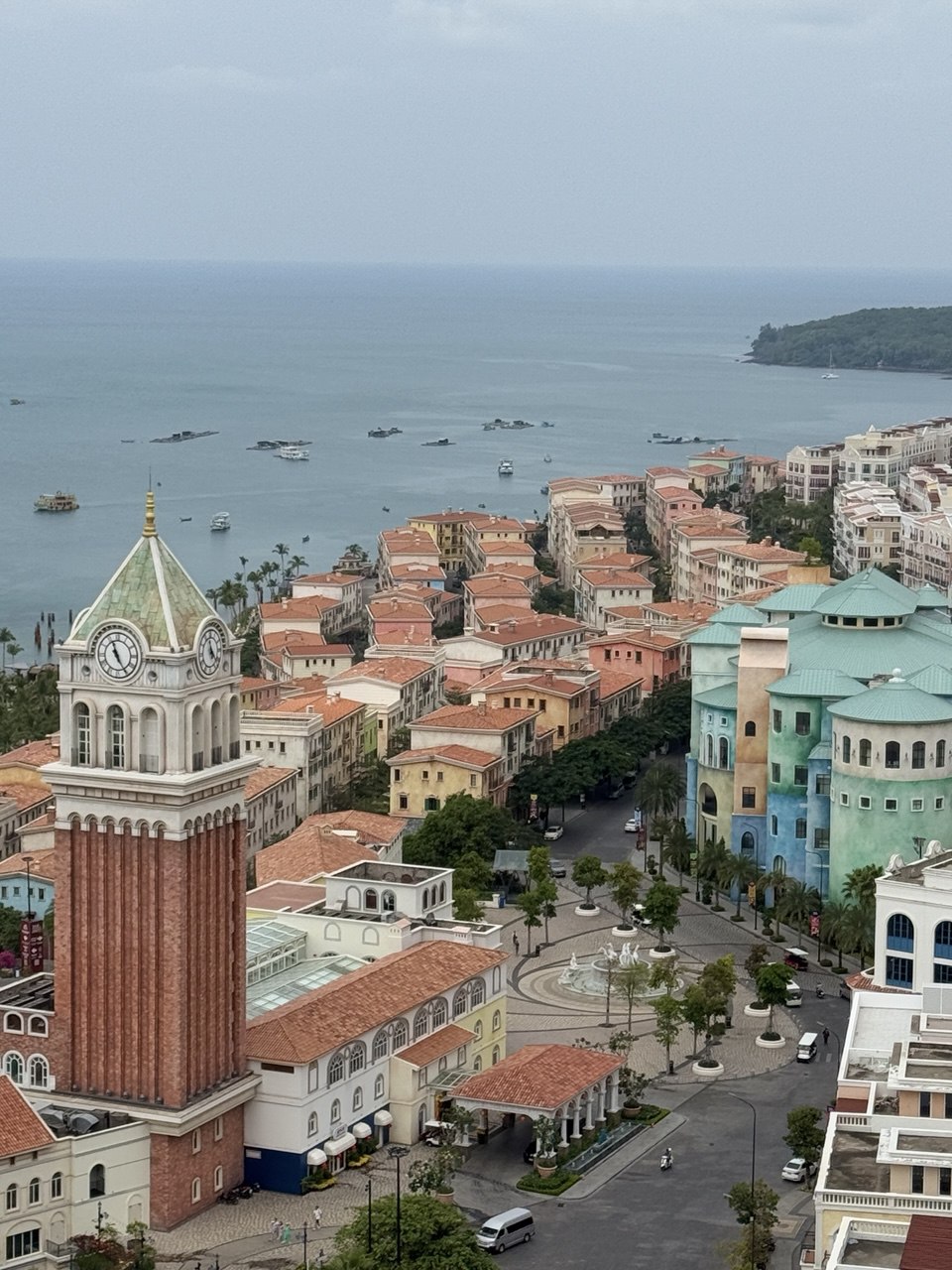
China even built this massive Disney type village in Phu Quõc (it’s nearly empty).

The people who live in Vietnam do not have money, they are a very poor nation.  The baseline poverty level, in combination with their communist regime politics, essentially eliminates their consumer power to purchase western goods and makes trade agreements between the U.S and Vietnam somewhat moot.  However, as a proxy manufacturing nation Vietnam is a valuable resource for China.

Essentially what can be seen in Vietnam is how Beijing spends money there for influence.  The U.S footprint is negligible in comparison to the visible influence of China.

Chinese Chairman Xi Jinping is in Vietnam right now making trade deals with the allied communist government.  At this point with so much Beijing influence money already in place, China can request very strategic terms.

(more…)

Stephen Miller Reiterates Tariff Strategy Around Section 232 National Security Products

In addition to Howard Lutnick, Peter Navarro and Kevin Hassett explaining the nuances of Section 232 tariff exemptions, White House Senior Policy Advisor, Stephen Miller, appears on Fox News to deliver the same message.

Steel, Aluminum, Automobiles, Pharmaceuticals and components for semiconductor manufacturing all fall under the Section 232 “National Security” tariff umbrella. Meaning, the products within each of those sectors of manufacturing are handled ¹differently from all other tariffs as executed.  WATCH:

[¹NOTE: This approach could present a problem in future lawsuits, because the administration is now beginning to define what is classified as a ‘national security’ product. Lawfare operatives will likely say in court that all other tariff sectors (not 232) are controlled by congress, not the President; at least that will be their predictable argument. The administration will counter by arguing all other sector tariffs are directed in response to the Fentanyl crisis, which is again described as a “national security” threat.]

President Trump released the following statement on Truth Social:

NOBODY is getting “off the hook” for the unfair Trade Balances, and Non-Monetary Tariff Barriers, that other Countries have used against us, especially not China which, by far, treats us the worst! There was no Tariff “exception” announced on Friday.

(more…)

Sunday Talks: Economic Council Director Kevin Hassett Explains China and Global Tariff Distinctions

You can watch Jake Tapper’s brow grow increasingly furrowed in real time as White House Economic Council Director, Kevin Hassett, smiles through the narratives and talks clearly about what is happening with President Trump’s tariff agenda.

This is a REALLY good interview.  Kevin “quokka” Hassett just keeps outlining clear examples of what regional tariffs are happening and why there are distinctions.  The interviewer Jake Tapper keeps trying to throw confusion at Hassett, who smiles and explains the reason why Tapper’s framework is silly. WATCH:

.

(more…)

Sunday Talks: Secretary of Commerce Outlines Purpose of Tariff “Exemptions” – Sector Specific Tariffs Coming Soon

Commerce Secretary Howard Lutnick appears on ABC This Week, to explain and clarify the purpose of the recently announced tariff exceptions.

According to the explanation, there are two “sector specific” tariffs in Semiconductors and Pharmaceuticals that will be announced in the next few months.  The recently announced “exemptions” are products that will be included in the sector specific tariffs that are also identified as “non-negotiable” tariffs.

Semiconductor items, automobiles, steel and aluminum as well as pharmaceutical products will fall under categories or ‘sectors’ of products that will be non-negotiable in all trade agreements for the tariff levy applied.  Any nation who enters negotiations for new Free Trade Agreements (FTAs) will not be permitted to negotiate trade on semiconductor products, automobiles, steel, aluminum and medications.  WATCH:

.

(more…)

President Trump Wallops China with Massive de minimis Tariff Increases – Mail Order Product Costs from China Will Skyrocket

Within the Executive Order modifying the April 2nd global reciprocal tariffs [SEE HERE] section #4, we note a massive increase in the duty fees for mailed products from China formerly shipped under ‘de minimis’ rules.

REMINDER: The de minimis loophole comes from back in the 1930s. The idea back then was, say you went on a vacation to Paris, you shouldn’t have to file customs paperwork or pay taxes if you decided to ship some little Eiffel Tower statues to your friends back home.

Congress in 2015 then raised the de minimis threshold from $200 to $800. However, the e-commerce world exploded, and Chinese companies began using the de minimis loophole to ship cheap goods (ex. Temu and Shein) into the USA direct to consumers without paying any customs duty.

On April 2nd, as part of the global trade reset and tariff structure, President Trump revoked authorization for Chinese goods to transfer to the USA using the de minimis rule. The de minimis exemption was cancelled for all products coming out of China. The rule change only targeted China and Chinese shippers. No one else. [XO HERE]

Yesterday, as part of the modification to Executive Order #14257, President Trump has increased the baseline tariff for product mailed from China [de minimis tariff] from 30 90 percent to 120%.

Mailed products from China now face a 120% tariff.  Additionally, minimum tariff amounts increased from $75 to $100 effective May 1st, and from $150 to $2oo effective June 1st.  [See Section #4]

Example: If you order a $20 shirt from China effective June 1st, you will pay $220.  $20 for the shirt, and $200 minimum tariff.

There is no way Chinese E-Commerce can survive this level of tariff/duty fees.

(more…)