Extreme leftists and white, female, overeducated, urban communists have one primary prism: how Obama-ish is their candidate?
Both El-Sayed and Barack Obama are supported by the Muslim Brotherhood directly. Both El-Sayed and Barack Obama campaigned for Senate in the mid-term election (BO ’06, ES ’26), and both Barack Obama and El-Sayed planned to run for higher office in 2nd year of their freshman term as senator.
The media now begin their fawning endeavor as the Muslim Brotherhood backed Abdulrahman Mohamed El-Sayed tries to moderate himself in the image of Barack Hussein Obama. I find it a little revealing that El-Sayed’s wife is a doctor who refuses to treat Medicare and Medicaid patients (cash only), as El-Sayed campaigns on Medicare for all. Of course, don’t look for the media to point this out during questioning.
Notice also the Middle East nations that El-Sayed criticizes (Egypt, Saudi Arabia, Jordan and Pakistan) are the Mid-East nations who have pushed back or banned the Muslim Brotherhood. This is very revealing for those who walk the political deep weeds. By the way, he’s a paper doctor; a Phd, not an MD. WATCH:
[Transcript] – KRISTEN WELKER: And joining me now is Michigan’s Democratic Senate nominee, Abdul El-Sayed. Dr. El-Sayed, welcome to Meet the Press.
DR. ABDUL EL-SAYED: Thanks for having me.
KRISTEN WELKER: Thank you so much for being here and congratulations. Let’s talk about your victory this week. You narrowly defeated Congresswoman Haley Stevens. And when you actually add up all of the votes, the vote totals that went to Stevens and Mallory McMorrow, a majority of voters actually ended up voting for candidates who are more moderate than you. So how do you win over those voters who voted for someone else?
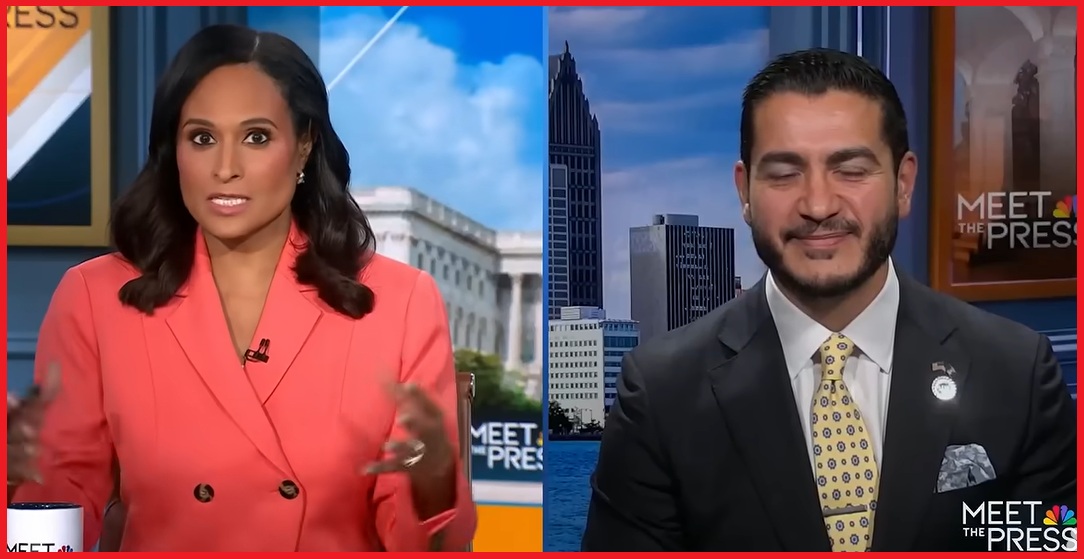
DR. ABDUL EL-SAYED: Well, thank you, Kristen. Really, we’re just grateful for everybody who participated. And the overwhelming recognition of the vote tallies is that 500,000 more Democrats voted than did Republicans in that election. And if that happens, we are going to win in a landslide. Now I know that we had it out with a very tough primary. There were a lot of issues that were discussed and differences that were identified and fixated on. But I will tell you this, that all of us agree that our differences are far smaller than what we agree on. And what we agree on is that Donald Trump has been an existential threat to our democracy. He is costing us jobs. He is costing us more at almost every aspect of our lives, whether it’s our gas, our groceries, or our health care, and that Mike Rogers is going to be nothing more than a rubber stamp on Donald Trump’s disastrous economic and foreign policies. And so this is an opportunity for us to come together to mend fences, to build together the coalition that is going to defeat Mike Rogers in November and defeat Trumpism over the next two years.
KRISTEN WELKER:
Well, let me ask you about some news that we’re learning this morning. Local outlets reporting that you spoke to former President Barack Obama on the phone. I know you’re not going to give me every detail of the call. But what was the crux of his message to you, Dr. El-Sayed?
DR. ABDUL EL-SAYED:
Well, Kristen, you’re right. I like to keep private conversations private. But it was a really warm and inspiring conversation. I’ve got to be honest with you. I never saw myself ever able to run for public office. I literally told former President Bill Clinton that at my college graduation, in which I was the senior speaker and he was the main speaker. And I then watched the next year Barack Hussein Obama run for and win the presidency. I watched him serve with a level of class, a level of elegance that we could only pine for now. So I really enjoyed the conversation. I was grateful for his advice. It was very warm and very inviting. And I know that he knows the critical role that Michigan is going to play in holding Trump accountable, in winning back the Senate, and in building forward the future that we need.
KRISTEN WELKER:
Is he going to campaign with you, Dr. El-Sayed?
DR. ABDUL EL-SAYED:
Look, I really hope so. And it was a really good conversation about what we need to do to be able to win. And obviously, this is somebody who knows a lot about winning Michigan.
KRISTEN WELKER:
And just to be clear, do you anticipate he’ll show up on the campaign trail with you? Is that one of the broad topics you all discussed?
DR. ABDUL EL-SAYED:
Look, we talked a lot about what it’ll take to win. Obviously, his presence here in Michigan would mean so much to the coalition that helped elect him. So I hope that we get to campaign together.
KRISTEN WELKER:
One of the big issues you ran on, of course, was Medicare for All. So let’s talk about that. You served as a public health official in Michigan. You even co-authored a book making the case for Medicare for All. Senator Bernie Sanders also campaigned on it as a presidential candidate back in 2016. Ten years later, this idea still does not have a majority support in Congress. If you were to win in November, Dr. El-Sayed, how do you make Medicare for All a reality when, so far, it has not had enough support?
DR. ABDUL EL-SAYED:
Well, Kristen, I’ve been up and down my state. And everywhere I go, people say the same thing. It just shouldn’t be this hard. And one of the big things that they bring up is the fact that they’re worried about having to see a doctor if they get sick and what that’ll mean for them. The median deductible, meaning the money that you pay to get the health care you already thought you paid for every single month, is about $4,500 for a family of four. That and considering the fact that the median income is about $80,000 means that you’re going to lose more than a whole paycheck just to actually pay for the health care you thought you already paid for. Our system has only gotten less and less effective, less efficient over time as we’ve watched health insurance corporations collude with big hospitals and the pharmaceutical industry to figure out how to pick more and more of our dollars out of our pocket to put into theirs. We don’t have to live like this. We have an opportunity to guarantee cradle to grave health care from the moment that somebody is born to the moment that they expire, God willing, at 120 years of life after a long, healthy life in their sleep peacefully. And it would guarantee them the health care that they need independent of the circumstances, wherever they needed to go. That is the kind of security we’ve never had in this country and is the kind of security that the health care corporations have denied us. So we’re watching more people support Medicare for All every day. We’re watching more elected officials support Medicare for All every day. And in a lot of ways, this campaign was a referendum on whether or not we want healthcare here or bombs somewhere else. And I think the Michigander — the Michigan voter chose health care here.
KRISTEN WELKER:
Well, you know, some Americans worry, though, you can only make Medicare free and universal if you increase taxes. So if you are elected and make this push, would you need to increase taxes?
DR. ABDUL EL-SAYED:
As I’ve said across this campaign, I am for taxing billionaires their wealth.
KRISTEN WELKER:
What about people who —
DR. ABDUL EL-SAYED:
And —
KRISTEN WELKER:
make less than a —
DR. ABDUL EL-SAYED:
— for the —
KRISTEN WELKER:
a billion and less —
DR. ABDUL EL-SAYED:
average person —
KRISTEN WELKER:
— than a million dollars, though, Dr. El-Sayed? What about people making less than a million dollars?
DR. ABDUL EL-SAYED:
So for the average person, when you look at your W2, if you’re an employee who gets paid every two weeks or four weeks, after you pay your taxes, the next biggest check that comes off the top of your pay stub is to your health insurance company. So imagine instead of paying that to your health insurance company, whose CEO makes $20 million a year, instead you paid a little bit more in taxes for healthcare that you wouldn’t lose if you lost your job or turned 26 or got married or got divorced. I think all of us would be a lot more interested in that kind of a system if we knew that our healthcare would be free at the point of care and would be free without having to worry about losing it, in general. So there’s an opportunity here, I think, to trade what we give to a big corporation, who gets to decide who we get to see and who we don’t, for a little bit more paid into FICA. And I think that’s a trade that’s worth making. I think the broader public understands that that’s a trade worth making considering how many people are holding medical debt, a third of all Michigan households right now.
KRISTEN WELKER:
Just to be very clear, you’re describing this trade-off. You are effectively acknowledging that people making less than a million dollars could see their taxes go up. I just want to be very clear. Is that a yes?
DR. ABDUL EL-SAYED:
I’m saying that we’d be paying for healthcare in a different way. Instead of paying a health insurance company, whose CEO makes $20 million, I would much rather pay for durable healthcare into a government, which, of course, we all know provides healthcare for seniors who need healthcare the most. So if I’m trading paying a CEO to make more money or paying a government to guarantee me healthcare, I’m picking the latter every time.
KRISTEN WELKER:
All right. Let’s talk about another big issue that dominated the campaign and will undoubtedly be a big topic of conversation in the general election: your criticism of Israel. President Trump had this to say after your win this week. I’m going to play it and get your reaction on the other side. Take a look.
[BEGIN TAPE]
PRESIDENT DONALD TRUMP:
He doesn’t love Israel. He doesn’t love Jewish people. He hates them. He hates them with a passion that burns in his heart.
[END TAPE]
KRISTEN WELKER:
What’s your reaction to that, Dr. El-Sayed?
DR. ABDUL EL-SAYED:
I love and revere Judaism and the Jewish people. I believe they’re a light unto the world. I grew up in a community that had a large Jewish population. I was so grateful to get to be invited to the seder and to shul and to bat and bar mitzvahs. I’m really honored for what I learned and got to share with my Jewish sisters and brothers. But they are not the same as AIPAC in Israel. AIPAC is an organization that spent, what, $30 million to beat me so that we could — they could have one more vote in the U.S. Senate to guarantee that our taxpayer dollars would be sent abroad to subsidize a foreign government’s military to do the worst things: genocide, apartheid, take us into wars we have no business fighting. And I’m running for Senate here in Michigan. I believe that we have a responsibility here in Michigan. I want our tax dollars spent to provide good schools, to pay for healthcare, to rebuild our roads here in Michigan rather than it being sent abroad to subsidize foreign militaries. That’s not just Israel, by the way. That is also Egypt and Saudi Arabia and Jordan and Pakistan. So I believe in international law. I believe in equal rights to peace, dignity, and self-determination for all people. I believe in a process that allows a free Palestinian people and free Jewish Israeli people to come together around what they believe the ultimate peace should look like. And I believe that our tax dollars should be spent on the things that are needed here in Michigan rather than to subsidize foreign militaries abroad.
KRISTEN WELKER:
Let me follow up with you on that point. You’ve said, you’ve just reiterated that you would rule out unconditional foreign military aid to Israel. Just to be very clear, is there any scenario where you would approve more aid to Israel, more military aid in any form?
DR. ABDUL EL-SAYED:
Well, if we were in a scenario where there were equal rights to peace, dignity, and self-determination for the Palestinian people and Jewish Israel people and they had come together to achieve that ultimate peace, and there were circumstances in which that was guaranteed, there would be a very, very different circumstance. But for right now, we are in a situation where we are continuously subsidizing the military of a state that has behaved in ways that can only be described as rogue. You think about the genocide in Gaza. You think about the continued attempt to annex southern Lebanon. These are things that we cannot subsidize considering the fact that we have kids who need better schools and better roads and bridges and better healthcare here in America.
KRISTEN WELKER:
You’re saying that you would not support sending aid to Israel, which was attacked by Hamas. But you have also said that you would support sending military aid to Ukraine, which was, of course, attacked and invaded by Russia. Where do you draw the line there?
DR. ABDUL EL-SAYED:
Well, in Ukraine, you’re talking about attacks from a leader of a neighboring sovereign country, who clearly violated international law in attempting to breach the sovereignty of the Ukrainian public. That is conditional on that circumstance. We have been offering unconditional foreign military aid to Israel independent of the circumstances for years and years and years. And might I say, it’s not just Israel. It’s also Egypt. It’s also Jordan. It’s also Saudi Arabia. That’s the difference. It’s about the conditions. So when we’re talking about taking on Putin and his violation of international law, I do believe we have a responsibility to uphold international law and, therefore, to support Ukraine in its efforts.
KRISTEN WELKER:
You have said, and I want to talk about your political identity now. You have said you’re not a Democratic Socialist. You were backed by Senator Bernie Sanders, who, of course, proudly says he is a Democratic Socialist. You even attended events hosted by the Democratic Socialists of America. Where do you differ from Senator Sanders? Is there one policy issue where you can point out a difference?
DR. ABDUL EL-SAYED:
Capitalism. You know, I’m a scientist and I believe in good, thoughtful, evidence-based solutions to problems. You know, when it comes to the question of capitalism, allocating capital based on supply and demand at the level at which it’s supposed to work, where you have free entry and exit into markets, you know, I support that idea. I understand right now, though, that we don’t live under capitalism. We live under corporatism. You have huge corporations that have used their power, in effect, to try and buy politicians, so that those politicians will turn around and help them use government to protect their position in markets. That is anti-capitalist. And look, you can go back to Adam Smith, the guy who coined the idea of capitalism, and he understood that the biggest risk to capitalism was not government regulation. It was always monopoly and oligopoly. If you think about the circumstances that we live under right now, the power of the biggest players in almost every market, both to squeeze labor to pay us less and to raise prices so that we have to pay more, that has been anti-capitalist on its own terms. And so it’s not that you have to be a socialist to believe that the government has a role in protecting a market or guaranteeing us health care or fixing our roads and bridges or providing us good schools. It’s that you have to understand what capitalism is and how it works.
KRISTEN WELKER:
I want to give you an opportunity to respond to some of the other attacks against you. This is an ad by the Republican Party. Take a look.
[BEGIN TAPE]
CAMPAIGN AD:
Abdulrahman Mohamed El-Sayed is the most radical Senate candidate in America.
DR. ABDUL EL-SAYED:
I’m pretty damn dangerous!
CAMPAIGN AD:
El-Sayed pledged support for the leader of the Muslim Brotherhood, a designated foreign terrorist group.
[END TAPE]
KRISTEN WELKER:
“Radical.” “Dangerous.” How do you respond?
DR. ABDUL EL-SAYED: We always knew they were going to go here. I mean, notice how they chose to use the, my full name in echoes to exactly what they did against President Obama. At the end of the day, it’s not radical to believe that people should be able to afford their groceries. It’s not radical to believe that you should have health care in this country. It’s not radical to believe that you don’t think the president should be able to deny elections or make $2.2 billion off of his role in office. It’s not radical to believe that all of us should be able to breathe clean air and drink clean water. Those are the things that I’ve been fighting for. I believe in an America where all of us can come together, to build together a government of the people, by the people, and for the people. Now they’re going to try and paint me as a certain thing, given my name. But I also think it’s important for us to recognize that America has a long history of embracing. America is a lot bigger than very small people like Donald Trump or JD Vance or Mike Rogers want to make it out to be. And so I’m grateful for all that America has given me and I’m grateful for the opportunity now to put myself out there and ask my fellow Michiganders for their stake in our democracy to be able to build an America that’s more just, that’s more equitable, that’s more sustainable, that’s more empowering, that’s more American that the vision that Donald Trump and JD Vance and Mike Rogers have for it.
KRISTEN WELKER:
You know, you’ve faced scrutiny for campaigning with socialist streamer, Hasan Piker, who has made a series of inflammatory comments, as you well know, including saying America deserved 9/11, describing Hamas as a lesser evil than Israel. Do you plan to continue to campaign with Hasan Piker in the general election campaign?
DR. ABDUL EL-SAYED:
Look, I’m less concerned now with who I’m campaigning with and a lot more concerned about who I’m campaigning to. We’ve got a lot of work to do to continue to build the coalition that’s going to beat Mike Rogers. And I’m looking —
KRISTEN WELKER:
Would you welcome him —
DR. ABDUL EL-SAYED:
forward to continue —
KRISTEN WELKER:
though —
DR. ABDUL EL-SAYED:
to —
KRISTEN WELKER:
— on the campaign trail with you?
DR. ABDUL EL-SAYED:
Like I said, I’m a lot more focused on who I’m campaigning to. So I think we have this notion sometimes on shows like this that we cannot or should not talk to certain groups of people. And I’ll tell you that the three million people who listen to Hasan are people I want to make sure understand that there’s a pathway into our politics around getting money out of politics so we can get money back in pockets and pass Medicare for All. And so I’m going to continue to have the conversations with those folks who we desperately need to reach out, just like I’m going to continue to have conversations with seniors in senior homes, folks up north, folks in Detroit, folks in Grand Rapids. So, again, I’m a lot more focused on who I’m campaigning to rather than who I might campaign with.
KRISTEN WELKER:
When asked about Hasan Piker’s comments on 9/11, Senator Bernie Sanders called it a dumb statement. Do you agree? Do you disavow those comments that America deserved 9/11?
DR. ABDUL EL-SAYED:
Of course. Of course. It was a dumb statement. And, of course, I think Hasan, himself, would say that was a dumb statement. He disavowed it. So yes. America didn’t deserve 9/11. But, you know, to sit here and play gotcha politics with a dumb thing somebody said out of context, that they disavowed themselves, to say, “Oh, well, what does that mean about what you think?” I want to be held accountable for what I say and what I do rather than this idea that we’re so stuck in cancel culture that all of us agreed was a bad idea back in 2020, but we seem to want to bring back.
KRISTEN WELKER:
We are out of time. But I have to ask you before I let you go. If you win, you will be the very first Muslim to serve in the Senate. What would that mean to you, Dr. El-Sayed?
DR. ABDUL EL-SAYED:
Honestly, I haven’t really thought that much about it. But it’s more about what it means to America. You know, this is a place that some people wanted to define as a lot smaller than it is. I’ve been Abdul in Michigan my whole life. And I know that people are big-hearted and open-minded. That’s the America I’ve always seen. And once again, Michiganders get to prove just how big-hearted and open-minded we really are against the small vision that people like Donald Trump want to perpetrate on us. So it really is about proving out the America that America has always been, this place that embraces people beyond differences and in faith or ethnicity, to come together around the ideals that bind us here.
KRISTEN WELKER:
Dr. Abdul El-Sayed, thank you so very much for joining us. We really appreciate it.
DR. ABDUL EL-SAYED:
Thank you Kristen.
{END TRANSCRIPT}
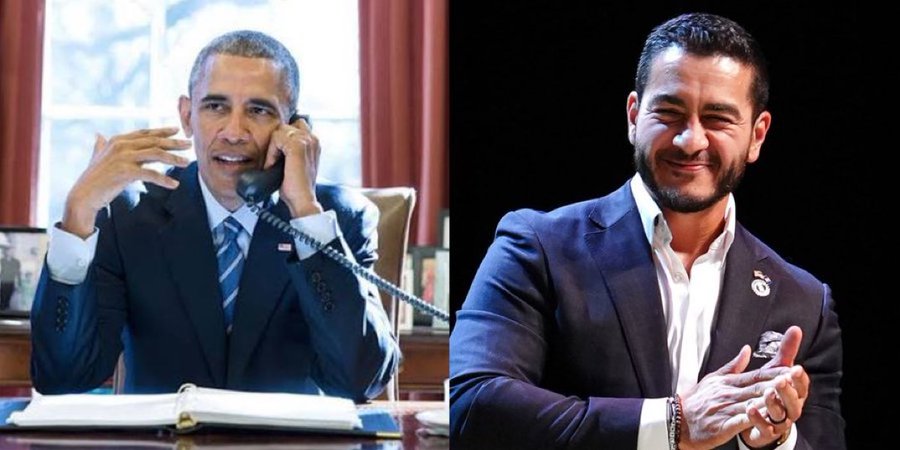
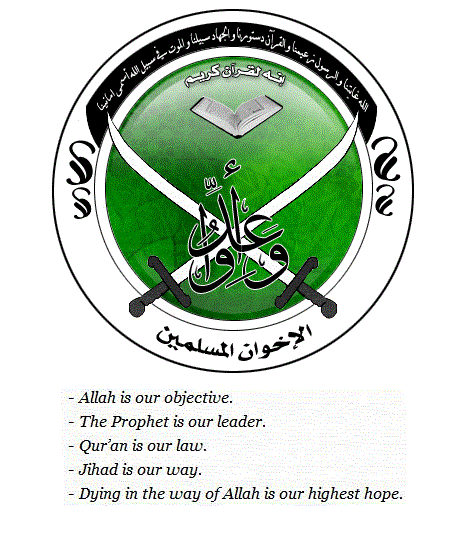
Media is supported by ads and Muslim Brotherhood, so make certain to not buy the ad products and condemn them and MB online in your personal social media. We have to fight MSM circus on all fronts!
That is obviously true but so what.? CNN has lost over 200,000 viewers lately and that loss continues increasing as number of watchers are elderly females and poor. There is no coming back from that reality. Young watchers are almost nothing except for young empty-headed females who still support long gone Obama who is now 65 .The aging Democrat Party numbers goes down. and down. The Democrat Party has now surrendering to the socialist mob of dummies and ignorant fools who plan to steal your money.I If they succeed the Chinese Communists will be coming for YOU Not me because i am 86 and still enjoying my remaining years while continue to support President Donald Trump and Republicans.
MSM is run by all the same type. Oddly they and certain enclaves like Upper West Side vote to support everything leftist, communist, islamic.
Repeal the 19th Amendment. Sorry but too many vote Left.
It’s true that too many women vote dem, but you know that’s NEVER going to happen, right?
Btw, I believe a slight majority of white women voted for Trump.
Yes, I know! But I can dream!
Nope, and this one doesn’t.
I agree. I’ll gladly give up my vote to get rid of the airhead voters.
Heh. He’s trading $20 million from a CEO”s salary for healthcare (bad healthcare) for all. How many CEO’s is he going to trade-in? Laughable. Has he even tried to do the math?
What a nothingburger interview, again, from Welken.
I don’t trust Abdul El-Sayed.
If he told me the Sun was shining…I would check for myself.
He is a snake oil salesman.
“A snake oil salesman is a fraud who tricks people into buying fake, useless, or dangerous products by making big, false promises. The term comes from the 19th-century practice of traveling pitchmen selling bottled “snake oil” liniments—often containing zero actual snake oil—as miracle cures for every type of pain or disease.”
Politician!
He’s just another smooth talkin’, lying commie. Too bad there are many fools in Michigan that will cast their ballot for the turd.
“fellow Michiganders for their stake in our democracy to be able to build an America that’s more just, that’s more equitable,”
Commie Dem Piece of Crap -> You can take your “Democracy” (and your Muslim BS) and shove it! The Founders were totally against America ever becoming a “Democracy”! America is a “Constitutional Republic”! America is all about “Liberty” which Communists Dems like you hate.
Well done, Sundance. Thanks for getting this on our radar.
Not good.
119 years ago Teddy Roosevelt banned Islam from the USA … who overturned that Presidential order ??
A leftist shill called Hassan Piker was emboldened by the rise of el-Sayed. Piker has started openly calling for the annihilation of white people and the destruction of America.
So when the time comes, I hope none of you have second thoughts about putting down these filthy third-world parasites.
Time comes? Take out the five or six running their mouths now. Since when did Americans gets so “civilized” that tar and feathers were taboo?
There is no “Muslim movement” it’s all just money buying ballots. The golden tickets to rule the world.
well at least the islamic communists aren’t hiding anymore. republirat and demonrat commies still try and pretend they’re not. look at thoon, he has to put pancake makeup on to hide the red glow…schoomer and jerkfrees are such vampires they can’t show their faces in daylight without their eyes bleeding out…ahhhh, if we could only take back the year 1913 when the republic died
we need discernment.
more than ever.
eagle eye discernment.
and not to forget to take our eyes off the size of the problem…and fix them on the size of our Lord.
Great comment and truth.
Recall 2008 when MSM wouldn’t use the the name Hussein when speaking about Barry Soetoro/Kenya Diggit/Barack Obama/Beri the Fairy.
“So how do you win over those voters who voted for someone else?”
Lie my ass off and count on the suckers voting for me just like Obama did it.
And cheat, cheat, cheat at the polls.
.👆.👆.👆.👆.👆. THIS! .👆.👆.👆.👆.👆.
Turn out of voters in November, is paramount! Normal people who love our country, our REPUBLIC cannot square with this guy, his lying resume, funding from CAIR, and idiotic promises.
See who backs him and how they are willing to stand in his shadow, a very dark shadow.
Obama told him to lie his ass off, make any promise necessary, be vague when possible. When you get into office do what the Brotherhood asks of you. It’s the Muslim way. How stupid the voters are in this country.
Helps when your dad is MB
Smooth words talking through the flowers, with veiled intentions. There will be many who are schmoozed. Socialist intentions, big gov and hell decide the bureaucratic ways and means. He is taking one issue, socialized medicine. Picking up where the Lightbringer left off to craft this utopian single payer, after they’ve destroyed the medical care for the free-insurance – Medicare by the gov still leaves huge out of pocket deductibles. Nothing is free and gov is a terrible fiscal manager.. .
BadKitty did some digging on El-Sayed and discovered some startling information.
https://x.com/pepesgrandma/status/2086764145890803725
el-Sayed is an M.D. – just not licensed anywhere.
This should be fun. Now watch the Fawning Marxist MSM deny that El-Sayed’s unofficial running mate and mentor, Hasan Piker, said that America Deserved 9/11 in 2019.
Wake up, Michigan,… “Some Muzzys Did Something” on 9/11,…. Never forget and vote accordingly.
Donald Trump has small vision? WTF are you talking about?
I am really having a problem understanding how these DSA people can state their unconstitutional goals and even be allowed to run for office. What they state is the overthrow of our system of government laid out clearly within our Constitution. How is this NOT treason? It would be IMPOSSIBLE for them to take the oath of office. They openly state that they will NOT uphold the Constitution of the United States. They have donors & voters supporting them so there’s a whole slew of folks going along with this. Do we just let them take office? You will not convince me that they are unelectable what with our elections being so secure and all. /s/
The extreme leftists / socialists I follow have absolutely no support for Obama. Anyone who associates himself with Obama is crossed off their list as suspect.
All the while the do-nothing Republican Senate hinder Trump’s agenda along with fair elections, angering the conservative and maga base.
If the establishment Senators have their way Trump will be impeached and these dimwits will NEVER be in power again.
What a hideous under estimation of the ruthlessness of the DSA. Even more ruthless than the Democrats they’ve aligned with. And that’s saying a lot!
the lame stream media are hoping to still have jobs when the muslims take over. Muslims have been bragging about their takeover of the euro peacefully after trying to do it with armies for 1400 years. The same with America. Communist democrats and dindonufin repubs are doing everything they can to give them the country. Remember it was folks like cheney who voted to let muslims hold office, and it was little georgie bush who capitulated after 9/11 and opened the floodgates for massive muslim invasion. The red cross and the catholic church have also done everything they can to help the invasion along.
Well, they won’t have jobs unless they already are Muslim or they convert. The pool of useful idiots is huge. I agree with you about the Red Cross & the Catholic church. Both of them exemplify to me the highly organized & orchestrated “march through institutions” (these two being large & worldwide). I don’t believe the proliferation of pedophile priests within the church was organic. To desecrate that religion by infiltrating pedophiles (and others) & create the massive “falling away” was quite purposeful in my view. The fact that our two most recent popes are communists and refuse(d) to stay in their lane bears me out. The chickens are definitely roosting. We can clearly see it for 360 degrees around us. What your everyday commie doesn’t understand is that the Muslims are communists until they take over. Then they are our Conquerors and, in the name of Allah, will impose Sharia law on us all. The huge pool of useful idiots walking with them now will wake up too late. We can ask the kenyan. He knows.
Recommend reading: Sword and Scimitar by Raymond Ibrahim.
WOFU…….white, overeducated, female, urban………….blech !!!!!!
The Democrat fetishes are far beyond anything that either God or nature prescribes as healthy for humanity.