Quantcast

Witkoff and Kushner Meet Russian Delegation in Florida – Reports Indicate Discussions of Strategic Economic Cooperation on Oil

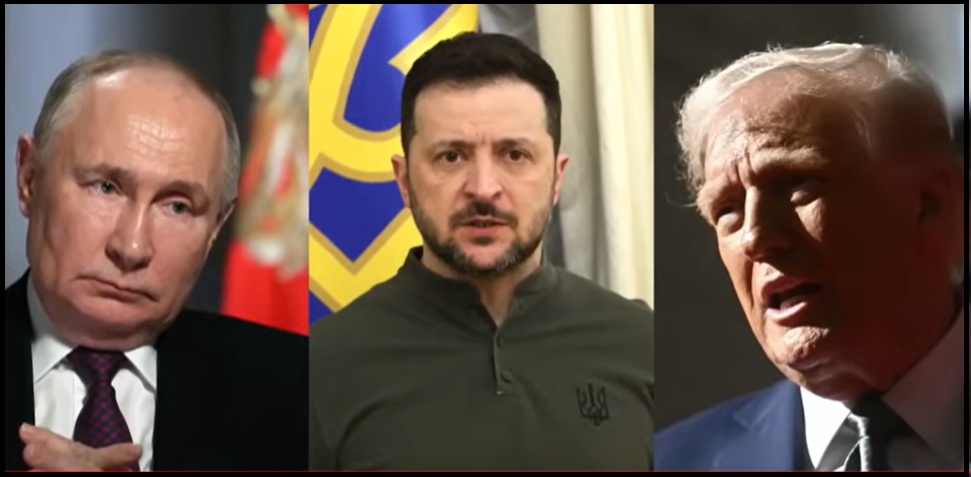
The fact that Team Russia and Team USA would be discussing a strategic economic alliance on the issue of energy is not a surprise to those who watched both President Putin and President Trump outline that same content discussion in Alaska last August.  However, given the current conflict with Iran and the escalating oil price issue, Russia and the USA discussing Russian oil capacity and U.S. sanctions therein takes on a new angle.

It has been obvious that domestic U.S. politics, in combination with the Russia-Ukraine war, has impeded President Trump from organizing a strategic reset with Russia pulling away from historic conflicts.  However, CTH is also clear-eyed on the longer-term ramifications for Eastern Europe when contrast with Putin’s ambitions to fix what he perceives as prior Russian Federation mistakes regarding the West (more on that at the end).

As noted in social media exchanges from Witkoff and Dmitriev, the discussion was productive.

[SOURCE]

All indications of this meeting give the appearance of less focus on progress in the Ukraine-Russia conflict, and a higher focus on current economic conditions -created by the Iran conflict- that could be enhanced with cooperation between the U.S. and Russia. {GO DEEP BACKGROUND}

According to Kirill Dmitriev, Russian special presidential envoy for investment and economic cooperation with foreign countries and director general of the Russian Direct Investment Fund (RDIF), relayed through the Russian News Agency (TASS), “he visited the US upon orders from Russian President Vladimir Putin, taking part in a meeting of the heads of a working group on economic cooperation between the two countries.”

(more…)

Volkswagen Loses Half Their Profit, Now Plan to Cut 50,000 Jobs Over Next Four Years

The origin of this issue goes back to 2021 and the relaunch of the Build Back Better European green energy program to fight the non-existent climate change problem.  We have been highlighting the consequences within the EU auto sector.

We noted in October of last year, the EU’s mandated fines against auto manufacturers who do not hit their production goals for electric vehicle sales began in 2025.  EU automakers unable to meet the regulatory compliance goal began purchasing carbon credits to avoid stiff EU fines.  Many of those carbon credits were purchased from Chinese EV automakers, who then turned around and started using the extra EU revenue to discount Chinese cars sold in Europe.

At the same time as Chinese autos hit record highs in Europe, EU car sales are flat or declining.  Now, Volkswagen is announcing they lost half their profits in one year and will be cutting 50,000 jobs in the next four years.

(MSM – Europe) – Volkswagen just revealed its operating profit sank like a stone last year, dropping by more than half as tariffs, Chinese competition, and shifting strategies took a serious bite out of the bottom line. And that performance now has the VW Group’s execs reaching for the cost-cutting scissors, including plans to shed 50,000 jobs by the end of the decade.

The German automaker reported an operating profit of €8.9 billion ($10.3 bn at current rates) for 2025. That’s down a hefty 53 percent from the year before and well below what analysts were expecting. Revenue, meanwhile, barely moved, slipping only slightly to around €322 billion ($374 bn). (read more)

This was very predictable. In essence, EU car companies buy Chinese car company carbon credits, to avoid the EU fines.  The Chinese car companies then use the carbon credit revenue to subsidize lower priced Chinese EVs to the European car market, thereby undercutting the European EV car companies.

(more…)

Part II – Europe and China Have an Energy Problem

When President Donald Trump and President Vladimir Putin met in Alaska on August 15, 2025, the focus of the geopolitical world was on discussions surrounding Ukraine.  Unfortunately, it didn’t take long, merely a few hours, for both the U.S. and Russia to say that no progress was made.  However, also noted at the time was both the USA and Russia saying sideline discussions took place surrounding the possibility for a strategic relationship surrounding energy development.

What follows below is a review of the current energy dynamic, specifically surrounding LNG, against the backdrop of the Iran war with a hindsight review of that previous discussion between Putin and Trump.

What most people are missing in their current analysis was something that took place immediately following that Alaska summit six months ago.  Something that did not make any sense until now. {GO DEEP PART I HERE}

Three days after that summit meeting, on August 18, 2025, Russia announced they were restarting Russia’s Arctic-2 LNG production facility.  Russia would be more than doubling their capacity to generate and store liquified natural gas (LNG).

It absolutely did not make sense that Russia would start producing even more LNG considering the previously imposed western sanctions against them, and the fact that Russia was already overproducing LNG. As noted by analysts at the time:

AUGUST 18, 2025 – Russia’s Arctic LNG 2 export facility, which is sanctioned by the United States, is coming back to life after a year of no activity and is looking for buyers in Asia.

[…] The U.S. and EU sanctions on Russia’s Arctic LNG 2, which was billed as Russia’s flagship LNG project, have effectively frozen the start-up of the export facility in the Gydan Peninsula.

[…] Last year, Russia started shipping LNG from its flagship Arctic LNG 2 project—but not to customers. The shipments were made from the Arctic project to floating storage units either in Russia or in European waters, as potential customers were unwilling to buy the sanctioned LNG. {SOURCE}

In August of 2025, Russia was essentially producing more LNG than they could sell into the available market.  Russia was storing the overproduction from Arctic-1 on floating storage units and slowly selling to countries that did not align with the sanctions, specifically China and some Asian buyers.  Then suddenly, after the Trump summit, Russia decides to bring Arctic-2 online and produce even more LNG.  You can see how this did not make sense.

If they could not even sell all the Arctic-1 LNG output, then why would Russia bring Arctic-2 LNG production online?

That was six months ago.

(more…)

Division, Derision and the Economics of the Thing

Do you remember this moment during the 2015 republican presidential debates when all of the candidates were on stage and leading control outlet Fox News (Bret Baier) purposefully asked the candidates:

…”is there anyone on stage, unwilling tonight, to pledge your support to the eventual nominee of the republican party, and pledge to not run an independent campaign against that person.  Again, we are looking for you to raise your hand now if you won’t make that pledge tonight.”

[The moment in video is here] The need for control is a reaction to fear.  The question was intentionally constructed to create both an optic and a narrative Fox News, Rupert Murdoch and the republican party were purposefully shaping.  Collectively the professional republicans were desperately afraid Donald Trump would run as an independent candidate.

I bring us back to that moment because it is the key to understand where we are even today.  This was the core of the matter. This is the “trillions at stake” aspect.  This is the economics of the thing as it first manifest.

Why did Donald J Trump stand against them all?

For many years before that moment, a small group of us had been outlining why it was urgent for MAGAnomics to take charge of the U.S. economy; because underneath both wings of the UniParty in Washington DC was a system that few understood.

♦ Prior to 2016, the United States Chamber of Commerce (U.S CoC), a private K-Street lobbying consortium, were the negotiators for every single trade deal done from the office of the United States Trade Representative (USTR).

The U.S. government (USTR, POTUS and Congress) was the trade stakeholder who signed the agreements; however, the actual nuts and bolts of what the trade deal included, the terms and conditions, were negotiated by the US CoC.

The U.S. Chamber of Commerce represented the corporate interests of their Wall Street clients. After all, the corporations paid the CoC and the business model of the CoC is dependent on the corporations.

This is the larger background for how decades of trade agreements ended up with offshoring, the Rust Belt, diminished domestic manufacturing, and increased corporate profits. This is the core mechanics of how a U.S. manufacturing economy was shifted to a “service driven economy.”

The U.S. Chamber of Commerce was writing the trade deals. The CoC would then fund the politicians who would approve the trade deals. The CoC would also finance the presidential candidates.

When President Trump ran for office in 2016, his trade, manufacturing and economic policies were against the interests of the entire business network that controlled trade. The U.S. CoC poured money into Hillary Clinton’s campaign and their main GOP partner in the enterprise, Mitch McConnell.

When Trump won the election, he completely shut out the CoC from any involvement in U.S. trade negotiations. Trump literally put himself, Wilbur Ross, and Robert Lighthizer in control.

(more…)

China Halts Refiners from Exporting Diesel and Gasoline

An interesting reaction from Beijing highlights an evaluation of risk from the lack of oil flowing from Iran.

According to most evaluated data, China was buying more than 80% of Iran’s shipped oil. That’s according to data from 2025 as analyzed by Kpler and published in January by Reuters.

Iranian oil always had limited buyers due to U.S. sanctions. However, China purchased on average 1.38 million barrels per day of Iranian oil last year, according to Kpler. That represented about 13.4% of the total 10.27 million bpd of oil it imported by sea.

With President Trump previously cutting of discounted oil from Venezuela, two things unfolded.  First, the Venezuela oil was no longer sold with non-petrodollar currencies; Venezuela oil is now being sold on the standard oil market.  Secondly, with the Venezuela oil disrupted China would become even more dependent on Iranian oil shipments if they wanted to retain the discounted rate.

How big is the financial difference?  According to Reuters, “Iranian Light crude has traded at around $8 to $10 a barrel below ICE Brent on a delivered basis to China since December.” … “That means Chinese refiners save about $8 to $10 a barrel if they buy Iranian Light rather than non-sanctioned oil.”

Additionally, as noted before Operation Epic Fury began, “Iran has a record amount of oil on the water, equivalent to around 50 days of output, as China has bought less because of sanctions and Tehran seeks to protect its supplies from the risk of U.S. strikes, Kpler said.”

Buying discounted oil from Venezuela, Iran and Russia resulted in billions of dollars saved by China.  The only production venue not currently disrupted would be purchases from Moscow.  This increases the dependency, but the purchase price may no longer carry any discounted value, at least not at the previous rate.

(more…)

Hemispheric Boss Level: Epic – Venezuela Edition

Sometimes you have to sip coffee slowly, while taking in the landscape.

About a month ago President Donald J Trump bombed Caracas, engaged the U.S. military with a direct firefight against Venezuela military & security forces, then snatched regime dictator Nicholas Maduro out of the country to face criminal charges in the United States.

Yesterday, Maduro’s replacement, President Delcy Rodriquez, stood on the steps to the Venezuela presidential office and publicly thanked Interior Secretary Doug Bergum for the kindness and support of President Donald Trump.

That reality represents a level of hemispheric ‘ultimate boss’ that boggles the mind.  But wait, it gets better. There’s video (prompted):

Before going further to current events, let us remind ourselves of a few details.

Sandwiched between the Venezuela Maduro operation and the recent Operation Epic Fury in Iran, approximately three weeks ago, Gen. Dan Caine, chairman of the Joint Chiefs of Staff, and Defense Secretary Pete Hegseth convened a gathering in Washington of all the defense chiefs and senior military officials from 34 Western Hemisphere countries.

As most of you will remember, securing the national security of the entire Western Hemisphere, was outlined in the national defense strategy document [SEE HERE] released by President Trump. In addition to setting the priorities for the United States focus, the report details the Trump administration perspective on the world as broken down into specific regions.  The report is a brutally honest review of the current state of geopolitical benefits, risks and threats as they pertain to vital U.S. interests. The report outlines a critically renewed focus on the Western Hemisphere.

Now, back to Secretary Bergum’s visit.

(more…)

Newsmax Carl Higbie Outlines the Stakes for China from Operation Epic Fury

I’m working on a deep explainer for the behavior of China as it relates to ongoing U.S. strategic military operations.  More to come soon.  In the interim, Carl Higbie from Newsmax outlines how China is spending domestically inside the USA in order to try and stimulate opposition to the Iran confrontation.  WATCH:

.

(more…)

Iran Conflict – Oil Disruption Hits Key BRICS Members Hard

Consider the severe economic body blows to China in the past 14 months.

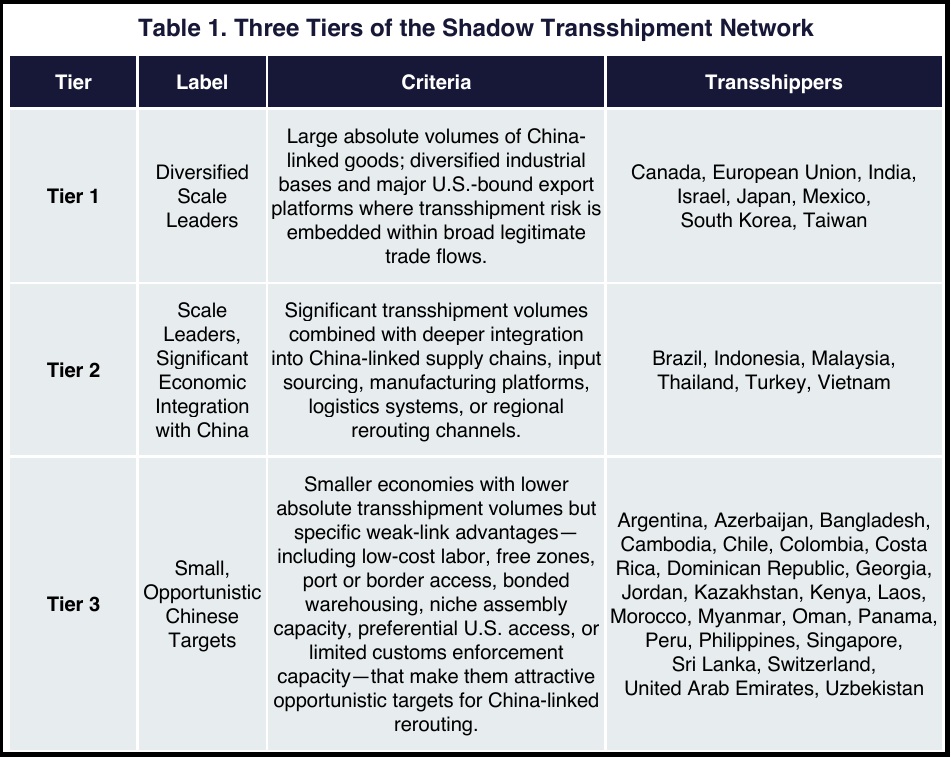
♦ First blow, the Trump tariffs hit Beijing hardest. ♦ Second blow, the Beijing tentacle on the Panama Canal is severed.  ♦ Third blow, global tariff threats changed the risk dynamic for southeast Asia countries who acted as transnational shippers for China. ♦ Fourth blow, cheap sanctioned oil from Venezuela was cut-off. ♦ Now, the fifth blow; cheap, sanctioned Iranian oil is disrupted.

As noted by Politico: Following USA military strikes, “ships have begun to avoid the Strait of Hormuz off the coast of Iran — a critical shipping lane for Gulf nations to export oil to Asia. China in 2025 received about half of its imported oil from the six Gulf countries that rely on the strait. Other large crude oil producers in the region — including Saudi Arabia, Iraq and the United Arab Emirates — transport almost all their crude exports through the geographic bottleneck.

[SOURCE]

It’s not just a factor of oil flow, but also the price that China will ultimately end up having to pay.  Beijing was buying oil from Venezuela, Iran and Russia at steep discounts because their purchases were skirting western sanctions.

With Iranian oil production now no longer a market option, China will seek to replace their needs with more Russian alternative. However, that diversion means the oil India was purchasing from Russia will come at a higher price, and the refined final product that was exported by India will arrive to the European Union carrying an additional cost.

Simultaneously, Vladimir Putin was asked about Russia’s lack of military support to Iran in response to the U.S. military action, to wit the Russian president noted the technical terms of their joint military agreements did not include Russia’s immediate involvement.  In shorthand, Russia is busy and is not getting involved.

(more…)

Canadian Prime Minister Pitching Global Trade Rules Agreement to Combat Trump – Connecting Trans-Atlantic to Trans-Pacific

There is an awful lot to unpack in this seemingly obscure article talking about Canadian Prime Minister Mark Carney and a new trade approach he is pitching to Pacific/Asia and Atlantic/European nations. [Story Here]

Before getting to the substance of the outline, something important needs to be shared for context.

Do you remember the 2014, 2015 and 2016 top story conversations and debates over the Transpacific Partnership trade deal known as TPP?

You might also remember the Transatlantic Trade and Investment Partnership trade deal known as TTIP.

The TPP (Pacific) and TTIP (Atlantic) were two major multinational trade deals negotiated between 2013 and 2016. While both sparked plenty of debate, most of the spotlight was on the TPP, the Trans-Pacific Partnership.

Hillary Clinton was in favor of TPP as were most of the traditional republican field of candidates in ’15/’16.  However, Donald Trump was strongly against TPP and pledged to exit out of any negotiations and scrap the U.S. participation if he was to win the 2016 election.  Some of you may begin to remember this.

Donald Trump agreed with our position, that TPP was being falsely sold as a beneficial 12-nation massive trade agreement between the USA and pacific rim countries including Australia and Southeast Asia nations.

With the history of NAFTA behind us, we could see two major issues with TPP:  #1: It was structured with a back door to let China into the deal. And #2) it was created to ensure the USA remained a “service driven economy.”

Supporters of TPP and TTIP claimed this multinational trade deals would create smooth supply chains and align on ‘rules of origin.’ They believed TPP would benefit companies and lead to cheaper products. Critics, however, argued that the agreements were designed to exploit the U.S. consumer market and prevent the country from ever regaining a strong manufacturing base.

I share those reminders to set up the big 800-lb gorilla question.

If the TPP was such a great trade deal for all parties involved, why didn’t the group finalize it after the USA withdrew? It’s been a decade, so why haven’t the TPP nations completed their trade agreement?

(more…)

Canadians Embrace Cheap Chinese Electric Vehicles

While the government of Canadian Prime Minister Mark Carney has inked a trade agreement with China to accept cheap imported vehicles in exchange for Beijing purchasing some agricultural products, President Trump has promised those cheap Chinese EVs will never cross the border into the USA.

The Canadian polling on the issue has done a remarkable chang in the past few years.  Now, the majority of Canadians are willing to purchase cheap Chinese EVs. As outlined by Bloomberg, “More than half of Canadians, or 53%, say that knowing an EV was made in China would have no effect on their purchasing decision, according to a new poll by Nanos Research Group for Bloomberg News.”

Approximately 50,000 Chinese electric vehicles will enter the Canadian market in the first year. “The pact with China includes a provision that part of the quota will be reserved for electric vehicles priced at C$35,000 ($25,700) or less, the government has said.” {SOURCE}

The Canadian government wants a Chinese auto manufacturer, any Chinese auto manufacturer, to build factories in Canada to produce these electric vehicles.  Canada wants the jobs and economic activity because Canada is currently bleeding jobs and economic activity due to the trade conflict with the U.S.

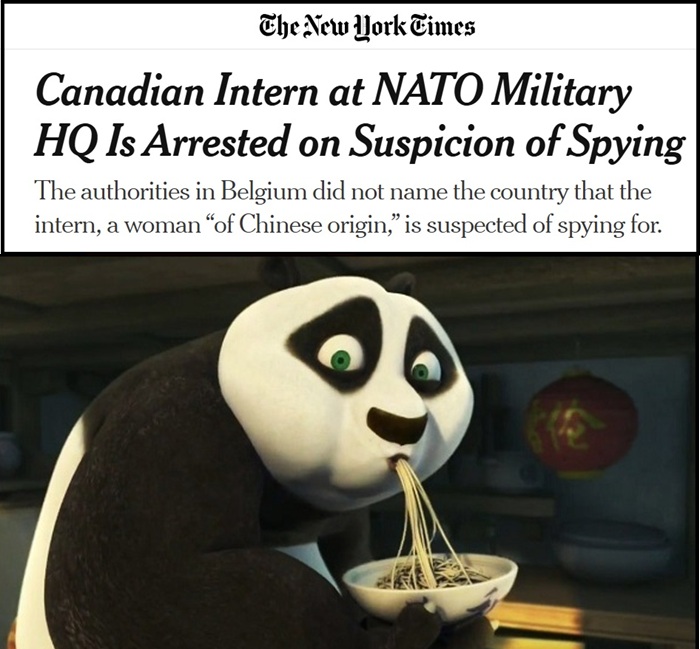
Building cheap Chinese EVs in Canada might help offset a few thousand job losses, but building Chinese EVs in Canada only further ensures there will not be a substantive trade agreement between the USA and Canada once the USMCA (CUSMA) is dissolved.  [More on that coming]

(more…)