Quantcast

President Trump: ‘No Deal with Iran Except Unconditional Surrender’

The U.S. and Israel have been targeting deep underground missile sites within Iran, with strong success.  Iranian counterstrikes, missile & drone launches are down 80 to 90 percent according to Pentagon officials.

Additionally, the Israeli military has reported they dismantled an underground bunker system in Tehran used by regime leadership.  Originally the bunker was used by slain Supreme Leader Ayatollah Ali Khamenei underneath the leadership compound in central Tehran.  The bunker was targeted by 50 Israeli fighter jets and subsequently destroyed.

President Trump announced via Truth Social that he will not seek any terms with Iran other than unconditional surrender.

[SOURCE]

Meanwhile, in a somewhat predictable move, Treasury Secretary Scott Bessent has announced the U.S. will lift some sanctions on Russian oil exports in order to mitigate shortfalls.  India will be permitted to purchase additional Russian oil for use in their refineries.  The gasoline end products will then be sold into the market.

BESSENT: “President Trump’s energy agenda has resulted in oil and gas production reaching the highest levels ever recorded.

To enable oil to keep flowing into the global market, the Treasury Department is issuing a temporary 30-day waiver to allow Indian refiners to purchase Russian oil. This deliberately short-term measure will not provide significant financial benefit to the Russian government as it only authorizes transactions involving oil already stranded at sea.

(more…)

President Trump Announces U.S. Insurance Underwriting for “All Maritime Trade Flowing Through the Gulf” Along with U.S. Military Escorts

This is a remarkable position for President Trump to take.  Optimal Solutions:

(President Trump) – “Effective IMMEDIATELY, I have ordered the United States Development Finance Corporation (DFC) to provide, at a very reasonable price, political risk insurance and guarantees for the Financial Security of ALL Maritime Trade, especially Energy, traveling through the Gulf. This will be available to all Shipping Lines.

If necessary, the United States Navy will begin escorting tankers through the Strait of Hormuz, as soon as possible. No matter what, the United States will ensure the FREE FLOW of ENERGY to the WORLD. The United States’ ECONOMIC and MILITARY MIGHT is the GREATEST ON EARTH — More actions to come. Thank you for your attention to this matter! President DONALD J. TRUMP

President Trump will use the full weight of the U.S. military to change behavior in Iran.  Not just to change the regime per se’, but to change the behavior of whoever surfaces to represent the interests of the people.  The change in behavior is the goal.

While this forced shift is underway, the full weight of the USA will also seek to mitigate any collateral economic damage to well behaved economic partners.  Forceful action, optimal stewardship.

(more…)

Iran Conflict – Oil Disruption Hits Key BRICS Members Hard

Consider the severe economic body blows to China in the past 14 months.

♦ First blow, the Trump tariffs hit Beijing hardest. ♦ Second blow, the Beijing tentacle on the Panama Canal is severed.  ♦ Third blow, global tariff threats changed the risk dynamic for southeast Asia countries who acted as transnational shippers for China. ♦ Fourth blow, cheap sanctioned oil from Venezuela was cut-off. ♦ Now, the fifth blow; cheap, sanctioned Iranian oil is disrupted.

As noted by Politico: Following USA military strikes, “ships have begun to avoid the Strait of Hormuz off the coast of Iran — a critical shipping lane for Gulf nations to export oil to Asia. China in 2025 received about half of its imported oil from the six Gulf countries that rely on the strait. Other large crude oil producers in the region — including Saudi Arabia, Iraq and the United Arab Emirates — transport almost all their crude exports through the geographic bottleneck.

[SOURCE]

It’s not just a factor of oil flow, but also the price that China will ultimately end up having to pay.  Beijing was buying oil from Venezuela, Iran and Russia at steep discounts because their purchases were skirting western sanctions.

With Iranian oil production now no longer a market option, China will seek to replace their needs with more Russian alternative. However, that diversion means the oil India was purchasing from Russia will come at a higher price, and the refined final product that was exported by India will arrive to the European Union carrying an additional cost.

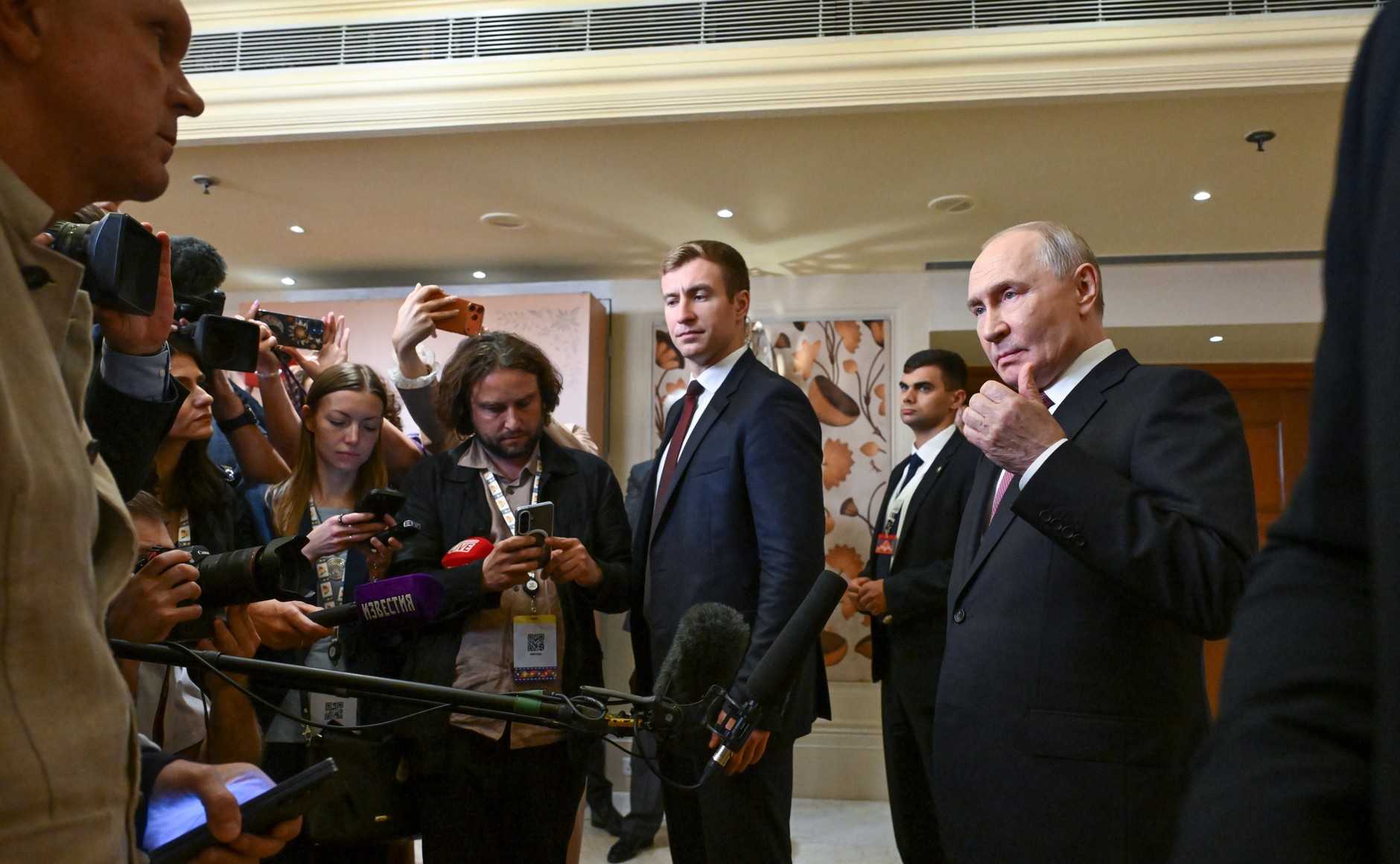
Simultaneously, Vladimir Putin was asked about Russia’s lack of military support to Iran in response to the U.S. military action, to wit the Russian president noted the technical terms of their joint military agreements did not include Russia’s immediate involvement.  In shorthand, Russia is busy and is not getting involved.

(more…)

President Trump Announces U.S. Economic Boycott of Spain During Meeting with German Chancellor Friedrich Merz

President Trump holds a bilateral meeting with German Chancellor Friedrich Merz in the Oval Office.  After brief remarks of mutual appreciation, President Trump and Chancellor Merz responded to questions from the assembled press pool.

Chancellor Merz expressed support for the objective of eliminating the regime threat from Iran.  President Trump notes at the beginning how Iran is targeting civilian targets in the region and generating even more support from the Gulf states for the USA.

When asked about the British and Spanish refusal to support U.S. military logistics and deployment, President Trump let the media be aware he is not happy with the position of Spain and the U.K.  President Trump also announced [11:00 of video] an economic embargo of trade with Spain as an outcome of their position.

.

(more…)

Spain and U.K Response to Iran Conflict Highlights NATO Weakness and Duplicity

When addressing Greenland’s strategic value within U.S. Arctic defense efforts, President Trump argued that although the European Union and NATO insisted there was no need for American control —promising instead to marshal their combined military strength to defend the territory— he remained skeptical of their assurances. Trump’s remarks were met with swift shock and visible dismay. Pearls were clutched and jaws stood agape.

However, it only took a few weeks for a moment of clarity to surface following the Israeli/U.S. decision to strike Iran and eliminate the long-standing nuclear threat. Suddenly Great Britain and Spain tell the U.S. they will not allow American military use of their joint airbases.  Once, again President Trump’s lack of trust in NATO proved correct.

This visible example of unidirectional self-interest is happening at the same time European and British leadership are requesting demanding the United States provide the security guarantees for their Ukraine ambitions.  The contrast is stark.

Concerns about Islamist extremism within the U.K. appear to influence the thinking of British Prime Minister Keir Starmer. With a significant number of immigrants from Muslim-majority countries now living in Great Britain, some argue that actions perceived as antagonizing more radical elements abroad could have domestic repercussions within the U.K.  That said, the contrast in support is so stark that opposition leadership inside the U.K. are now confronting the British Prime Minister.

.

(more…)

Promethean Action Give Their Perspective on UK Reaction to U.S. Strikes Against Iran

Susan Kokinda and the Lyndon LaRouche network give their perspective on the British reaction to the U.S. strikes against Iran.  The analysis has value from a review of the historic relationship of the British imperialist policy toward matters of foreign entanglement and the control mechanisms that have historically flowed from the U.K

As a consequence of British government policy much of the Kokinda analysis accurately touches on the root cause of U.K response. However, the emphasis on the modern UK government as the lead of a global network is not always as severe or ¹complicated as the Lyndon LaRouche network would espouse.  WATCH:

¹Great Britain has imported a large percentage of extreme Islamists.  As Iran is confronted, and as Israel is viewed as a significant beneficiary to that confrontation, the leftist British government -represented by majority base supporting Prime Minister Keir Starmer- is politically trying to retain stability.  Starmer does not want to upset the Muslim population within the U.K.  That is a significant political facet undiscussed in the Kokinda review of British response.

Additionally, the Trump Doctrine in confronting totalitarian dictators, or oppressive government systems, has always been to support the rise of the authentic ‘nationalist’ voice of the nation in question.  President Trump has no personal or policy motive to drive the outcome when the authentic rise of the voice happens. Instead, he seeks to remove the anti-American sentiment carried by the former -hopefully replaced- regime.

In all of President Trump’s prior foreign policy examples we see he focuses on creating opportunity for liberty and freedom, but he does not seek to determine how that liberty and freedom are ultimately expressed – so long as there is no negative outcome to American interests.

(more…)

After Being Named in Epstein Files WEF President and CEO Borge Brende Resigns

Apparently, the World Economic Forum had launched an internal investigation of President and CEO Borge Brende following revelations of his relationship with Jeffrey Epstein. Today, the former Norwegian Foreign Minister resigned from his position.

ZURICH, Feb 26 (Reuters) – The president and CEO of the World Economic Forum, Borge Brende, said he was stepping down on Thursday, a few weeks after the forum launched an independent investigation into his relationship with late U.S. sex offender Jeffrey Epstein.

Brende, who became president of the WEF in 2017, announced his decision in a statement following disclosures from the U.S. Justice Department that showed the Norwegian had three business dinners with Epstein and had also communicated with the disgraced financier via email and text message.

“After careful consideration, I have decided to step down as President and CEO of the World Economic Forum. My time here, spanning 8-1/2 years, has been profoundly rewarding,” said Brende, a former Norwegian foreign minister.

(more…)

The EU Energy War Against Hungary Escalates – Orban Puts Military Defenses Around Critical Infrastructure

The collective war being carried out by Ukraine and Brussels against Hungarian energy systems is escalating. Hungarian Prime Minister Viktor Orban is now putting military defenses and security forces around critical infrastructure.

ORBAN: We will not give in to blackmail! I have ordered increased security for critical energy infrastructure.

The Ukrainian government is exerting pressure on the Hungarian and Slovak governments through an oil blockade. They will not stop there, as they are preparing further actions to disrupt Hungary’s energy system. Hungary cannot be blackmailed!

(more…)

Cutting Through the SCOTUS Tariff Fog, USTR Jamieson Greer Discusses Baseline Tariff Reset Shifts and Reciprocity Tariffs

The Supreme Court tariff ruling has created the need for U.S. Trade Representative Jamieson Greer and U.S. Commerce Secretary Howard Lutnick to modify the baseline tariff approach with the approvals of President Trump.

The baseline tariffs are being reset to 10% with upward adjustment to 15% as planned.  The reciprocal tariffs will not require any substantive modifications as most of the Free Trade Agreements have been cemented with reciprocity tariffs as part of the negotiated deals.

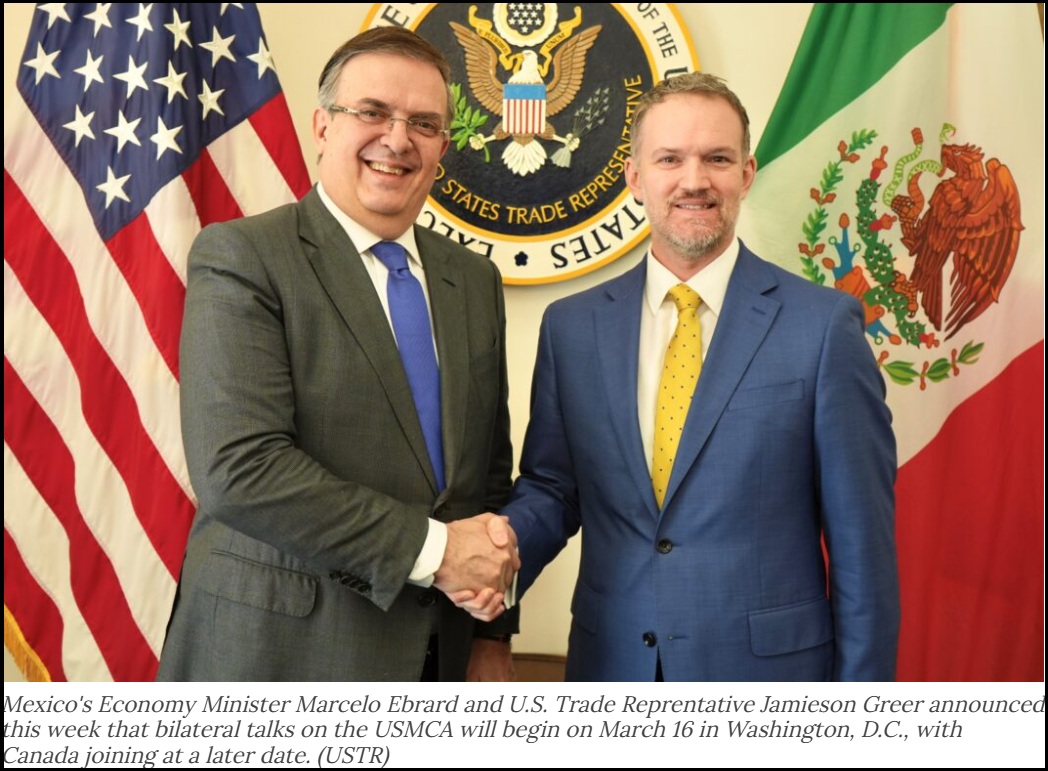
USTR Greer appears on Bloomberg to clarify the current situation and provide some information as to the transitional baseline tariffs as now modified. Additionally, and importantly, Greer begins discussing the USMCA review and his acceptance that President Trump is openly questioning the value for us. Greer notes Mexico and Canada being used as import hubs to avoid tariffs is a big issue. WATCH:

Section 232 [Steel and Aluminum examples] of the Trade Expansion Act of 1962 (19 U.S.C. §1862, as amended) authorizes the President to impose trade restrictions—such as a tariff or quota—if the Secretary of Commerce determines, following an investigation, that imports of a good “threaten to impair” U.S. national security. {SOURCE}

Section 301 tariffs are a trade enforcement mechanism established under the Trade Act of 1974. They allow the U.S. government to impose tariffs on imports from countries that are found to be engaging in unfair trade practices. The Office of the United States Trade Representative (USTR) conducts investigations to determine if a country is violating trade agreements, and if so, it can impose tariffs as a corrective measure {SOURCE}

Section 122 of the Trade Act of 1974 allows the U.S. president to impose tariffs of up to 15% to address “large and serious” balance-of-payments deficits. This authority can be exercised without prior congressional approval for a limited duration of 150 days. After this period, any tariffs must be extended by Congress. {SOURCE}

*FYI, there is a lot of distracting noise in the various social media platforms about internecine MAGA battles and ego-driven points of specific interest.  CTH chooses to focus energy and attention on the substantive policy issues that will generate substantive policy outcomes for America.

(more…)

EU Schedules Permanent Ban on Russian Import Oil for Three Days After Hungarian Election

I guess we can put this in the open admission file surrounding the all-out effort by the European Union to defeat Hungarian Prime Minister Viktor Orban.

According to a leaked document received by Reuters, the European Union is scheduled to permanently ban all EU nations from importing Russian oil.  They have scheduled the ban to trigger on April 15th, three days after the Hungarian election.

BRUSSELS, Feb 24 (Reuters) – The European Commission will submit a legal proposal to permanently ban Russian oil imports on April 15, three days after Hungary’s parliamentary election, according to EU officials and a document seen by Reuters.

Two EU officials told Reuters the timing was designed to prevent the oil ban becoming a major factor in Hungary’s election campaign. Hungary and Slovakia, still reliant on Russian oil imports, are strongly opposed to any ban.

In the April 12 election, Hungarian Prime Minister Viktor Orban and his nationalist Fidesz party are facing the biggest challenge to their hold on power in 16 years.

(more…)