Quantcast

Secretary Bessent Announces “Narrowly Tailored, Short Term Sanction Relief” for Russia

Trump, you magnificent bastard, I read your book!’

President Trump and Treasury Secretary Scott Bessent are facing mounting criticism for creating a window for Russia to sell oil and gas to the global market via “narrowly tailored, short-term” sanction relief.  However, few people are putting the issue into context, and the background here is exceptionally interesting.

According to the terms announced by Secretary Bessent, the license to sell applies solely to Russian crude or petroleum products loaded onto vessels as of March 12 and is valid through midnight Washington time on April 11. [Treasury Notice HereOFAC Technical Details Here]

[source]

The sanction relief license to sell will be done in globally recognized petrodollars and applies only to preexisting oil and petroleum products that are already in transit at sea.  However, here’s where it gets very interesting and the ramifications are significant.

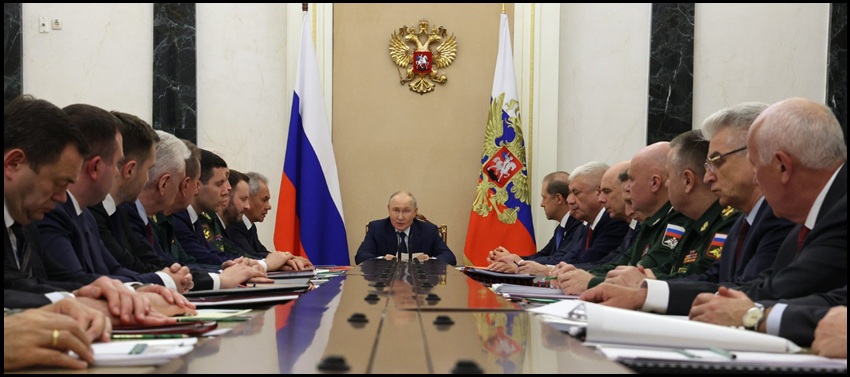
Immediately following the Alaska summit between Russian President Vladimir Putin and President Trump, Russia restarted Arctic-2 LNG terminals and began increasing oil production for storage on ‘floating platforms.’  President Trump met with Putin on August 15, 2025, and the curious increase in Russian production began on August 18, 2025.

In the past six months Russia has been pumping sanctioned oil and gas and storing it on ships and mobile sea platforms, seemingly (at the time) with no customers.  Suddenly, against the background of the Iran conflict, all of that previously stored ‘on the water‘ production, now worth double, is authorized for global sale (in petrodollars).

Either Russian President Putin is the luckiest guy in the world, or Russia knew something.

In 2025 what Russia did following the Alaska summit did not make sense; now it does and the ramifications are stunning.

(more…)

USTR Greer Announces Launch of Sec 301 Trade Investigations into 16 Economies Including the EU

When the Supreme Court made their ridiculous decision to nullify the import tariffs under the International Emergency Economic Powers Act (IEEPA) use, the high court noted several alternate approaches would not be legally problematic.  One of those approaches would be the use of Section 301 trade tariffs.

Yesterday USTR Jamieson Greer quietly announced that a Section 301 review would be taking place for the following countries: China, the European Union, Singapore, Switzerland, Norway, Indonesia, Malaysia, Cambodia, Thailand, Korea, Vietnam, Taiwan, Bangladesh, Mexico, Japan, and India.”

♦ Section 301 tariffs are a trade enforcement mechanism established under the Trade Act of 1974. They allow the U.S. government to impose tariffs on imports from countries that are found to be engaging in unfair trade practices. The Office of the United States Trade Representative (USTR) conducts investigations to determine if a country is violating trade agreements, and if so, it can impose tariffs as a corrective measure {SOURCE}

USTR PRESS RELEASE – WASHINGTON — Today, United States Trade Representative Jamieson Greer announced the initiation of investigations regarding the acts, policies, and practices of various economies under Section 301(b) of the Trade Act of 1974 relating to structural excess capacity and production in manufacturing sectors.

The investigations will determine whether those acts, policies, and practices are unreasonable or discriminatory and burden or restrict U.S. commerce. The economies subject to these investigations are: China, the European Union, Singapore, Switzerland, Norway, Indonesia, Malaysia, Cambodia, Thailand, Korea, Vietnam, Taiwan, Bangladesh, Mexico, Japan, and India.

(more…)

Democrat Senator Ruben Gallego Urges President Trump to Renegotiate USMCA

It is transparently obvious now that Canada is going to rely on UniParty (Corporate) opposition to President Trump in the dissolution of the USMCA (CUSMA) in favor of two distinctly different bilateral trade agreements; one with Canada and one with Mexico.

A bilateral trade negotiation between the United States and Canada would be devastating to the interests of the Canadian government.  Particularly after the Venezuela operation and new strategic relationship with the United States, Canada has almost zero points of leverage to negotiate anything similar to their current exploitative trade position.

Canada is going to rely on congress to stop Trump from forcing reciprocity in the bilateral discussions. However, as a positive indicator that President Trump will factually have congressional support for the elimination of the USMCA, Democrat Senator Ruben Gallego has written a letter to President Trump requesting a comprehensive review. [LETTER HERE]

[SOURCE]

This is a key Senate democrat who notes the problem.  One of Gallego’s top points of concern is the loophole that Canada uses to assemble Chinese component parts into finished goods for tariff free distribution into the United States.

Ever since President Trump won the 2024 election, Mexico has been taking proactive independent action to block Chinese component goods. But Canada has done the opposite and begun to enhance their trade relationship with China to take even more Chinese component and finished goods.

Gallego writes to U.S. Trade Representative Jamieson Greer from the position of wanting to increase wages and enhance jobs in both Mexico and the USA, growing both economies. However, Gallego’s advocacy simultaneously bolsters why the USMCA should be dissolved and also puts Canada at a distinct disadvantage.

(more…)

Witkoff and Kushner Meet Russian Delegation in Florida – Reports Indicate Discussions of Strategic Economic Cooperation on Oil

The fact that Team Russia and Team USA would be discussing a strategic economic alliance on the issue of energy is not a surprise to those who watched both President Putin and President Trump outline that same content discussion in Alaska last August.  However, given the current conflict with Iran and the escalating oil price issue, Russia and the USA discussing Russian oil capacity and U.S. sanctions therein takes on a new angle.

It has been obvious that domestic U.S. politics, in combination with the Russia-Ukraine war, has impeded President Trump from organizing a strategic reset with Russia pulling away from historic conflicts.  However, CTH is also clear-eyed on the longer-term ramifications for Eastern Europe when contrast with Putin’s ambitions to fix what he perceives as prior Russian Federation mistakes regarding the West (more on that at the end).

As noted in social media exchanges from Witkoff and Dmitriev, the discussion was productive.

[SOURCE]

All indications of this meeting give the appearance of less focus on progress in the Ukraine-Russia conflict, and a higher focus on current economic conditions -created by the Iran conflict- that could be enhanced with cooperation between the U.S. and Russia. {GO DEEP BACKGROUND}

According to Kirill Dmitriev, Russian special presidential envoy for investment and economic cooperation with foreign countries and director general of the Russian Direct Investment Fund (RDIF), relayed through the Russian News Agency (TASS), “he visited the US upon orders from Russian President Vladimir Putin, taking part in a meeting of the heads of a working group on economic cooperation between the two countries.”

(more…)

Volkswagen Loses Half Their Profit, Now Plan to Cut 50,000 Jobs Over Next Four Years

The origin of this issue goes back to 2021 and the relaunch of the Build Back Better European green energy program to fight the non-existent climate change problem.  We have been highlighting the consequences within the EU auto sector.

We noted in October of last year, the EU’s mandated fines against auto manufacturers who do not hit their production goals for electric vehicle sales began in 2025.  EU automakers unable to meet the regulatory compliance goal began purchasing carbon credits to avoid stiff EU fines.  Many of those carbon credits were purchased from Chinese EV automakers, who then turned around and started using the extra EU revenue to discount Chinese cars sold in Europe.

At the same time as Chinese autos hit record highs in Europe, EU car sales are flat or declining.  Now, Volkswagen is announcing they lost half their profits in one year and will be cutting 50,000 jobs in the next four years.

(MSM – Europe) – Volkswagen just revealed its operating profit sank like a stone last year, dropping by more than half as tariffs, Chinese competition, and shifting strategies took a serious bite out of the bottom line. And that performance now has the VW Group’s execs reaching for the cost-cutting scissors, including plans to shed 50,000 jobs by the end of the decade.

The German automaker reported an operating profit of €8.9 billion ($10.3 bn at current rates) for 2025. That’s down a hefty 53 percent from the year before and well below what analysts were expecting. Revenue, meanwhile, barely moved, slipping only slightly to around €322 billion ($374 bn). (read more)

This was very predictable. In essence, EU car companies buy Chinese car company carbon credits, to avoid the EU fines.  The Chinese car companies then use the carbon credit revenue to subsidize lower priced Chinese EVs to the European car market, thereby undercutting the European EV car companies.

(more…)

Sunday Talks – Energy Secretary Chris Wright Discusses Anticipated Timeline for Price Stability

Energy Secretary Chris Wright appears on Face the Nation to push back against the narrative engineering of CBS’s Margaret Brennan.  The video and transcript are below.

[Transcript] – MARGARET BRENNAN: We turn now to Energy Secretary Chris Wright, who joins us this morning from Denver. Good morning to you.

SECRETARY OF ENERGY CHRIS WRIGHT: Thanks for having me Margaret.

MARGARET BRENNAN: So 50,000 U.S. troops deployed, six Americans that we know of so far killed in action, civilians stranded. We look at our polling, Mr. Secretary, and we see that this is an unpopular war among the majority of Americans. More than half of them, 56% disapprove. When you speak to energy executives about the scope and duration of American involvement, what do you tell them? How long?

SEC. WRIGHT: I tell them that for 47 years, Iran is warg- waged war against the United States, and they’ve- throughout that 47 years, they’ve tried to undermine the energy development and energy infrastructure of all their neighbors, as they’re doing right now, and it’s time to put it to an end. So yes, we have a, we have a temporary period of elevated energy prices, but it will not be long. In the worst case, this is weeks, this is not months, and it leads to a much better place. It leads to an Iran that’s defanged, that can’t threaten its neighbors, can’t threaten American soldiers and can’t continue to drive up energy prices by making a mess of the Middle East. They can move to commerce, not conflict.

(more…)

Part II – Europe and China Have an Energy Problem

When President Donald Trump and President Vladimir Putin met in Alaska on August 15, 2025, the focus of the geopolitical world was on discussions surrounding Ukraine.  Unfortunately, it didn’t take long, merely a few hours, for both the U.S. and Russia to say that no progress was made.  However, also noted at the time was both the USA and Russia saying sideline discussions took place surrounding the possibility for a strategic relationship surrounding energy development.

What follows below is a review of the current energy dynamic, specifically surrounding LNG, against the backdrop of the Iran war with a hindsight review of that previous discussion between Putin and Trump.

What most people are missing in their current analysis was something that took place immediately following that Alaska summit six months ago.  Something that did not make any sense until now. {GO DEEP PART I HERE}

Three days after that summit meeting, on August 18, 2025, Russia announced they were restarting Russia’s Arctic-2 LNG production facility.  Russia would be more than doubling their capacity to generate and store liquified natural gas (LNG).

It absolutely did not make sense that Russia would start producing even more LNG considering the previously imposed western sanctions against them, and the fact that Russia was already overproducing LNG. As noted by analysts at the time:

AUGUST 18, 2025 – Russia’s Arctic LNG 2 export facility, which is sanctioned by the United States, is coming back to life after a year of no activity and is looking for buyers in Asia.

[…] The U.S. and EU sanctions on Russia’s Arctic LNG 2, which was billed as Russia’s flagship LNG project, have effectively frozen the start-up of the export facility in the Gydan Peninsula.

[…] Last year, Russia started shipping LNG from its flagship Arctic LNG 2 project—but not to customers. The shipments were made from the Arctic project to floating storage units either in Russia or in European waters, as potential customers were unwilling to buy the sanctioned LNG. {SOURCE}

In August of 2025, Russia was essentially producing more LNG than they could sell into the available market.  Russia was storing the overproduction from Arctic-1 on floating storage units and slowly selling to countries that did not align with the sanctions, specifically China and some Asian buyers.  Then suddenly, after the Trump summit, Russia decides to bring Arctic-2 online and produce even more LNG.  You can see how this did not make sense.

If they could not even sell all the Arctic-1 LNG output, then why would Russia bring Arctic-2 LNG production online?

That was six months ago.

(more…)

Right Now, Russia is Like Amazon During COVID

We like the deep weeds, most do not.  The geopolitical ramifications of the U.S. confrontation with Iran are vast and complicated; however, to encapsulate one of the most interesting dynamics consider this ‘tldr’ statement to open the discussion with your friends: Right now, Russia is like Amazon during COVID-19.

What follows is not me saying President Trump and President Putin are holding nightly conversations, discussing steps or details, or even obliquely coordinating measures as Trump eliminates the generational threat posed by Iran.

However, I am saying that given the nature of all contact and communication between Trump and Putin, including extensive contacts by their representative emissaries, both Putin and Trump are well aware of each downstream effect from the Iranian confrontation.

Two days after the U.S./Israel began Operation Epic Fury, President Vladimir Putin said Russia should consider shutting down oil and liquified natural gas (LNG) shipments to the EU in advance of the previously scheduled April deadline date when the EU would stop purchases.

♦ First, remember ‘force majeure’ contract nullification is in place for every producer, supplier and transporter in the middle east. Second, with shipments from the Gulf of Oman greatly reduced, LNG prices along with oil prices are increasing rapidly.  The result – ships filled with oil and LNG currently on the water are diverting in real time as international bidding for the content of the ships take place.

If Putin stops selling LNG to Europe, and Europe cannot get LNG from the Gulf of Oman, and China/Asia are LNG dependent (not exporting), then where is Europe going to get the LNG to replace what Russia will no longer provide?

Answer: The United States, and to a lesser extent, Norway.

[SIDENOTE: now does President Trump continuously smacking Great Britain about shutting down their North Sea oil and gas operations take on context?  Geopolitical foresight? I digress. END SIDENOTE]

The European Commission’s decision to phase out and ultimately stop purchasing Russian oil/gas was made in 2025 prior to the Iran conflict triggering.  Europe’s replacement plan included increased LNG purchases from the U.S., Norway and middle east; the latter supply option is now void.

Europe’s decision to stop buying oil/gas from Russia puts them in a very precarious position.  The supply option for Europe is suddenly very limited, and Putin’s statement about stopping the flow early was obviously made with this understanding in mind.

(more…)

Orban Intercepts Zelenskyy’s Money Laundering Operation – Zelenskyy Threatens to Send Ukraine Special Forces to Assassinate Orban

The origin of the latest development goes back several weeks.

Ukraine (Zelenskyy) was angry at Hungary (Orban) for blocking the €90 billion EU loan (a loan with no payback clause) which was backed by confiscated Russian sovereign wealth funds.  A splendidly European financial scheme.

To get back at Viktor Orban, Volodymyr Zelenskyy destroyed an oil/gas pipeline hub in Ukraine that transferred Russian oil to Hungary and Slovakia (Robert Fico).

Hungary and Slovakia were furious, and Zelenskyy said repairs were too complicated to be easily fixed.  Viktor Orban and Robert Fico then doubled down on blocking Ukraine funds and Ukraine’s assentation to the EU.

When Zelenskyy was questioned about Hungarian or EU inspectors visiting the site to evaluate the repairs, Zelenskyy said they would not be allowed access.

Zelenskyy further noted when he was told Patriot Missiles were in short supply, he did not get to visit the inventory; implying his lies were similar to lies told by the United States.

Caught in a lie, Zelenskyy followed up by saying he didn’t care, it was Russian oil so get lost.

Two days ago, Hungary then intercepted two Ukraine vans carrying $40 million in cash dollars, €35 million in cash Euros, and 9 kg of gold – presumably a money laundering transfer intended to fund Zelenskyy and his intelligence chiefs.

Hungarian Foreign Minister Péter Szijjártó stating that “since January, $900 million and €420 million in cash, as well as 146 kilograms of gold, have been transported across Hungary.”

The shipment apprehended by Hungary included 40 million U.S. dollars as well as 35 million euros and 9 kilograms (19.8 pounds) of gold — worth around $1.5 million at current prices — according to a separate statement by Oschadbank.

Hungary’s National Tax and Customs Administration confirmed Friday that it had detained the Ukrainian citizens and seized the two armored cash-transport vehicles. It added it was conducting criminal proceedings on suspicion of money laundering. {LINK}

Upon hearing of the intercept yesterday, a highly angered Volodymyr Zelenskyy then threatened to send Ukraine “special military operators” to the home of Viktor Orban to extract revenge.

(more…)

President Trump: ‘No Deal with Iran Except Unconditional Surrender’

The U.S. and Israel have been targeting deep underground missile sites within Iran, with strong success.  Iranian counterstrikes, missile & drone launches are down 80 to 90 percent according to Pentagon officials.

Additionally, the Israeli military has reported they dismantled an underground bunker system in Tehran used by regime leadership.  Originally the bunker was used by slain Supreme Leader Ayatollah Ali Khamenei underneath the leadership compound in central Tehran.  The bunker was targeted by 50 Israeli fighter jets and subsequently destroyed.

President Trump announced via Truth Social that he will not seek any terms with Iran other than unconditional surrender.

[SOURCE]

Meanwhile, in a somewhat predictable move, Treasury Secretary Scott Bessent has announced the U.S. will lift some sanctions on Russian oil exports in order to mitigate shortfalls.  India will be permitted to purchase additional Russian oil for use in their refineries.  The gasoline end products will then be sold into the market.

BESSENT: “President Trump’s energy agenda has resulted in oil and gas production reaching the highest levels ever recorded.

To enable oil to keep flowing into the global market, the Treasury Department is issuing a temporary 30-day waiver to allow Indian refiners to purchase Russian oil. This deliberately short-term measure will not provide significant financial benefit to the Russian government as it only authorizes transactions involving oil already stranded at sea.

(more…)