Within the Executive Order modifying the April 2nd global reciprocal tariffs [SEE HERE] section #4, we note a massive increase in the duty fees for mailed products from China formerly shipped under ‘de minimis’ rules.
 REMINDER: The de minimis loophole comes from back in the 1930s. The idea back then was, say you went on a vacation to Paris, you shouldn’t have to file customs paperwork or pay taxes if you decided to ship some little Eiffel Tower statues to your friends back home.
Congress in 2015 then raised the de minimis threshold from $200 to $800. However, the e-commerce world exploded, and Chinese companies began using the de minimis loophole to ship cheap goods (ex. Temu and Shein) into the USA direct to consumers without paying any customs duty.
On April 2nd, as part of the global trade reset and tariff structure, President Trump revoked authorization for Chinese goods to transfer to the USA using the de minimis rule. The de minimis exemption was cancelled for all products coming out of China. The rule change only targeted China and Chinese shippers. No one else. [XO HERE]
Yesterday, as part of the modification to Executive Order #14257, President Trump has increased the baseline tariff for product mailed from China [de minimis tariff] from 30 90 percent to 120%.
Mailed products from China now face a 120% tariff. Additionally, minimum tariff amounts increased from $75 to $100 effective May 1st, and from $150 to $2oo effective June 1st. [See Section #4]
Example: If you order a $20 shirt from China effective June 1st, you will pay $220. $20 for the shirt, and $200 minimum tariff.
There is no way Chinese E-Commerce can survive this level of tariff/duty fees.

 Western governments’, specifically western Europe, North America (U.S-Canada) and Australia/New Zealand, are intentionally trying to lower economic activity to meet the intentional drop in energy production.
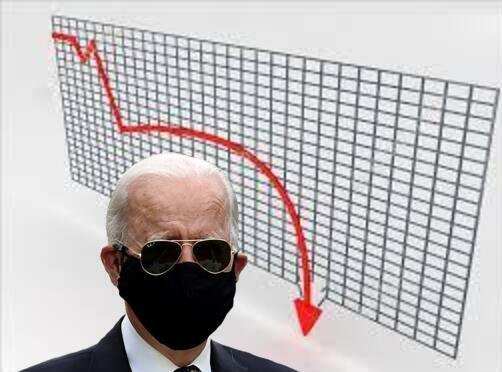 The first quarter of 2022 started with a drop in U.S. consumer spending on non-essential durable goods like electronics. The net result of contracted consumer spending was a 1.6% negative GDP.
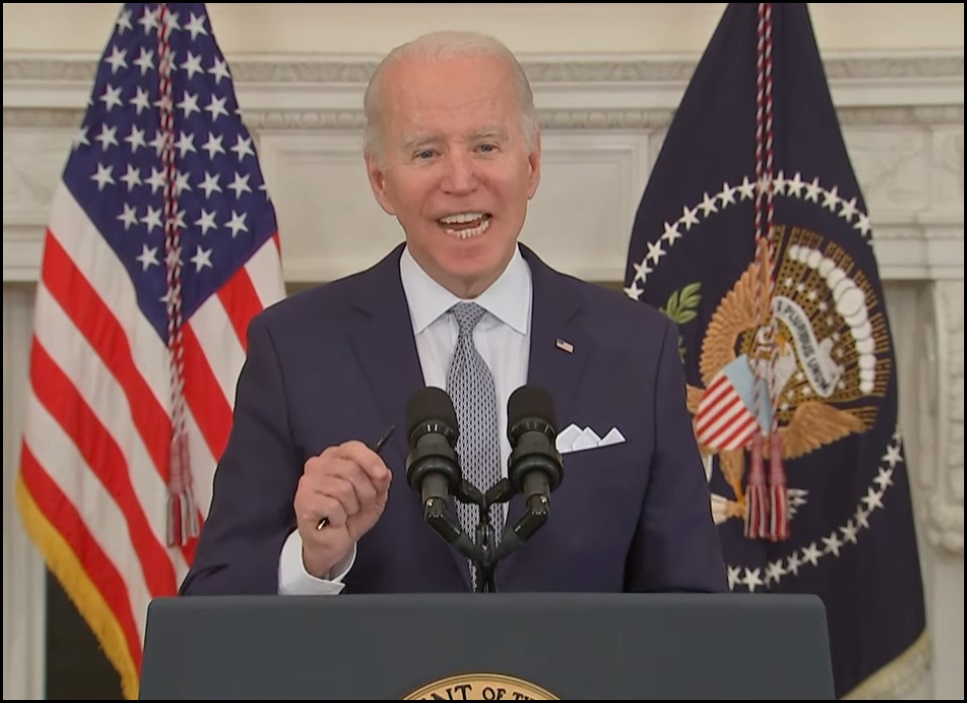 As Biden doubles down on a proxy war against Russia in Europe, and given the financial stakes within the western economic sanctions, the global trade cleaving could leave the countries around India with a decision on which financial trade mechanisms they will support.