Secretary of Treasury Scott Bessent appears on CBS’s Face the Nation for an inflation and affordability debate with narrative engineer Margaret Brennan.
The primary narrative can be seen in Brennan’s emphasis of the new democrat catch phrase “affordability.” Having gaslit the American electorate over the issues of Joe Biden’s economic/energy policy which created record inflation, the same media who ran cover for Joe Biden have switched during the Trump administration to calling the subsequent high costs an “affordability” crisis.
In essence, Biden’s economic, energy and monetary policies drove 2021/2022 inflation to record levels, this made all prices rise massively. Those high prices are now the “affordability problem.” WATCH:
[Transcript] – MARGARET BRENNAN: Good morning and welcome to ‘Face The Nation.’ We have a lot of news to get to, and we begin with the Secretary of the Treasury, Scott Bessent. Good to have you here.
TREASURY SECRETARY SCOTT BESSENT: Morning, Margaret.
SEC. BESSENT: Mr. Secretary, a lot of people are out there holiday shopping. Here is how the President described back in April, what to expect from this season.
If we read between the lines in the latest update from President Trump emissary Steve Witkoff, we can clearly see the negotiations have entered into that critical phase where payments to all of the stakeholders will determine a successful outcome.
Pragmatic people have long predicted the ultimate solution to the bloodshed will only be determined once western interests get to the point where negotiators propose a long-term plan for continued financial benefit. Too many people, “stakeholders” are making money from the conflict.
From a western perspective, support for the Ukraine conflict is based on money. Therefore, the solution to the conflict requires a system where the western opportunity for financial benefit continues.
Written in polite diplomatic terms, the continued payments are identified as “the prosperity agenda which aims to support Ukraine’s post-war reconstruction, joint U.S.–Ukraine economic initiatives, and long-term recovery projects.” This is codespeak for the U.S. Senate and EU will retain a financial mechanism to exploit for personal benefit.
From the language it appears that Witkoff and Kusher are confident they can construct a financial reward system for western banks, investors, politicians and Ukraine officials that will retain the benefits of war without the ancillary ingredient of bloodshed.
If the U.S. delegation can pull this off, then Russia can gain the territory they want, corrupt Ukraine officials can keep skimming investment money, the EU can retain the power it wants to extract financial payments, American politicians can use the “long-term recovery projects” for money laundering and quasi-public/private investment banks can benefit from the exploitation of Ukraine resources.
Again, from a ‘western geopolitical perspective’, the territorial issues, security guarantees, EU membership status and the position of NATO are downstream details once the larger payment system is organized. Put another way, they are down to the stuff that really matters, the money.
Treasury Secretary Scott Bessent appears on Meet the Press to debate Kirsten Welker’s formatted corporate media talking points. The source of most American division is found in the behavior of the media.
Video and Transcript Below:
[TRANSCRIPT] – KRISTEN WELKER: And joining me now is Treasury Secretary Scott Bessent. Secretary Bessent, welcome back to Meet the Press.
SEC. SCOTT BESSENT: Kristen, good to be with you today.
KRISTEN WELKER: It’s great to have you here in person. Thank you for being here. I want to start right there on the discussion of affordability. You just heard Vice President JD Vance ask people to have, quote, “a little bit of patience” with the administration. Let me ask you, Mr. Secretary, how long do Americans need to be patient? How long do they have to wait for the cost of living to come down?
SEC. SCOTT BESSENT: Well, Kristen, in March of 2024, I – I wrote a piece, and I talked about the three I’s that were killing Americans: immigration, interest rates and inflation. The president’s closed the border, and the mass immigration is gone. And that was putting – a lot of the immigration was putting upward pressure on housing, downward pressure on wages. Interest rates are down. And now we are starting to see the affordability – we – the prices get better. We had a very big October for home sales. Energy prices, gas – gasoline is down. We saw – we believe health care is going to come down. We will see an announcement this coming week on that. And so across the board, prices are starting to come down. We’re having Thanksgiving week. This will be the lowest cost for a Thanksgiving dinner in four years. Turkey prices are down 16%.
The govt shutdown made a mess of the economic data surveying and statistical analysis generally needed for accurate snapshots of the economy. However, the Bureau of Labor and Statistics (BLS) was able to release the September jobs report data {SEE BLS REPORT HERE}.
The geopolitical trade reset continues delivering domestic economic fluctuations, as each sector and specific international dependency reacts to President Trump’s shifts and turns in targeted economic policy. The September jobs report caught the economic pundits off-guard, as it showed a much bigger gain in jobs than they expected.
As noted by MSM, “The US added 119,000 jobs in September, far more than the 53,000 economists expected, and unemployment unexpectedly increased to 4.4% from 4.3%.” President Trump’s immigration enforcement continues to capture and remove illegal alien workers from the U.S. economy. This is also driving up domestic wages.
President Donald Trump gave U.S. Trade Representative, Ambassador Jamieson Greer, all the tools and leverage needed to bring the Swiss govt to a substantive trade agreement. The pressure was too much to bear, so Switzerland quickly negotiated a deal.
In the background President Trump’s global trade reset has been seriously damaging for the Swiss industrial economy. The EU overall, Germany specifically and China, have stopped purchasing precision Swiss industrial machinery.
It’s not the direct tariffs against Swiss precision machinery itself that created the pressure, but rather the tariffs against nations who purchased the Swiss precision machinery.
China was a big purchaser of the Swiss machinery, until Beijing stole enough intellectual property to develop their own precision machining capacity. Slowly China didn’t need Switzerland.
Germany and the EU economy then began to contract as the Trump tariffs bit hard against their exports to the USA.
Simultaneously, Chinese EV production started replacing more expensive European EV production, and the tooling purchases within the auto industry began contracting within Switzerland.
As things unfolded, the forecast for the future of the Swiss economy started to become very clear; their precision industrial exports were going to continue contracting. Something needed to change, and fast.
Ambassador Jamieson Greer announces a major free trade agreement with Switzerland {SEE HERE} and the White House provides a fact sheet {SEE HERE}. A joint statement is then released:
Treasury Secretary Scott Bessent appears on ABC This Week to combat the narrative engineering of DNC transcriptionist George Stephanopoulos.
Sometimes it’s worth watching Stephanopoulos, Bill Clinton’s former Chief of Staff, because he frames the political position, current and future, for the Democrat party. Video and Transcript Below:
[Transcript] STEPHANOPOULOS: And we’re joined now by the Treasury secretary, Scott Bessent.
Mr. Bessent, thank you for joining us this morning.
We’ve just heard about all these impacts from the shutdown — government shutdown right now. Are we starting to see — see a permanent impact on the economy?
TREASURY SECRETARY SCOTT BESSENT: Sure, George.
And good to be with you.
And we’ve seen an impact on the economy from day one, but it’s getting worse and worse. We had a fantastic economy under President Trump the past two quarters. And now there are estimates that the economy, economic growth for this quarter, could be cut by as much as half if the shutdown continues.
White House Economic Council Director, Kevin Hassett, is a straight shooter; he calls things as they are, not as many would pretend them to be.
On the issue of court orders demanding various cabinet secretaries spend money to fund the government, Director Hassett correctly reframes the issue around the law of federal spending that says money not appropriated for that expenditure cannot be spent. The Supreme Court will strike down, as they already have, any order not grounded in the law around government spending.
Hassett correctly warns that any cabinet agency who attempts to comply with a district or circuit court order, is running the risk of having a lawsuit filed against them for spending non-appropriated funds. This could be part of the reason why Democrats are purposefully not reopening government, to force the Trump administration into a catch-22 legally where they are going to violate the law either way.
Margaret Brennan stands jaw agape at the Machiavellian approach that Director Hassett outlines, “surely they would never do that” she proclaims. In response Hassett reminds Brennan that such Lawfare strategies are indeed part of the larger stop Trump movement. Video and Transcript Below.
[Transcript] – MARGARET BRENNAN: We begin this morning with the Director of the White House National Economic Council, Kevin Hassett. This is now the longest shutdown in American history. The treasury secretary told us two weeks ago November 15 was the hard stop for any paychecks going to US troops. Does that remain the point of exhaustion?
KEVIN HASSETT, DIRECTOR, NATIONAL ECONOMIC COUNCIL: Right, I think that- that’s about the right number. And the problem is that under the law, we’re not allowed to spend money that hasn’t been appropriated. And there is a law, the Antideficiency Act, that says that if a government official spends money that isn’t appropriated by Congress, which will only happen if the Democrats vote to open up the government, then you could even have criminal penalties. And so people are very carefully studying the law and trying to get as much money out the door as is legal. And we’re very glad that we found a way to get a lot of the SNAP money out, but it’s really pushing the boundaries of the law, which is why the Supreme Court had to take that ruling from Rhode Island and put it on hold.
President Trump posted the importance of the Supreme Court case to support presidential authority on Tariffs.
The heart of the argument really is the “trillions at stake” aspect we have discussed on these pages for the past ten years. If the institutions of our government factually want to dispatch President Trump and diminish the American middle-class, the Supreme Court will support the multinational corporations and Wall Street in decision to remove presidential tariff authority.
[Via Truth Social] – “Next week’s Case on Tariffs is one of the most important in the History of the Country. If a President is not allowed to use Tariffs, we will be at a major disadvantage against all other Countries throughout the World, especially the “Majors.” In a true sense, we would be defenseless! Tariffs have brought us Great Wealth and National Security in the nine months that I have had the Honor to serve as President. The Stock Market has hit All Time Highs many times during my short time in Office, with virtually No Inflation, and National Security that is second to none.
Our recent successful negotiation with China, and many others, put us in a strong position only because we had Tariffs with which to negotiate fair and sustainable Deals. If a President was not able to quickly and nimbly use the power of Tariffs, we would be defenseless, leading perhaps even to the ruination of our Nation. The only people fighting us are Foreign Countries who for years have taken advantage of us, those who hate our Country and, the Democrats, because our numbers are insurmountably good.
I will not be going to the Court on Wednesday in that I do not want to distract from the importance of this Decision. It will be, in my opinion, one of the most important and consequential Decisions ever made by the United States Supreme Court. If we win, we will be the Richest, Most Secure Country anywhere in the World, BY FAR. If we lose, our Country could be reduced to almost Third World status — Pray to God that that doesn’t happen!”
Secretary of Treasury Scott Bessent appears on Fox News with Maria Bartiromo to discuss the Asia tour by President Trump and the trade delegation that culminated with a lengthy meeting between President Trump and Chairman Xi Jinping.
By locking down trade agreements with Australia, Malaysia, Cambodia, Vietnam, Philippines, Thailand, Japan and South Korea in advance of the meeting with Xi, President Trump had effectively boxed out the maneuvers of Beijing and isolated any contravening strategy.
Chairman Xi was facing a U.S. strategic trade reset with multiple options for replacement of Chinese goods and resources. As a result, the Beijing trade delegation recognized President Trump had effectively neutered the scale of their economic power and influence over the U.S. economy. Instead, the best play for big panda was to shake hands and come to agreeable terms. WATCH:
.
Playing into President Trump’s hands was/is the strains currently ongoing within the Chinese domestic economy. Further friction against the USA would have weakened Chairman Xi domestically.
United States Trade Rep. Jamieson Greer is a very solid member of the Trump trade team. Having learned at the knee of former USTR Robert Lighthizer, you can see the stability of thought in the consistency of approach.
USTR Greer outlines the ongoing discussions between the U.S. and China on the framework of a stable trade relationship. Against a myriad of geopolitical chess moves on the economic and trade front, Greer and Treasury Secretary Bessent play key roles in executing the Trump Doctrine.
.
In the background of the President Trump and Chairman Xi meeting, we can see the broad contours of President Trump’s strategy toward both the Russia-Ukraine conflict and the China-Canada trade relationship.
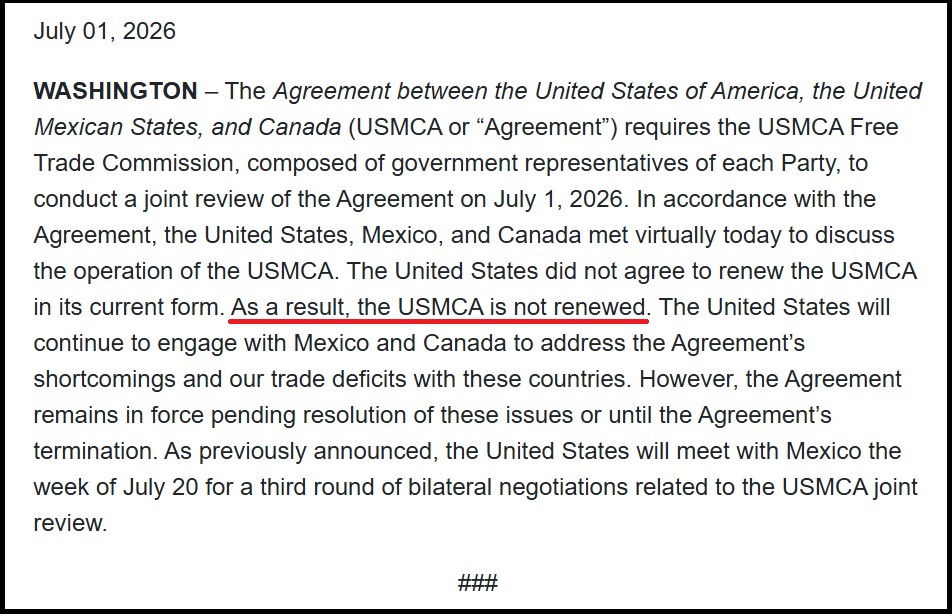
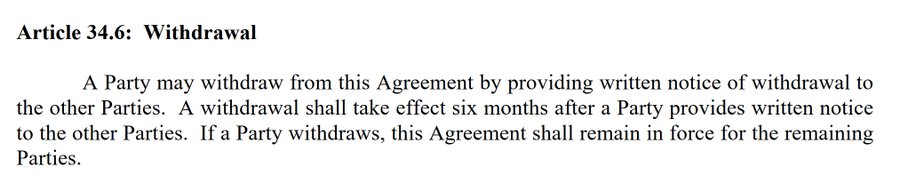
If President Trump can formulate a strong, actionable and enforceable free trade agreement with Chairman Xi, it will undercut the ability of Canada to assemble cheap component goods not available in the U.S. manufacturing equation for total cost of goods. This puts Trump in an even stronger position heading into the 2026 USMCA (CUSMA) dissolution phase.
Additionally, despite the mainstream thoughts to the contrary, putting distance between Russia and China is not averse to the interests of Russian Federation Vladimir Putin, who would strategically prefer to do business with the ‘West’ over Beijing. However, China does not want to see their Biden-created tentacle weakened in Russia.