Quantcast

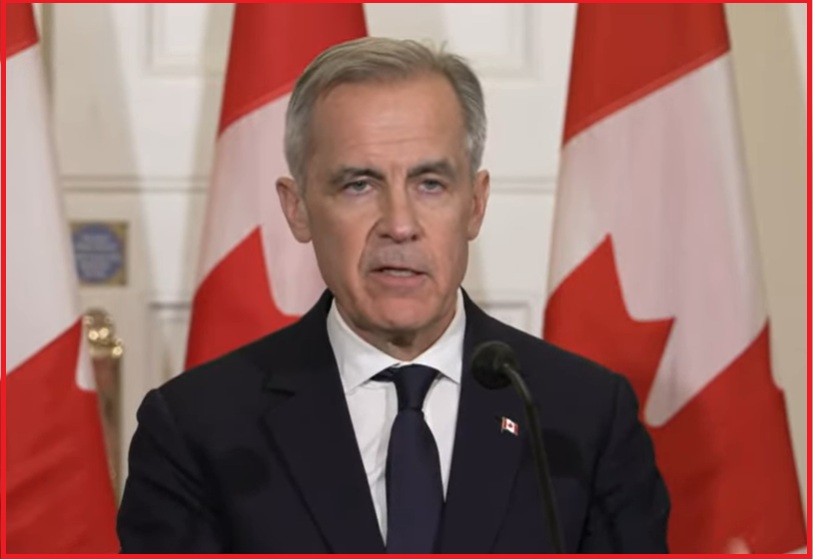
Neil Oliver and David Krayden Discuss Recent Canada Election and Future of Alberta Secession

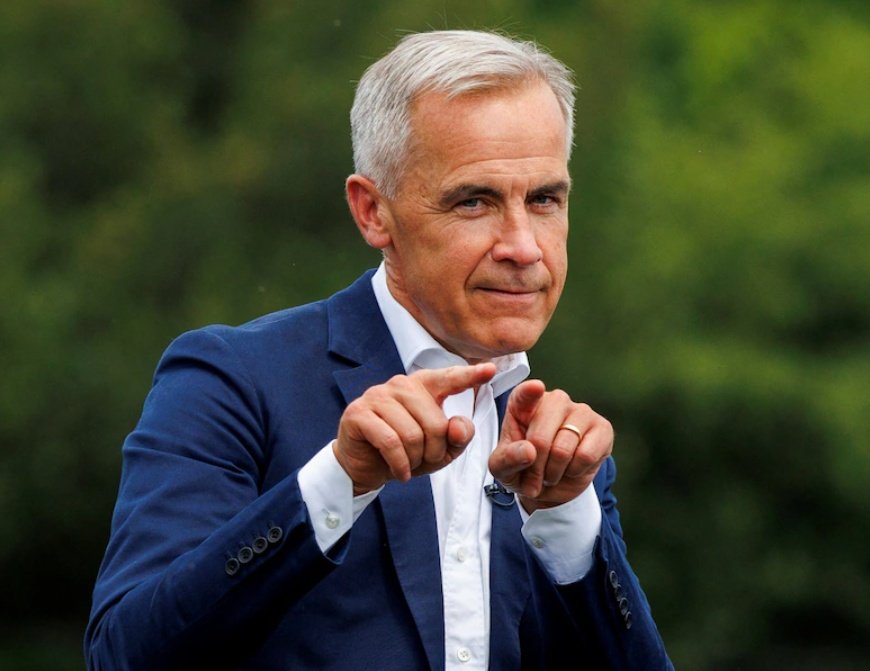
In this interview, British pundit Neil Oliver and Canadian David Krayden discuss how in the wake of the recent election Alberta separatism is gaining momentum.  Elected Prime Minister Mark Carney’s net zero energy policies could push Canada towards economic crisis, with fears of higher taxes and a loss of national identity.

Krayden outlines why some Canadians believe Alberta could become the 51st US state and how Donald Trump’s surprising support for Carney is fueling debate in Candian conservative circles.  Was there a plan behind Trump’s approach?   WATCH:

.

(more…)

China Reroutes Targeted Goods to Friendly North American Partner to Avoid Tariffs

As if on cue, a short article from the Chamber of Shipping notes that cargo from China is being rerouted to avoid tariffs.

The destination of the cargo is, wait for it,… CANADA!

USCoS – As U.S. tariffs on Chinese goods soar to as high as 145%, a growing number of companies are rerouting shipments to Canada and storing them in bonded warehouses in hopes of avoiding the duties and capitalising on a future rollback. This strategy has caused a sharp spike in Chinese shipments to Canada, with logistics firms and customs brokers reporting surging inquiries and storage demand from consumer goods, chemical, and auto parts sectors. However, experts caution that prolonged storage costs—estimated at $1,750 per container per week—and limited warehouse capacity could force sellers to offload discounted goods into the Canadian market, potentially disrupting domestic manufacturing. Others warn the strategy is risky and unsustainable, especially if the trade conflict drags into next year’s U.S.-Mexico-Canada Agreement negotiations. (link)

This will not end well….

… For Canada.

(more…)

An Unavoidable Trade War with Canada is Looming – Trigger Date July/August 2025

According to the people present, when former Canadian Prime Minister Justin Trudeau traveled to Mar-a-Lago to meet with President-elect Donald Trump, his primary objective was to inform President Trump his public demands for U.S. trade reciprocity with Canada were unachievable.

Trudeau was not lying.  In this outline we will explain a dynamic that is certain to surface this summer.

President Trump has deferred all North American trade negotiations with Canada and Mexico until later in the year, after the priority trade deals with other large trade partners are completed.  The USMCA trade pact is due for review and renegotiation this year [BACK STORY]. We should expect an entirely different trade pact as an outcome, quite possibly the ending of the trilateral nature of the current agreement.

A few days ago, Politico noted that Canadian Prime Minister Mark Carney had a reprieve from his prior campaign points about confronting President Trump on tariffs immediately.  PM Carney is currently trying to align allies for what will likely be a major confrontation that he cannot win.

♦ BACKGROUND – Following the 2024 presidential election, Prime Minister Justin Trudeau traveled to Mar-a-Lago and said if President Trump was to make the Canadian government face reciprocal tariffs, open the USMCA trade agreements to force reciprocity, and/or balance economic relations on non-tariff issues, then Canada would collapse upon itself economically and cease to exist.  In essence, in addition to the NATO defense shortfall, Canada cannot survive as a free and independent north American nation, without receiving all the one-way benefits from the U.S. economy.

To wit, President Trump then said, if Canada cannot survive in a balanced rules environment, including putting together their own military and defenses and meeting their NATO obligations, then Canada should become the 51st U.S state.  It was following this meeting that President Trump started emphasizing this point and shocking everyone in the process.  However, in the emotional reaction to Trump’s statements, no-one looked at the core issues outlined by Trudeau that framed President Trump’s opinion.

(more…)

April Jobs Report Reflects 177,000 New Jobs Beating Expectations, Federal Employment Drops 9,000

The Bureau of Labor and Statistics (BLS) has released the jobs and employment data for April [SEE HERE].  Within the data we see 177,000 jobs were gained, beating expectations of 133,000.   The unemployment rate remains unchanged at 4.2%.

Federal government employment declined by 9,000 in April [BLS, Table B-1]  Health care added 51,000 jobs: consisting of hospitals (+22,000) and ambulatory health care services (+21,000). Transportation and warehousing increased by 29,000 jobs in April: with warehousing and storage (+10,000), couriers and messengers (+8,000), and air transportation (+3,000).

(Via Wall Street Journal) – The U.S. economy continued to add jobs at a steady clip in April, although the pace of gains slowed slightly during a month that saw changing tariff announcements and market turmoil.

The U.S. added 177,000 jobs in April, the Labor Department reported Friday, above the gain of 133,000 jobs economists polled by The Wall Street Journal had expected to see.

(more…)

Following Massive Surge in First Quarter USA Purchases, Chinese Manufacturing Output Now Drops in Second Quarter

This next story is a natural outcome in the flow of goods. Remember, the Bureau of Economic Analysis (BEA) of the first quarter is a hindsight review. Meaning the information released today was based on activity in January, February and March 2025.

U.S. companies surged the purchasing of import goods, mostly from China, by more than 50% in the first quarter. They were/are building inventory. So, what happens in China starting in April?

Hong Kong, CNN – China’s factory activity contracted at its fastest pace in 16 months in April, as steep US tariffs took a heavy toll on the manufacturing sector, adding urgency to Beijing’s efforts to roll out fresh economic stimulus.

The manufacturing Purchasing Managers’ Index (PMI) fell to 49.0 in April, the weakest reading since December 2023, according to data released by the National Bureau of Statistics (NBS) on Wednesday. A reading below 50 signals a contraction.

Zhao Qinghe, a senior statistician at the NBS, said in a statement that the contraction in factory activity was due to “sharp changes in the external environment and other factors.” (read more)

The U.S. has front-loaded the inventory. So, orders to China drop now. It’s a natural outcome.

We have purchased goods in advance. So, orders to China drop. As a result, the cargo shipments from China to the USA drop in April, May and June.

(more…)

Peak Hassett – National Economic Council Director Kevin Hassett Provides Details on Trade Negotiations

As we saw previously in Term-1, President Trump has again divided and assigned trade negotiation responsibility to key cabinet members.  In this interview with CNN National Economic Council Director Kevin Hassett smiles and walks effortlessly through the narrative engineering attempt by CNN pundit Kassie Hunt.

This is a must watch interview if you are following the details of the current global trade renegotiation.

Hassett outlines the current status of trade negotiations with some of the biggest trade partners in the world.  India and Southeast Asia are being handled by Treasury Secretary Scott Bessent.  Commerce Secretary Howard Lutnick is in control of the section 232 (national security) tariffs, and USTR Jamison Greer has 19 current Free Trade Agreements outlined with various partners all willing to accept the reciprocity agreement.  WATCH:

.

(more…)

How the NAFTA/USMCA 2025 Review Underpins President Trump Remarks on Canada

Only President Trump could get the Canadians to vote for an exit to the USMCA, and he did it brilliantly.

To understand President Trump’s position on Canada, you have to go back to the 2016 election and President Trump’s position on the NAFTA renegotiation.  If you did not follow the subsequent USMCA process, this might be the ah-ha moment you need to understand Trump’s strategy.

During the 2016 election President Trump repeatedly said he wanted to renegotiate NAFTA, the North American Free Trade Agreement.  Both Canada and Mexico were reluctant to open the trade agreement to revision, but ultimately President Trump had the authority and support from an election victory to do exactly that.

In order to understand the issue, you must remember President Trump, Commerce Secretary Wilbur Ross and U.S. Trade Representative Robert Lighthizer each agreed the NAFTA agreement was fraught with problems and was best addressed by scrapping it and creating two seperate bilateral trade agreements. One between the USA and Mexico, and one between the USA and Canada.

In the decades that preceded the 2017 push to redo the trade pact, Canada had restructured their economy to: (1) align with progressive climate change; and (2) take advantage of the NAFTA loophole.  The Canadian government did not want to reengage in a new trade agreement.

Canada has deindustrialized much of their manufacturing base to support the ‘environmental’ aspirations of their progressive politicians.  Instead, Canada became an importer of component goods where companies then assembled those imports into finished products to enter the U.S. market without tariffs.  Working with Chinese manufacturing companies, Canada exploited the NAFTA loophole.

Justin Trudeau was strongly against renegotiating NAFTA, and stated he and Chrystia Freeland would not support reopening the trade agreement.  President Trump didn’t care about the position of Canada and was going forward.  Trudeau said he would not support it.  Trump focused on the first bilateral trade agreement with Mexico.

(more…)

Watch Longshoremen Union – A Predictable Democrat Strategy to Weaponize Absent China Goods in Coming Months

[AUTHORS NOTE: Having attended the ASEAN conference to make contacts, after a brief respite at home I spent the past several weeks traveling Southeast Asia to research the likely impact from Trump’s tariff and global trade reset. Visits included manufacturing and distribution facilities in the Philippines, Malaysia, Thailand, Vietnam, Cambodia, Sri Lanka and South Korea. What I will share with you in the next few months is an overview from direct first-hand discussions, contrast against the MSM financial media outline.]

The predictable doomsday Wall Street Journal narrative includes a forecast for a massive drop in exports from China as shipping conglomerates begin to outline a drop in trans-pacific sea cargo and container carriers.

What I would say to concerned Americans is to filter out the political narrative and remind yourself of the expanded footprint throughout SE Asia that Beijing has already established.  Chinese companies, many of them subsidized by the CCP, are pre-positioned to begin transnational shipping. I have witnessed it first-hand.  However, here’s the WSJ narrative as it begins.

WSJ – The number of ships sailing from China to the U.S. laden with clothes, electronics, furniture and other goods is plunging, as an accelerating number of cargoes are canceled.

The scrapped sailings come after the Trump administration ratcheted up tariffs on China while giving a three-month reprieve on punitive levies for much of the rest of the world.

At the Port of Los Angeles, one of America’s biggest gateways for imports from China, executive director Gene Seroka told port officials Thursday that he expects a 35% drop in import volumes in two weeks “as essentially all shipments out of China for major retailers and manufacturers has ceased.”

(more…)

President Trump to Hold 100th Day Celebration in Michigan – Auto Tariff Focus

President Donald Trump will be holding a celebration of his 100 days in office during a stop in Michigan.  It makes sense to pick Michigan as the auto industry is representative of the Trump global trade reset and tariff program.

So far, eleven new or expanded U.S. automotive factories have been announced as major automakers seek to establish production lines in the USA to avoid 25% auto tariffs.  The latest announcement was from Toyota, for expanded facilities in West Virginia.

“Toyota Motor Corporation’s North American manufacturing subsidiary, Toyota North America Inc, announced this week that it plans to invest a further US$88 million in its West Virginia plant in the US to assemble its next generation of hybrid transaxles.” {source}

Additionally, South Korea is on the losing end of negotiation leverage due in large part to their position within the auto sector.  Japan has already had preliminary discussions with the Trump administration on a new free trade agreement. Now we see South Korea coming to the table for the agreement outline today.

(Reuters) – A South Korean delegation will meet U.S. counterparts on Thursday for an opening round of trade talks, with cooperation on shipbuilding and energy expected to be on the agenda, and possibly shared defence costs, as Seoul seeks lower tariffs.

(more…)

President Trump Takes Questions from Media During Oval Office Presser

Wednesday, President Trump held an executive order signing ceremony in the oval office and took questions from the media on current topics.  Video Prompted:

.

President Trump notes the economic team have been in contact with 90 countries from around the world who have called to renegotiate trade agreements.  Additionally, Trump notes that 11 new automotive assembly plants have been announced by car companies in order to avoid U.S. tariffs.  That’s a lot of American jobs.

(more…)