Quantcast

The Great Economic Pretending Has Become Absurd, WSJ Economists Ignore Current Reality and Ponder Possibility of Recession in 2023

I do not know how to describe this with the Through The Looking Glass absurdity it deserves.

The ability of financial media and national economists to suspend accepting current reality, while making claims about the possibilities for next year, is ridiculous. Ask me why this era of great economic pretending is underway, and I have no answer. The intellectual dishonesty is beyond my comprehension.

The first and second quarters of the U.S. economy showed negative Gross Domestic Product valuations (GDP). We just finished the third quarter (July, Aug, Sept) and the likelihood of another negative GDP is high. Production is down, demand is down, consumer spending is down, inventories are climbing, and the economy is contracting. We are in a literal, technical and structural recession. Considering the Q1 and Q2 outcomes, we have been in a recession all year.

The Wall Street Journal publishes an article citing several notable economists who are putting the likelihood of a 2023 recession at 63%.

(WSJ) – […] On average, economists put the probability of a recession in the next 12 months at 63%, up from 49% in July’s survey. It is the first time the survey pegged the probability above 50% since July 2020, in the wake of the last short but sharp recession.

Their forecasts for 2023 are increasingly gloomy. Economists now expect gross domestic product to contract in the first two quarters of the year, a downgrade from the last quarterly survey, whereby they penciled in mild growth.

[…] Forecasters have ratcheted up their expectations for a recession because they increasingly doubt the Fed can keep raising rates to cool inflation without inducing higher unemployment and an economic downturn. Some 58.9% of economists said they think the Fed will raise interest rates too much and cause unnecessary economic weakness, up from 45.6% in July. (read more)

They are analyzing a pending recession in 2023 without even admitting we are in a recession right now. AT THIS VERY MOMENT.  We have two consecutive negative quarters of economic growth behind us (another Q3 result pending), and these economists are discussing a recession “next year“?

(more…)

South Africa Confirms Likelihood of Saudi Arabia Joining BRICS Economic Alliance

South African President Cyril Ramaphosa held a two-day summit with Saudi Arabia on mostly economic matters.

At the conclusion of the summit, he confirmed the intent of Saudi Arabia to join the BRICS economic coalition, which should not come as a surprise given the previous statements by Saudi leader and Crown Prince Mohamed Bin Salman (MbS).

(MSM) Ramaphosa confirms Saudi Arabia wants to join Brics family.  This was revealed by President Cyril Ramaphosa during his two-day state visit to the kingdom on Sunday.

“The Crown Prince (prime minister Mohammad bin Salman bin Abdulaziz al Saud) did express Saudi Arabia’s desire to be part of Brics and they are not the only country,” said Ramaphosa. He confirmed this on Sunday during an engagement with the media.

Brics held its first summit in 2009, with SA joining the following year. The bloc has generally been seen as an alternative to the dominance of the western economies.

“We did say that Brics having a summit next year under the chairship of South Africa in SA and the matter is going to be under consideration.

“A number of countries are making approaches to Brics members, and we have given them the same answer that it will be discussed by the Brics partners and thereafter a decision will be made.” (read more)

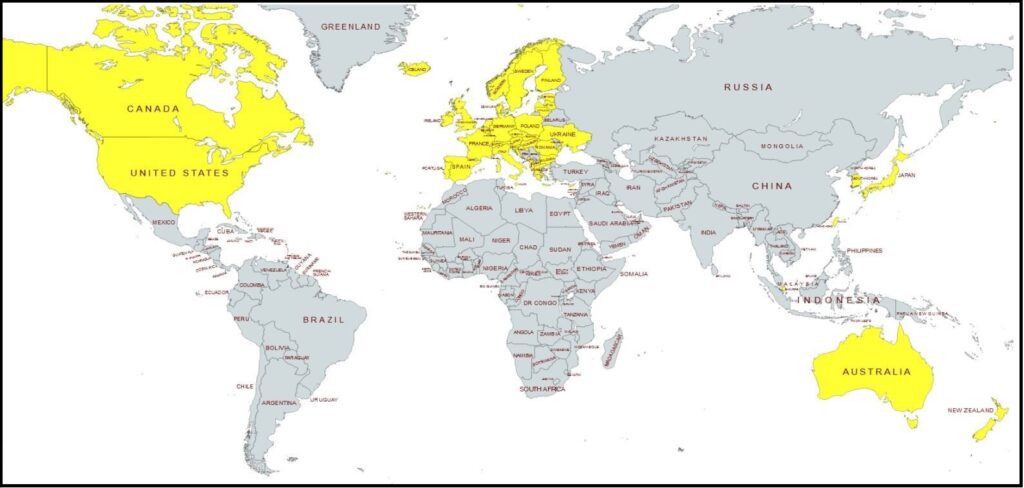
Since the outset of the Western Alliance sanctions against Russia, we have been predicting an increased geopolitical influence from the BRICS team.  A global financial and economic cleaving is underway created by the western nations chasing ideological climate change energy policy, while the rest of the world remains pragmatic toward oil, coal and natural gas as energy resources.

(more…)

Major Merger Announced, Kroger and Albertsons Announce Merger Deal Worth $24.6 Billion

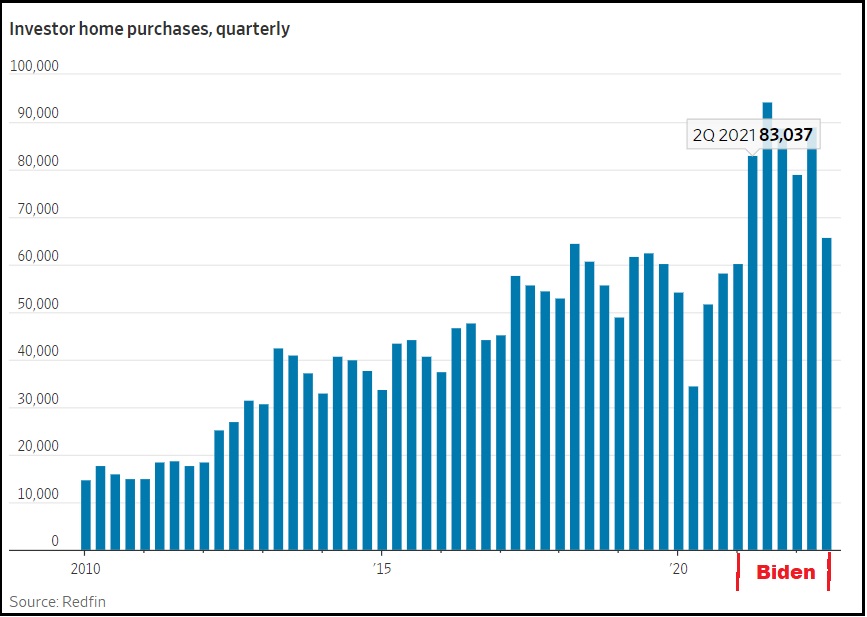
Not that long ago, I would have said to allow the free market to decide if a merger or acquisition was valuable for the consumer.  However, in the era where massive multinational corporations, investment groups and financial institutions have now used corporatism to merge their interests with government, the massive multinationals need scrutiny.

Two major food retailers, Kroger and Albertsons, have announced their intent to merge into one massive company in a deal valued at $24.6 billion.  The majority stakeholders in Kroger are institutional investors Vanguard ($3.72 billion/11.29%) and Blackrock ($3.02 billion/ 9.17%).   The majority stakeholder in Albertsons is institutional investment group Cerberus ($3.90 billion/28.54%).

In the past few years, food has surfaced as a growing national security issue.  Foreign companies and large multinationals continue to expand their control over U.S. farm production and export U.S. farm products (Big Ag).  A major retail level move like the merger of Kroger and Albertsons creates a weaker competitive environment and gives a larger potential footprint to price control.

CBS – […] Together, the companies will have more than 710,000 workers and operate nearly 5,000 stores, along with roughly 4,000 pharmacies. Kroger, based in Cincinnati, Ohio, operates 2,800 stores in 35 states, including brands like Ralphs, Smith’s and Harris Teeter. Alberstons, based in Boise, Idaho, operates 2,220 stores in 34 states, including brands like Safeway, Jewel Osco and Shaw’s. 

(more…)

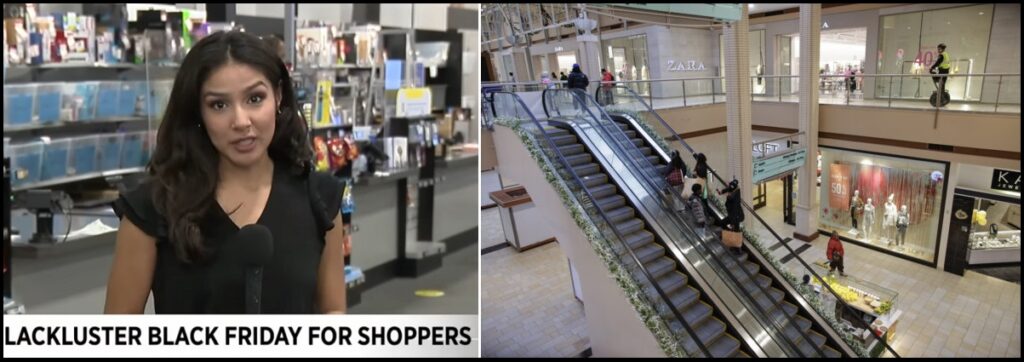
Retail Sales Growth Drops Below Rate of Inflation, What Does That Tell You?

You often hear me talk about how financial pundits and economic analysts are disconnected from Main Street.  Today we get a prime example of that from the Wall Street Journal.

The topline of the WSJ article is essentially that people are not spending money on anything except essential goods (housing, energy, fuel, food, etc), which is somewhat of a ‘duh tell us something we don’t know‘ type article.   However, the analytical part of the article is where you find the insufferable disconnect.   Here’s one example:

[Data Point 1] Gasoline prices dropped in September for the third month in a row, falling 4.9% from August.”  [Data Point 2] Sales at gasoline stations, a proxy for spending by car owners, declined 1.4% last month.” 

If gasoline dropped 4.9% in price, but sales only declined 1.4% that would indicate more physical gasoline was purchased at a lower price than the month before.   It’s not a hard concept to understand.

This is a retail sales reality even identified in the article itself, “Unlike many government reports, retail sales aren’t adjusted for inflation, so some swings reflect price changes rather than shifts in the amounts purchased.”

However, now look at this:  “Spending at restaurants and bars grew 0.5% in September from the prior month. But prices at restaurants grew 0.9% in the same month, according to a separate Labor Department report released Thursday, meaning that consumers are getting less for their spending.

No, that’s not what this means.

(more…)

NBC Nibbles Carefully During Report on Fall Harvest Inflation

In this brief segment on fall harvest inflation, NBC notes consumer prices for food stuffs continue increasing regardless of the economic action by the Biden administration. The reason is very simple and is outlined within the segment by Jacob Goebbert, the Goebbert’s farm general manager.  WATCH:

.

The current inflation is embedded in the cost of products, because it’s a supply side issue.

Financial “experts” can shout all day long about the fiscal policy (spending) being the origin of inflation (ie. demand side), they’re wrong.  Our current inflation cycle, most notably evident within massive increases in food prices, is a supply side issue created by the increased energy costs.  Full stop.  It’s a Biden policy outcome.

(more…)

Social Security Administration Announces 2023 Cost of Living Adjustment (COLA) at 8.7 Percent, Biggest Inflation Driven Increase Since Jimmy Carter Era

Joe Biden’s economic and energy policies have resulted in another record matching former President Jimmy Carter.  The Social Security Administration (SSA) has announced an inflation driven increase in SAA benefits of 8.7% beginning in January 2023.  This is the largest cost of living adjustment in 40 years.

(Social Security Administration) – Approximately 70 million Americans will see a 8.7% increase in their Social Security benefits and Supplemental Security Income (SSI) payments in 2023. On average, Social Security benefits will increase by more than $140 per month starting in January.

Federal benefit rates increase when the cost-of-living rises, as measured by the Department of Labor’s Consumer Price Index (CPI-W). The CPI-W rises when inflation increases, leading to a higher cost-of-living. This change means prices for goods and services, on average, are higher. The cost-of-living adjustment (COLA) helps to offset these costs.

(more…)

September Consumer Price Index Shows Inflation Continuing to Rise More Than Expected, Fed Raising Rates Having No Impact Because it is NOT Demand Side Inflation

The Bureau of Labor and Statistics released the September Consumer Price Index (CPI) today [DATA HERE].  The financial and business media call the continued rise of consumer inflation “unexpected,” however, the results are not a surprise to those who are not pretending.

This CNBC headline highlights the economic pretense still entrenched: “Inflation increased 0.4% in September, more than expected despite rate hikes.”  Those who are not pretending fully understand the economic dynamic, but you will not find reality expressed by the mainstream media.

FED rate hikes can only impact the demand side of the inflation issue. U.S (and global) inflation is NOT the result of excess demand. It has not been driven by demand for over a year.  The root cause of inflation is on the supply side. That root is grounded in the energy policy making everything entering the marketplace more expensive.

The historic rise in energy prices; the result of Joe Biden’s specific energy policy to limit oil, gas and coal as energy resources; are what have driven inflation throughout the economy.  The monetary policy (Fed policy) continues to pretend this dynamic does not exist.  The FED is trying to support the political policy, but the bloom is off the ruse.

Overall inflation increased 0.4% in September, leading to a result of 8.2% year over year.  Food and energy prices continue driving inflation, additionally core inflation (everything except food and energy) continues to be driven by the originating issue of extreme energy costs.

Everything costs more because energy costs more.  That is the reality of this inflation issue.

(more…)

Real Average Hourly Wages Continue to Decline as Inflation Destroys Economy and Now Hours Worked is Contracting

The Bureau of Labor and Statistics (BLS) released the September wage report [DATA HERE] delivering worse economic news for workers.

Real wages are dropping at a historic rate as inflation continues to rise and as a result wages buy less.

[BLS] “Real average hourly earnings decreased 3.0 percent, seasonally adjusted, from September 2021 to September 2022. The change in real average hourly earnings combined with a decrease of 0.9 percent in the average workweek resulted in a 3.8-percent decrease in real average weekly earnings over this period.” (link)

REAL WAGE CHART:

As the Biden economic/energy policy and Federal Reserve monetary policy merge together, the economy shrinks.  As the economy shrinks, fewer goods and services are purchased.  As less consumer goods are purchased, employment hours drop.  As employment hours drop, wages decline.

Declining wages combined with increased inflation forms the perfect storm against middle-class and working-class families.  This dynamic means lowered income and higher prices for essential goods and services like food, fuel, energy and housing.  It’s not difficult to see why this is happening.

(more…)

Leading Edge of Field to Fork Inflation Starts to Arrive in September Producer Price Index

The “Producer Price Index” (PPI) is essentially the tracking of wholesale prices at three stages: Origination (commodity), Intermediate (processing), and then Final (to wholesale). Today, the Bureau of Labor and Statistics (BLS) released September price data [Available Here] showing another 8.5% increase year-over-year in Final Demand products at the wholesale level.  However, that’s not the bad news in this data.

While the overall September PPI was higher than expected at 0.4%, the Final Demand Producer Price for food products in September was a whopping 1.2% (14.4% annualized).

The BLS notes the driver by saying, “a major factor in the September increase in prices for final demand goods was a 15.7-percent advance in the index for fresh and dry vegetables. Prices for diesel fuel, residential natural gas, chicken eggs, home heating oil, and pork also moved higher.”

That’s a 15.7% increase in price, in one month, for fresh and dry vegetables.  Annualized that’s a rate of price increase of 188.4% for vegetables.   Remember the warning about farm costs (energy, fertilizer, fuel) driving field to fork inflation at harvest?  This is the leading edge of that third wave of food price increases.

I have modified BLS Table-2 to focus specifically on food costs.  The data is on left.

You will note that ‘row crops’ are the big drivers along with grain and seed products.  This is exactly as we predicted it would be because those specific farming costs are the ones with greatest increase from energy, fuel, fertilizer, weed and insect control, and diesel costs.

All of those higher costs have been growing in the fields and will now surface at harvest.   The higher farm costs transfer from the field to the fork via the food supply chain.  This is only the leading edge of the price increase.

In October 2021 we first warned of the food price increases coming in distinct waves.  The first was Jan, Feb and March 2022.   The second wave was May through July 2022.  This third wave will be bigger than the first two and starts arriving this month, October 2022.

People laughed at me when I said in late 2022 eggs were going to reach .50¢ EACH ($6/doz).

Well, in September the price of fresh eggs jumped 16.7% in a single month.  That’s an annualized rate of price increase for eggs over 200%.

(more…)

Biden Threatens Saudi Arabia for “Siding with Russia” Over OPEC Oil Production Cuts

The global economic cleaving continues.  Western allied nations are intentionally shrinking their economies to meet intentionally lowered energy production, ie ‘the green new deal’.  However, as the phrase is used, “managing the transition to the green energy economy” still requires the use of oil and gas no longer being generated within the same western allied nations.

As a result of this self-serving and ideological dynamic, any foreign oil provider who restricts the western nations from having access to cheap imported energy is viewed as an enemy.  The U.S. and western alliance forbid domestic development of oil, coal and gas, but the U.S. and western alliance still need oil, coal and gas.  This is the backdrop for Biden creating a dependency on foreign oil and being angry at Saudi Arabia for lowering production. {Direct Rumble LinkWATCH:

The era of great pretending continues.

In this example Jake Tapper pretends not to know that Biden’s policy to block U.S. oil development has made the U.S. vulnerable to foreign oil decisions.  Saudi Arabia is the bad guy for limiting oil production, but Joe Biden is not confronted for limiting U.S. oil production.  It’s a media game of pretending not to know things.

In a semi related note, do not forget the connections.  NYT/Politico are used for FBI/DOJ narratives.  The Washington Post is used for CIA/IC narratives, and CNN is used for State Dept narratives.   The US State Department is conducting the war operations in Ukraine which is the core issue in the CNN interview above.

(more…)