The Bureau of Labor Statistics (BLS) has released the July inflation figures known as the Consumer Price Index (CPI) [DATA HERE]. I’m not going to spend much time on the review because the big picture results are exactly what we expected, the appearance of a false inflation plateau, drop and/or moderation of inflation.
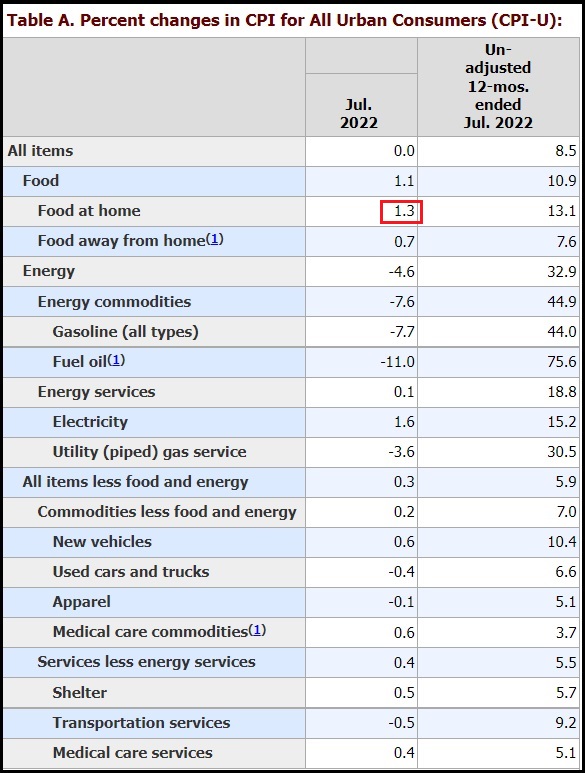 The July energy prices dropped significantly driven by a reduction in consumer demand for gasoline and fuel oil, which lowered prices. We can expect a very similar outcome in August (report in Sept).
Most financial and economic media are reporting an “unexpected” drop in inflation, ex:
“Prices that consumers pay for a variety of goods and services rose 8.5% in July from a year ago, a slowing pace from the previous month due largely to a drop in gasoline prices. On a monthly basis, prices were flat as energy prices broadly declined 4.6% and gasoline fell 7.7%. That offset a 1.1% monthly gain in food prices and a 0.5% increase in shelter costs. {link}
Most econ people will look at the price drop sectors and accept that consumer spending on durable goods and non-essentials has become a downward price point on key categories like vehicles etc.
This is the ‘stag’ part of the ‘stagflation’ (economy), or the new lingo; the ‘dis’ part of the ‘disinflation’ (consumer spending).
For the middle-class or working class, especially those families with young children, I would shake all those data points away, clear the table and look more closely at [BLS Table-2] to see where our eyeballs should be focused.
Look closely at all food group products that originate as “ROW CROPS” and/or “GRAIN”. Just by looking at the current rate of price increase, you can easily see that all grain and row crop outcomes are going to explode in price in around 60 to 90 days.
(more…)
Posted in Big Government,
Big Stupid Government,
Climate Change,
Decepticons,
Deep State,
Dem Hypocrisy,
Donald Trump,
Economy,
Election 2022,
energy,
Joe Biden,
media bias,
Notorious Liars,
propaganda
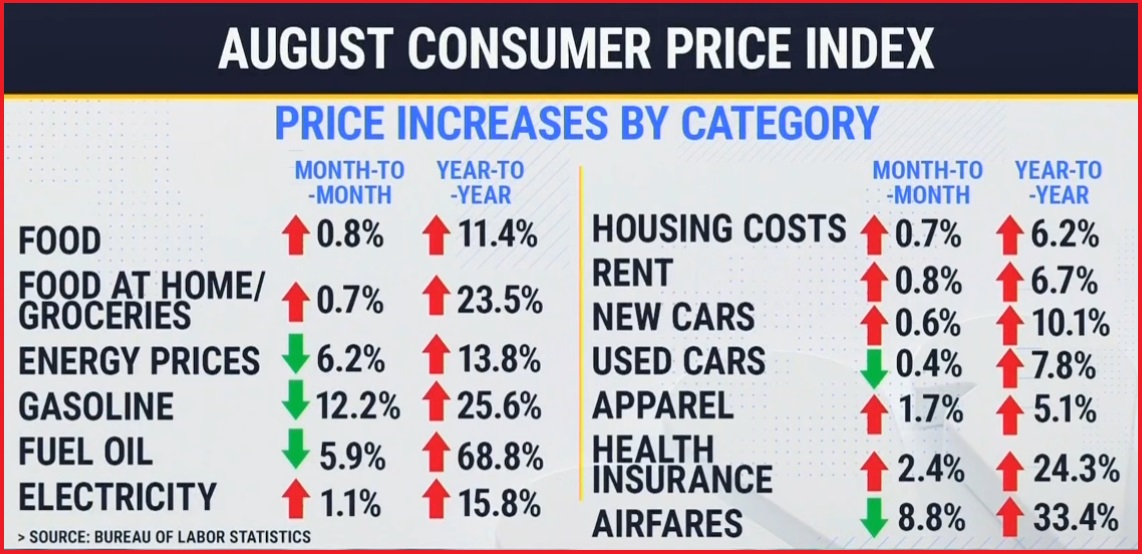
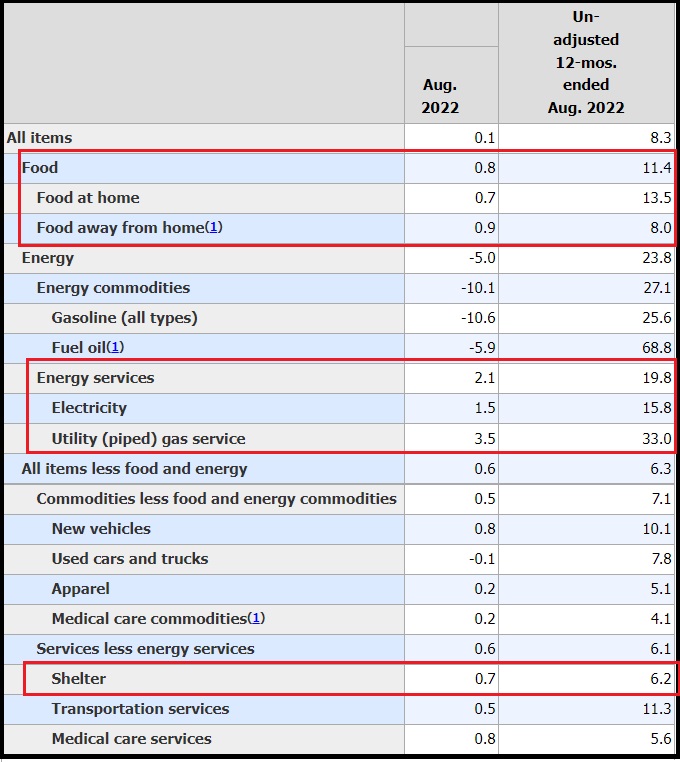 The Bureau of Labor and Statistics (BLS) has released the August inflation data today [
 An interesting story