Quantcast

Interesting Timing – Zelenskyy Planning to Remove Head of the Security Service of Ukraine

This is very interesting timing considering the recent denial by Zelenskyy that Ukraine had anything to do with the attack on Russian President Vladimir Putin’s residence.

According to Politico, Zelenskyy is removing Vasyl Malyuk as head of the Security Service of Ukraine (SBU), the state’s top counterintelligence agency. Malyuk previously worked with British intelligence on operation “Spiderweb” where Ukrainian drones hit Russia’s strategic bombers on several protected airfields (USA not informed).

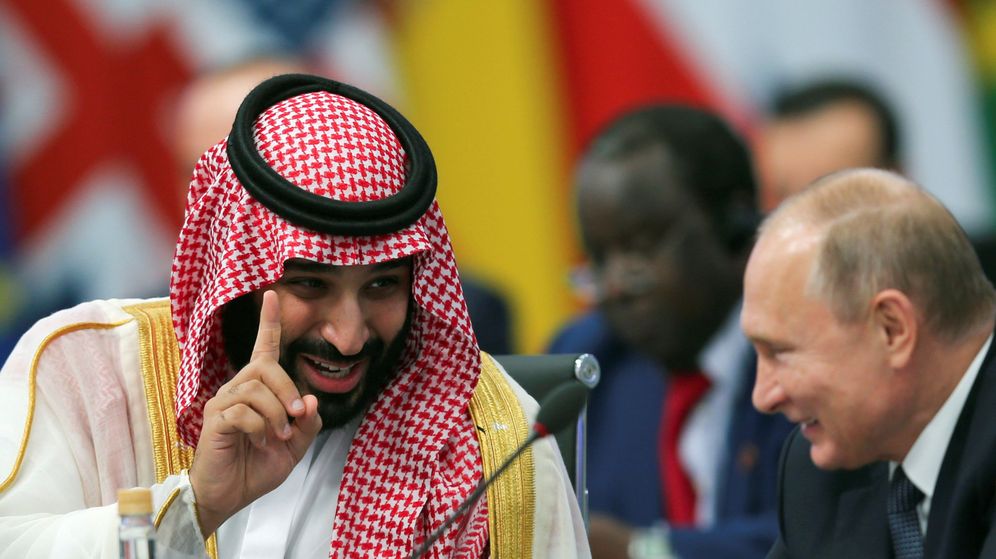
Vasyl Malyuk (pictured above right) was reportedly also behind the St Petersburg terrorist attack that killed Russian blogger Maksim Fomin, 40, who was more popularly known by his pen name, Vladlen Tatarsky. The important element of this shift is the intelligence nature of Malyuk and his covert operations, which arguably did not always flow through information channels.

VIA POLITICO – Vasyl Malyuk as head of the Security Service of Ukraine (SBU), the state’s top counterintelligence agency, as part of an ongoing government reshuffle.

The reshuffle has already seen two other top spies — Kyrylo Budanov and Oleh Ivashchenko — shifted to other responsibilities. Budanov has agreed to head the president’s office, while Ivashchenko will be chief of the HUR military intelligence service. Malyuk is said to be fighting to retain his post.

(more…)

Monday Should Be Really Interesting – And Other Random Stuff

My grandpa, and later my father, used to say something at particular moments that generally annoyed me but turned out to be entirely accurate, much to my youthful angst… “Well, hang around a one-legged group long enough, and you’re eventually going to end up limping.”

Yup, I learned to hate that lesson because the truth of it was always annoying.

This is perhaps the first time in memory when I look forward to Donald J Trump getting out of the Mar-a-Lago bubble and back to Washington DC.  Good grief, just typing that I can’t believe I’m saying it.  Here’s why:

Having followed and written about the optimal solution approach within the Trump Doctrine, a process that assigns responsibility to regional actors, then exits while providing support but not direct involvement [the delegation metric of high-support/low-direction], perhaps that is unfolding again in the background.  However, it seems like Trump is accepting the annoying Iran monkey problem on our behalf. [REF: How to Make The Monkey Jump]

To be clear in my personal position, charity begins at home.  (1) I don’t want conflict with Iran, nor do I really care about their internal political struggles; most of my day-to-day contacts feel the same. (2) At the same time, yes, I can imagine a scenario where Venezuela represents a threat to our continental objectives and national security, but would prefer to see them isolated from the outside.  Embargo them, stuff them inside an economic confinement zone (if needed), tell them why, then let the internal mess work itself out; most of my day-to-day contacts seem to feel the same.

Granting President Trump the long view of support; I mean, we don’t know what he is aware of; I sure hope all of this Iran stuff has a direct connection to American strategic interests.

Simultaneously, I can certainly see where deconflicting the USA, vis-a-vis Ukraine (literally London and the EU) from friction with Russia, has a strategic interest and factual bearing on the dollar-based trade system.  Attention on the Ukraine vs Russia stuff does have direct, albeit complicated outcomes attached to the economic standing of the average American.  Iran less so.

(more…)

Anonymous U.S. Officials Say Ukraine Didn’t Target Putin with Drone Attack – Russian Officials Say They Have Drone Flight Plan From Navigation Unit

The Wall Street Journal is reporting that Ukraine did not target the personal residence of Russian Federation President Vladimir Putin, “according to U.S. officials.”   However, Russia captured one of the drones intact and have said they were able to “extract a file containing a flight plan from the navigation unit” which they plan to share with the Trump administration through established channels. {LINK}

WSJ – WASHINGTON—U.S. national-security officials said Wednesday that Ukraine didn’t target Russian President Vladimir Putin or one of his residences in an alleged drone operation, challenging Moscow’s assertion that Kyiv sought to kill the Russian leader.

That conclusion is supported by a Central Intelligence Agency assessment that found no attempted attack against Putin had occurred, according to a U.S. official briefed on the intelligence. The CIA declined to comment.

The U.S. found that Ukraine had been seeking to strike a military target located in the same region as Putin’s country residence but not close by, the official said.  (read more)

Who are we going to believe, Russian “special service” operations or anonymous “U.S. Intelligence Officials”?

Unfortunately, this question is no longer easy to answer given the history of the U.S. Intelligence Community, and yes, that includes the current embedded IC officials within the National Security Council, DNI and CIA even with Marco Rubio, Tulsi Gabbard and John Ratcliffe in position.

I would be very surprised if the U.S. Intelligence Community would be honest with President Trump on this issue if, and that is a big “if”, they even factually had any specific intelligence about it. [This WSJ narrative could be fake news]

Again, CTH will also assert the likelihood that Volodymyr Zelenskyy likely didn’t carry out the attack; everything about the timing of it during his meeting with President Trump just doesn’t fit.  Instead, it is more likely British intelligence, specifically MI6 carried out the attack, timed specifically for the Trump/Zelenskyy meeting.

(more…)

Zelenskyy Outlines His 20-Point Terms During Fox News Interview

Ukraine President Volodymyr Zelenskyy appears on Fox News for an interview with Bret Baier.  Within the interview Zelenskyy gives some context and details to the 20-point plan organized between him and the EU Leaders, currently being reviewed and modified by President Trump, Steve Witkoff, Marco Rubio and Jared Kushner.

The two remaining issues as described by Zelenskyy are the (1) security guarantees and (2) the territorial issue, Donbas control.

(1) Within the security guarantee proposal there are troubling signs.  Zelenskyy describes it as a bilateral agreement between the USA and Ukraine, with similar constructs to the NATO alignment.  A non-NATO pact between the U.S. and Ukraine that commits us to his defense if Russia would advance another attack.  A 15-year guarantee committed in U.S. law through the U.S. House and Senate. This sounds troubling.

(2) On the territorial issue, regional control of the Donbas, Zelenskyy appears to be willing to cede territory but only under very limited circumstances.  Zelenskyy wants a demilitarized zone under the term “a free economic zone” with specific rules.

Zelenskyy admits Ukraine cannot win the conflict against Russia without the United States involvement.  Essentially without America, Russia would own the skies and be able to crush the Ukrainian army. WATCH:

.

(more…)

President Trump Responds to the 91-Drone Attack on Putin’s Residence in Novgorod region

During an impromptu press availability beside Israeli Prime Minister Benjamin Netanyahu, President Trump responded to a question about a drone attack against the personal residence of Russian President Vladimir Putin.

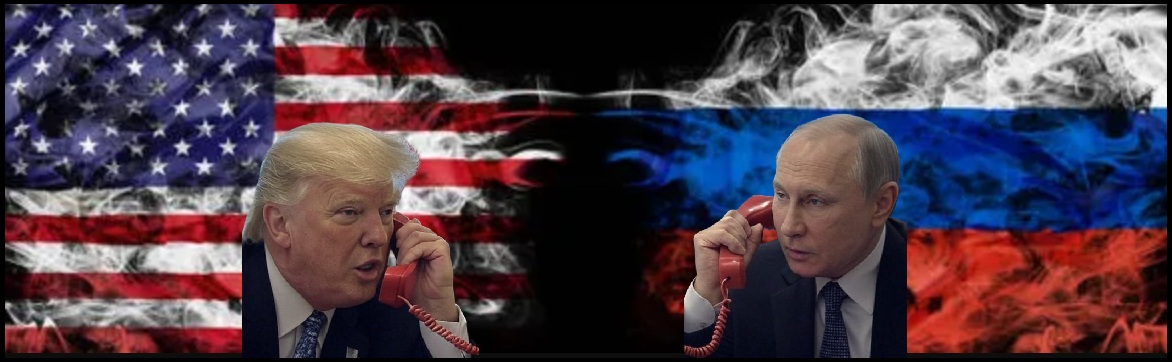
President Trump noted that he was informed of the attack by President Putin during an early Monday phone call between the two leaders.

According to Russian media, confirmed by Russian foreign Minister Sergey Lavrov, Putin’s presidential residence in the Novgorod region, more than 400 kilometers (249 miles) northwest of Moscow, was targeted by 91 drones. Russia has vowed retaliation saying, “targets had already been selected.” President Trump’s response is prompted below:

Ukraine President Volodymyr Zelenskyy has denied the accusation that Ukraine carried out this particular attack.  The attack took place while Zelenskyy was in Florida meeting with President Trump.

In context, there have been several attacks against Russia timed with negotiations.  CTH has noted that each instance of closer agreement during Russia/Ukraine negotiations (Turkey) or U.S/Ukraine negotiations (Turkey and Paris) there have been attacks into Russia that seemed to carry a motive from an external third party.

U.S. media have said the attack on Putin may be a lie; however, with physical evidence from the defense operation, it is less likely Russia just made up the attack.  At this moment in the conflict, Putin doesn’t need domestic propaganda.

(more…)

Memos of Conversations Between George W. Bush and President Vladimir Putin Are Released

BUMPED Due to Importance:

Following a series of FOIA lawsuits, memos from conversations between Russian Federation President Vladimir Putin and former US President George W. Bush have been released online by the National Security Archive. [Original Source Here]

I know it’s Christmas, but bookmark or review as time allows, because the content is very interesting and very important. As early as 2001 and 2008, President Putin clearly told President Bush of his opposition to Ukraine’s accession to NATO, along with other key positions.

Despite what popular media might say, these are NOT full transcripts. Rather, they are memos containing quotes from both leaders as they discuss geopolitical relations between the U.S. and Russia. [SOURCE HERE]

♦ June 16, 2001 – Memorandum of Conversation. Subject: Restricted Meeting with Russian President Vladimir Putin. [LINK HERE] In this first personal meeting at the Brno Castle in Slovenia Vladimir Putin and George W. Bush express respect for each other and desire to establish a close relationship. Putin tells Bush about his religious beliefs and the story of his cross that survived a fire at his dacha. In a short one-on-one meeting they cover all the most important issues of U.S.-Russian relations such as strategic stability, ABM treaty, nonproliferation, Iran, North Korea and NATO expansion. Bush tells his Russian counterpart that he believes Russia is part of the West and not an enemy, but raises a question about Putin’s treatment of a free press and military actions in Chechnya. Putin raises a question of Russian NATO membership and says Russia feels “left out.” [READ MEMO HERE]

(more…)

Half of Germany’s Manufacturing Sectors Anticipate Significant Layoffs and Job Losses in 2026

In addition to being the main economic engine in Europe, Germany is the epicenter of the European Union’s overall goal to chase the green energy agenda.

For the past several years Germany has been deconstructing their fossil fuel energy production and replacing it with far more expensive alternatives.  This has led to large increases in overall energy prices, and downstream increases in manufacturing costs.

The consequences have been snowballing throughout 2025, while cheap competitive alternatives coming into the EU from China have compounded their problem.  Recently a survey of major industries was conducted in Germany to determine the forecast for 2026, the results are not good.

Approximately half of the industrial sectors in Germany are anticipating job losses, cuts or layoffs this year.

22 out of 46 business associations are preparing to downsize their labor force.  Only 9 of the 46 are expected to increase hiring.

At a top-line this looks bad.  However, when you look at the sectors contracting versus the sectors stable or expanding, you suddenly realize there is a bigger geopolitical problem within the forecast.

Job losses are expected in auto manufacturing, the textile sector, wood and paper fabrication.  Job gains are expected in aerospace, shipbuilding and defense production – i.e. the war machinery.

When the largest and most developed industrial economy in Europe is pinning its economic survival on war machinery, a particular momentum is created.  It is never a good outcome for Europe when Germany becomes reliant on war to maintain employment.

(more…)

Recap Video of Zelenskyy Sunday at Mar-a-Lago

President Donald Trump is ducking and weaving through the minefield of geopolitical politics, managing a proxy war he did not create that was organized by a corrupt U.S. State Dept./CIA and globalist agenda.

Trump wants the war to end; he wants the U.S. out of it; he wants peace with a fundamental reset of the entire European dynamic, and he wants a strategic relationship with the Russian Federation.  However, every element in the proverbial ‘West’ wants exactly the opposite.

Washington DC – the majorities in both parties, most of the European Union and the ‘Western’ military industrial complex stand in opposition to President Trump’s objective.  The value of the dollar rests on his ability to navigate this complex geopolitical dynamic.  The ‘stakeholders’ are against him.  Trump has few allies. This is the challenge.

Do not diminish the scale of the challenge without consideration for the scale of opposition.  Russian President Vladimir Putin knows exactly what President Trump is up against; we would be wise to watch with similar patience.

Volodymyr Zelenskyy has been convinced by European leaders, NATO and the Intelligence Community that he has the upper hand. President Trump has only his wits, a strategic perspective and us.

Let Trump be Trump. He’ll figure it out.

(more…)

President Trump and President Zelenskyy Deliver Remarks Following Bilateral Discussions

President Trump stated earlier today he held a 2-hour phone call with Russian President Vladimir Putin as ongoing discussions with Ukraine President Volodymyr Zelenskyy continue.

President Trump suggested a few more weeks would be needed to iron out the remaining, critical sticking points. When asked if he and Zelenskyy had agreed on what would happen in the Donbas region, President Trump said the “word ‘agreed’ is too strong.” “I would say not ‘agreed’ but we’re getting closer to an agreement on that,” Trump said.

“Some of that land is maybe up for grabs, but it may be taken over the next period of a number of months,” Trump said. “And you’re better off making a deal now.” WATCH:

.

(more…)

Cutting Through the Fog and Conflict Within Current U.S. Republican Politics

Prior to the 2012 Republican presidential primary, many conservative Americans -including myself- were confused by the consistent illusion of choice offered in Republican presidential candidates. The Republican Party’s successful installation of Mitt Romney was the final straw.

Going into the 2016 Republican presidential primary, we became more attune to how the illusion of choice is created. By closely following the Republican Party’s assemblies, tracking the participants, researching the networks and looking at how the Republican Party professionals modified their election rules at a state level, revealed the closed system used to create the illusion of choice.

The GOP winter meeting in Washington DC, December of 2014, outlined the playbook. The sequencing of state elections, the distribution of delegates (proportional or winner-take-all) and various internal mechanisms all play a part. This led to our first breakthrough – we began to understand the “splitter strategy”.

A small group of internal party officers, in combination with powerful established politicians and major donors, could coordinate a party objective to support the “acceptable candidate.”

The outcome of the GOP 2014 winter meeting was a pathway for Jeb Bush in 2016. The outcome of the DNC construct was a pathway for Hillary Clinton. Regardless of which wing of the UniParty system won the election, the actionable outcome in policy would be the same – the institutions of DC maintained, and network affluence apportioned according to the victor.

In this form of party democracy, voting is an outcome of the illusion of choice. The real decisions were/are not being made by voters. The party system determines the candidate. DNC or RNC the policy outcome is a few degrees different, but the direction is the same.

In 2016, the left-wing of the Uniparty would diminish any challenger to Hillary, Bernie Sanders would be controlled. The right-wing of the Uniparty would diminish any challenger to Jeb, divide the voting base and use party rules to clear his path.

The opaque nature of this party control system became clearer when the last GOP candidate entered the race. In the clearest exhibition of controlled politics in modern history, Donald Trump was the wildcard.

Mainstream “conservative” voices, what a later vernacular would describe as “influencers,” began exposing their ideological special interest in this political control system through opposition to Trump, the popular people’s choice candidate.

You know the history thereafter. However, the problem for the GOP wing in 2016 was not Donald Trump per se’, their biggest problem was that American ‘conservatives‘ had discovered their playbook. The illusion of choice was now becoming very well understood by a subset of voters later named MAGA voters, the original “silent majority” was silent no more.

This review is simply context; however, it is important context if we are to understand exactly where we are in late 2025 going into the midterm election in 2026. [Star Wars (2016), the Empire Strikes Back (2020), the Return of the Jedi (2024)]

The fourth chapter of this conflict is now upon us. It is a battlefield that has been unfolding all year.

When you understand the larger objectives behind what is happening, you can clearly see -even predict- each of the moves.

(more…)