Quantcast

President Trump Announces 30 Percent Baseline Tariff for European Union and Mexico

President Trump announced on Truth Social a baseline tariff rate of 30% for both the European Union and Mexico.  Other sector specific tariffs still apply.

The EU rate is interesting in that the 30% rate is lower than the Canadian rate of 35%, yet the EU rate exceeds the current ‘chicken tax’ rate historically applied to imported SUVs and Trucks.  Strategically, the 30% tariff rate on Europe is a major incentive for various EU sectors to shift manufacturing into the USA.

Without a formal declaration of the end of the Marshall Plan, the reciprocity rate of 30% for all EU imports also equalizes the transatlantic trade benefit.  It will be interesting to see how the EU responds, given any retaliation could be added to the existing baseline.

Canada is currently trying to organize a trade agreement with the EU, in the hopes of positioning themselves toward the transatlantic group as they were toward the transpacific group (vis-a-vis China).

(more…)

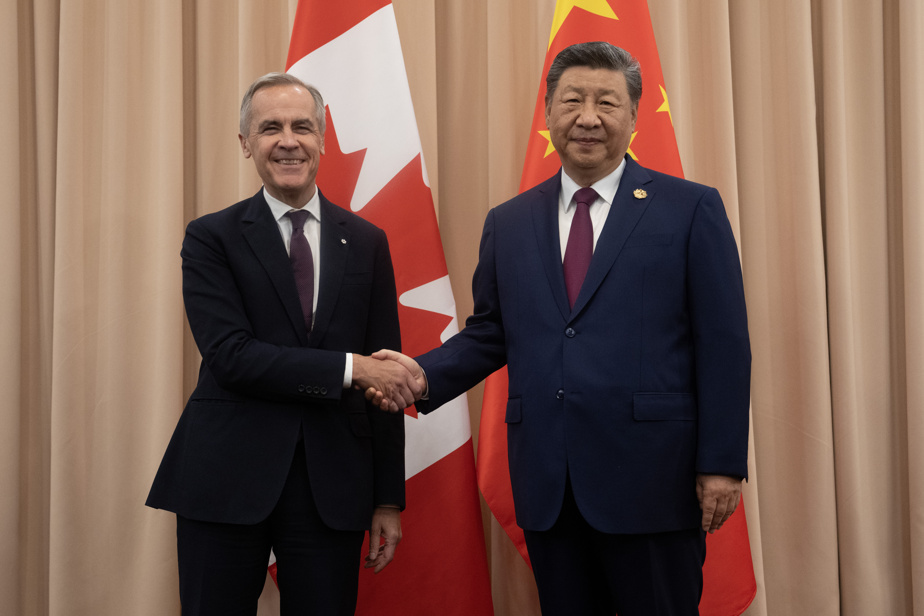
President Trump Announces 35 Percent Baseline Tariff for Canadian Goods Not Covered Under USMCA

President Donald Trump has announced a 35% baseline tariff rate for Canada on all imported goods not currently covered under the soon-to-expire USMCA trade agreement.

“Instead of working with the United States, Canada retaliated with its own Tariffs,” President Trump shared on Truth Social. “Starting August 1, 2025, we will charge Canada a Tariff of 35% on Canadian products sent into the United States, separate from all Sectoral Tariffs.”

[LINK]

As noted by President Trump in his remarks during Prime Minister Mark Carney’s visit to the White House, Trump plans to renegotiate the USMCA and end the trilateral agreement in favor of two bilateral trade deals.

During the oval office meeting President Trump said, “as you know [USMCA] terminates fairly shortly. It gets renegotiated fairly shortly.” Then the biggest statement, “this was a transitional deal, and we’ll see what happens, we’re going to start renegotiating that”… “I don’t know if it serves a purpose anymore.”  …. “And the biggest purpose it served was, we got rid of NAFTA.” 

President Trump is going to exit the trilateral USMCA in favor of two distinctly different bilateral trade agreements between the U.S and Mexico; and the U.S and Canada.  The only consideration now is the timing.  President Trump is 100% focused on the BIG ECONOMIC PICTURE; it’s not about the politics, it’s all about the economics.

(more…)

Secretary of State Marco Rubio Debriefs Media Following Discussions with Chinese and ASEAN Counterparts

Secretary of State Marco Rubio speaks to reporters at the conclusion of the ASEAN Summit in Kuala Lumpur, Malaysia. While the topic of trade and tariffs was not the intention of the assembly, the issues around trade with the USA and tariffs was obviously of keen interest.  WATCH:

.

(more…)

President Trump Hits Brazil with 50 Percent Tariff Rate

Previously, President Trump lashed out against the government of Brasil led by Brazilian president, Luiz Inácio Lula da Silva, saying, “Brazil is doing a terrible thing on their treatment of former President Jair Bolsonaro. I have watched, as has the World, as they have done nothing but come after him, day after day, night after night, month after month, year after year! He is not guilty of anything, except having fought for THE PEOPLE. I have gotten to know Jair Bolsonaro, and he was a strong Leader, who truly loved his Country — Also, a very tough negotiator on TRADE. His Election was very close and now, he is leading in the Polls. This is nothing more, or less, than an attack on a Political Opponent — Something I know much about!

President Trump then announces a 50% baseline tariff rate against Brazil.  This is a strategic gamble for President Trump in that Jair Bolsonaro is effectively banned from running in the next election, and leftist Lula da Silva could benefit from an increased surge in nationalistic sentiment similar to the Canada election.

.

(more…)

To Retain Exports Japan Slashes Auto Prices 20 Percent, Now Face Problem with Wages

It’s the reverse rustbelt issue.  In order to retain their market share, Japanese automakers are slashing the prices of their export vehicles to the USA.  However, simultaneous with the anticipated drop in profits, the Japanese economists are worrying what impact this will have on autoworker wages.

Not accidentally this is exactly the problem U.S. workers suffered through during the era of offshoring our manufacturing. Apparently, Japan is heading into the dynamic the U.S. rustbelt previously suffered.  Imagine that.

The Straits Times – TOKYO – Japan’s automakers slashed the price of products exported to the United States at record pace, in a sign that companies are sacrificing profits to remain competitive as President Donald Trump’s tariffs hit cars.

In June, the export price index for vehicles shipped to North America plunged 19.4 per cent from a year earlier on a contract currency basis, the biggest drop in records going back to 2016, according to the Bank of Japan’s (BOJ) corporate goods price report on July 10.

The data adds to signs that Japanese automakers are trying to avoid a major price increase to remain competitive in the US, even after Mr Trump began to impose 25 per cent auto tariffs in early April. The flip side of the move is it raises concerns over companies’ profitability and whether they can continue to keep raising wages – a key component of the Bank of Japan’s sustainable inflation goal.

(more…)

Dept of Ag Shuts Down U.S. Southern Border Ports to Livestock Trade Due to Screw Worm Spread Through Mexico

Announcement from Secretary of Agriculture, Brooke Rollins: “I have ordered an immediate shutdown of live cattle, bison, and horse trade through the southern U.S.–Mexico border. This decisive action comes after Mexico confirmed another case of New World Screwworm in Veracruz.”

(Washington, D.C., July 9, 2025)– Yesterday, Mexico’s National Service of Agro-Alimentary Health, Safety, and Quality (SENASICA) reported a new case of New World Screwworm (NWS) in Ixhuatlan de Madero, Veracruz in Mexico, which is approximately 160 miles northward of the current sterile fly dispersal grid, on the eastern side of the country and 370 miles south of the U.S./Mexico border.

This new northward detection comes approximately two months after northern detections were reported in Oaxaca and Veracruz, less than 700 miles away from the U.S. border, which triggered the closure of our ports to Mexican cattle, bison, and horses on May 11, 2025.

[…] Therefore, in order to protect American livestock and our nation’s food supply, Secretary Rollins has ordered the closure of livestock trade through southern ports of entry effective immediately. (read more)

(more…)

Pattern Repeats – Imported Durable Goods Creating Deflation on U.S Consumer Prices

The Term-1 effect of deflation created by tariff policy is resurfacing in Term-2 even with larger tariff impacts across the network of global manufacturing exports. [DATA SOURCE]

In essence, there is little to no end result in price increases in the final price of consumer goods (Consumer Price Index). In fact, there is a slight deflationary aspect on CPI data from imported durable goods.  The lower price of arriving imported durable goods is effectively putting downward pressure on US consumer prices.   This is identical to the Term-1 result. A pattern is repeating.   [PCE personal consumption expenditure / CPI consumer price index]

[Source – WH Council of Economic Advisors]

It sounds counterintuitive, but tariffs do not impact the final price of goods to USA consumers; there are just too many factors, too many elements within the Total Cost of Goods (TCG) within supply chain.  Global energy prices, domestic energy prices, currency evaluations and fluctuations, state/govt subsidies to manufacturers, labor negotiations and production profit offsets are only a few of the components.

Additionally, and this is where U.S. consumers do not get a fulsome explanation from corporate media analysts, the tariff rate is applied to the ‘cost’ the exporter pays, not the final consumer price.  A pair of jeans from China may be sold to the import company for $5 per pair. A 30% tariff raises the price of the jeans by $1.50 to $6.50.  The tariff rate does not apply to the retail price of $50 paid by the consumer.

(more…)

President Trump Posts International Tariff Announcement Letters on Truth Social

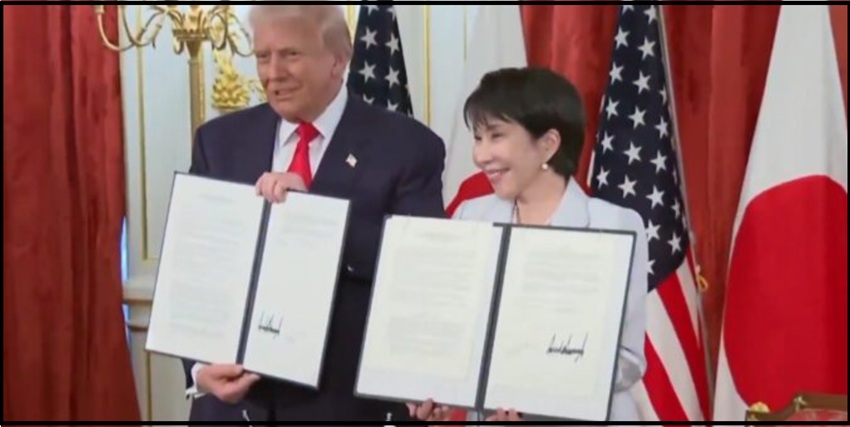
President Donald Trump has begun posting the country specific tariff rate announcements on his Truth Social account.

Beginning with Japan and South Korea, President Trump is sending letters to each nation not currently in direct negotiations with the USA.  Japan example below:

Both Japan and South Korea are assigned 25% baseline tariff rates “separate from all Sectoral Tariffs.”  Additionally, if the nation participates in transnational shipping, the rate attempting to be avoided will be applied to the country violating the trade position.

Example:  South Korea (25%) acts as a passthrough for a country with a higher tariff rate like Vietnam, 40%.  If South Korea is caught engaging in transnational shipping then the applied tariff rate on the South Korean goods is 40%.

(more…)

White House Trade and Manufacturing Economy Advisor Peter Navarro Discusses the Misalignment With Fed Chair Powell

White House Trade and Manufacturing Advisor Peter Navarro talks about how the Fed monetary position is lagging with the intent of Trump’s MAGAnomic policy.  In the short review, Chairman Jerome Powell is approximately 0.50% in rate cuts behind the growth plan of President Trump.

Peter Navarro notes this disconnect is politically motivated when viewed through the window of hindsight.  Navarro is correct.   CTH has been outlining this economic policy and monetary policy disconnect, specifically as it pertains to President Trump’s Main Street focused agenda, for almost a decade {GO DEEP}.

Additionally, in many ways the Trump tariffs are the reverse of decades of ‘exfiltration’ of American wealth. Just as there was a shift when the value of the Wall Street economy surpassed the value of the U.S. Main Street economy, the politicians began responding to their new donors, so too is the Fed reluctant in reverse focus and advance the agenda of Main Street.  WATCH:

Here’s the key – The DC challenges are not overwhelming when you take a non-traditional approach toward finding solutions.

(more…)

Treasury Secretary Scott Bessent Explains MAGA Policy Intent on Growing U.S Economy to Deal with Debt Crisis

Appearing on CNBC to explain the big picture economics, Treasury Secretary Scott Bessent outlines how debt and deficit hawks are seemingly blind to the need for GDP growth to deal with federal spending.

From the outset of President Trump’s MAGAnomic policies in his T-1 and T-2 platform, growing the U.S. economy, expanding the size of the GDP is a key facet to dealing with debt and deficits.  President Trump has always promoted economic policy that expands the size of the pie rather than focus on making smaller portions of each spending slice.

Secretary Bessent also explains the current status of the tariffs as delivered by the Trump administration.  The next few days are exceptionally busy with incoming requests to renegotiate trade terms, and avoid countervailing duties.  WATCH:

.

Big picture:  Trump, Lutnick and Greer are now transmitting 1. Baseline tariffs (10-20%), 2. Reciprocity tariffs (trade imbalance) and 3. Section 232 tariffs (ex. Steel and Aluminum).  Countries are notified and their tariff rate begins on August 1st.

(more…)