More of this is needed. Today, Illinois Senator Dick Durbin (D) and Ohio Senator JD Vance (R) confronted each other in the upper chamber over DOJ nominees that Senator Vance refuses to advance with unanimous consent.
Durbin was furious at the blocks JD Vance was putting in front of the Joe Biden nominees for U.S. Attorney and criticized Vance for campaigning on “law and order” while blocking those DOJ nominees advanced by Durbin. In response, Senator Vance delivered remarks promising to block every DOJ nomination as long as Joe Biden continues weaponizing Main Justice and the USAO nominations to target his political opposition. WATCH [prompted to the Vance response]:
.
JD Vance has some tenuous network affiliations in his background that give me a little pause; however, on the substance of this issue, he is righteous in this approach.
There has been little, if any, Republican push-back to the radical nature of the onslaught brought forth by Biden, DAG Lisa Monaco and AG Merrick Garland. Factually the Lawfare tactics have increased in weaponized intensity throughout the Biden term in office.
The Republican House has the ability to block the funding mechanism, and the Republican minority in the Senate have the ability to block the nominees. Until now, we have seen little, if any, effort by either chamber to bring the Biden rogue elements to heel. Perhaps this is the start. Regardless, it is at least a step in the right direction.

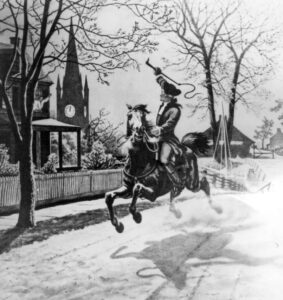 Many are familiar with the poem Paul Revere’s Ride, however, far fewer know that Paul Revere actually memorialized the events of the April 18 and 19, 1775, in an eight-page letter written several years later.