I previously saw an interesting discussion with NVIDIA Jensen Huang where in the context of AI he was asked: who is the smartest person you ever met?
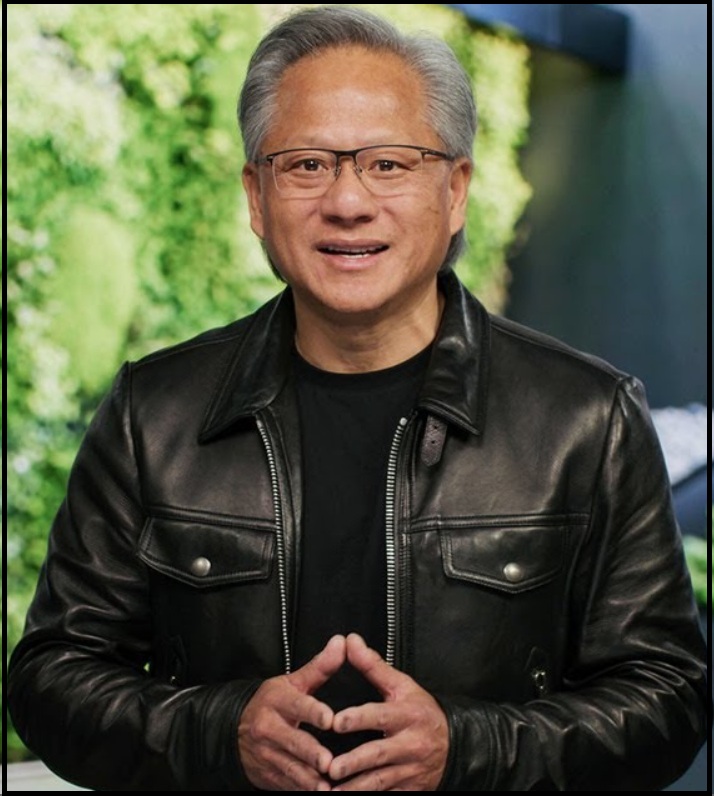 Jensen Huang paused for quite a few moments thinking about the question before he answered.
Huang then redefined the word “smart.”
‘Smart’ is a word we have historically used in reference to ‘intelligence’. If a person was intelligent, we say that person is smart. However, in this era of AI at your fingertips, we must break this connection.
Intelligence, the assembly of knowledge about a particular matter of discussion, is no longer limited to educational or real-life training or study by people who focus intensely on subject material.
All of the knowing about a system, any system, process, history or discussion topic is now available almost instantly to anyone in this era of artificial intelligence.
The NVIDIA CEO then continued, therefore, once we break our historic reference connecting ‘intelligence’ and the generalized term ‘smart’, we can properly address the question you present.
Who is the smart man? Or, in the context of the originating question, “who is the smartest person?”
With this baseline established, Jensen Huang then outlined the traits of the smartest person. The smartest person is not the person with the greatest knowledge; the smart individual is the person who can tune into the frequency of the universal moment, look at the human reality of what is factually taking place that has not yet become an input into the AI capture record, and then predict the material outcome – the destination of knowledge that has not yet arrived.
Essentially, Huang explains the smart person is alone, tuning themselves into the vibration that is the consequence of human activity, financial interests, geopolitical movement, social transformation, economic shifts and cultural modifications. Then, positioning their interests at the place in the future where they predict all the activity will arrive.
The accuracy of prediction, or predictive positioning, then determines the scale of smart. The more accurate a person is under this perspective, the smarter they are.
I agree with this perspective.
 All of human knowledge is now being assembled into AI databases for exploration by anyone with a keen interest or stake in the subject matter. Knowledge is no longer the valuation of ‘smart.’ The ability to predict the next step, phase or moment is the smart attribute.
With this context, we can now look back over the past few decades, not looking for the most intelligent voice, but rather looking at the accuracy of current position, contrast with the outline from the voices who make the predictions.
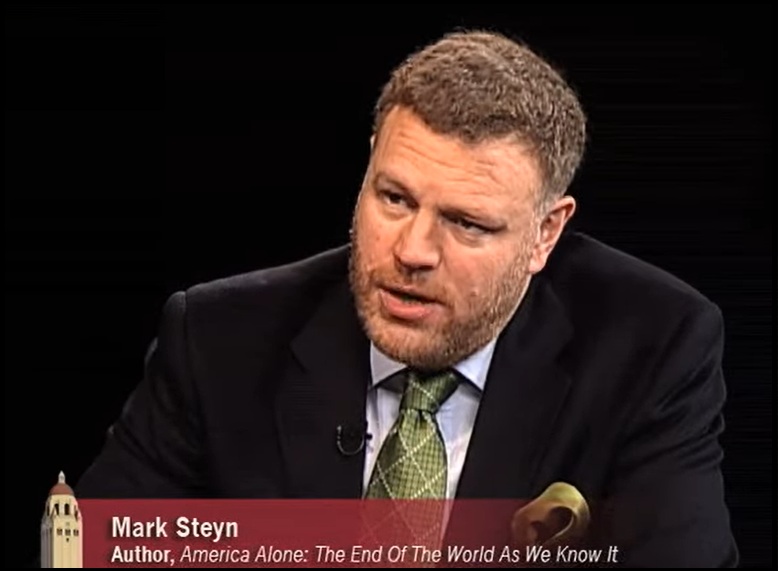
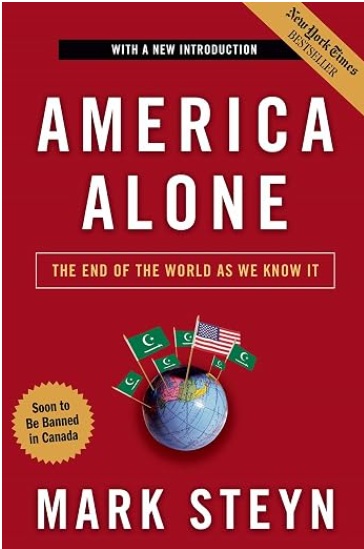
This interview about the ramifications of cultural change in Europe was given in 2010, sixteen years ago, centered on a book written by Mark Steyn and the context within the questioning is looking forward over a period of about 20 years.
Remember, this is 2010, written before the “arab spring, long before Brexit, well before President Donald Trump and the MAGA agenda as policy and before the U.K churned through seven prime ministers’ in a decade.
Remarkably, Steyn discusses/predicts what would happen if Islam tried to reform; if the U.S. pulled NATO resources out of Germany; if the U.K doesn’t radically alter direction and much more.
Watch the discussion or put the interview on play while listening to it in the background as you go about your tasks. Remind yourself at moments throughout the roughly 30 minutes, that the interview took place fifteen years ago.
Mark Steyn, a writer, political commentator, and friend of the Treehouse outlines his 2010 prediction about the destination of the Western world during a discussion with Peter Robinson.
.
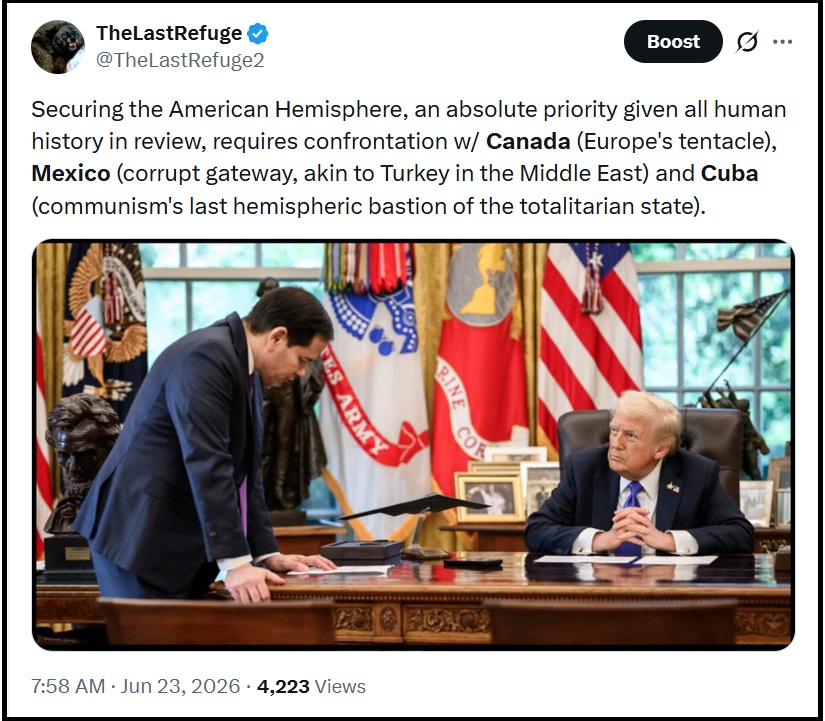
CTH has no financial association with any of this; I just find it super interesting, because my research folder is growing increasingly large with material behind a hemispheric shift. {TWEET}
Objecting to manipulation of word meanings is smart. Too many people who should be smart are allowing socialists to freely twist word meanings.
I reject the premise of the answer.
CT —
Infuriatingly 99.99%
Yes yes yes.
“1984”
Do not change the word, change the meaning of the word.
The DemonRats are damn good at doing that.
Yes. Remember when they officially changed the definition of the word “vaccine” just prior to their plandemic?
No longer is a ‘vaccine’ defined to prevent transmission of a disease. Vaccines now (supposedly) mitigate symptoms only.
..which actually mimics the definition of a therapeutic, does it not? So what distinguishes a vaccine anymore, except for a legal silo created to absolve ‘big’ pHarma from liability for conducting heretofore secret gubmint experiments.
On our children. Since 1986.
And, when shielded under the guise of the Patriot Act’s national security’ umbrella, on us as well.
Love Mark. Hope he’s doing well. And I also agree with this characterization of “intelligent”. The expertise is becoming a commodity- just a prompt away. But discretion and thinking forward to create the future still remains an exclusively human endeavor. Glad that you (SD) are keeping up with the happenings in the AI world.
It’s Huang not Haung
Smart: People who make quick connections with a high degree of accuracy.
Intuition is what slow people call smart people’s thinking, i.e., making quick connections with a high degree of accuracy. In other words, slow people assume that fast thinkers are guessing from the gut, because they cannot possibly do what smart people do.
Toffler’s Future Shock is here, and the Mark Steyn interview only adds an exclamation mark to that fact!
If there is an overriding theme to the 38:19 minutes I spent listening to Steyn, it is that America is, absolutely and irrefutably, the hope of the world! Without the American beacon of personal freedom and unalienable rights bequeathed to us by God, a new and repressive dark age will surely envelope us all!
I’m an old man, old enough to have grown up on Baltimore streets teeming with kids, the progeny of Europe, here to become the future of America! A time when our b&w tv’s told us that Superman was “fighting an never-ending battle for truth, justice and the American Way!” and we all believed those words because truth and justice WAS the American Way!
Birth rates were high, dads sere breadwinners. mom’s were homemakers and boys grew into responsible men because of the example of their fathers and they came to understand unselfish love because of the sacrifices made by their mothers!
We have to get back to that way of life for America to prosper. There is no other way to do it!
What is truly amazing is what the people of the world who come over here for the World Cup see how beautiful and great our Country is and how blessed we are for everything we have. Just a quick example: In England it is standard for houses to only have one toilet and only one car if you are lucky. In the US 2 bathrooms are standard with 3 or 4 very common with cars being the same. And most of the people in this Country hate it here, go figure that one out.
Most people in this country do not hate it here. Many columnists and commentators try to make dramatic points that make themselves and others appear to hate it here. Fear sells copy.
Ignore the steady beat of drama and you will find many folks that deeply enjoy our country. Some are trained to pretend to hate work or school or church, but most are kidding themselves.
Accomplishment is possible in the US and joy always comes from working and building up.
I dont hate it here! I miss the freedoms ive seen taken at the hand of people who cannot see the value in a hard days work. The joy of a family. Or a babys gaze.
How does concrete pass for progress?
A fresh tomato substituted for what we have now.
I wish no harm on people its what they desire for others that brings it on themselves as well as us.
Data? Remember angels brought “data” they now are chained beneath.
Right –
Cut “legacy media” totally out of your life. You will be both better informed and happier.
I could not agree with you more. We must remember that the only difference between the street radical and the talking head is a suit and a shave. Other than that, they are one in their hatred for America and the patriotic people of this great country. So the talking head amplifies the street radical many times over and we’re left with this idea that the country is seething with self hatred. That is quite clearly a bunch of nonsense. No matter where you go, you are much more likely to encounter patriotic Americans than useless bed wetting leftists. For empirical proof, watch what happens in this year’s midterms. Once the voter rolls are cleaned, voter ID is made mandatory and the vast majority of the fraud is gone, the republicans will pick up hefty majorities for Trump’s final two years.
The foreign visitors here for the FIFA World Cup are recognizing and appreciating what America is. I refuse to give in to the America is bad BS.
As i sit in wonder of the greatness in a mansion full of gold and silver statues. Garages full of toys, barns full of grain. My mind fixated on such material.S
We miss what is beneath our feet.
Like a “camper” who pulls an Rv full of comfort to the secluded woods and watches television.
I dont think people realize that poverty is the remains of theft.
Giving unconditional does not reduce a person. It is the theft that reduces and usually the most vulnerable.
Americans have a history of independence. What they do not like is the growing repression of the government, federal and state.
I don’t know where you live, but in a small town in Texas, not one of us hates our country or our great state.
Typically, Small Town USA is where you will find patriotic, church-going, God-fearing Americans. Or in the suburbs, outside of many/most of the largest violent jungles (cities) that breed crime, corruption, unemployment, underperforming schools, incompetent leadership and the list goes on. Unfortunately, “Mayberry” is becoming just a pleasant memory in many areas, as people are forced to move to where the jobs are located.
Haven’t heard anyone mention Alvin Toffler or ‘Future Shock’ in the longest time.
Read it in 1970. Toffler and Marshall McLuhan both seemed to be trending in the ‘60s-early ‘70’s.
McLuhan with his ‘Understanding Media’ and ‘The Gutenberg Galaxy’ sure made an impact.
My Dad was a lithographer – so the Gutenberg Galaxy was provocative.
Some of it was blather – but some of it was on point.
Definitely made you think.
Future Shock was enough of a novelty to be a best-seller in ’70. It would barely make the bookshelves today and even Toffler’s ghost would be Shocked at the Future so far!
Asked if you would like to know when you die. Your future? Life does not retain its worth.
Maybe if the afterlife was debated and examined.
We seek godship only to destroy ourselves as a toxic byproduct.
Can a night and day not pass in mystery, as we imagine life?
People are not intelligent, the very nature is fault. Its why we must have a savior.
Of for Pete’s sake, that bit sounds like a teacher’s lounge at Columbia in 1970, as the elites smoked dope and talked way too much. BTW, you really ought to Rent-a-Christian to learn about Christ the Savior. I offer reasonable rates for basic theology classes. In your case, I would consider it a penance and would not charge for it.
I volunteer to be your assistant.
I’ll pay my tuition for that class!
We need an Ozzie-And-Harrietization of America once again.
The fact that none of my predictions have come true is merely proof of my farsightedness. ( :
None of your predictions have come true?
Who do you think you are, Al ‘ManBearPig’ Gore?
(None of his predictions have come true either!)
LOL…ManBearPig.
maybe i presented that post wrong. i put a smily face at the end. it is sarc.
Thank you, Sundance!
I frequently read a person’s writings that fit the paradigm.
I’ve worked for people who are/were absolutely convinced of their own brilliance and competence, yet were complete failures at managing their staff. Which then results in a fubar situation. I have a HS diploma and a handful of credits from community college, yet when placed in a management role I generally got the job done well. I had one previous manager had a masters degree from an Ivy League school who was unable to achieve the same results as I have. And let me tell you I drove him nuts, veins bulging, bug eyed nuts.
Your previous manager is a good example of “The Peter Principle”. And most of them are typically pricks!
DEI is the Peter Principal on RACIST!!!!! Steroids. These hires are being outed daily now for reaching their pinnacle of inability to function at a higher level of intellect than they actually are. Ex. JP Morgan DEI Director of Corporate DEI management, fired for dumping a NY Nick’s logo garbage can full of garbage because she was entitled to just take the garbage can and dump all it’s contents in public onto the streets, and have it video taped. She was fired as soon as the video went viral. $375K position at JP Morgan for their woke policies management. My favorite post yesterday and made fun of by Greg Gutfeld on late night Fox airing.
No. What people do with power and control is well known and understood. The moment you think “all of human knowledge” even exists you’re already living within a delusion that forgets what people actually do.
We live in a world where if a person tries to publish a cure for a highly profitable disease where only “treatment” is presently available? That person will die and everything they know will be destroyed. This is what people do.
When Islam was taking over Europe, it destroyed ALL KNOWLEDGE it could come across because it was false and competed with Islam’s world view. Does anyone think this is UNIQUE to Islam? It’s not.
Today what people are calling knowledge and science and history? It’s now controlled by FETISHISTS who claim everyone is neither a man nor a woman.
AI is trained on the preponderance of data that exists out there and it turns out the left generates the largest preponderance of information out there. No one has to code AI to be left-wing. It’s simply the static condition of information available today.
AI is NOT even capable of accessing all of human knowledge when “the good stuff” is held away from the public.
And let’s be frank about AI. Is doing what AI tells you to do “intelligence”? Is it “smart”? No. Is directing AI to create something you cannot create yourself providing you with abilities you don’t have or are you flying in a commercial airliner???
I’ve been all over Claude.ai since it became “a strongly encourage requirement” where I work. The first things I did was establish limitations. Beyond that, I have it doing things which are complex of which I *DO* have knowledge.
Learn what the Gell-Mann Amnesia effect is. If you think AI can and does have access to all of human knowledge, just quiz it on complex topics of which you have expertise. You will find out pretty quickly it’s just NOT TRUE. And if you think it’s great for “most things” that’s likely because you don’t know “most things” all that well.
It’s fascinating to see the incredibly BAD images AI comes up with on social media.
And you bring up a good point – when you understand/have a great deal of knowledge of a particular subject – and AI gets a hold of it – it’s gibberish!
AI is manmade meat vs any natural meat.
Walk away.
While I’ll be, He described Sundance to a T!
I agree. 100 per cent.
My working definition of intelligence has been the degree to which a person can connect disparate facts that are seemingly unconnected to discover something useful. That is something like what Huang said. But there must also be an element of common sense, how the connection fits with the reality of the physical world and human nature. I’ve always seen Steyn as a really smart guy.
when you think you got it figured out………finger pointing at temple. shooter.
Having my own personal experience with people who are well educated, but are total idiots I assess intelligence or being smart very simply. There are those that are learned but can’t apply what they supposedly know and those that can apply what they know. Being full of knowledge does not make you smart, you may be able to talk a good game, write a book and even win trivia contests. If you can’t properly apply the wealth of knowledge you have, you are just other well educated idiot. Then there are those that can apply what they know, even if they are limited in formal education. The worst of the well educated idiots are those that think they are smarter than everyone else; simply ignore or blame others for their failures.
Agree bigly
I think when we see ourselves its when we are disgusted with others. How can we see what is unfamiliar?
Our universities are full of these types. They are called professors and many/most have a PhD (Piled High and Deep).
Agreed, wisdom about where we stand and where we are going is essential.
And character to stand in the gap when it matters most.
Be a citadel
All of this conversation has been fascinating as well as informative. But let me interject a thought; God forbid, what if any or all those in our discussions has a STROKE!??
I can tell you, since I have had one. It has not been pretty! The world says my mind is nothing like it used to be.
The only reason I can function is because the Lord God showed mercy and gave me His direction how to get my brain to put thoughts into words to speak and print.
We have nothing without God Almighty! A person can lose every bit of his/her knowledge, intellect, reason and wisdom in spite of how many books, seminars, etc they once produced!
We are so filled with hubris assuming that ‘we’ are the creators of our own capabilities.
I thank God for those who are/have been gifted. But I have learned never to assume it is about ‘me’ since I have lost more than I can remember!
We are never meant to be alone. We are a part of a large ‘Body’ created to give and share with one another, and the greatest Body is that of Christ.
When my life on earth is over I will receive a new body and mind, much greater than I ever had here. Those in God’s Heaven will know more than all humanity on earth! Think of that!!
The answer is having a ‘personal relationship’ with Jesus Christ, always putting Him first with great humility and surrender of all earthly desires! Who of us will do this…..
SELAH
Praise God!
Sadly, the Mark Steyn of today is not the Steyn of 20 years ago, or even 5 years ago. He contracted TID (Tucker Iran Disease) over the Iran military operation, which has led to an opportunistic infection of TDS.
Even worse, the last podcast of his that I listened to he let that piece of Canadian excrement Tal Bachman host, whose opening line was “Trump has sold us all out for personal gain”
Done with Steyn, just like I’m done with Tucker
Actually I saw it coming because Mark still did not have anything bad to say about his “old friend Tucker” even after he went full anti-semite
I still give him the credit due for taking on the most dishonest, vile person in the US, Michael Mann.
That in itself overrides any comments about Tucker.
I have always wondered, had we not spent the trillions on endless wars or being the global policeman or providing food and clothing on families too lazy to do it themselves, and instead spent it on infrastructure like we did before LBJ then where would the US be today? The shining city upon the hill.
“It ain’t the way I wanted it! I can handle things! I’m smart! Not like everybody says… like dumb… I’m smart and I want respect!” ……… Fredo Corleone
Smart is in the eye of the beholder.
what I dislike about that definition is it makes thought and analysis a betting game
Did anybody in the MSM or any pundit Right or Left predict that America would become the world’s largest gas station ? (This neuters Iran’s ability to blackmail the rest of us over energy.)
Huang’s definition omits the role of Serendipity in human events and discovery,… something the best of the best AI cannot possess, as AI has no spirit or soul.
Twain wrote a short story claiming that it is sometimes better to be Lucky than smart.
Due to serendipity, many breakthrough discovers in science, medicine, the humanities or tech by humans have occurred simultaneously to different people in different parts of the world,… hence, I believe that the source of the Discovery intel must originate from a different sphere than the mundane here and now.
AI applying the Monte Carlo Theory algorithm software can do wonders in predictive analysis, but even that can’t allow for serendipity,… as AI can’t possess a spirit or soul.
That said,…. Nuralinked AI may present a few problems in the future???
Regardless, Mark Steyn cannot be replaced,… his wisdom, humor and debating skills are the Best. Big prayers for his complete recovery.
I am so glad that Sundance published this piece because I’ve been meaning to come to the Tree House to see if anyone has good information about how Mark Steyn is doing.
I don’t know how many of you belong to the MS Club but I am a long time member and check in at his site Steynonline.com on a daily basis.
Mark has had some serious health issues in the last few years including near fatal heart attacks and you can see from the photos how much he has aged. Nevertheless, he is one of the most valiant knights in all of Christendom, a fearless scribe and music lover. He was probably the best Guest Host that Rush had on his radio show and he was until recently extremely prolific.
A few months ago Mark went to Ukraine. It was all very hush hush as to what it was about but apparently while he was there he had a “medical emergency” and since then his site is being run by his loyal staff but Mark himself has been out of commission for a couple of months.
If anyone has information about Mark and how he’s doing, please post something here and let us know. I recently asked one of his staff for “proof of life” but they didn’t think it was funny.
Anyway, any info would be appreciated by his fans and friends all over the world.
Thanks!
I’ve read that all of those law suits to shut him down have had a very negative effect on his mental and physical health. Those Evil forces always try to cancel the messenger as they cannot refute his Truths that expose their evil ways.
Please let us know if you learn of Mark Steyn’s current condition.
It must be pretty bad because there was never this much secrecy even when he suffered the heart attacks before.
You are spot on about the litigation helping to destroy his health. It was like Satan himself was in those courtrooms, there was so much viciousness. My heart went out to Mark and his family even back then. It was so bad that last I saw him, Mark had to use a wheel chair or a cane.
If I do find out anything else I will post here.
Also, FYI- most everything on his website is free and there’s a lot of great stuff including his reading books, his old tv and radio shows and his essays.
TY,…been reading his website for years now,… loaded with humor, wit and critical political reviews and reveals. So much Courage, Fight, Knowledge and Intelligence wrapped up in one man.
One of my favorite things on his website is Mark reading “America Alone”. I highly recommend to anyone who loves his work, it’s a real treat.
I am led to believe that Mark took the junk jab in order to travel to and from London when he did the GB News stint over here.
Against his better judgment as he was literally fired from GB news for his trenchant views on the Wuhan flu scam.
He was sued by OFCOM our government censorship quango, for his broadcasts.
His employers refused to back him and insisted he pay any fines himself.
Mark upped sticks and told GB news to stuff it.
That is what we are led to believe in Britain.
Patrick-I have no idea if Mark took the jab or not but I do know that he became gravely ill and aged overnight during the Inquisition of Michael Mann and the subsequent trials.
If you see any before and after photos, it is evident that all that stress took a huge toll on his health.
Nevertheless, I have no idea why his “team”- those closest to him I suppose, who are managing the website and presumably his affairs, insist on such secrecy about Mark’s whereabouts, his health status or what happened to him in the first place.
There has been no direct message from Mark himself in months; I think that the last live communication he sent out was while he was in Ukraine which is another mystery as to why someone in his condition would decide to visit a war torn hell hole. It’s not exactly the French Riviera.
Anyway, I hope that anyone reading this who has more info about Mark will share it with us and I will do likewise.
Thanks!
I agree. He was the best Guest Host that Rush had…..
Oh, wow!
We are 16 years past this prophetic video.
This needs to be played and replayed.
i’m not a big fan of changing definitions to words that already have one.
this is how they ruined the NFL.
Changing definitions is the Marxist tenet # 2. Revising history is # 3. Number 1 is Lying.
I was ahead of the curve with my appreciation for Mr. Steyn for decades. He has always been ahead of the curve with his understanding of the direction the world has and is taking.
I grieve for the fact that he could not foresee the toll on him, personally, both economically and, much, much worse, physically the current madness would take on him. He is gravely physically compromised.
This said, within his capacity to function, Mr. Steyn has not let up in his focus and warnings about where events are taking us.
He is, indeed “smart” in both the current redefinition as well as in its original intent.
He is well worth reading. And more so, praying for.
Rush did this all the time, but it made me wonder if he was giving them a roadmap to follow and his prediction caused the outcome.
Read it when it came out. Steyn lives in my state.
He could of kept it simple and quoted Wayne Gretzky, be where the puck is going to be.
AI isn’t as smart as touted. My customers (ac tech) often cite AI for diagnostics. It’s always close but dangerously wrong. My own experience is the same. AI has knowledge but sifting through that information to extract the correct bit is the hard part. Results are mostly skewed with whatever politically correct piece. Example:
R22 compressors are not avalible anymore but ones for the new refrigerants are available so I ask, What R454b compressor can I use to replace a 2 ton r22 compressor?
Results always say: You cannot use a 454b compressor in an r22 system because 454b operates at higher pressures.
Yes I know that I’m not going to use 454b. Perfect use for AI to look at the data and provide a close enough match to flow rates at r22 pressures. It’s not that hard but instead of searching the manufacturer data to identify a suitable option it flat out says you can’t do that because of (something stupid.
Imagine that process applied to Modern Medicine in a health exam,… probably done by a digital AI ‘assistant’ remotely via Zoom?
I’ll pass and rely on my MD (GP) wife and an old fashion Physicians Desk Reference, instead. A proper human diagnosis requires examining the whole body/person, best done by a Human MD,… not a Physician Assistant with AI.
Spot on. In the early versions of AI, responses to questions on vaccinations over 30 years ago were flat-out wrong, with the AI response being adamant that the answer was correct. After pointing out easily found Congressional research on the subject, it was amazing how fast those responses changed to agreement. It was almost as if AI was pushing conventional, consensus scientific knowledge and only begrudgingly acknowledge other facts.
In another example, Grok clearly accepted early news reports on the flooding and drowning of many at the camp in Texas. Many of those early news reports were clearly designed to blame certain entities or were flat-out lies. Again, it was amazing how fast the answers changed when facts were pointed out with web links for reference.
On a more complicated project, I have been using AI to assist in restoring a mid 1920’s radio that used 4 vacuum tubes. The tubes are very expensive, but AI was able to provide a schematic and component values to build a device that would emulate the vacuum tube being replaced. Everything has been completed and now I am troubleshooting it trying to get everything to work, but I am finding AI likes to go down a rabbit hole on some things. It helps to pause at certain steps and ask AI to re-evaluate and confirm things before moving on. One would think with electronics, voltages, component values and other things being exact that this would be easy to do, but AI can easily get myopic when it wants to.
He was my favorite Rush sub
Love Mark Steyn
His obituaries are so good
He Made the Refraines Run on Time
And
His 100 Essays 9n songs by Sinatra should be taught in college
Decades before: Enoch Powell remains one of the most controversial political figures in twentieth-century British history. To his supporters, Powell’s troublesome career in politics reveals a man who put principles before loyalty to his party. To many, Powell was the “high priest of High Toryism.” To most, he is remembered still for his outspoken, racist opposition to nonwhite immigration into Britain in the late 1960s. Nonetheless, his career may be read as a product of a crucial postwar transformation in the Conservative Party. His uncompromising monetarism and faith in the free market worked against the postwar political consensus and were clear antecedents to the direction of the Conservative Party under Margaret Thatcher. His Euroskepticism, support for Ulster, and attacks on immigration were representative of a Conservative vision of the post-imperial nation. Britain, Powell insisted, had to wake up to the “morning after the imperial night before.” At the same time, he believed that only history legitimated national sovereignty and social order. If Britain, therefore, did not reclaim its stable and historical nationhood as a white, Christian island in the North Atlantic, Enoch Powell could see nothing but racial violence and national disintegration.
Indeed old Enoch was a prophet
“Fourth Turning” — Neil Howe, William Strauss, 1995 … been there, done that
I consider our host, Sundance, to be the exact type of human being, that Jensen is describing.
Mark Steyn is a very deep thinker.
Prescient
Yes, yes indeed. You are that, SD. CTH is the place to find out the real truth, backed up by facts. SD navigates the DC silos like no other. SD also puts all this information together so the average person can connect the dots.
Im guessing a lot of what we have been seeing, and will probably see in the future, as far as prosecutions and declassifying criminal doings, within documents, held by the Deep State, will have something to do with Sundances deconstructing of the facts, timetables and connections.
We know there are many people in high places that read Sundances work, and our comments and questions too.
As we all know- The Truth Has No Agenda. And SD brings the receipts. ( Im not kissing arse here, Im simply stating the facts, as they are. )
Not suggesting I am smart by either definition, but I predict we will see some rather unfortunate changes in people within the next 20 years with AI being everywhere.
I noticed about 15 years ago when cell phones first became widely available that younger people (pre-teens and teens) that were glued to their phones constantly had little ability to interact directly with other people. Spelling, grammar and sentence structure was atrocious, and I don’t claim to be an English major.
Young adults were affected to a lesser degree, but still enough to be noticeable.
Fast forward 10 years, and the problem became so much worse. Safe spaces and delicate feelings were everywhere, often because people had not learned to deal with other people, or at least a wider range of people beyond their own age…either younger or older.
Covid was a hammer to many because now people were encouraged/forced to be remote and only interact through a cell phone or laptop.
Lousy schools have not helped in the slightest, and each year seems to result in the problem being more widespread.
Changing a tire, gardening, washing clothes, replacing a light bulb, unclogging a drain are fairly easy to do, but there are many people who can’t do that today simply because they either never learned it, don’t have the motivation to learn it, or become a blubbering mess if faced with the challenge of having to do it and fearing failure.
With AI becoming widely available, I predict in a few years we will start seeing people who are unable to function with much success without it. I myself use it here and there when I don’t want to waste time trying to research something by wading through multiple web pages trying to find what I am looking for. When I do, I find myself not retaining the knowledge gained as much as I would have if I gained it in the usual manner. Quick question, thorough answer, move on to the next problem.
I can see people becoming so reliant on it, and not retaining the knowledge gained that I can foresee many being unable to perform basic tasks if they cannot use their phone to ask AI how to do it.
I never assumed that memorizing certain information was the key to intelligent thought. First of all, who puts out this information and who has deemed it noteworthy?
Are we being misled or distracted, intentionally or not, by the information laid out for us in school textbooks, for example?
I’ve always thought that ‘open book’ tests were preferable to cramming for a test. It takes more skill to figure out where to locate the answers on our own.
Anybody can learn by rote. But what happens when you have to solve real life problems after you leave school, without an answer key to memorize?
There is book smart and then there is street smart. Book smart is often one dimensional and lacks critical thinking beyond what is taught. Street smart on the other hand, also known as common sense, serves us better on the fly. I would rather navigate the world on my own as opposed to some wizard handing me a brain on paper.
Pure information is available to us on what I call the information superhighway. As soon as our conscious mind gets ahold of it, however, the information becomes subjective and therefore impure.
So the purest information, also known as truth, often comes to us via the subconscious or superconscious mind. This is why meditation is revered throughout the ages, to transcend the conscious mind tainted by active thinking.
As far as being able to see around corners, or seeing what may come next, it’s not as difficult when God is lighting the path. Our lives are pretty much mapped out for us already. Depending upon the paths we choose to see, it’s predictable that A will lead us right to B..
“I would rather navigate the world on my own as opposed to some wizard handing me a brain on paper.” is a fantastic truth.
One must know the fundamental truths to be able to problem solve or think critically. My thoughts are based on the “Proportional Theory”. The product of the ends equal the product of the means which leads to critical thinking.
Learning by rote is not learning, learning by doing (problem solving) is learning.
Electorally I can’t vouch for any elections outside the U.S. however, as far as the U.S. goes if everyone had to truly prove via photo ID who they are, were registered at valid addresses and with the proper number of voters at said addresses Republicans would have super-majorities at the federal level including more at the state levels.
Life as we know it would be substantially more safe, sane and common sense oriented.
With AI stupid-smart people (many of the Deep-State Establishment politicians) will definitely become less of a problem.
Every citizen should have a voter ID number containing their name, birthdate and/or date of naturalization. Nationwide, so you cannot vote in two or more states, e.g. New York and Florida.
Loved this post!
I’ve always been frustrated with the dictionary definition of intelligence because it included a need for knowledge. In my mind, intelligence has always been an individuals ability to recognize similarities and differences, regardless of knowledge. Knowledge is what’s in the individuals ‘tool box’.
I think Mr Huang did a superior job in crystallizing that perspective. I liked how he defined ‘smart’ as assessing knowledge to position one’s self favorably in the future.
I’ve always been a fan of Steyn.
This Muslim migration / invasion has to end.
Here’s one of the best high level historical commentaries I’ve watched on Islam…
It’s about 26 minutes.
Demographers are always soothsayers because the meaning of demography is always found in the future. Great demographers are great soothsayers, and I put Mark Steyn in that category in 2007, after reading that book.
Steyn also never has believed in the Global Warming nonsense, and low and behold, his detractors have finally admitted he was right about that. All except for the little Communist German girl with the incessantly displayed big mouth, who is always dead wrong about everything. Except, of course, the Commie axiom that the louder you shout, the more people will believe whatever you say.
If he is not the smartest person in the world, he is surely among them.
The Bible says: In the end times knowledge will increase. I always wondered about that.
Now it is here.
I wrote about this some years ago: when formal education and social stability produce a population that is functionally literate but intellectually vacant, what you get is not intelligence. It is trained compliance.
Knowledge and intelligence are not simply about credentials or rule-following. They require:
Without these, people may appear competent, but only within tightly controlled systems. Once real-world complexity shows up, they default to passive obedience, groupthink, or ritual. That is not intelligence. That is mental sedation with a degree: people who are formally educated, but understimulated and incurious.
We’re here.
Just look at lawyers and doctors. Both professions engineered their own mystique deliberately and early. The AMA and the bar associations are among the most successful cartels in American history. They controlled supply through licensing, inflated credential requirements beyond what the work actually demands, and then sold the resulting scarcity as evidence of exceptional quality. The glamour is a downstream product of the cartel, not a reflection of the underlying value.
The education racket is specific.
Three years of law school to learn what a competent person could absorb in 18 months of structured apprenticeship. Four years of medical school followed by residency structured partly around cheap institutional labor. The length is not calibrated to competence. It is calibrated to debt load, which produces compliance, and to barrier maintenance, which produces pricing power. Both are cartel functions dressed as pedagogy.
The actual work is less mystical.
Most of it is procedural, repetitive, and rule-bound. That is exactly why AI hits both professions hard, and why the professions are fighting so aggressively to frame AI as a supplement rather than a replacement. The mystique depends on the work appearing irreducibly complex.
The uncomfortable part is that the racket worked.
For a century, it produced reliable middle- and upper-middle-class incomes for people of above-average but not exceptional ability who were willing to absorb the entry cost. That is not nothing. It just was never what it claimed to be.
AI does not just disrupt the profession. It exposes the original fiction.