Quantcast

President Trump Announces 30 Percent Baseline Tariff for European Union and Mexico

President Trump announced on Truth Social a baseline tariff rate of 30% for both the European Union and Mexico.  Other sector specific tariffs still apply.

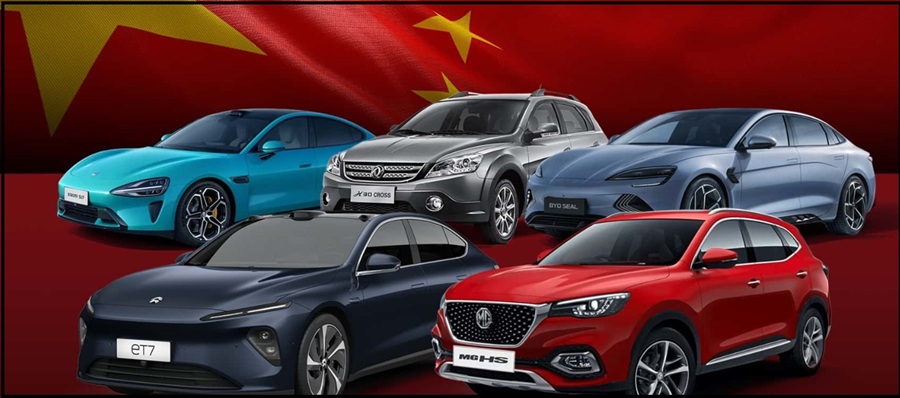
The EU rate is interesting in that the 30% rate is lower than the Canadian rate of 35%, yet the EU rate exceeds the current ‘chicken tax’ rate historically applied to imported SUVs and Trucks.  Strategically, the 30% tariff rate on Europe is a major incentive for various EU sectors to shift manufacturing into the USA.

Without a formal declaration of the end of the Marshall Plan, the reciprocity rate of 30% for all EU imports also equalizes the transatlantic trade benefit.  It will be interesting to see how the EU responds, given any retaliation could be added to the existing baseline.

Canada is currently trying to organize a trade agreement with the EU, in the hopes of positioning themselves toward the transatlantic group as they were toward the transpacific group (vis-a-vis China).

(more…)

WSJ, NYT and WaPo Authors Promote Leaked Audio of Trump Threatening Xi and Putin

CNN state media narrative engineers (think State Dept. in all things CNN) are running with a story to promote a new book by Josh Dawsey (Wall Street Journal – Author), Tyler Pager (New York Times – Author), Isaac Arnsdorf (Washington Post – Author) where they write about an audio segment by candidate Trump telling NY donors how he threatened Russian President Vladimir Putin and Chinese Chairman Xi Jinping.

The leaked audio is essentially unremarkable as President Trump has told this story several times. However, the background context is more interesting when we consider the motives of the WSJ, NYT and WaPo. Here’s the segment:

The WSJ is against President Trump based on economics; WSJ representing Wall Street. The NYT is against President Trump based on DHS/DOJ domestic opposition from within DC. The WaPo is against President Trump based on the CIA position and larger intelligence community. None of the motives within these outlets are challenged by the intellectually honest political observers.

So, what’s the play here?

(more…)

Sunday Talks – Kevin Hassett Outlines Trade Deadlines and Tariff Status

White House National Economic Chairman, Kevin Hassett, discusses the current status of the ongoing trade negotiations as the deadline for engagement windows is scheduled to close on July 9th.

As outlined by Kevin Hassett, we can expect those nations who are not in current negotiations will receive letters from President Trump letting them know that the baseline tariff rate (10%) and reciprocity rate (unknown) will be.  Large nations like India and China are currently in negotiations.  The EU collective has preliminary contact information, and a few others are in close proximity to Free Trade Agreement closure.

With the Big Beautiful Bill passed, in combination with baseline and reciprocal tariffs, the revenues to grow the GDP are in place to expand the overall U.S. economy.  WATCH:

[Transcript] – WEIJA JIANG: We turn now to Kevin Hassett. He is the director of the National Economic Council and one of President Trump’s top advisors. He’s also very popular on that driveway where I’m usually alongside about a dozen reporters. So, Kevin, thank you so much for your time this morning. I want to start with trade, because there’s a big deadline coming up on Wednesday. As you know, that 90-day pause on reciprocal tariffs that the President announced back in April is set to end. So far, the US has announced a few deals; the UK, Vietnam, and you’re inching closer to a final agreement with China. Do you expect to get any more deals done with America’s biggest trading partners by Wednesday?

KEVIN HASSETT: Yeah. First, I do have to take- take a pause and share your thoughts and prayers with the people of Texas. It’s an incredible, heartbreaking story, and Kristi Noem and the President have instructed the federal government to throw everything they’ve got at helping the survivors and helping clean up that place. So, anyway, I’m really heartbroken today to see these stories, and I want you to know that in the White House, everybody is putting every effort they can into helping the people of Texas today.

(more…)

When an Intransigent Resistance Meets an Immovable Object – EU Trade Team Accepting Baseline Tariffs

The intransigent European Union is hitting a dead end with immovable Trump on the issue of tariffs.  The resulting dynamic is what we would expect given 75 years of the Marshall Plan (European Recovery Plan) as part of the EU’s only point of reference.

In order for the EU to maintain its socialistic form of government, it needs to continue the economic benefits from one-way tariffs that exploits the American consumer market.  President Trump’s plan to force reciprocity is against its entire economic foundation.  The EU simply cannot fathom life without the status quo.

In many ways the EU is in the same position as Canada. From its perspective, economic reciprocity is not sustainable; it would have to change its social compacts. This is the core of the conflict.

The EU trade delegation hit a brick wall in Washington DC, as the U.S. trade team reiterated the baseline tariffs are not something within the negotiation dynamic.

BRUSSELS — The European Union is weighing a provisional trade deal with the United States that would maintain a 10 percent tariff on most exports, the European Commission told EU ambassadors on Friday.

The EU executive reported back after a crucial round of talks in Washington on Thursday, in which Trade Commissioner Maroš Šefčovič sought to head off a threat by President Donald Trump to impose a 50 percent tariff on all European goods from July 9 if no deal is reached.

In addition to the baseline tariff, conversations would continue on providing relief to specific industry sectors such as cars, two national officials cited top Commission officials as saying.

The outcome fell short of expectations in European capitals after the Commission’s trade negotiating team had previously said the possibility of “up-front” tariff relief for some industries was under consideration. The U.S. levies 25 percent tariffs on cars and 50 percent on steel and aluminum. (read more)

(more…)

When the Drones are Coming, They Turn Off the Internet

Some thoughts on what I would call ‘modern warfare’ for citizen preppers.  Some of this experience may pertain to urban areas, some perhaps pertinent overall.

Dimitri’s wife is grabbing her purse to go to the grocery store, when he casually says “it’s 5:45.” She just as ordinarily replies, “I’ve got cash.”  Dimitri sees the slightly puzzled look on my face and flippantly notes, “they turn off the internet at six thirty now,” shrugs, and goes back to reading his paper.

Perhaps similar to London life during the blitz. Various municipal govts coordinated the shut down of lights and people wait. Others got about doing what they needed to do, sirens notwithstanding.

There is a familiar life amid modern drone warfare, and with the similar control of electricity comes the need to add internet.

When the drones are coming they turn off the internet.

As I contemplate the contrasts in social resilience, my most familiar reference point is life after a hurricane.  In Florida when we are dealing with the aftermath of a hurricane, no power, no water, no internet, etc., you adapt to life without modern technological conveniences.

If you’ve ever lived amid the aftermath of natural disasters, you understand the need for a plan and quick adaptation. Do it a few times and adaption becomes ordinary. Horrible in ways, yes; awkward, certainly. But you take things in stride; overcome, figure out the optimal solution and keep moving.  However, not everyone is prepared to consider a disruption an ‘inconvenience’ and many people who need consistency to retain stability end up in panic.  I think long term readers well understand the reference.

As Dimitri goes back to the paper my mind shifts to stuff I’ve heard in bits and pieces but never given context before.

I think about this U.S. ‘Space Force’ thing, and now realize there are people who have gamed out modern warfare more than we discuss as a western technological society.

(more…)

Transformational – President Trump Holds Quiet Meeting with Saudi Defense Minister Prince Khalid bin Salman, MbS Younger Brother

It was reported last night that President Trump held a quiet meeting with Saudi Arabia Defense Minister Prince Khalid bin Salman in the White House Thursday. This meeting is reported to cover discussions around de-escalation with Iran, the conflict in Gaza and what comes next.

The meeting also comes on the heels of President Trump having a phone call with Russian President Vladimir Putin and work throughout the middle-east region by President Trump Emissary Steve Witkoff and Israeli Strategic Affairs Minister Ron Dermer.

(Via Fox News) Saudi Defense Minister Prince Khalid bin Salman secretly met with President Donald Trump and other key officials in the White House on Thursday to discuss de-escalation efforts with Iran, multiple sources confirmed with Fox News.

Khalid, also known as KBS, is the younger brother of Saudi Crown Prince Mohammed bin Salman.

[…] The talks were also reportedly about ending the war in Gaza and negotiating the release of the remaining hostages – whether dead or alive – and about working toward peace in the Middle East. (more)

Previously it was reported by Israeli media that President Trump was working on a comprehensive solution to Gaza that would encompass peace in the middle-east by normalizing ties with Israel, isolating Iran and giving them fewer options for regional instability.  Expanding the Abraham Accords provides the diplomatic vehicle for this approach.

Prime Minister Benjamin Netanyahu will visit the White House on Monday, July 7th.

It is strongly rumored that Syria and Lebanon would soon join the Abraham Accords, with the possibility of Saudi Arabia joining thereafter.  Saudi Crown Prince Mohammed Bin Salman (MBS) is a key figure hoping to bring a new era to the middle east absent of conflict and focused on prosperity.

(more…)

President Trump Firm, No More Tariff Extensions Beyond July 8th

There is some interesting information within the video of President Trump aboard AF-1 as he returns from Florida. However, one of the more interesting aspects comes around 05:39 when asked if he was thinking about extending the tariff pause beyond July 8, 2025.

As noted by President Trump, very firmly, no. There is no reason to extend the deadline for reciprocal tariffs beyond July 8th for any country not in direct negotiations as of that date. Trump intends to just send them a letter outlining the applied tariff rate and that’s it. Done is done. WATCH:

This firm date is why India has extended their negotiation team in Washington DC, and is also the reason why Europe is coming Thursday.  The baseline tariffs are done, everyone pays 10% regardless of a FTA or not.  The reciprocal tariff rate will be applied to those without an FTA effective July 9th.

[The EU (who wants a trade deal now) is eventually going to align with Canada (who will need a trade deal later).  This factors into the current trade dynamic and looms over the decision making.]

Post July 9th, President Trump moves on to other important geopolitical matters with the tariffs as an ancillary weapon for adherence to the new international trade alignment.  Those who want to benefit commit to the U.S. dollar as the trade currency (that’s the reason for India’s announcement today), and trade preferences are then used to shake up the geopolitical alignments.  Watch for how this plays out with Trump’s planned UK visit.

From there, and after the gnashing of teeth settles down, later in the summer President Trump then triggers the USMCA renegotiation phase with Mexico and Canada.   President Trump is essentially ambivalent to the pleas from nations who want to continue their trade imbalance.  This sequencing and outline appears clear; but let’s watch and see what happens.

(more…)

Pentagon Stops Some Promised Munitions for Ukraine

If my data alignment points are accurate, now that the BBB is passed through the Senate we are likely to see some very major geopolitical changes come rushing to the surface.

Keep watching and let’s see if things happen the way we expect.

WASHINGTON DC – The Pentagon has halted shipments of some air defense missiles and other precision munitions to Ukraine due to worries that U.S. weapons stockpiles have fallen too low.

[…] In a statement following the publication of this story, White House Deputy Press Secretary Anna Kelly said that the decision “was made to put America’s interests first following a DOD review of our nation’s military support and assistance to other countries across the globe. The strength of the United States Armed Forces remains unquestioned — just ask Iran.”

Included among the items being pulled back are missiles for Patriot air defense systems, precision artillery rounds, Hellfire and other missiles that Ukraine launches from its F-16 fighters and drones.

The losses will surely be felt on the ground as Ukraine continues to beat back fresh assaults by Russian forces. (read more)

In related news not getting attention, French President Emmanuel Macron had a two-hour phone call with Russian President Vladimir Putin today. [LINK]  Also, Volodymyr Zelenskyy called the president of Azerbaijan today, an ally of Putin [LINK]. Azerbaijan is to Russia as Mexico is to the United States.

(more…)

Europe in Rush For Initial Trade Framework – Reality of Baseline Tariffs Setting in

A serendipitous article about information from European Commission officials Björn Seibert and Sabine Weyand, as EU Trade Commissioner Maroš Šefčovič urgently heads to Washington DC for emergency talks Thursday against the backdrop of a July 8 deadline set by U.S. President Donald Trump to do a deal or face 50 percent “reciprocal” tariffs.

Let me just remind everyone the ongoing failure to recognize or accept President Trump’s position regarding both the EU and Canadian trade position with the U.S. will be their undoing.  For whatever reason, likely because it has always been thus for them, they both have a massive cognitive disconnect.

EU trade Commissioner Maros Sefcovic is going to try and avoid the baseline tariffs; however, the aggregate EU now accepts after reviewing the details of the U.S-UK trade agreement, they will not be able to get below 10%.  This alone has them considerably triggered.

The only real tariff positions the EU have to try and escape are the auto tariffs (25%) and Steel/Aluminum (50%).  There is no way for them to avoid the baseline 10% on everything.   Keep in mind President Trump will add a tariff surcharge for Spain’s refusal to meet their NATO obligations.  Trump cannot single out Spain, so the entire EU will be punished with the surcharge for not bringing them into line.

BRUSSELS — The outline of a trade deal between the EU and the U.S. is taking shape. It would contain a baseline 10 percent U.S. tariff, relief for specific industries and an “up-front” U.S. commitment to tariff relief, four diplomats told POLITICO.

[…] Brussels is pushing to secure a U.S. commitment to “up-front” tariff relief at the time of the agreement in principle, according to the diplomats. This would resemble a deal already struck by the U.K. with Washington, which offered tariff exemptions on auto and steel exports while talks on a comprehensive deal continue. A number of EU countries told the Commission no deal of any kind would be possible without such relief.

(more…)

Emissary Steve Witkoff Discusses Next Steps with Iran and Expansion of the Abraham Accords

Presidential envoy Steve Witkoff deserves a great deal of credit for what followed in the aftermath of President Trump’s final elimination of the Iranian nuclear threat.  Throughout the 12-day war, Witkoff maintained a diplomatic connection to the Iranian delegation in order to position a ceasefire upon conclusion.

The Trump administration is now taking a more firm stance toward who in Iran they will accept negotiations with.  As noted by Secretary Rubio, the use of intermediaries has exhausted its usefulness.  While Qatar may play a role as an interlocutor to bridge the two sides, the time has come for direct face-to-face discussions with Iranian officials.

With the potential of a peace agreement and increased stability throughout the region, there is an opportunity for an expanded investment and economic zone throughout the middle east, not just in Iran.  As CTH noted regarding the threat to close the Strait of Hormuz, technically it is not the Iranian government who closes the strait, but rather the maritime insurance companies who refuse to underwrite an enlarged risk.  The same concept applies when the absence of conflict becomes the norm.  Steve Witkoff draws attention to this background context within his remarks.

An ancillary benefit in the Russia-Ukraine conflict comes from a very public display of FAFO outcomes.  None of the principle characters within NATO, the EU, the U.K nor Ukraine or Russia want to face the Godzilla FAFO strategy that President Trump is willing to deploy.

The reason why the NATO partners responded with great deference to President Trump in the Netherlands is no global observer wants to face Godzilla in FAFO mode, militarily or economically.  Even before the dust settled from 70 tons of massive ordnance detonation deep underground in Iran the leaders of the world knew things would be different now.

How different?  We saw the outcome at the Hague.

(more…)