Quantcast

Sunday Talks, Goldman Sachs CEO LLoyd Blankfein Still Sees Demand Side Inflation

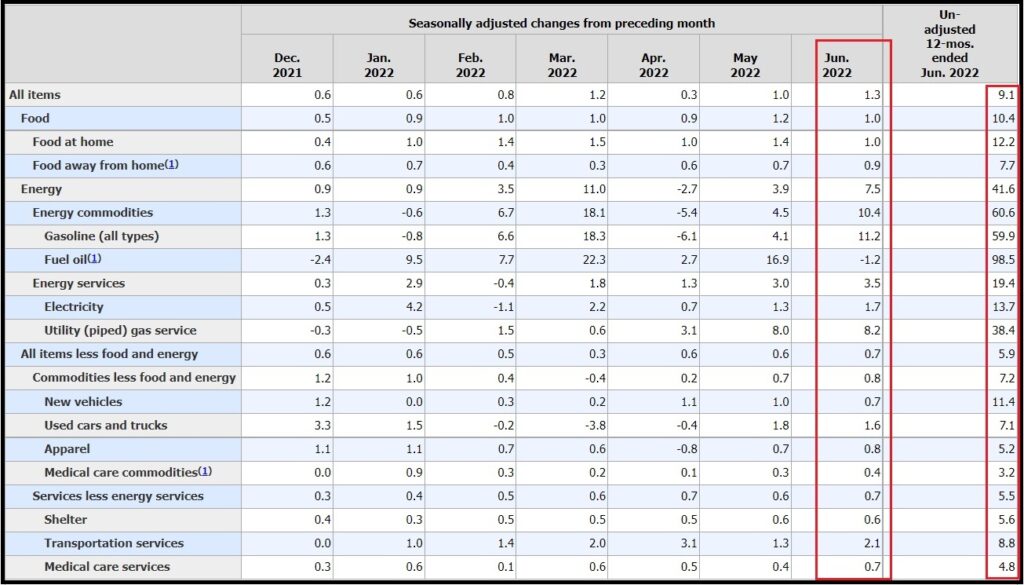
Appearing on Face the Nation (FtN) Goldman Sachs CEO Lloyd Blankfein discussed his views and perspectives on the economy overall and U.S. inflation specifically.  Undoubtedly Blankfein has access to resources and analysis far beyond CTH scope; however, despite a statistically factual contracting GDP, Blankfein is claiming to see overall demand side inflation remaining in the macro economy.

Perhaps that view might still be true domestically on the service side (it certainly isn’t on the trade side), but demand driven inflation does not appear visible on the goods side of the economic ledger.  What is clearly present as the price driver is “production side inflation,” the costs to create goods and bring them to market.   If you look at economic activity in units instead of dollars, the units are contracting.

The demand for goods is now focused almost entirely on priority or essential purchases like housing, energy, fuel and food.  The price for those essential products is driven by production costs, which are a direct outcome of the energy policy, environmental policy, regulatory policy, and to a lesser extent trade policy, of the Biden administration.  Blankfein is pretending not to know things… WATCH:

Putting housing aside due to investment purchasing of real estate, if Blankfein was correct, and demand was still driving inflation, then a massive deflationary cycle would be coming as a result of lowered consumer purchasing of goods.   There isn’t any chance we are going to see “deflation” in the next several years.  [We will likely see housing prices collapse, but not consumer goods.]

Inflation is being driven by production costs, and there is no end in sight to the production cost increases as long as the crew behind Joe Biden keeps strangling the U.S. energy sector…. and then compounding the domestic price issue by creating incentives for energy exports (vis-a-vis EU sanctions).  The production inflation is a purposefully inflicted wound on our economy.  Production inflation is avoidable.

That interview is Wall Street gaslighting to a Main Street audience.  I don’t like it one bit.

(more…)

India Reverses Prior Position and Will Now Block Further Wheat Exports, Triggering G7 Concerns

In April India said it was hoping to expand its wheat exports from 7 million tons to 10 million.  However, as precarious winter wheat harvests reflect lower outputs, they are reversing position and will now block any wheat exports in order to ensure their own supply.

INDIA – […] The announcement drew sharp criticism from the Group of Seven industrialized nations’ agriculture ministers meeting in Germany, who said that such measures “would worsen the crisis” of rising commodity prices.

“If everyone starts to impose export restrictions or to close markets, that would worsen the crisis,” German Agriculture Minister Cem Ozdemir said at a press conference in Stuttgart.

Global wheat prices have soared on supply fears following Russia’s February invasion of Ukraine, which previously accounted for 12% of global exports.

(more…)

Diesel Fuel Shortage Sets Stage for Next Biden Created Crisis

It has often been said that if you chase the global climate change ideology to its natural conclusion, we end up in communal groups sitting around a tepid campfire eating some form of sustainable algae cakes and picking parasites off each other…  Prior to Joe Biden that prediction might have seemed like hyperbole. Now, not so much.

Indeed, the Green New Deal energy policy of Joe Biden creates massive downstream consequences.  Unfortunately, the White House doesn’t seem to care. The high prices and scarcity of critical goods are a feature, not a flaw, as they chase their climate friendly Build Back Better agenda.

Following the continuum of intended consequence, now we have diesel fuel shortages beginning to hit the U.S. economy; and with scarcity comes higher prices of an almost astronomical scale. “The national average price of diesel is now $5.54 per gallon, which is an increase of 22 cents from last week, which was when the most recent record was set. Data shows there’s no state that’s currently seeing diesel prices below $5.12 per gallon.” (LINK)

Making matters even worse is a drop in available inventory of diesel fuel which is about to become a crisis for the east coast of the U.S.  Some Truck Stop operators like Love’s and Pilot are already warning their big rig customers they may not have fuel for truckers.

[…] “Love’s is monitoring the fluid situation on the East Coast, we have experienced minimal outages during low traffic hours,” Oklahoma-based Love’s Travel Stops said in an emailed statement. “The company has no plans to restrict purchases of diesel.”

[…] Earlier on Wednesday, the U.S. government’s Energy Information Administration said total inventories of distillates, which is mainly diesel fuel but also heating oil, fell last week to a 17-year low of 104 million barrels, which is 23% below normal.

(more…)

Fertilizer Prices Continue Rising, Increasing Fears of Global Grain Costs and Shortages

As CTH has noted since last October the rapid increases in fertilizer costs could potentially create a major issue for global food supplies later this summer.  As the farming costs continue escalating, including fertilizer and diesel fuel prices, this will eventually lead to major price increases on the harvests.   Field to fork inflation is looking increasingly severe later this year; what we have called the third wave of inflation.

Beyond prices, a primary impact in the U.S. market, concerns are now escalating about grain shortages {SEE HERE} and lower European crop yields which will lead to less food products on a global basis.   According to information shared by ZeroHedge, “We think it will take at least 2-3 years to replenish global grains stocks,” Illinois-based CF Industries Holdings Inc.’s president and chief executive officer Tony Will said in a statement in Wednesday’s earnings report.”

Axios is reporting on the continued escalation of fertilizer prices; however, they conveniently and purposefully avoid noting the origin of the problem in North America is directly the result of Joe Biden’s immediate energy policies that drove up the costs of natural gas (a critical component):

AXIOS – “Skyrocketing fertilizer costs — like those made from nitrogen, phosphorus and potassium (NPK) — are driving up food prices and, worse, threatening food security around the globe.

State of play: Prices for NPK were up 125% in January from a year before, and rose another 17% from the beginning of the year to March, according to data compiled by the International Food Policy Research Institute (IFPRI).

(more…)

Hungary Will Continue Purchases of Oil and Gas from Russia, Zelenskyy and European Union Furious

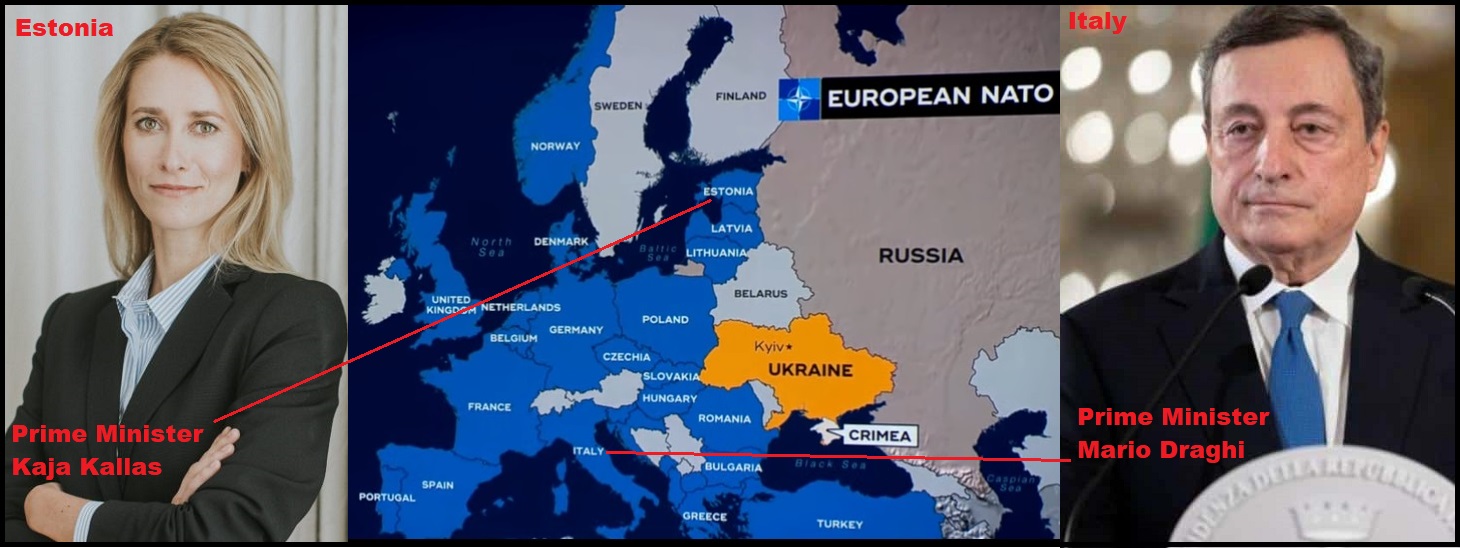
Defying threats from the European Union, Hungary has announced they will not stop purchasing oil and gas from Russia and join a blockade of energy products by the 27 member EU alliance.

BUDAPEST (Reuters) – Hungary will not support sanctions that would make Russian oil and gas shipments to Hungary impossible, Foreign Minister Peter Szijjarto said in a statement on Tuesday.

Speaking in Kazakhstan, Szijjarto said Russian oil shipments via the Druzhba pipeline accounted for about 65% of the oil Hungary needed and there were no alternative supply routes that could replace that. (link)

Slovakia has also announced they will not participate, which makes any collective EU action problematic.  Ukrainian President Volodymyr Zelenskyy is reported to be using his connection to the U.S. and Joe Biden in an effort to force the EU to deliver additional sanctions.   Essentially, if an EU country does not fall in line, Zelenskyy will instruct Biden not to support that EU country with the money congress is preparing to use as blackmail.

(more…)

Russia Stops Gas Supplies to Poland and Bulgaria Amid Ongoing Ukraine Battle

At the same time as Russia has targeted railway lines as part of the effort to block U.S. arms shipments into Eastern Ukraine, Vladimir Putin has now followed through on the previous warning to stop Russian gas supplies unless payments are made in non-sanctioned Rubles.

Poland is obviously the primary target for retaliation here, as the NATO alliance is using Poland as the gateway for arms deliveries into Ukraine.

According to multiple reports from the EU Russia has halted gas shipments into Poland and Bulgaria.  (Reuters) “Gazprom Russia’s gas export monopoly, suspended gas supplies “due to absence of payments in roubles”, as stipulated in a decree from Russian President Vladimir Putin that aims to soften the impact of sanctions.”

There are conflicting reports as to whether Germany is paying Russia, or whether they are trying to avoid running afoul of the NATO alliance by reducing Russian imports.

Ukraine President Zelenskyy is using the opportunity to reinforce his position that all European countries need to stop purchasing energy from Russia, or else they are not supporting Ukraine.   However, it’s not as simple as it seems because multiple EU countries are dependent on Russia for energy products and there are no immediate alternatives.  Russia is leveraging this dependency in an effort to break the western sanctions.

(more…)

Goya CEO Bob Unanu Discusses Food Production, Security and Sustainability from Field to Fork

Goya Foods CEO Bob Unanu appeared on Fox Business earlier today in order to give a bigger picture review of the current status of food production. Unanu does a good job outlining how the interconnected systems from field to fork impact consumers.  The Goya CEO appropriately outlines what is happening and what the consequences are from Biden energy policy.  It’s a good interview.

Unanu does not push food alarmism and accurately states the U.S. food production system will ensure that food is available for U.S. consumers to purchase, albeit at higher prices.  The people most at risk from food insecurity are developing countries who rely on exports of food products generated by efficient, productive and exceptional farming operations in North America that feed the world.

For U.S. consumers it is the massive increases in energy and transportation costs that are driving up food prices, putting the issue of food insecurity into the correct context of food affordability.   WATCH:

.

Consumers can offset the price impacts by shopping closer to the field, the origin of the food purchases needed.  Shopping for fresh food products at farmers markets avoids feeling the impact of shipping and transportation costs, and it helps the local economy.  If you are near areas with farm production in the United States consider the financial value of skipping the convenience of the supermarket in favor of shopping closer to the field.

In the field to fork food supply and distribution system, the closer you can get to the field for purchases the less costs you will encounter.  Obviously, for many people this may not be possible.  However, for others it might be time to evaluate the cost of convenience.

(more…)

REPORT, U.S. Gas Exports are Triple U.S. Gas Production, Low Gas Reserves Now Sends Prices Soaring

Another item in the long list of ‘thanks Joe Biden‘ stuff.  Shortages in natural gas in windmill chasing Europe have driven up the prices significantly.  The conflict between NATO and their targeted villain in Russia is only making matters worse.

As the EU prices jump to $33/$34 per million British thermal units (BTU’s), the U.S. natural gas selling at $6 per million BTU’s is an absolute bargain.

Liquify that stuff and send it across the pond says any smart energy capitalist.

However, that comes with a problem for us.  Our supplies of natural gas are depleting quickly, our exports are now almost three times more than our production.

LONDON, April 8 (Reuters) – U.S. gas prices have climbed to their highest level in more than a decade as strong demand from overseas has emptied storage and left inventories well below average for the time of year despite a mild winter.

Front-month futures for gas delivered at Henry Hub in Louisiana have risen to $6.40 per million British thermal units, the highest in real terms since 2010. Wholesale prices in the United States are still far below those prevailing in Northeast Asia ($33 per million British thermal units) and Northwest Europe ($34).

[…] U.S. LNG exports rose 13% in the three months from November to January compared with the same period a year earlier, while gas production was up by less than 5%.

(more…)

German Govt Release Inflation Data, Hyper Production Inflation Surpasses 30 Percent, Highest Rate Since 1949

The German government released their version of the producer price index for inflation, and they are reporting 30.9% inflation for products leaving German factories.  [DETAILS HERE] That’s the highest rate of inflation since shortly after the second world war.

The inflation rate is being driven mostly by energy costs which are more than 80% higher than last year.   However, each nation’s overall inflation rate is also driven by the amount of central bank spending they used during the COVID economic lockdowns.  The more any govt spent on subsidies, the more money they printed, the more they devalued their money and subsequently, the higher their current rate of inflation.

Germany is the largest economy in the European Union.  This level of inflation within Germany has major ramifications.

First, with this level of energy inflation Germany cannot afford to stop purchasing Russian energy products.  There’s no way for Germany to join or increase western sanctions against oil and gas they need to stay sufficient.  Germany is dependent on Russian energy.

Second, with Germany’s economy this vulnerable; and with Germany being so dependent on Russian energy; Germany will have to distance itself further from any Ukraine assistance.   In the background of western voices already being upset with Germany for not providing more support for Ukraine, their economic vulnerability explains their unwillingness.   The U.S. proxy war against Russia does not benefit Germany, at all.

(more…)

Fannie Mae More Than Triples Negative Forecast for Housing Sales

Lots of people talk about an inflation driven recession.  Essentially, that’s a total economic contraction in the value of goods and services produced, sold and purchased, due to rising prices.   However, as CTH has been pointing out for more than six months, if you subtract the federal COVID infusion money from the overall economy, we have been in a contracting demand economy for almost nine months.

A negative GDP outcome is quite possible, perhaps likely, when the first quarter GDP figures are released on the last Friday of this month.  The most recent sales and economic data shows that U.S. consumers are prioritizing spending and high priced durable good sales are negative.

Now, Fannie Mae is delivering a rather stunning shift in their economic forecast.  In addition to projecting a recession for 2023, these revised home purchase figures are remarkable:

...”We have downgraded our total home sales forecast for 2022 to a decline of 7.4 percent (previously a 4.1 percent decline) followed by a decrease of 9.7 percent in 2023 (previously a 2.7 percent decline).” (link)

That is a very significant change in home sales forecast to the negative position.

We already have serious energy inflation to contend with and low wage growth.  We already know a third inflation wave on highly consumable goods is coming this summer, likely around 30% or more in food prices at the grocery store.

The professional forecasts are always tilted toward the positive for this administration, so this new statement by Fannie Mae should be considered accordingly.  Remember, Boy Scouts motto.

(more…)