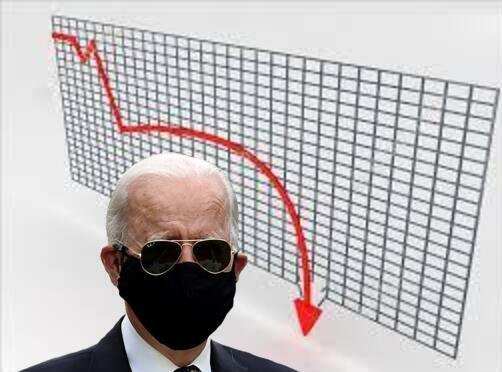
 Jumpin’ ju-ju-bones, CTH did not expect the BEA to admit the U.S. economy was in recession. CTH originally predicted the BEA would use lower import data as the primary tool to modify the GDP result.
Factually, in this report, import data -in combination with lower consumer spending- was the primary sector that led to the result. However, even with drops in the valuation of imports which lift GDP calculations, the economy still contracted.
Things must be much worse than officially admitted (details below), if the BEA is going to admit things are bad.
Gross Domestic Product (GDP) is the dollar value of all goods and services produced in the economy, minus the dollar value of goods and services we import. The percentages discussed are percentages of change over time.
The Bureau of Economic Analysis (BEA) released their first estimate of the second quarter GDP [Data Here] reflecting a 0.9% drop in U.S. economic activity. The second quarter contraction follows a 1.6% drop in the first quarter, which means we now have two consecutive quarters of declining economic activity, the technical definition of a recession.
The two primary data points which show the economic contraction are: (1) Lowered consumer spending; and (2) much lower imports as a result of lower consumer spending on durable goods and non-essential items. High Q1 inventories of goods were also flushed out by companies and not replaced. Starting with the consumer spending, here’s the data [Table-2, BEA report]:
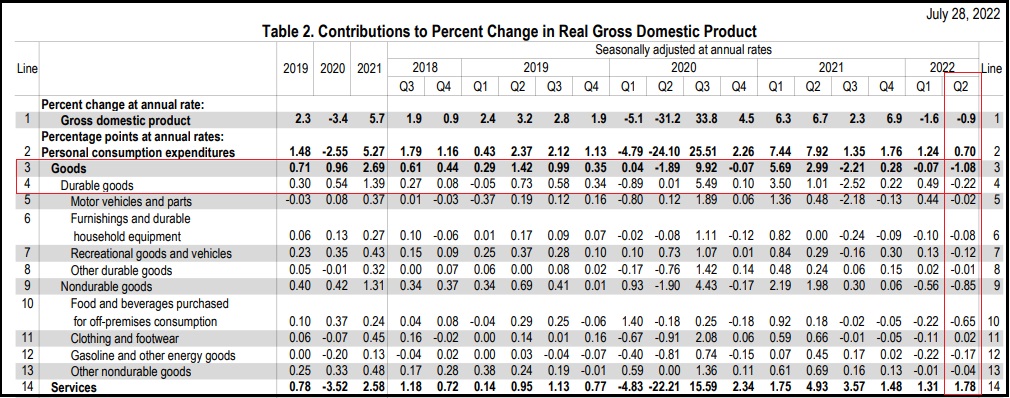
Consumer spending, also called “personal consumption expenditures” declined 1.08% for goods overall in the second quarter.
Consumer spending represents two-thirds of all GDP in the United States. Americans buy lots of stuff, and when Americans stop spending on goods the economy stalls. As you can see in Table-2, consumer spending on goods dropped 1.08% and spending on services increased 1.78%. The net difference is 0.70%, a massive drop in consumer spending compared to prior quarters/years.
The next component with major impact is the result of the drop in spending.
(more…)
Posted in Big Government,
Big Stupid Government,
Climate Change,
Decepticons,
Deep State,
Dem Hypocrisy,
Economy,
Election 2022,
energy,
Joe Biden,
media bias,
Notorious Liars
 [Keep an eye on this and we will likely see a similar increase in foot traffic at Aldis]
 Essentially Liawatha is big mad because Federal Reserve Chairman Jerome Powell is raising interest rates into a contracting economy.