Quantcast

American Confidence in the Economy Drops to Lowest Level Since 2009, Oil Prices Climb, Gas Prices Break Records, Main Street in Serious Trouble

…..Quit Pretending

Joe Biden is not running this economy.  Joe Biden’s economic advisors are not running this economy.  Joe Biden’s cabinet members are not running the economy. The people running this economy are the climate change activists behind the scenes who have been elevated into positions in all economic cabinet offices throughout the administration.  This was the deal in 2020 that led to Biden’s installation.

Professional political activists, Elizabeth Warren and Bernie Sanders types, within the Interior Dept., Energy Dept., EPA and other regulatory agencies related to the energy economy are in control. Not a single operator within the system looks to the White House or executive office for guidance.  They knew they had a short window to carry out the unilateral agenda regardless of damage it does.
This is a full-throated assault on the energy industry under the auspices of the climate change agenda. And that is what is collapsing Main Street and pushing massive costs onto consumers via inflation.  That’s it. That’s the background. No one in/around the White House has any control over the consequences. That was the 2020 deal made, and the reason why Biden was selected as the nameplate.

Oil prices have shot up to $120/barrel.  Russia and Ukraine are being used as a smokescreen for the ‘Build Back Better’, or domestically, the “Green New Deal’, agenda.  The same climate agenda supported by the entire Western government alliance who bow to the altar of the World Economic Forum.

Damn the consequences, full speed ahead. Main Street citizens are collateral damage.  They don’t care. In the view of the operators, their urgent goals are bigger than our needs; and their high-minded, filled with superiority justification is, they are trying to save us from ourselves.

(more…)

USDA Raises Food Price Forecast to Highest Level in 42 Years, Third Wave of U.S. Food Inflation Will Dwarf Prior Price Increases

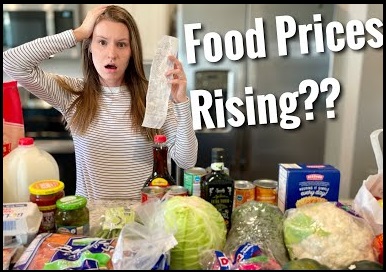
Have you ever seen egg prices at $1 per egg range, or $12/doz?  Hold on a few months and perhaps you will.  That is the context for the scale of food price increases the USDA is now starting to predict.  The highest predicted change in food costs in well over 40 years, that’s the USDA warning in their revised May “Food Price Outlook”. [DATA HERE]

This month the USDA just re-re-revised the forward price outlook, and things are grim.  It likely doesn’t come as a surprise to many CTH readers because we have been discussing the convergence of events since October of 2021, when we first were able to predict Wave-1 (Dec/Jan), and Wave-2 (March/Apr) inflation.  However, the underlying data for Wave-3 is double the prior two phases.

Keep in mind the data is national & skewed toward low estimations as represented by (+).

When the USDA predicts egg prices increasing by 19.5 to 20.5% (from where those prices are now), there will be regions with much higher retail increases than estimated.

Just two months ago, USDA had egg inflation at 2.5%-3.5% range, year over year.  Again, that’s the scale of change; from a 3.5% forward outlook to a 20.5% forward outlook effective right now.

Food at home (grocery store) prices: up 7% to 8% in this monthly review, versus the April outlook of a rise of 5% to 6%. That means the USDA is predicting the highest grocery store price rise since 1980 when prices rose 8.1% (prices rose 7.2% in 1981).  There is no reason to think the USDA forecast will not rise again in June.

(more…)

India Reverses Prior Position and Will Now Block Further Wheat Exports, Triggering G7 Concerns

In April India said it was hoping to expand its wheat exports from 7 million tons to 10 million.  However, as precarious winter wheat harvests reflect lower outputs, they are reversing position and will now block any wheat exports in order to ensure their own supply.

INDIA – […] The announcement drew sharp criticism from the Group of Seven industrialized nations’ agriculture ministers meeting in Germany, who said that such measures “would worsen the crisis” of rising commodity prices.

“If everyone starts to impose export restrictions or to close markets, that would worsen the crisis,” German Agriculture Minister Cem Ozdemir said at a press conference in Stuttgart.

Global wheat prices have soared on supply fears following Russia’s February invasion of Ukraine, which previously accounted for 12% of global exports.

(more…)

Joe Biden Rails Against Inflation He Created

Even with dementia I doubt seriously Joe Biden believes the nonsense he read from his prepared script today.  Every economy policy the Biden administration has triggered, specifically including the Green New Deal energy policy, has caused massive inflation.

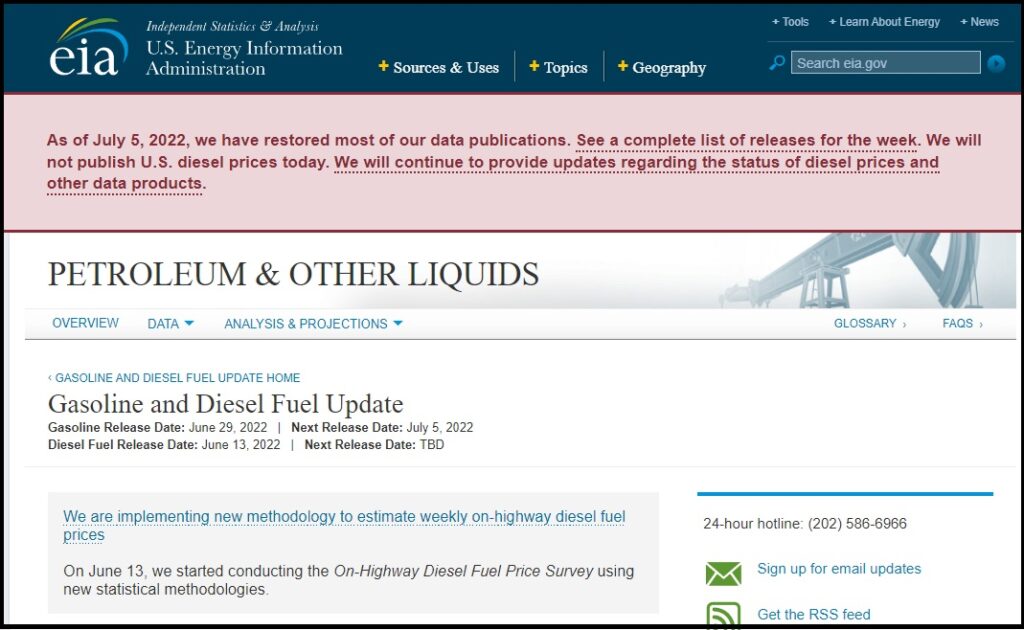
The national average price per gallon of gasoline was $2.33 in January 2021, according to the U.S. Energy Information Administration (EIA). It has increased nearly 84% when compared to the current national average price of $4.28 per gallon {link}.  Petroleum and refined gasoline costs are embedded in every aspect of the production economy.  Additionally, Biden’s restrictions, and later policies, on natural gas and coal have caused overall energy costs to skyrocket. Again, these are cornerstones of economic inflation.

During a ridiculously obtuse speech today [Full Speech Here], part of which is in the excerpt below, Biden claims there are only two sources of inflation: (1) the pandemic (covid-19); and (2) Russia’s invasion of Ukraine.  I often accuse democrats of pretending not to know things, however these false attributions are far beyond pretense, they are purposeful lies. WATCH:

Beyond the claims about inflation, a visible pile of bovine excrement is noted in the sentences around Ukraine grain supplies.  Notice there is no supply chain issue pushing thousands of tons of military hardware into Ukraine; however, Biden claims they cannot get grain supplies out of Ukraine.  He cannot even see the hypocrisy in his own script.

Sending more than $50 billion in U.S. taxpayer money to Ukraine while those same U.S. taxpayers are crushed under the weight of the inflation that type of spending creates, is beyond blood-boiling.  We are currently in an abusive relationship with our own government and Joe Biden is the cognitively challenged, disposable front man sent to the cameras to gaslight the American people.

(more…)

Fertilizer Prices Continue Rising, Increasing Fears of Global Grain Costs and Shortages

As CTH has noted since last October the rapid increases in fertilizer costs could potentially create a major issue for global food supplies later this summer.  As the farming costs continue escalating, including fertilizer and diesel fuel prices, this will eventually lead to major price increases on the harvests.   Field to fork inflation is looking increasingly severe later this year; what we have called the third wave of inflation.

Beyond prices, a primary impact in the U.S. market, concerns are now escalating about grain shortages {SEE HERE} and lower European crop yields which will lead to less food products on a global basis.   According to information shared by ZeroHedge, “We think it will take at least 2-3 years to replenish global grains stocks,” Illinois-based CF Industries Holdings Inc.’s president and chief executive officer Tony Will said in a statement in Wednesday’s earnings report.”

Axios is reporting on the continued escalation of fertilizer prices; however, they conveniently and purposefully avoid noting the origin of the problem in North America is directly the result of Joe Biden’s immediate energy policies that drove up the costs of natural gas (a critical component):

AXIOS – “Skyrocketing fertilizer costs — like those made from nitrogen, phosphorus and potassium (NPK) — are driving up food prices and, worse, threatening food security around the globe.

State of play: Prices for NPK were up 125% in January from a year before, and rose another 17% from the beginning of the year to March, according to data compiled by the International Food Policy Research Institute (IFPRI).

(more…)

Food Supply Protectionism is Rapidly Spreading as Global Organizations Like The IMF Warn of Consequences

This is an update to an ongoing issue we started seriously discussing last October when it became clear that if the trajectory was followed, “the absence of food will change things.”

The International Monetary Fund (IMF) is continuing to send warnings with increased urgency about the very real possibility of widespread food shortages in regions where food instability is a historic issue. [SEE HERE]

The war in Ukraine has triggered a sharp increase in energy and food prices that could undermine food security in the region, raise poverty rates, worsen income inequality, and possibly lead to social unrest,” the Fund said in its annual Regional Outlook for Africa.

This is a recent warning around a topic that has increasingly gained international attention.  Indeed, experts in multiple related agricultural fields have openly started to discuss and predict a looming crisis as the majority of the global food supply is contingent on only one or two growing cycles per year for harvest.  Those harvests are facing multiple headwinds that could likely result in lower yields.

Against this backdrop we can be certain that all nation’s government interests are taking this issue seriously.  Now, we are starting to see a race for supply control by various governments.

(more…)

Goya CEO Bob Unanu Discusses Food Production, Security and Sustainability from Field to Fork

Goya Foods CEO Bob Unanu appeared on Fox Business earlier today in order to give a bigger picture review of the current status of food production. Unanu does a good job outlining how the interconnected systems from field to fork impact consumers.  The Goya CEO appropriately outlines what is happening and what the consequences are from Biden energy policy.  It’s a good interview.

Unanu does not push food alarmism and accurately states the U.S. food production system will ensure that food is available for U.S. consumers to purchase, albeit at higher prices.  The people most at risk from food insecurity are developing countries who rely on exports of food products generated by efficient, productive and exceptional farming operations in North America that feed the world.

For U.S. consumers it is the massive increases in energy and transportation costs that are driving up food prices, putting the issue of food insecurity into the correct context of food affordability.   WATCH:

.

Consumers can offset the price impacts by shopping closer to the field, the origin of the food purchases needed.  Shopping for fresh food products at farmers markets avoids feeling the impact of shipping and transportation costs, and it helps the local economy.  If you are near areas with farm production in the United States consider the financial value of skipping the convenience of the supermarket in favor of shopping closer to the field.

In the field to fork food supply and distribution system, the closer you can get to the field for purchases the less costs you will encounter.  Obviously, for many people this may not be possible.  However, for others it might be time to evaluate the cost of convenience.

(more…)

Increase in Industrial Accidents at Food Processing Plants Has Raised Suspicions

Several people have written to inquire about recent stories surrounding a wave of industrial accidents at food processing plants all over the U.S.  {Zero Hedge Article} {Twitter Questions, Suspicions} {List from Western Standard}

Indeed, there has been a significant increase in fires and explosions from furnaces, industrial fryers, boilers and some other rather odd incidents with aircraft hitting food processing.  The frequency even gathered attention from Fox News host Tucker Carlson.  WATCH:

Addressing the lesser frequent impact incidents from airplanes etc.  Keep in mind that major industrial food processing facilities are generally located around major transportation hubs – large arteries for commercial trucking and railway lines for inbound good deliveries.  These are the same zoned commercial regions where you find small regional airports.

So, let’s put those airplane ‘accidents” aside for a moment and look at the bigger picture.

(more…)

Robert Lighthizer Discusses Biden Trade Policy and Potential for Administration to Remove Chinese Tariffs

Robert Lighthizer was the U.S. Trade Representative (USTR) under the Trump administration.  Lighthizer was exceptionally strong in developing and structuring the America First trade policy that included the effective use of tariffs to get fair trade outcomes.

In this video Ambassador Lighthizer discusses the current trade policy of the Biden administration with former National Economic Council Chair Larry Kudlow.  The discussion centers around U.S-China trade policy, the phase-1 trade deal that was interrupted by the pandemic, and the future of the existing trade tariffs against Beijing that Biden is reportedly going to remove.  WATCH:

As noted by Lighthizer, if Biden drops the Chinese tariffs, it will only make the trade imbalance worse and push the U.S. deeper into the cycle of lost jobs and economic contraction.  He’s correct.

(more…)

Union Pacific Rail Line Begins Restricting U.S. Fertilizer Distribution

This is layers of odd.  As many readers are aware, the prices of fertilizer have skyrocketed as supplies have been heavily impacted by increased energy costs and supply chain issues.  Many people have worried if a shortage of fertilizer may impact farm yields this year.

Against this backdrop CF Industries, one of the world’s largest manufacturers of hydrogen and nitrogen fertilizer, is warning its customers that Union Pacific Railway Lines is now restricting the amount of container tonnage they will permit.  [Press Release Here]

CF Industries Holdings, Inc. (NYSE: CF), a leading global manufacturer of hydrogen and nitrogen products, today informed customers it serves by Union Pacific rail lines that railroad-mandated shipping reductions would result in nitrogen fertilizer shipment delays during the spring application season and that it would be unable to accept new rail sales involving Union Pacific for the foreseeable future. The Company understands that it is one of only 30 companies to face these restrictions.

CF Industries ships to customers via Union Pacific rail lines primarily from its Donaldsonville Complex in Louisiana and its Port Neal Complex in Iowa. The rail lines serve key agricultural areas such as Iowa, Illinois, Kansas, Nebraska, Texas and California.

(more…)