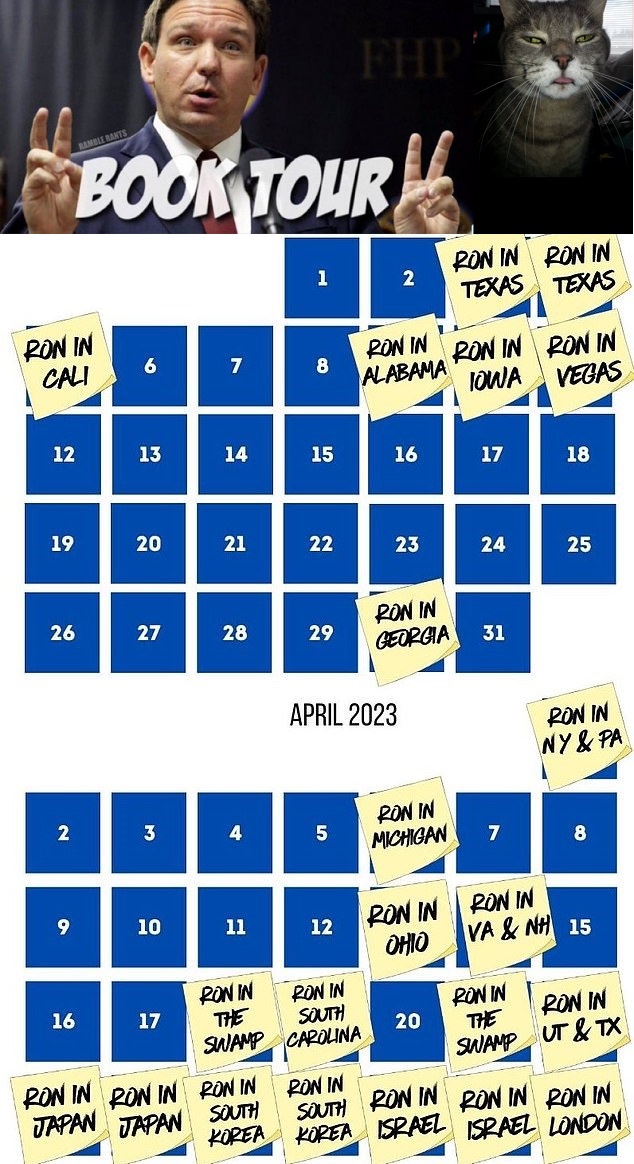
 As Florida Governor Ron DeSantis finishes up his long-scheduled foreign policy tour, he finishes the trip on a down note in London, England. Apparently, the political and business leaders were unimpressed by the diminutive stature of the Top-Gov and had lots of uncomplimentary things to say about him.
Meanwhile, on the domestic front, the most recent Trump -vs- DeSantis poll shows another slip for the DeSantis brand managers, despite the considerable lifts they put in his shoes to assist the optics. President Trump now leads Ron DeSantis 62% to 16% in polling, a 46-point advantage {link}.
Governor DeSantis is scheduled to arrive back in Florida this week as the consultants organize bill signing ceremonies for legislation completed during his absence. The bills will include a change to the Florida election laws permitting Ron to start officially campaigning for president instead of pretending not to run. The ‘official’ announcement, which appears to have been planned for several years, is scheduled for mid-May next month.
LONDON — He hopes to win the hearts and minds of devoted Donald Trump supporters ahead of next year’s U.S. election.
But Republican presidential hopeful Ron DeSantis failed to impress British business chiefs at a high-profile London event Friday, in a tired performance described variously as “horrendous,” “low-wattage” and “like the end of an overseas trip.”
The Florida governor, expected to launch his bid next month to challenge Trump as the Republican nominee for the 2024 presidential race, met with more than 50 representatives of major U.K. firms and business lobbying groups as a part of a four-country “trade mission” ending in London Friday.
For several of those present, however, the statesmanship was lacking.
(more…)
Posted in Big Government,
Big Stupid Government,
Election 2024,
Joe Biden,
media bias,
Notorious Liars,
Professional Idiots,
propaganda,
Ron DeSantis,
Trade Deal,
Uncategorized,
United Kingdom (UK) and Great Britain