President Trump is disrupting decades of multinational financial interests who use the U.S. as a host for their ideological endeavors. President Trump is confronting multinational corporations and the global constructs of economic systems that were put in place to the detriment of the host (USA) ie. YOU. There are trillions at stake; it is all about the economics; all else is chaff and countermeasures.

We are already familiar how China, Mexico and ASEAN nations export our raw materials (ore, coking coal, rare earth minerals etc.). The raw materials are used to manufacture goods overseas, the cheap durable goods are then shipped back into the U.S. for purchase.
It is within this decades-long process where we lost the manufacturing base, and the multinational economic planners (World Trade Organization) put us on a path to being a “service driven” economy.
The road to a “service-driven economy” is paved with a great disparity between financial classes. The wealth gap is directly related to the inability of the middle-class to thrive.
Elite financial interests, including those within Washington DC, gain wealth and power, the U.S. workforce is reduced to servitude, “service”, of their affluent needs.
The destruction of the U.S. industrial and manufacturing base is EXACTLY WHY the wealth gap has exploded in the past 30 years.
(more…)
Coronavirus As An Economic Contagion
Steve Bannon discusses the Chinese Coronavirus as an economic contagion and how the Trump economic security doctrine applies to the current downstream impacts. Even before the Coronavirus surfaced in China there was lower manufacturing factory activity within the Chinese economy. The necessary response within China to control the spread of the Coronavirus was to shut down most commerce. Factories, schools & businesses throughout China were impacted as various containment measures took hold.
Economic Nationalism -vs- Economic Globalism
Despite the intense doomsayer predictions surrounding the ‘Coronavirus as an economic contagion’ narrative, the U.S. economy remains strong. When evaluating economic impacts for the USA it is important to remember 80 percent of all activity within the U.S. is internal. We create and consume eighty percent of our own production.
(more…)
CTH is more confident than ever about POTUS having a comprehensive understanding of the bigger picture around COVID-19 and China’s Coronavirus outbreak. In this interview Senator Marco Rubio discusses the risks that China now represents on a myriad of levels.
The Coronavirus issue hits on three main points of policy outlined by President Trump since his initial announcement of candidacy in 2015: (1) The need for secure borders and strong immigration controls. (2) The need to stop reliance on Chinese manufacturing; and (3) The need for the U.S. to have independent control over key sectors of manufacturing; including healthcare products and pharmaceuticals, as a matter of national security.
.
Stay big picture. Think about what you know of the aggressive Communist and strategic disposition of China. In addition to the risks within technology development (well discussed), allowing China to have a heavy influence over critical healthcare supply chains is too dangerous.
(more…)
Economic Nationalism -vs- Economic Globalism
Despite the intense doomsayer predictions surrounding the ‘Coronavirus as an economic contagion’ narrative, the U.S. economy remains strong. When evaluating economic impacts for the USA it is important to remember 80 percent of all activity within the U.S. is internal. We create and consume eighty percent of our own production.

The U.S. economy is unique in the amount of balance within it as compared to other industrial economies. We are not dependent on exports to sustain our economy; and we are not dependent on any imports at the macro level. Unlike China, Asia and Europe, and despite decades of efforts by globalists and multinationals, the U.S. generates and sustains a tremendous amount of our own economic prosperity. First the January data:
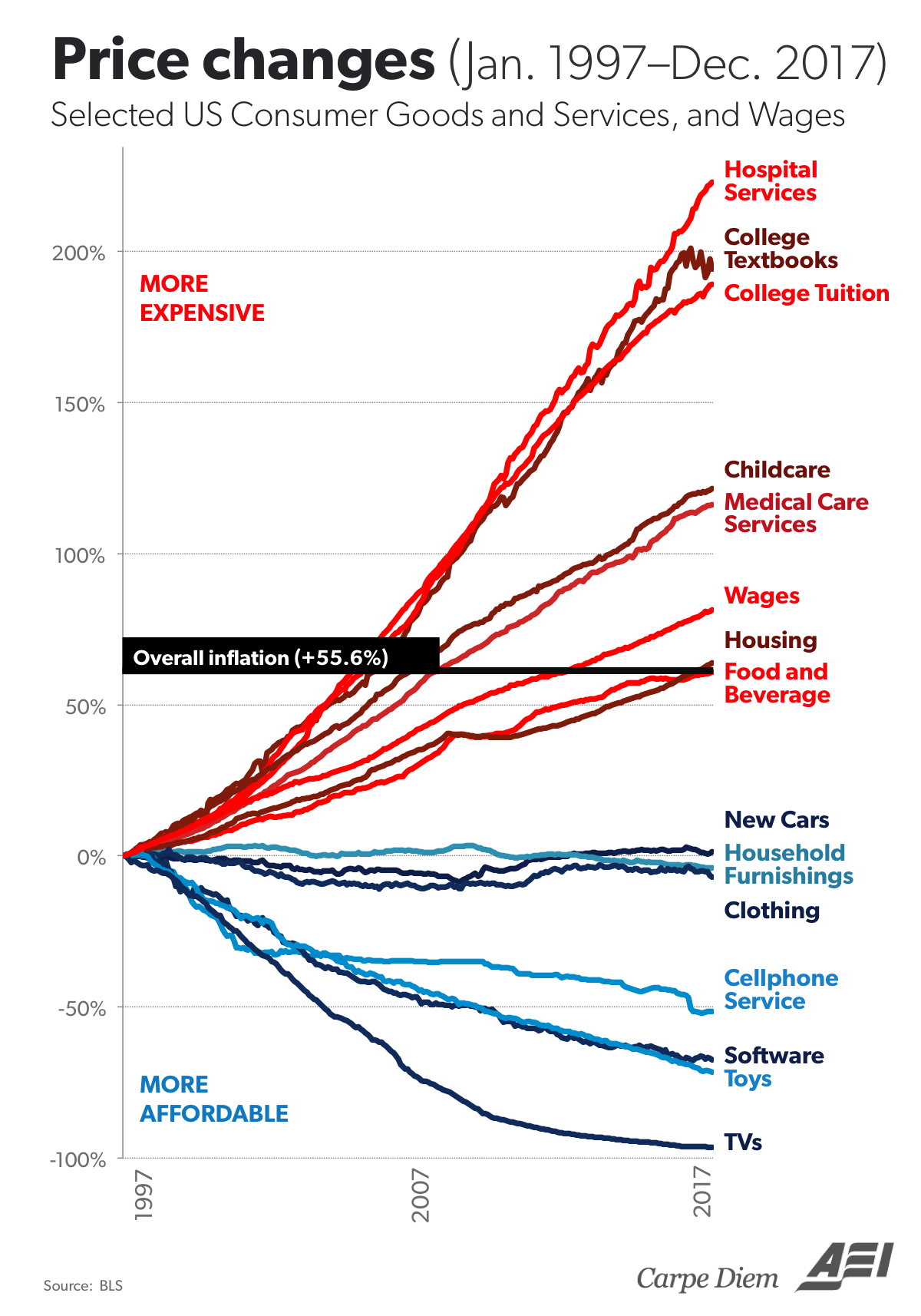
The Bureau of Economic Analysis (BEA) reveals data today showing January wage growth .5%, personal income increases .6%, consumer spending at .2%; overall U.S. savings at $1.33 trillion, and low inflation at 1.7 percent year-over-year. Solid and stable.
Both consumer spending (+.2 Jan) and inflation (1.6% Jan) were impacted by lower energy prices (-.7%) & mild weather in January. Reuters spins the lower rate of spending growth to imply a contracting U.S. consumer; there is no data to support that narrative.
(more…)
During a mid-afternoon session at the U.S. embassy’s Roosevelt House in New Delhi, India, President Trump met with U.S. and India business leaders. The president cancelled his prepared remarks to the business investors, instead he took questions from roundtable participants.
(more…)
White House Manufacturing and Trade Advisor Peter Navarro has been advocating for a return to U.S. production of medical products as a matter of national security. With the spread of the Chinese Coronavirus and a rapid depletion of medical response products, Navarro’s concerns carry more weight than ever before.
President Trump has tasked Navarro with lead position coordinating the administration response to U.S. supply chain impacts. In this interview with Charles Payne, Peter Navarro outlines the ongoing efforts to address all Coronavirus impacts.
.
On the economic front President Trump has positioned the U.S. to withstand supply chain disruption better than most consumer economies. Starting from a position that the U.S. was too dependent on Chinese products; over the past two years Trump has pressured companies to return to the U.S. or find alternate suppliers outside China. During the two-year tariff battle many companies did exactly that. As a result those companies are not dependent on Chinese component goods. A proactive position is now helping many U.S. companies avoid the China economic contagion, and insulating their business interest.
(more…)
White House Trade and Manufacturing Advisor Peter Navarro has an interview with Maria Bartiromo to discuss potential U.S. supply chain issues and the need to reorient our medical equipment manufacturing back to North America. As Navarro highlights the Chinese communist govt recently nationalized an American medical manufacturing company and commandeered all of their products. An important discussion.
Additionally, Navarro discusses the ongoing administration effort to combat incoming fake products from China still estimated to be over ten percent of all imports.
(more…)
CTH often describes the background DC motives with the phrase: “There are Trillions at Stake.” Here we take a look at what that really means, and how DC politics is not quite based on the ideas that frame many reference points.
With people taking notice of DC politics for the first time; and with people not as familiar with the purpose of DC politics; we end up within two different references. Perhaps it is valuable to reset the larger frames of reference and provide clarity.
Most people think when they vote for a federal politician -a House or Senate representative- they are voting for a person who will go to Washington DC and write or enact legislation. This is the old-fashioned “schoolhouse rock” perspective based on decades past. There is not a single person in congress writing legislation or laws.
In modern politics not a single member of the House of Representatives or Senator writes a law, or puts pen to paper to write out a legislative construct. This simply doesn’t happen.
Over the past several decades a system of constructing legislation has taken over Washington DC that more resembles a business operation than a legislative body. Here’s how it works right now.
(more…)
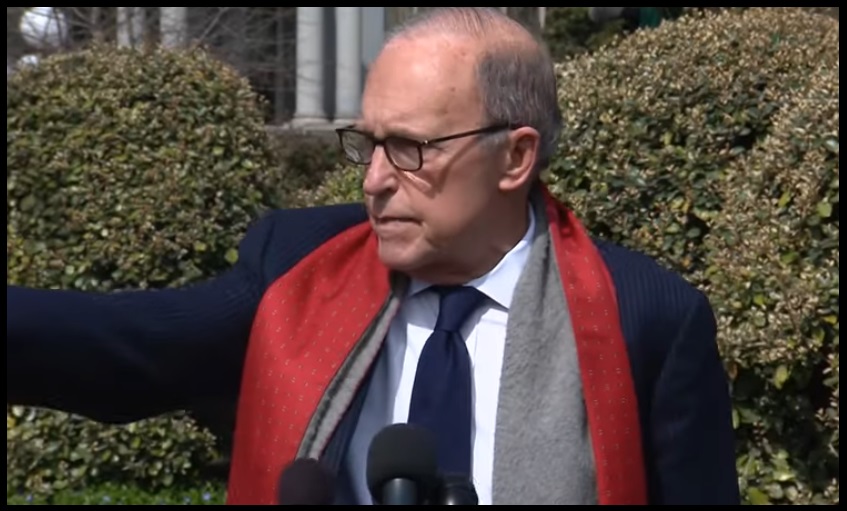
National Economic Council Director Larry Kudlow appears on CNBC for an extensive interview on upstream economic issues. With China’s economy at a standstill; and with the troubles of the coronavirus spreading outward; what does that mean for us?
There’s some good questions in this interview. Domestically, as we noted yesterday, the U.S. economy is strong and growing. However, the Wall Street multinationals are very exposed to the China issues. On the bright side the overall China issues are helping to push more corporate decisions toward domestic investment and away from Beijing.
.
Given these lessons being learned, I sure wish we didn’t have China involved in making our medicines and medical products. The administration needs to look at this more.
Director Kudlow also appeared on Fox Business with Lou Dobbs.
(more…)
President Trump and Ecuadorian President Lenin Moreno deliver remarks to the press pool prior to a bilateral meeting in the White House. [Video and Transcript Below]
.
[Transcript] – PRESIDENT TRUMP: Well, thank you very much. It’s great to be with the President of Ecuador — and it’s one of the most beautiful countries in the world — and perhaps equally as important, and maybe even more importantly, your great First Lady. Thank you very much for being here. This is a tremendous honor. Some of the most beautiful landscapes in the world and one of the most beautiful places on Earth, they say. I’ve heard that for a long time.
(more…)