Quantcast

Japan Signs Major $56 Billion Energy Deal with U.S, Strategically Boosting Energy Relationship

CTH has said to watch the U.S.-Japan trade relationship closely because the outlines of multiple geopolitical shifts can be referenced from a new strategic relationship surrounding multiple sectors, including energy.

The U.S, relationship with Japan is both leverage and a hedge against old alliances that may seek to disrupt the global reset currently underway through President Trump policy.  The issues with the European Union, U.K, USMCA and other tenuous allies, look entirely different when President Trump has alternative partnerships for massive energy exports.

ENERGY NEWS – In a major move to secure stable energy supplies amid escalating geopolitical tensions, Japan has inked deals worth up to $56 billion with the United States for oil, natural gas, and liquefied natural gas (LNG) purchases and investments.

This agreement, finalized at the Asia-Pacific Energy Security Forum in Tokyo on March 14, 2026, underscores Japan’s push to diversify its energy imports and deepen economic ties with the US under Prime Minister Sanae Takaichi’s administration.

The deals come as part of a broader framework stemming from the 2025 US-Japan trade agreement, where Japan pledged $550 billion in US investments over several years, with energy as a key pillar.

(more…)

All Things Considered – A Good Geopolitical Recap

Some additional contexts not included in the British-centric financial review below.

(1) Japanese Prime Minister Takaichi Sanae will be at the White House next week.  This meeting was scheduled several weeks before Operation Epic Fury began.  The timeline continues to indicate that President Trump’s primary geopolitical focus is on China, not necessarily the U.K-EU angle, although that is a materially significant overlay.

(2) “A major U.S. weapons package for Taiwan worth about 14 billion dollars is awaiting approval from Donald Trump and could be announced after his planned visit to China later this month, according to sources familiar with the discussions. The proposed deal would be the largest U.S. arms sale ever to Taiwan and comes as military tensions between China and the self-ruled island continue to rise.” {SOURCE}

.

(more…)

Indicted John Bolton Beclowns Himself and Showcases Why His Neocon Mindset is Useless

While under federal indictment for improper retention, holding and releasing classified intelligence, John Bolton appears on NBC News to complain about how President Trump is conducting the war against Iran.

It is hilarious to see Bolton pontificate, with all the customary arrogant self-assurances, that President Trump did not plan for a scenario where the oil flows through the Strait of Hormuz would be disrupted, while simultaneously proclaiming President Trump is giving Russian President Vladimir Putin a gift with the lifting of oil/gas sanctions to support the global market.

His insufferable ignorance is laughable. John Bolton just cannot hear himself.  Trump didn’t plan for the oil shortage, but Trump lifted Russian oil sanctions.  Say that again slowly John, while looking in the mirror.  Trump didn’t plan for an oil shortage, but Trump planned to lift Russian oil sanctions.  Slow it down and repeat as needed, until the ah-ha moment sinks in.

Consider that President Trump did actually plan for the Strait of Hormuz to be closed; perhaps even planned for a long time for the issue {GO DEEP}.  And planned, well in advance, for an offset to deliver massive amounts of oil even with the Strait of Hormuz closed.

Give his narrow and stale globalist mind a little longer than normal to see the strategy; give him quiet time in a room with no windows to contemplate the outcomes he is witnessing; and we might even sell tickets to see the moment his ancient neocon brain explodes.

(more…)

Secretary Bessent Announces “Narrowly Tailored, Short Term Sanction Relief” for Russia

Trump, you magnificent bastard, I read your book!’

President Trump and Treasury Secretary Scott Bessent are facing mounting criticism for creating a window for Russia to sell oil and gas to the global market via “narrowly tailored, short-term” sanction relief.  However, few people are putting the issue into context, and the background here is exceptionally interesting.

According to the terms announced by Secretary Bessent, the license to sell applies solely to Russian crude or petroleum products loaded onto vessels as of March 12 and is valid through midnight Washington time on April 11. [Treasury Notice HereOFAC Technical Details Here]

[source]

The sanction relief license to sell will be done in globally recognized petrodollars and applies only to preexisting oil and petroleum products that are already in transit at sea.  However, here’s where it gets very interesting and the ramifications are significant.

Immediately following the Alaska summit between Russian President Vladimir Putin and President Trump, Russia restarted Arctic-2 LNG terminals and began increasing oil production for storage on ‘floating platforms.’  President Trump met with Putin on August 15, 2025, and the curious increase in Russian production began on August 18, 2025.

In the past six months Russia has been pumping sanctioned oil and gas and storing it on ships and mobile sea platforms, seemingly (at the time) with no customers.  Suddenly, against the background of the Iran conflict, all of that previously stored ‘on the water‘ production, now worth double, is authorized for global sale (in petrodollars).

Either Russian President Putin is the luckiest guy in the world, or Russia knew something.

In 2025 what Russia did following the Alaska summit did not make sense; now it does and the ramifications are stunning.

(more…)

Witkoff and Kushner Meet Russian Delegation in Florida – Reports Indicate Discussions of Strategic Economic Cooperation on Oil

The fact that Team Russia and Team USA would be discussing a strategic economic alliance on the issue of energy is not a surprise to those who watched both President Putin and President Trump outline that same content discussion in Alaska last August.  However, given the current conflict with Iran and the escalating oil price issue, Russia and the USA discussing Russian oil capacity and U.S. sanctions therein takes on a new angle.

It has been obvious that domestic U.S. politics, in combination with the Russia-Ukraine war, has impeded President Trump from organizing a strategic reset with Russia pulling away from historic conflicts.  However, CTH is also clear-eyed on the longer-term ramifications for Eastern Europe when contrast with Putin’s ambitions to fix what he perceives as prior Russian Federation mistakes regarding the West (more on that at the end).

As noted in social media exchanges from Witkoff and Dmitriev, the discussion was productive.

[SOURCE]

All indications of this meeting give the appearance of less focus on progress in the Ukraine-Russia conflict, and a higher focus on current economic conditions -created by the Iran conflict- that could be enhanced with cooperation between the U.S. and Russia. {GO DEEP BACKGROUND}

According to Kirill Dmitriev, Russian special presidential envoy for investment and economic cooperation with foreign countries and director general of the Russian Direct Investment Fund (RDIF), relayed through the Russian News Agency (TASS), “he visited the US upon orders from Russian President Vladimir Putin, taking part in a meeting of the heads of a working group on economic cooperation between the two countries.”

(more…)

Part II – Europe and China Have an Energy Problem

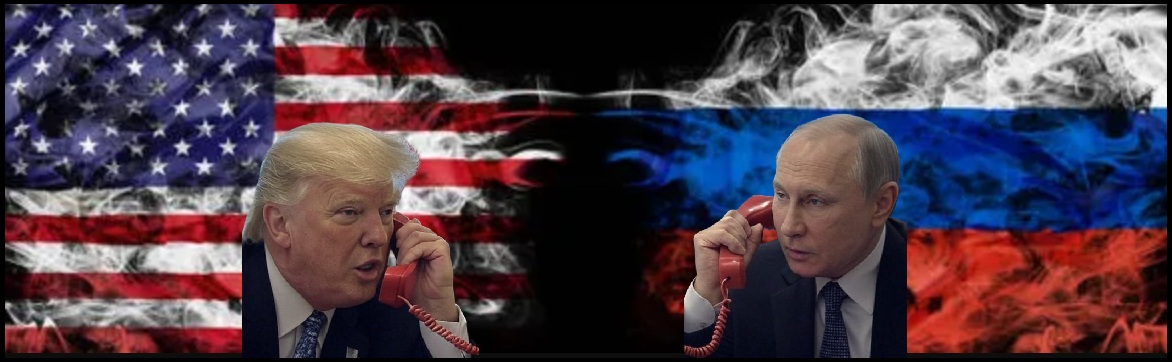
When President Donald Trump and President Vladimir Putin met in Alaska on August 15, 2025, the focus of the geopolitical world was on discussions surrounding Ukraine.  Unfortunately, it didn’t take long, merely a few hours, for both the U.S. and Russia to say that no progress was made.  However, also noted at the time was both the USA and Russia saying sideline discussions took place surrounding the possibility for a strategic relationship surrounding energy development.

What follows below is a review of the current energy dynamic, specifically surrounding LNG, against the backdrop of the Iran war with a hindsight review of that previous discussion between Putin and Trump.

What most people are missing in their current analysis was something that took place immediately following that Alaska summit six months ago.  Something that did not make any sense until now. {GO DEEP PART I HERE}

Three days after that summit meeting, on August 18, 2025, Russia announced they were restarting Russia’s Arctic-2 LNG production facility.  Russia would be more than doubling their capacity to generate and store liquified natural gas (LNG).

It absolutely did not make sense that Russia would start producing even more LNG considering the previously imposed western sanctions against them, and the fact that Russia was already overproducing LNG. As noted by analysts at the time:

AUGUST 18, 2025 – Russia’s Arctic LNG 2 export facility, which is sanctioned by the United States, is coming back to life after a year of no activity and is looking for buyers in Asia.

[…] The U.S. and EU sanctions on Russia’s Arctic LNG 2, which was billed as Russia’s flagship LNG project, have effectively frozen the start-up of the export facility in the Gydan Peninsula.

[…] Last year, Russia started shipping LNG from its flagship Arctic LNG 2 project—but not to customers. The shipments were made from the Arctic project to floating storage units either in Russia or in European waters, as potential customers were unwilling to buy the sanctioned LNG. {SOURCE}

In August of 2025, Russia was essentially producing more LNG than they could sell into the available market.  Russia was storing the overproduction from Arctic-1 on floating storage units and slowly selling to countries that did not align with the sanctions, specifically China and some Asian buyers.  Then suddenly, after the Trump summit, Russia decides to bring Arctic-2 online and produce even more LNG.  You can see how this did not make sense.

If they could not even sell all the Arctic-1 LNG output, then why would Russia bring Arctic-2 LNG production online?

That was six months ago.

(more…)

Right Now, Russia is Like Amazon During COVID

We like the deep weeds, most do not.  The geopolitical ramifications of the U.S. confrontation with Iran are vast and complicated; however, to encapsulate one of the most interesting dynamics consider this ‘tldr’ statement to open the discussion with your friends: Right now, Russia is like Amazon during COVID-19.

What follows is not me saying President Trump and President Putin are holding nightly conversations, discussing steps or details, or even obliquely coordinating measures as Trump eliminates the generational threat posed by Iran.

However, I am saying that given the nature of all contact and communication between Trump and Putin, including extensive contacts by their representative emissaries, both Putin and Trump are well aware of each downstream effect from the Iranian confrontation.

Two days after the U.S./Israel began Operation Epic Fury, President Vladimir Putin said Russia should consider shutting down oil and liquified natural gas (LNG) shipments to the EU in advance of the previously scheduled April deadline date when the EU would stop purchases.

♦ First, remember ‘force majeure’ contract nullification is in place for every producer, supplier and transporter in the middle east. Second, with shipments from the Gulf of Oman greatly reduced, LNG prices along with oil prices are increasing rapidly.  The result – ships filled with oil and LNG currently on the water are diverting in real time as international bidding for the content of the ships take place.

If Putin stops selling LNG to Europe, and Europe cannot get LNG from the Gulf of Oman, and China/Asia are LNG dependent (not exporting), then where is Europe going to get the LNG to replace what Russia will no longer provide?

Answer: The United States, and to a lesser extent, Norway.

[SIDENOTE: now does President Trump continuously smacking Great Britain about shutting down their North Sea oil and gas operations take on context?  Geopolitical foresight? I digress. END SIDENOTE]

The European Commission’s decision to phase out and ultimately stop purchasing Russian oil/gas was made in 2025 prior to the Iran conflict triggering.  Europe’s replacement plan included increased LNG purchases from the U.S., Norway and middle east; the latter supply option is now void.

Europe’s decision to stop buying oil/gas from Russia puts them in a very precarious position.  The supply option for Europe is suddenly very limited, and Putin’s statement about stopping the flow early was obviously made with this understanding in mind.

(more…)

U.S. Treasury Secretary Scott Bessent Discusses U.S. Maritime Reinsurance and Global Energy Markets

The geopolitical ramifications of the oil and liquified natural gas (LNG) impact from the ongoing conflict with Iran is changing many of the world’s energy supply chains. Given the nature of the issues there are a myriad of complex dynamics to discuss. However, one key component is the U.S. policy shift to deal with the supply.

With that in mind, Treasury Secretary Scott Bessent appears with Larry Kudlow to discuss the United States’ new $20 billion maritime reinsurance plan as well as the ongoing conflict in Iran. CTH will be expanding the conversation specifically as it relates to Russian oil/gas sales. This is a good precursor interview. WATCH:

.

(more…)

Strange – CNN Found a War to Cover Again

CNN is bragging about the teams they have on the ground in Iran and around the war zone to provide coverage for Operation Epic Fury. [SOURCE]  Which again, brings up an interesting contrast that seemingly flew under the radar from past events.

[Citationlink]

As we noted in the beginning of the Russian war in Ukraine, where was the media for that one?  Where was this CNN coverage for the war in Ukraine?  The Ukraine war was the only war in modern history with ZERO mainstream media reports complete with helmets, flak jackets and play-by-play reporting of every moment within the conflict.  Why?

The answer is not necessarily complicated.  The Ukraine war was a war of narratives.  Yes, there was actual fighting, but the physical conflict itself was not in alignment with the narrative the media intended to create from it.  The reality within Ukraine did not fit in the pert chart and the visuals would not ever have supported the claims.

Ukraine was/is the COVID-19 of wars.  A western intelligence operation using the geography of Ukraine to push an agenda in alignment with western interests. It would not and does not serve the interests of truth and transparency for media to report from inside a battlespace that might contradict their claims.  Hence, we labeled it “World War Reddit,” and it remains that way through today.

(more…)

President Trump: ‘No Deal with Iran Except Unconditional Surrender’

The U.S. and Israel have been targeting deep underground missile sites within Iran, with strong success.  Iranian counterstrikes, missile & drone launches are down 80 to 90 percent according to Pentagon officials.

Additionally, the Israeli military has reported they dismantled an underground bunker system in Tehran used by regime leadership.  Originally the bunker was used by slain Supreme Leader Ayatollah Ali Khamenei underneath the leadership compound in central Tehran.  The bunker was targeted by 50 Israeli fighter jets and subsequently destroyed.

President Trump announced via Truth Social that he will not seek any terms with Iran other than unconditional surrender.

[SOURCE]

Meanwhile, in a somewhat predictable move, Treasury Secretary Scott Bessent has announced the U.S. will lift some sanctions on Russian oil exports in order to mitigate shortfalls.  India will be permitted to purchase additional Russian oil for use in their refineries.  The gasoline end products will then be sold into the market.

BESSENT: “President Trump’s energy agenda has resulted in oil and gas production reaching the highest levels ever recorded.

To enable oil to keep flowing into the global market, the Treasury Department is issuing a temporary 30-day waiver to allow Indian refiners to purchase Russian oil. This deliberately short-term measure will not provide significant financial benefit to the Russian government as it only authorizes transactions involving oil already stranded at sea.

(more…)