Mohamed El-Erian, the chief economic adviser for Allianz, got the inflation problem correct; states a forecast in line with CTH Main Street review, but then falls short on his political outlook for the solution.
Within the interview, El-Erian predicts inflation at the current CPI measure will increase from current 7.9% to over 10% this year. That aspect is in alignment with CTH review at ground level.
Current real inflation is more than 15% across the board, if you use the CPI methodology we were using in the 70’s and 80’s. Both the scale and the speed of the current price increases are historic. That is why you are seeing prices on retail items jumping so high, so fast. The price increases on highly consumable goods are in the 15 to 20% range. WATCH:
An increase to over 10%, using current CPI measures, equals an increase of 25 to 30% in actual price (using historic measures). Keep in mind, we have already passed through a wave of backward-looking inflation in the 25 to 30% range. El-Erian is predicting a duplication of that scale into the remainder of 2022, I agree. The 2020 $3 item became the 2021 $4 item, which will now become the 2022 $5.50 item. That is our reality. It will not get better.
Where we differ from El-Erian is on the wage side and the political analysis. Any political intervention to create govt subsidy with the goal to generate a higher workforce will backfire – bigly. Recent historic employment statistics have not yet reflected the demand side decline in goods. The employment data is skewed and useless because of the COVID mitigation impact on jobs.
 What the Mueller probe was to President Trump, the J6 Committee is to the MAGA movement.
 …”Strategic success in the 21st century is not about a physical land grab of territory; that’s what Putin has done. In this century, strategic power is increasingly measured and exercised by economic strength, by technological sophistication and your story – who you are, what your values are; can you attract ideas and talent and goodwill? And on each of those measures, this will be a failure for Russia.”
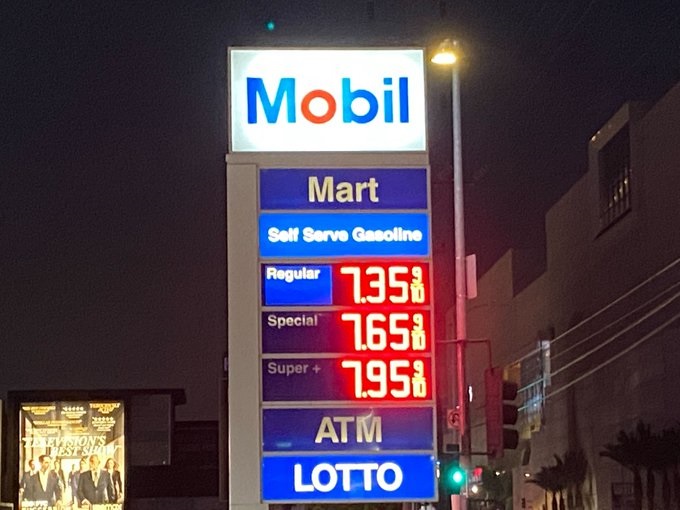
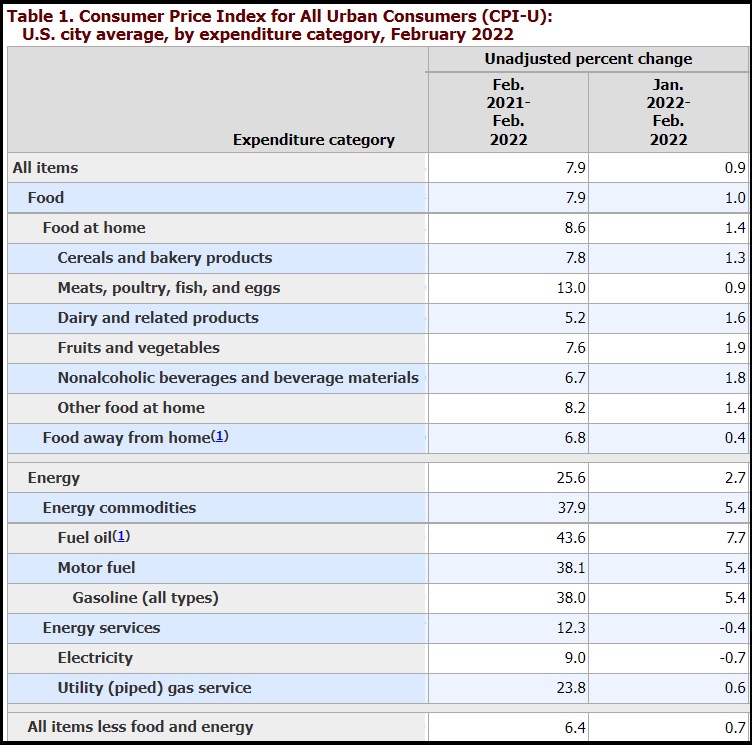 First, the capture of the current February data was BEFORE the Russia-Ukraine crisis came into play. Despite the White House attempting to justify the release data today by blaming it on Russia-Ukraine influence on oil and gas prices, the data itself was assembled before the recent spikes in oil and gasoline. This is an important distinction, because that means what is coming next is even higher.
 What we have talked about prudently on these pages is now coming into greater focus, as global leaders are beginning to prepare their own citizens for the long-term consequences of their disruption to the food supply chain.