Quantcast

The Outlier of the West, Japan Core Inflation Rises 2.4% Year Over Year

If you have been following along, you might remember the note we made in July about not every country willing to go along with the western agenda on energy reduction, climate change, and raising interest rates to shrink their economy down to the scale of diminished energy development {Go Deep}.

In addition to Russia, China, Iran, Brazil, South Africa, Argentina and India vociferously retaining their own economic and monetary independence, Mexican President AMLO literally blasted the program while visiting the White House and the Bank of Japan refused to join the mantra to raise interest rates.   Essentially, all of the aforementioned nations see the collective Build Back Better program for what it is, a path to poverty.

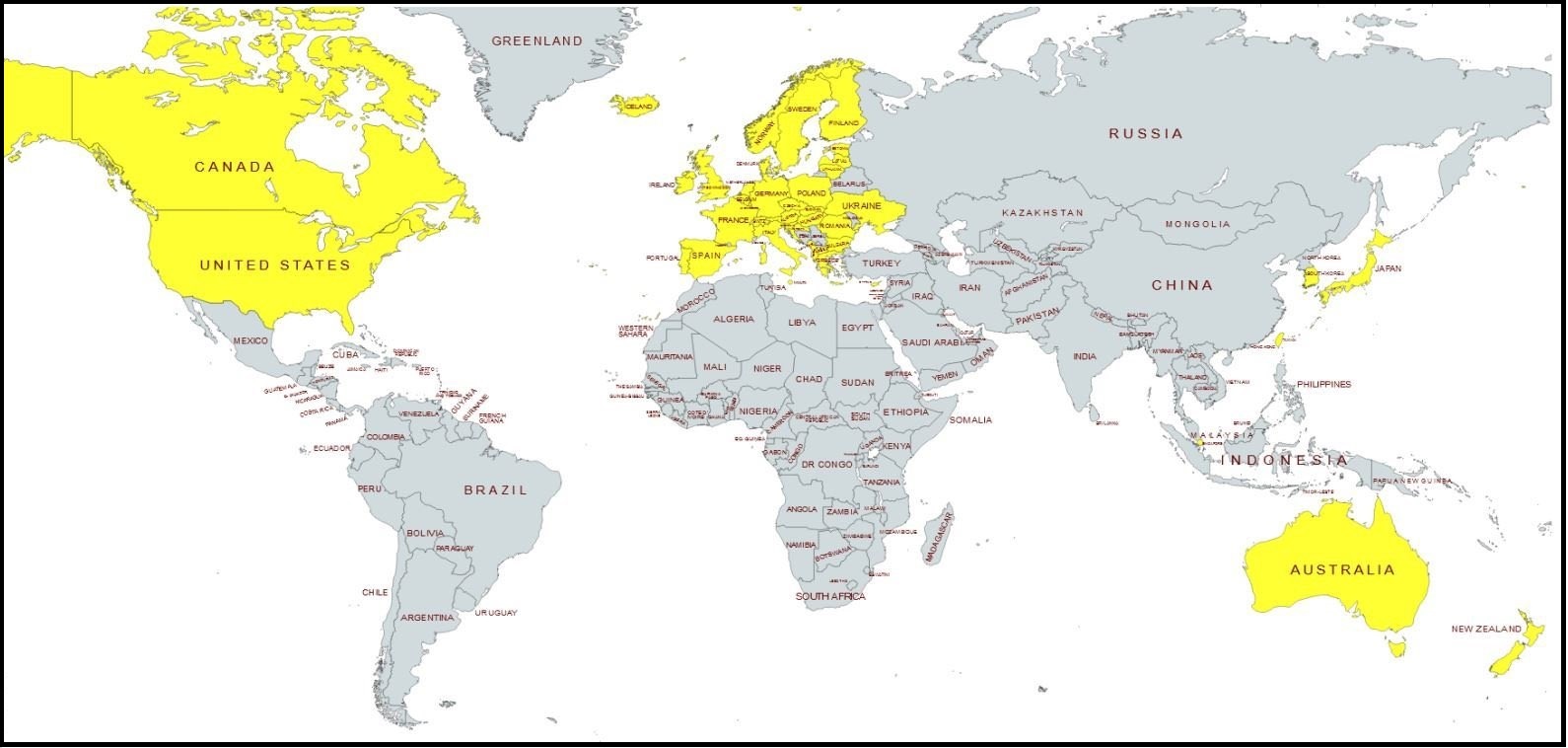
As a result of their non-compliance with the global bankers, which, not coincidentally I would point out, coincided with the assassination of Shinzo Abe, the government of Japan has been getting blasted by the proverbial ‘west’ (U.S, Canada, U.K, Europe and Australia).

Japan is attempting to deal with inflation by focusing on increasing energy production and security (the supply side); while the rest of the western group have been chasing the false promise of decreased inflation by lowering the demand side, ie. pretending not to know their energy policy is creating the increases in costs.

As a result of the distinctly different monetary approaches, the financial system has been trying to punish Japan and the financial media have been trying to point out every flaw in the Japanese economy as a result of their noncompliance.   However, as you will see in this Reuters article, the July inflation within Japan is moderating.  Inflation in Japan is 2.4% for July (year over year).

TOKYO, Aug 19 (Reuters) – Japan’s core consumer inflation accelerated in July to its fastest in seven-and-a-half years, driven by fuel and raw material prices and adding to the costs of living for households yet to see significant wage gains.

(more…)

Oliver’s Twist, Policymakers Legislating Against the People – It’s Not About Going Green, It’s About Going Without

Last Saturday’s weekly monologue by Neil Oliver was a tremendous hit, helping to awaken millions of people from multiple nations about the true intent of this new governing system as promoted by policymakers on behalf of corporate interests [SEE HERE].

Earlier today (UK time) GBNews host Mark Steyn had Mr Oliver appear in studio to expand the conversation.  What results from Steyn and Oliver is a brilliant segment outlining the nature of this new governing system.  A system structured on the standard that disconnected policymakers are legislating to the needs of corporations.

When you remove the old “representative democracy” scales from your outlook and replace the lens with an understanding that representation now means representing the needs of multinational interests, almost all of the contradictions reconcile.

From that perspective, the Build Back Better or Green New Deal (climate change) agenda is not about replacing the system of energy production with a green system that duplicates the output. The intent of the new program is to produce less energy and then modify the uses of the now limited resource.  In one of the examples given, 30 million gasoline powered cars are not expected to be replaced by electric vehicles, a personal transportation system of far fewer vehicles is the goal.  WATCH (prompted):

.

(more…)

Something is Looming Geopolitically, and We Better Start Taking It Seriously

As a result of western governments’ taking collective action under the auspices of a ‘climate change’ agenda, we are on the cusp of something happening with ramifications that no one has ever seen before.

Western governments’, specifically western Europe, North America (U.S-Canada) and Australia/New Zealand, are intentionally trying to lower economic activity to meet the intentional drop in energy production.

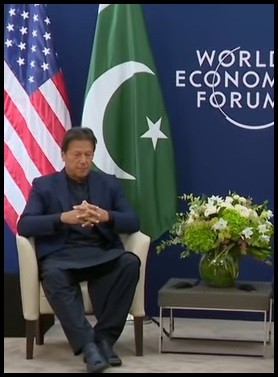
This is the core consequence of the Build Back Better agenda as promoted by the World Economic Forum.

Anyone who says there is a reference point to determine both the short-term and long-term consequences is lying. There is no precedent for nations’ collectively and intentionally trying to reduce economic activity.

Hiding behind the false justification that current inflation is driven by too much demand, central banks in Europe, the Bank of England, Bank of Canada and U.S. federal reserve are raising interest rates.  The outcome we are currently feeling is an intentional economic contraction and global recession.

The Build Back Better monetary policy is successfully shrinking western economic activity; however, the impacted nations that produce goods for markets in North America and Europe, specifically southeast Asia, Japan and China, are not raising interest rates in an effort to try and offset the drop in demand.  China has announced they are dropping their central bank rates in a desperate effort to lower costs and keep their export dependent economy working.

Underneath all of this, is a drop in energy production in the same nations trying to lower economic activity.  The political policymakers are attempting to manage this process without informing the citizens of the unspoken goal.   Shortages of oil, coal and natural gas are self-inflicted problems, all part of the BBB agenda.

(more…)

Biden Sends $4.5 Billion to Ukraine to Fund Salaries, Pensions, Welfare and Healthcare Costs, With Additional $1 Billion in Weapons

U.S. taxpayers are now responsible for financially supporting the lifestyle of Ukrainian citizens directly.  Earlier today the Biden administration sent $4.5 billion to the Ukraine government to pay for their “salaries, pensions, welfare and healthcare costs“; with an additional $1 billion in weapons.  Total package $5.5 billion for Ukraine.  Meanwhile, congressional members are doubling the size of the IRS enforcement to keep Americans paying for these expenditures.

Europe is not paying to support the lifestyle of their neighbors, we are.  Somehow, I doubt that Germany would be willing to pay the expenses of the Mexican government – yet it is perfectly justified (in their mind) for the U.S. to carry the financial burden of Ukraine.  The more you think about it, the more infuriating it becomes.

(Reuters) -The United States will send an additional $5.5 billion in aid to Ukraine, made up of $4.5 billion in budgetary support and $1 billion in military assistance, to help it come to grips with the turmoil of this year’s Russian invasion.

The $4.5 billion budgetary grant will fund urgent government needs including payments for pensions, social welfare and healthcare costs, bringing total U.S. fiscal aid for Ukraine to $8.5 billion since Russia’s February invasion, the U.S. Agency for International Development said.

(more…)

Good News, Gasoline Prices Drop – Bad News, Demand for Gasoline Plummets to Pandemic Era Levels

The good news is that gasoline prices have dropped in the past several weeks to an average of $4.13/gal.  However, the bad news is that most of the drop in price is related to gasoline demand dropping to the same level as July 2020 during the pandemic lockdown phase.

Obviously, $4.13/gal is still a very high price for gasoline, and that is leading to fewer people purchasing gasoline.

(Via Fox) – […] New data from the Energy Information Administration (EIA) shows that gas demand dropped from 9.25 million barrels per day to 8.54 million per day last week. That’s 1.24 million barrels per day lower than last year and “in line with demand at the end of July 2020,” when there were widespread virus-related restrictions and fewer people were hitting the road, according to AAA. 

The latest demand figures bolster a recent AAA survey that revealed 64% of drivers had changed their driving habits or lifestyle since March to offset the high prices at the pump. (read more)

If you think about the position of the Organization of Petroleum Exporting Countries (OPEC or OPEC+), it makes sense for them to recognize the intentions of the western leaders to shrink the western industrial economies and respond accordingly.

(more…)

Western Nation Economic Recession, Maersk Shipping Group Forecasts Weak Shipping Demand as Warehouses Fill with Unsold Durable Goods

A few months ago, amid all of the headline warnings about inflation and prices of essential products, CTH noted that if we were to continue waiting about six months, we would see a massive backlog of unsold goods and as a consequence the prices of non-essential durable goods would begin a rapid decline.  That exact scenario is about to unfold.

Keep in mind, this is not necessarily a collapse of total global economic activity; what we are seeing is a collapse of western nation economic activity that is impacting the rest of the world.  A great economic fracturing is taking place as the western nations intentionally shrink their economy.  The supplier nations are feeling the consequences.

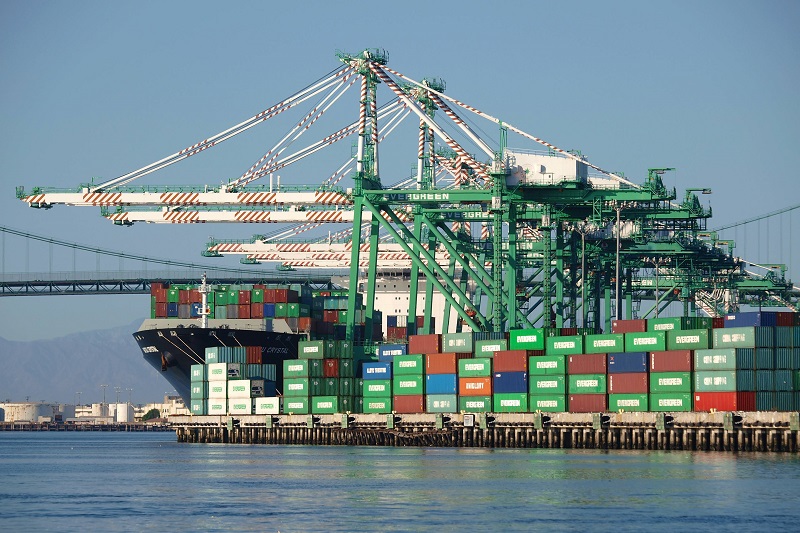
Maersk is the international shipping company that delivers millions of containers of goods all around the world, mostly by ship.  They are warning that warehouses are full of previously delivered goods, unsold consumer durable goods, as retail sales have come to a standstill.

The amount of inventory in warehousing is so extreme, major wholesale and retail groups have run out of storage space (link).

COPENHAGEN, Aug 3 (Reuters) – Shipping group Maersk (MAERSKb.CO) expects global container demand to fall this year as sales of durable goods come to a “standstill”, leaving flat-screen TVs and furniture piling up in warehouses, the company said on Wednesday.

A surge in consumer demand and pandemic-related logjams holding up containers in key ports had boosted freight rates and profits in the shipping industry in recent quarters, yet the cost-of-living crisis has reversed that trend.

(more…)

Global Recession Spreads, European Factory Activity Contracts in July, Japanese Factory Activity Also Drops

In addition to the contraction in South Korean manufacturing announced last night, European manufacturing and factory activity is also contracting with less output, higher buildup of inventory and fewer orders for finished goods.  The global recession is being measured fast and furious.

Every economic outcome is connected to a purposeful decision by the leaders of western industrialized nations to follow the Build Back Better climate change agenda.  Higher energy costs, an outcome of the collective policy to stop new production of coal, oil and gas, which has transferred into higher food prices, farm prices, gasoline prices, heating and cooling prices as well as electricity rates, is forcing consumers to stop purchasing non-essential products.

The sale of durable goods collapsed in the first half of this year; however, no policymakers or bankers wanted to admit it and they kept saying there was an excess of demand.  Now, with fewer customers for durable goods in the market, global manufacturing and factory outputs are dropping fast.  Eventually the central planners are going to have to admit their pretended demand does not exist.

While there is a natural lag in the activity, the rate of factory contraction will be proportionate to rate of the drop in demand.  Meaning we have only just begun to see the manufacturing decline that lags a few months behind consumer activity.

LONDON, Aug 1 (Reuters) – Manufacturing activity across the euro zone contracted last month with factories forced to stockpile unsold goods due to weak demand, a survey showed on Monday, adding to concerns the bloc could fall into a recession.

(more…)

Not Every Developed Western Nation is Destroying Itself While Chasing the Build Back Better Objective

In fact, there are several western nations who see the ‘climate change” energy transformation as an economic kamikaze mission… and that reality is upsetting those who control the larger western alliance agenda.

When we outlined the ‘biggest problem‘ we noted: Brazil, Mexico, and more recently Japan, have started pushing back against the climate change ideologues.  We must do the same.

So, let’s get everyone up to speed.

Factually, Brazilian President Jair Bolsonaro is not only a nationalist leader for his country, Brazil itself is in an emerging economic relationship within the BRICS group (Brazil, Russia, India, China, South Africa).  The BRICS group are not in ideological or geopolitical alignment with the World Economic Forum (WEF) climate change instructions known as Build Back Better.  This lack of ideological synergy is one of the reasons we see a joint effort between the U.S. State Dept and U.S. intelligence group to target Jair Bolsonaro for removal.  [Watch Bolsonaro w/ Tucker Carlson]

Recently, Mexican President Andres Manuel Lopez-Obrador (AMLO) visited the White House.  AMLO is basically soft-socialist, a nationalist who does not like the influence of multinational corporations on the economic politics within Mexico.  When he visited with Joe Biden, AMLO’s public comments in the oval office (he actually had them written down so he would not be deterred from his delivery) about the U.S. chasing a short-sighted and dangerous energy policy, were just ignored by media.  However, watching AMLO deconstruct the Biden energy policy was very telling. [Review Outline Here].

In addition to so-called geopolitical adversaries like Russia, China and Iran, there are also geopolitical allies who clearly see that fracturing the global economy based on energy development, the center of the Build Back Better agenda, is going to create major issues for the citizens within the countries determined by ideological quest to change their energy system.   As noted with Brazil and Mexico, not everyone in the “west” is on board with the program.

(more…)

First Major German City Turns Off Hot Water and Public Building Electricity to Save Gas

Hanover, a city in the northwest of Germany, has become the first major metropolitan area to try and reduce the use of natural gas by removing hot water from public buildings.  The move comes as natural gas supplies from Russia are reduced to 20% of capacity.  Germany is attempting to fill up storage facilities of natural gas in order to survive the winter.

Germany, together with several European countries, are telling their citizens to expect large increases in their electricity bills as energy costs continue to skyrocket.

Germany does not have any LNG terminals to receive shipments of natural gas into ports, they are dependent on pipelines from Russia.  They are urgently trying to reduce the current amount of natural gas being consumed.

(Via Daily Mail) – […] Other desperate gas-saving measures include switching off public fountains and blacking out night-time lights on major buildings such as the town hall and museums. The city’s mayor, Belit Onay, spoke of an ‘imminent gas shortage’ that meant they had to reduce the city’s energy consumption by 15 per cent.

[…] There will also be a ban on portable air conditioners, heaters and radiators among the general populace as the average German begins to pay a price for standing up to the Russian dictator.

[…] Germany, like most of Europe, has been enjoying a hot summer which should soften the blow of the cold showers, but public officials are introducing the measures now in fear of what awaits them when the season turns.

(more…)

To Lower Natural Gas Use World’s Largest Chemical Company Announces Making Less Ammonia, Fertilizer Production Will Shrink Further

The energy crisis in Germany is now a confluence of terrible events that will snowball well into next year.

The world’s largest chemical company, BASF, has announced they will cut down the production of ammonia in order to use less natural gas.

In the short term this will help Germany build up natural gas supplies to survive a cold winter with predicted rationing still planned.  However, in the long term the shortage of ammonia means less fertilizer which will mean future shortages and increased costs for farmers; ultimately creating lower yields next year.

FRANKFURT, July 27 (Reuters) – Germany’s BASF (BASFn.DE), the world’s largest chemical company, is cutting ammonia production further due to soaring natural gas prices, it said on Wednesday, with potential ramifications from farming to fizzy drinks.

Germany’s biggest ammonia maker SKW Piesteritz and number four Ineos also said they could not rule out production cuts as the country grapples with disruption to Russian gas supplies.

Ammonia plays a key role in the manufacturing of fertiliser, engineering plastics and diesel exhaust fluid. Its production also yields high-purity carbon dioxide (CO2) as a byproduct, which is needed by the meat and fizzy drinks industries.

(more…)