The “Producer Price Index” (PPI) is essentially the tracking of wholesale prices at three stages: Origination (commodity), Intermediate (processing), and then Final (to wholesale). Today, the Bureau of Labor and Statistics (BLS) released September price data [Available Here] showing another 8.5% increase year-over-year in Final Demand products at the wholesale level. However, that’s not the bad news in this data.
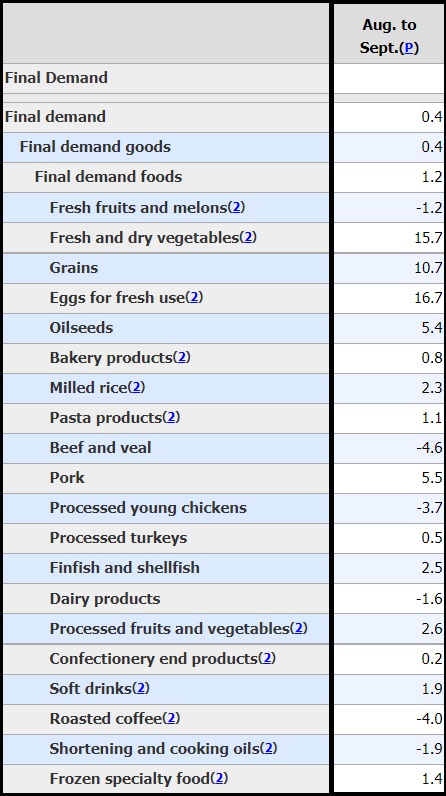 While the overall September PPI was higher than expected at 0.4%, the Final Demand Producer Price for food products in September was a whopping 1.2% (14.4% annualized).
The BLS notes the driver by saying, “a major factor in the September increase in prices for final demand goods was a 15.7-percent advance in the index for fresh and dry vegetables. Prices for diesel fuel, residential natural gas, chicken eggs, home heating oil, and pork also moved higher.”
That’s a 15.7% increase in price, in one month, for fresh and dry vegetables. Annualized that’s a rate of price increase of 188.4% for vegetables. Remember the warning about farm costs (energy, fertilizer, fuel) driving field to fork inflation at harvest? This is the leading edge of that third wave of food price increases.
I have modified BLS Table-2 to focus specifically on food costs. The data is on left.
You will note that ‘row crops’ are the big drivers along with grain and seed products. This is exactly as we predicted it would be because those specific farming costs are the ones with greatest increase from energy, fuel, fertilizer, weed and insect control, and diesel costs.
All of those higher costs have been growing in the fields and will now surface at harvest. The higher farm costs transfer from the field to the fork via the food supply chain. This is only the leading edge of the price increase.
In October 2021 we first warned of the food price increases coming in distinct waves. The first was Jan, Feb and March 2022. The second wave was May through July 2022. This third wave will be bigger than the first two and starts arriving this month, October 2022.
People laughed at me when I said in late 2022 eggs were going to reach .50¢ EACH ($6/doz).
Well, in September the price of fresh eggs jumped 16.7% in a single month. That’s an annualized rate of price increase for eggs over 200%.



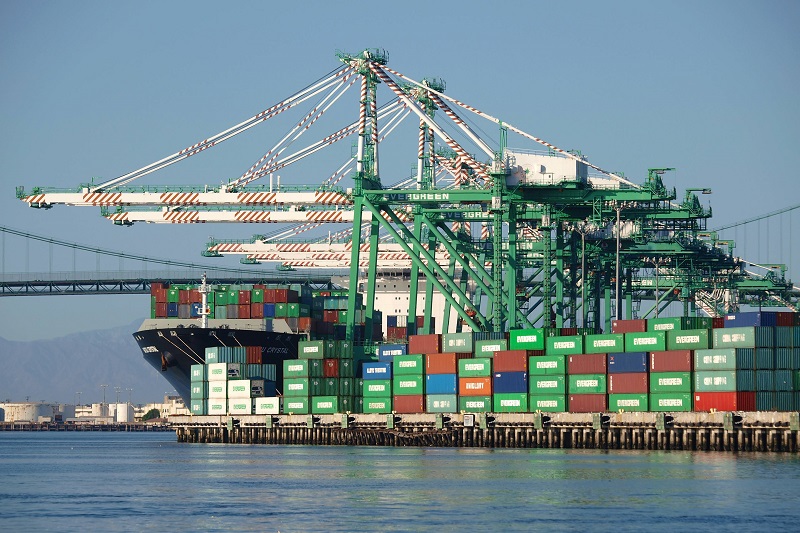 A single transpacific container shipment cost $19,000 in 2021, then $14,500 in 2022 as the intentional slowdown began. Now it’s only $3,900 as entire fleets of cargo shipments are cancelled due to lack of demand by U.S. purchasers.