Quantcast

Chinese Auto Sales to Europe Expected to Top 700,000 Units Sold This year

The geopolitical baseline for Europe is often determined by the economics of their situation.  In 2024 approximately 408,000 cars from China were sold in Europe.  For 2025 that number is now expected to exceed 700,000 units despite tariffs.

Previously we highlighted the short-term ramifications of the European Union push to force the sale of electric vehicle (EVs) upon the consumer base.  {SEE HERE} EU automakers unable to meet the compliance goal began purchasing carbon credits to avoid stiff EU fines.  Many of those carbon credits were purchased from Chinese automakers, who then turned around and started using the extra EU revenue to discount Chinese cars sold in Europe.

In essence, EU car companies started subsiding China to undercut their own market. An outcome of the EU chasing the ridiculous green energy project throughout the European free trade zone.

Now reports are beginning to surface of how the non-EV segment of the industry is being lost to less expensive Chinese hybrid autos that: (1) are much cheaper, (2) not bad in quality, and (3) are not subject to the 35% EV tariff rate.

The EU tariff applied to gasoline powered cars or hybrids from China is 10%.  That tariff is not enough to stop the imports. The Chinese hybrid autos are substantially less than European car brands, and there’s no financial incentive for China to build auto plants in the EU zone especially when you consider the EU is subsidizing those cars by purchasing carbon credits.

When analyzed from a cost and consequence, the entire EU dynamic toward car companies is a little funny.  However, for Germany this is a serious issue, and with the German industrial economy already stagnant – every impact to their auto industry only makes the situation worse.

(more…)

A Contrast in American vs British National Security Priorities

Lyndon LaRouche (1922-2019) was a rather eclectic fellow in the world of American politics for several generations. Some of his perspectives were sound and nationalistic, and some of his perspectives slipped into the realm of geopolitical conspiracy theory finding British Imperialism under every rock and blaming Queen Elizabeth II for assassination attempts against him.

Susan Kokinda and Barbara Boyd of Promethean Action continue the LaRouche tradition while smoothing out some of the more outlandish elements the originating political movement was known for. Barbara Boyd is the spokesperson and treasurer of the LaRouche Youth Movement. Boyd’s partner, Susan Kokinda, maintains a belief that eliminating British Imperialism is the objective of President Trump’s America-First policy agenda.  This is where I disagree.

While the outcome of President Trump’s policy does factually lead to the result LaRouche advocated, I strongly doubt “eliminating British imperialism” is the prism through which Donald Trump’s thought process flows.  That said, in the overall picture of American politics, the Kokinda and Boyd analysis of Trump’s opposition is generally accurate.

In their most recent update, Susan Kokinda discusses how President Trump’s recent national security strategy marks a significant departure from over a century of British-influenced American foreign policy.  Their review delves into the geopolitical friction between the U.S. and the UK, particularly regarding their strategies toward Russia and Ukraine.

Mrs. Kokinda underscores the broader clash of worldviews between America-First sovereignty and British-led internationalism, highlighting the latest developments including reactions from Russia and European elites. The episode also examines the opposition Trump faces from both within the U.S. political establishment and British geopolitical strategists and emphasizes the importance of maintaining political support to ensure the success of Trump’s transformative policies.  WATCH:

The divergence between the worldview of the European Union and President Trump is accurately presented as above.  The Ukraine/Russia war serves as a case study in how the two worldviews conflict.  The core of U.K policy and national security strategy continues to view Russia as the biggest threat; the national security outlook by President Trump does not.

(more…)

Zelenskyy and Coalition of Willing Will Meet in Berlin to Finalize Ukraine Counterproposal December 15

President Trump had previously said that Zelenskyy has until Christmas to make a decision on the negotiated ceasefire and peace plan organized over weeks of discussions between the U.S., Ukraine and Russian intermediaries.

Ukraine President Zelenskyy then rushed to Paris, London, Brussels and Rome to coordinate with European stakeholder interests. [Notably, he never prioritized discussion of the proposal with the people of Ukraine.]

Zelenskyy then announced his European partners were close to finalizing a counterproposal deal.

Interestingly, the leaders of Germany, U.K., France and Ukraine then leak they had a 2-hour phone call with President Trump.  It’s interesting, because President Trump chose to stay quiet about the call as the “coalition of the willing” plotted their next move to keep the USA attached to their collective destiny.

UK Prime Minister Sir Keir Starmer, French President Emmanuel Macron and German Chancellor Friedrich Merz said they “agreed that this was a critical moment – for Ukraine, its people and for shared security across the Euro-Atlantic region”. A White House official confirmed the call took place but did not give details. {link}

British Prime Minister Sir Keir Starmer spoke with the other heads of state, declaring that they were at a “critical moment,” according to a spokesperson for Downing Street. “The Prime Minister Keir Starmer spoke to the president of the United States, Donald Trump, the president of France, Emmanuel Macron, and the Chancellor of Germany, Friedrich Merz today,” they said. {link}

German Chancellor Friedrich Merz then announces the “coalition of the willing”, which is specifically Germany, Great Britain and France, will reassemble with President Zelenskyy to solidify the next steps in the “security guarantee” part of their proposal. Previously, the trio would only commit to be “willing” if the USA agreed to protect their military forces on the non-NATO territory of Ukraine.

President Volodymyr Zelenskyy confirmed that Ukraine, together with American and European partners, is working on three separate documents related to security and the country’s postwar development. {link}

(more…)

Zelenskyy Says European Counterproposal for Conflict Ceasefire Soon to Be Sent to White House

The premise of this interlocutory exchange is beyond bizarre when you think about it.

President Trump’s negotiation team worked with Ukraine officials and Russian officials to establish the parameters for a ceasefire proposal. Representatives from the U.S, including Secretary of State Marco Rubio, Steve Witkoff and Jared Kushner, working as moderators for a cessation of hostilities, held multiple meetings with high level Ukraine and Russian officials, including Russian Federation President Vladimir Putin, and Ukraine President Volodymyr Zelenskyy.

As a consequence, President Trump’s team (Rubio, Witkoff and Kushner) have spent hundreds of hours, including nine entire days over the last two weeks, in detailed face-to-face discussions with Ukraine officials.

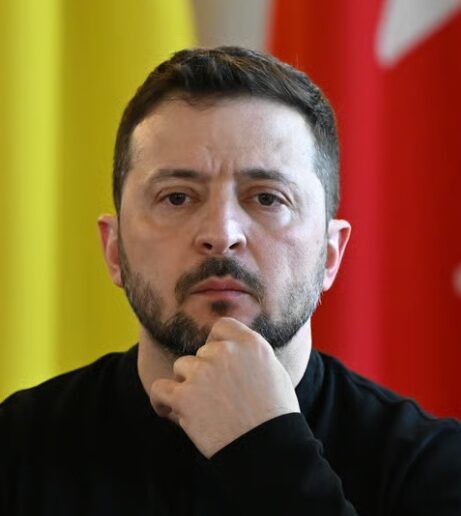
Zelenskyy then goes to Paris, London, Brussels and Rome, to consult with European leaders, and then has the audacity to say he will present a counterproposal from the Europeans to President Trump.

PRESIDENT ZELENSKYY “Today, we already discussed with our negotiating team the results of yesterday’s work in London, which was conducted at the level of the National Security Advisors of our European partners. This was agreed upon yesterday at the leadersʼ level.

We are working very actively on all components of potential steps toward ending the war. The Ukrainian and European components are now more developed, and we are ready to present them to our partners in the U.S. Together with the American side, we expect to swiftly make the potential steps as doable as possible.

(more…)

President Trump Gives Extensive Comments on State of Ukraine-Russia Conflict

President Trump sat down for an extensive interview with Dasha Burns of Politico.  Despite the ideological outlook of Politico, the interview itself was remarkably absent of combative antagonism. The result is a good review of the current positions of President Trump as they relate to the rest of the world.

The Ukraine-Russia conflict is the immediate issue that is discussed within the interview.  President Trump answers some direct questions about who is currently most responsible for continuing the conflict and is asked his opinion directly on Ukraine not holding elections.

President Trump notes Russian President Vladimir Putin is in the strongest position within the conflict and carries the strongest leverage into any ceasefire negotiations.  Trump also frames the need for the bloodshed to end with a much greater sense of urgency than any of the EU leaders or Zelenskyy.  Additionally sharing the opinion that Ukraine needs to have an election to showcase the will of the Ukrainian people in the leadership of Volodymyr Zelenskyy.  WATCH:

.

(more…)

Zelenskyy Met with Starmer, Merz and Macron – Now Heading to Brussels

Yesterday, Ukraine President Volodymr Zelenskyy traveled to London to meet with British PM Keir Starmer, German Chancellor Friedrich Merz and French President Emmanuel Macron.

As expected, part of the Zelenskyy meeting with the “coalition of the willing” included a briefing by Ukraine negotiator Rustem Umerov, the secretary of Ukraine’s National Security and Defense Council, who held detailed consultations for three days last week in Miami with Trump’s envoys Steve Witkoff and Jared Kushner.

President Zelenskyy then departed London traveling with his media entourage to Brussels for the next round of discussions with the European Union stakeholders, financiers and politicians. During the trip Zelenskyy told his media stenographers, “Under our laws, under international law — and under moral law — we have no right to give anything away. That is what we are fighting for.

The U.K, France and Germany support Zelenskyy’s position that he is not going to concede any territory to the Russian Federation, specifically the 30% of the Donbas area in Eastern Ukraine currently at the heart of the physical conflict.

The 30% issue surrounds the Donetsk region in Ukraine, which includes the cities of Kramatorsk and Sloviansk. Russia is currently pushing deep into fortified Ukraine resistance in this region with a population of around 100,000. Zelenskyy claims losing this area would allow Putin to invade the Dnipropetrovsk, Zaporizhzhia and Kharkiv regions.

(more…)

Following Three Days of Talks with U.S, Team Zelenskyy Heads to London for Meeting With “Coalition of the Willing”

Following three days of negotiations in Florida (Thur, Fri, Sat) between President Trump emissaries Steve Witkoff and Jared Kushner, and Ukraine emissaries Rustem Umierov and Andrii Hnatov, the group then held a 2-hour phone call with Ukraine President Volodymyr Zelenskyy.

No substantial progress was reported.  However, military officials Umierov and Hnatov then flew to meet Zelenskyy in London where French President Emmanuel Macron, British Prime Minister Keir Starmer and German Chancellor Friedrich Merz are assembled to discuss alternatives to ending the conflict.

Starmer, Macron and Merz form the core of the “coalition of the willing,” an EU group who have unilaterally proclaimed they were willing to send the military of the U.K, France and Germany into Ukraine so long as President Trump would backstop their troops with promises of U.S. intervention if things went badly.  Trump would not make that commitment.

Zelenskyy Inc, Macron, Starmer and Merz do not want to end the proxy fight against Russia.  Together with the EU leadership of NATO, the coalition of the willing want to retain the conflict.  However, the problem for the four leaders is that without strong USA support, the citizens of their EU countries will rise up against them.

Even with NATO missiles and transferred technological assistance, they ultimately need the American military in order to ensure Putin doesn’t squish them.  President Trump wants the proxy war to end – loggerheads are reached.

Russian President Vladimir Putin does not seem to be paying too much attention to the bureaucratic speeches and instead is continuing forward advancement [SEE HERE] to secure the territory in Ukraine with or without a negotiated settlement.

(more…)

President Trump’s 2025 National Security Strategy – Europe Is Destroying Itself

President Trump’s 2025 National Security Strategy is outlined in a detailed 33-page report.

In addition to setting the priorities for the United States focus, the report details the Trump administration perspective on the world as broken down into specific regions.  The report is a brutally honest review of the current state of geopolitical benefits, risks and threats as they pertain to vital U.S. interests.

[Full pdf Here]

In addition to outlining a critically renewed focus on the Western Hemisphere, the Trump administration also notes the practical position of Europe, as it pertains to NATO and dependency on the U.S.A.

In a brutally honest review of the situation, the Trump administration notes Europe is increasingly losing their own identity.  The fear the Europeans express about being vulnerable to Russian strength is hypocritical, in the sense that in practical outcomes the EU is purposefully weakening itself and simultaneously demanding assistance against their own weakness.

(more…)

A Welcome Perspective Change Within U.S. State Department

Deputy Secretary of State Chris Landau presents a well-articulated change in perspective from the U.S. State Department.  The response comes following the EU decision to levy a compliance fine against the social media platform X.

[SOURCE]

What Christopher Landau notes as the contrast and conflict in ideological priority from the EU can just as easily be applied to the USA dynamic with Canada.  As noted by Twitter user John Frank, “The same observations can easily apply to the relations with Canada, given the divergence between the US role in the military alliance with Canada, while Canada is involved in activities which work against US interests.

At a certain point it does become necessary to distinguish exactly what values, benefits, perspectives and priorities frame the positions that determine who our U.S. allies really are, and who should benefit from that relationship.

It is good to see a structurally different perspective from the U.S. State Department that puts a bold underline under the term “western alliances.”  What values are those alliances based on?

(more…)

The Money Phase – Emissary Witkoff Updates on Ukraine/Russia Peace Negotiations

If we read between the lines in the latest update from President Trump emissary Steve Witkoff, we can clearly see the negotiations have entered into that critical phase where payments to all of the stakeholders will determine a successful outcome.

Pragmatic people have long predicted the ultimate solution to the bloodshed will only be determined once western interests get to the point where negotiators propose a long-term plan for continued financial benefit.  Too many people, “stakeholders” are making money from the conflict.

From a western perspective, support for the Ukraine conflict is based on money. Therefore, the solution to the conflict requires a system where the western opportunity for financial benefit continues.

Written in polite diplomatic terms, the continued payments are identified as “the prosperity agenda which aims to support Ukraine’s post-war reconstruction, joint U.S.–Ukraine economic initiatives, and long-term recovery projects.” This is codespeak for the U.S. Senate and EU will retain a financial mechanism to exploit for personal benefit.

From the language it appears that Witkoff and Kusher are confident they can construct a financial reward system for western banks, investors, politicians and Ukraine officials that will retain the benefits of war without the ancillary ingredient of bloodshed.

If the U.S. delegation can pull this off, then Russia can gain the territory they want, corrupt Ukraine officials can keep skimming investment money, the EU can retain the power it wants to extract financial payments, American politicians can use the “long-term recovery projects” for money laundering and quasi-public/private investment banks can benefit from the exploitation of Ukraine resources.

Again, from a ‘western geopolitical perspective’, the territorial issues, security guarantees, EU membership status and the position of NATO are downstream details once the larger payment system is organized.  Put another way, they are down to the stuff that really matters, the money.

(more…)